



BNI Invites Former Scholarship Secretariat Registrar Over Alleged Scandal

The Bureau of National Intelligence (BNI) has invited Dr Kingsley Agyemang, the former Registrar of the Ghana Scholarship Secretariat, to assist with investigations into an alleged scholarship allocation scandal during his tenure under the previous NPP administration. Dr Agyemang confirmed to Citi News that he had honoured the BNI’s invitation, reporting to the Bureau on Tuesday, May 5, where he provided a formal statement and was subsequently released after the engagement. The BNI’s action follows a recent investigative report by The Fourth Estate, which alleged that scholarships meant for needy students were being disproportionately awarded to well-connected and affluent individuals across the country. Meanwhile, the Office of the Special Prosecutor (OSP) has revealed it is also conducting a separate investigation into the operations of the Ghana Scholarship Secretariat, with its probe dating back to July 2023. These parallel investigations have heightened public attention on the management of the scholarship scheme, as calls mount for greater transparency and accountability in the award of educational support nationwide. Source: Apexnewsgh.com
Majority in Parliament Criticises Akufo-Addo Government Over Failure to Achieve Macroeconomic Stability Amid BoG Losses
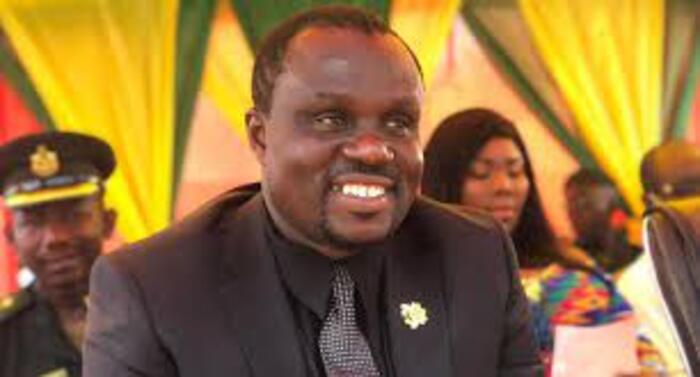
The Majority in Parliament has publicly criticised the Akufo-Addo administration for what it describes as a failure to achieve macroeconomic stability, pointing to the Bank of Ghana’s cumulative losses of over GH₵80 billion between 2022 and 2024 as evidence of persistent economic challenges. Addressing journalists, Eric Afful, Chairman of Parliament’s Economy and Development Committee and Member of Parliament for Amenfi West, outlined a series of economic hurdles that, in his view, have contributed to the central bank’s reported loss of GH₵15.6 billion in 2025. He argued that despite these significant operational losses, the country’s economic fundamentals remain weak. “Inflation surged to a peak of 54.13% in 2022 before easing to 23.84% by the end of 2024. The Ghana cedi continued to depreciate, reaching approximately GH₵14 to a dollar by December 2024, a depreciation of about 19.7%,” Afful stated. He further noted that gross international reserves were only sufficient to cover around four months of imports, standing at $9.3 billion in 2024. Afful also highlighted the central bank’s deteriorating equity position, revealing that negative equity stood at GH₵64.34 billion in 2023, improving only marginally to negative GH₵61 billion in 2024. “Despite all these losses, we have not seen a corresponding improvement in the economy’s fundamentals,” he remarked. He argued that the losses recorded in 2025 should not be viewed in isolation but rather as part of ongoing policy interventions intended to stabilise the economy. “Given these considerations, the 2025 outcomes must be understood as the continuation of a deliberate and necessary policy intervention,” Afful explained. The Majority’s critique comes at a time of heightened scrutiny over the government’s economic management, with many stakeholders calling for renewed efforts to address inflation, currency depreciation, and the central bank’s financial health. Source: Apexnewsgh.com
Bank of Ghana Slashes Currency Issuance Costs Amid Rising Cash Demand in 2025

The Bank of Ghana (BoG) has achieved a significant reduction in the cost of issuing currency in 2025, even as the volume of cash circulating in the economy reached new highs. According to the central bank’s latest financial statements, the total cost of currency issuance dropped sharply from over GH¢1 billion in 2024 to GH¢471.4 million in 2025, a noteworthy operational shift for the institution. The decline was largely fueled by a dramatic 72% fall in direct production expenses, with the cost of printing banknotes and minting coins plummeting from GH¢986 million to GH¢277 million year-on-year. This points to a deliberate strategy by the BoG to scale back physical currency production, likely through better inventory management, reduced replacement needs, or targeted cost-optimisation measures. However, the overall picture of currency management remains complex. While the central bank succeeded in slashing production costs, several other operational expenses saw increases. Agency fees inched up to GH¢10.6 million, foreign currency import costs rose from GH¢14.4 million to GH¢16.5 million, and miscellaneous currency-related expenses surged to GH¢183 million from GH¢14.6 million. This sharp rise in ancillary costs partially offset the savings made in printing and minting, highlighting continuing logistical and management pressures. Despite the cost-cutting measures, Ghanaians’ appetite for cash showed no sign of waning. Currency in circulation, defined by the BoG as the total face value of banknotes and coins held by the public and financial institutions, net of cash in the central bank’s vaults, increased by about 17%, rising from GH¢71.6 billion in 2024 to GH¢83.8 billion in 2025. The latest data underscores the BoG’s evolving approach to operational efficiency in currency management, even as demand for physical cash continues to grow across the country. Source: Apexnewsgh.com
EOCO Re-Arrests Former NAFCO CEO and Wife Minutes After Court Discharge in High-Profile Food Supply Case

In a dramatic twist on Tuesday, May 5, operatives from the Economic and Organised Crime Office (EOCO) re-arrested the former Chief Executive Officer of the National Food and Buffer Stock Company (NAFCO), Hanan Abdul-Wahab, and his wife, Faiza Seidu Wuni, barely moments after they were discharged by an Accra court. The couple’s re-arrest occurred shortly after the Attorney-General’s Department had withdrawn all criminal charges against them in a case linked to the alleged loss of GH¢78 million under the national school feeding programme. Earlier that day, the courtroom witnessed a surprising turn when Deputy Attorney-General Dr Justice Srem-Sai informed the presiding judge of the prosecution’s decision to discontinue proceedings against Hanan Abdul-Wahab, his wife, and other accused persons and companies. He announced that fresh evidence had emerged, prompting the withdrawal to ensure “a fair and speedy trial in accordance with the Constitution.” With the prosecution’s decision, the court struck out all charges and discharged the accused. However, the relief for the former NAFCO boss and his wife was short-lived. As they exited the courtroom, EOCO officials moved in swiftly to place them under arrest once again. The specific reasons for this re-arrest have not yet been disclosed by authorities, leaving both legal observers and the public speculating about the next phase of the case. The high-profile trial has been marred by a series of legal tussles, including disagreements over the admissibility of witness statements and the role of EOCO officers in the prosecution. At a previous hearing, defence lawyers had challenged the participation of an EOCO officer, prompting Justice Achibonga to direct the Attorney-General’s Department to provide evidence of proper authorisation for the officer’s involvement. The latest development is set to intensify public scrutiny, raising significant questions about the legal and procedural processes underpinning both the withdrawal of charges and EOCO’s immediate re-arrest of the couple. As the case continues to unfold, attention remains fixed on the next moves by both the prosecution and law enforcement authorities. Source: Apexnewsgh.com
National Anti-Illegal Mining Taskforce Dismantles Multinational Syndicate in Mankraso, Arrests Three Chinese and Four Ghanaians
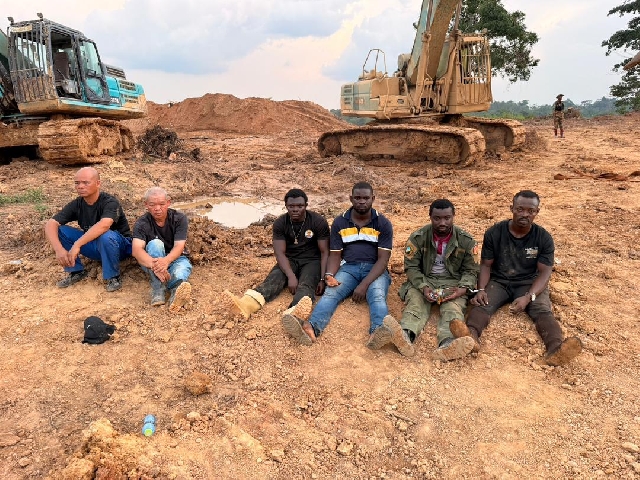
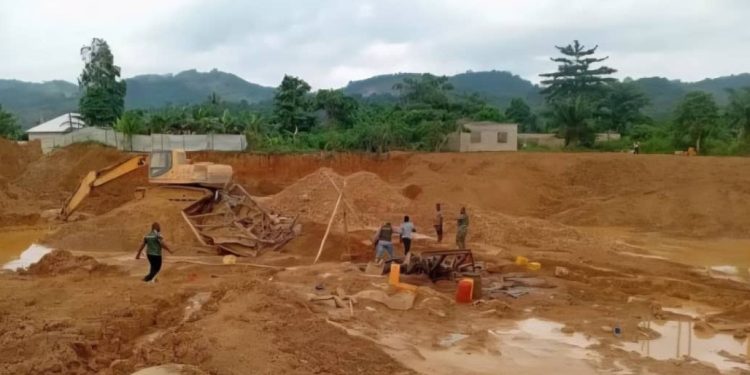
The National Anti-Illegal Mining Operations Secretariat (NAiMOS) has struck a major blow against illegal mining in the Ashanti Region, dismantling a well-organised multinational syndicate operating in the communities of Ntabanu and Nyameadom in Mankraso. The coordinated operation on Saturday, May 2, 2026, resulted in the arrest of three Chinese nationals and four Ghanaian operators, and the seizure of an array of vehicles and heavy equipment believed to be linked to the illicit activities. According to NAiMOS, the crackdown began as a routine patrol in the Mankraso operational corridor but quickly escalated when taskforce operatives spotted a brown Zonda pickup fleeing from a suspected galamsey site in Ntabanu. The driver, a Chinese national, was apprehended after a brief pursuit as he attempted to evade the task force following the spread of news about the operation among local illegal miners. Further intelligence gathered by the task force revealed that operators had begun concealing excavators and other heavy-duty machinery, anticipating a raid. The swift response by NAiMOS operatives prevented the escape of key suspects and led to the immediate arrest of the first Chinese operator. Meanwhile, in a related operation at nearby Nyameadom, the task force intercepted a convoy of three vehicles, Nissan Navara, Nissan Oting, and Toyota Hilux, carrying two more Chinese nationals and four Ghanaian accomplices. The suspects were reportedly attempting to flee after abandoning an excavator at an active mining site, following extensive destruction of farmlands and the pollution of the River Mankran—a crucial water source for the local communities. Authorities said the well-coordinated response blocked the convoy without resistance or casualties, leading to the arrest of all six suspects. The individuals taken into custody have been identified as Su Zhoxiang, 43; Wei Renguang, 54; Tan Shishian, 50; and four Ghanaians: Kumi Richard, 34; Justice Nkrumah, 37; Emmanuel Nyeri, 25; and Francis Mintah, 23. A search of the sites resulted in the recovery of GH¢2,750 from the Zonda pickup, the seizure of all four vehicles used by the syndicate, an excavator, and an “Aboboyaa” tricycle. Authorities also discovered several assorted and expired non-citizen identification cards belonging to the Chinese suspects. The four Ghanaian suspects have been handed over to the Mankraso District Police for further investigation and possible prosecution, while the three Chinese nationals have been transferred to NAiMOS Headquarters in Kumasi. They are expected to be handed over to the Ghana Immigration Service for further action. The confiscated excavator has been transported to the NAiMOS logistics holding facility in Kumasi for safekeeping. NAiMOS officials highlighted that the operation underscores the continued involvement of foreign nationals in illegal mining, despite legal prohibitions against their participation in Ghana’s small-scale mining sector. The scale of logistics uncovered, including multiple vehicles and heavy machinery, points to the structured and well-financed nature of these illicit networks. Reaffirming its commitment to the fight against illegal mining, the Secretariat assured the public that all individuals involved, both foreign and Ghanaian, will be vigorously pursued and prosecuted. NAiMOS pledged to intensify its operations to protect Ghana’s natural resources and uphold the rule of law. Source: Apexnewsgh.com
Former Finance Minister Petitions IMF Over Bank of Ghana’s Worsening Finances, Warns of Risks to Economic Stability
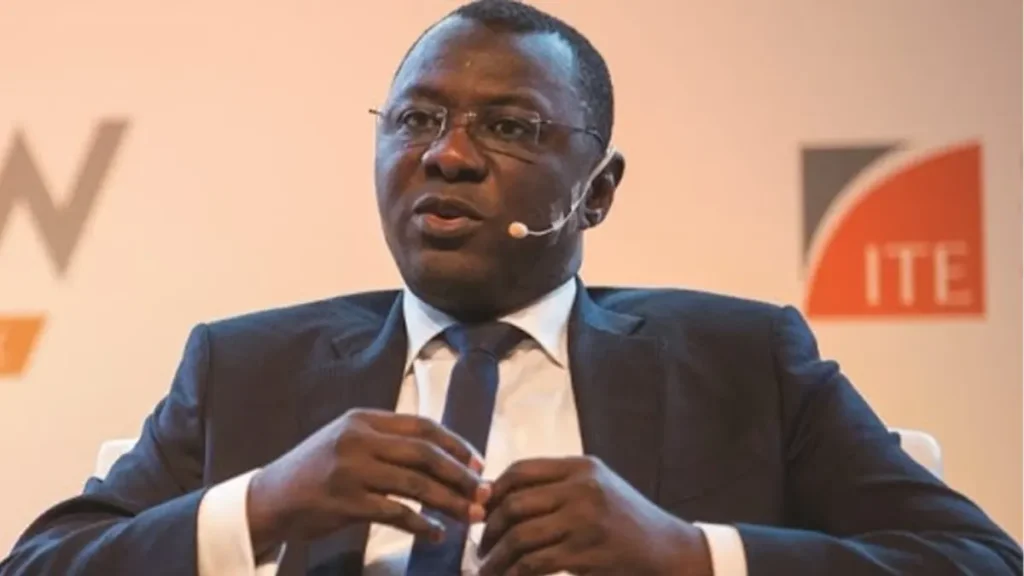
Former Finance Minister and Ranking Member on Parliament’s Finance Committee, Dr Mohammed Amin Adam, has sounded the alarm over Ghana’s economic future, petitioning the International Monetary Fund (IMF) to closely scrutinise the Bank of Ghana’s latest audited financial statements. In a detailed letter addressed to the IMF Ghana Mission Chief under the Extended Credit Facility (ECF) programme in Washington, D.C., Dr Amin Adam expressed deep concern over what he termed the “material implications” of the central bank’s mounting financial challenges on Ghana’s macroeconomic stability and fiscal outlook. Dr Amin Adam began by commending the IMF for its support throughout Ghana’s ECF programme, which has helped steer the country through turbulent economic conditions. However, with Ghana preparing to exit the programme, he urged the Fund to ensure that the hard-won gains are not undermined by emerging risks. “Greater attention is needed to safeguard the durability of these gains,” he stressed. Central to his concerns is the Bank of Ghana’s worsening negative equity position. Dr Amin Adam cited figures from the 2025 audited financial statements showing the group’s negative equity ballooning from GH¢58.62 billion in 2024 to GH¢93.82 billion in 2025, while for the Bank itself, the figure grew from GH¢61.32 billion to GH¢96.28 billion over the same period. He warned that this sharp deterioration signals that “meaningful balance sheet repair has not yet commenced in substance.” The letter also highlighted the Bank’s escalating losses and rising monetary policy costs. Dr Amin Adam noted that the Bank recorded a loss of GH¢15.63 billion in 2025, up from GH¢9.49 billion in 2024, attributing the surge to high open market operation expenses and other financial pressures. He cautioned that such developments could spill over into government finances and jeopardise Ghana’s debt sustainability. Calling for action, Dr Amin Adam urged the IMF to ramp up post-programme surveillance and ensure full transparency in the central bank’s operations. He insisted that the durability of Ghana’s economic progress would depend on “transparent recognition of all public-sector obligations” and that fiscal consolidation must be accompanied by clear and open accounting. In his petition, Dr Amin Adam also called for clearer treatment of gold transactions, comprehensive recapitalisation plans for the Bank of Ghana, and robust safeguards against monetary financing. These measures, he argued, are essential to protect Ghana’s economic gains and ensure a stable path forward as the country navigates its post-ECF future. Source: Apexnewsgh.com
Upper East GJA Marks World Press Freedom Day with Focus on Ethical Court Reporting
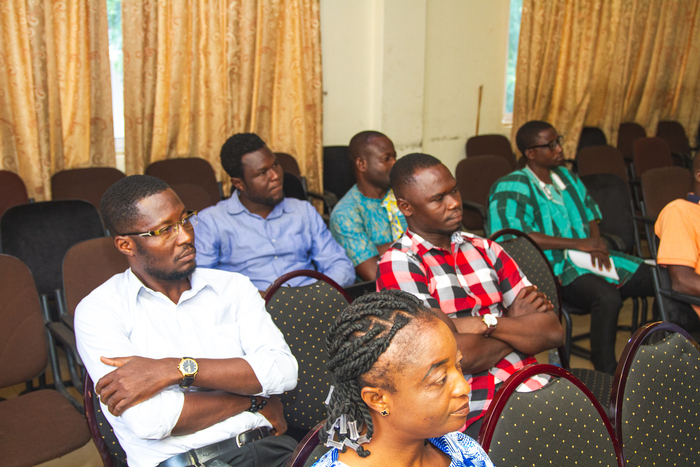
The Upper East Regional branch of the Ghana Journalists Association (GJA) commemorated the 2026 World Press Freedom Day with a renewed commitment to ethical court reporting. This year’s celebration, held in Bolgatanga, brought together journalists from across the region for a hands-on workshop aimed at deepening their understanding of the legal and ethical complexities of reporting on legal proceedings. In his address to the gathering, GJA Upper East Chairman, Albert Sore, celebrated Ghana’s remarkable progress in media freedom. “The World Press Index, released by Reporters Without Borders, shows that Ghana has climbed from 52nd to 39th out of 180 countries,” he announced. “Today, as we mark World Press Freedom Day, this is something remarkable that we should all be proud about. It is our hope that we will continue to see improvement in the years ahead.” The GJA Chairman emphasized that the decision to focus on court reporting was a conscious one, aimed at sharpening journalists’ skills and ensuring responsible coverage of sensitive legal matters. “If you misrepresent what transpires in court, you risk not only creating problems for yourself, but also infringing on someone’s human rights,” he cautioned. He urged participants to actively engage, ask questions, and share experiences, expressing his hope that the workshop would lead to a noticeable improvement in the quality of legal reportage in the region. The workshop featured presentations from key legal experts, including Lawyer Jaladeen Abdulai, Upper East Regional Director of the Commission on Human Rights and Administrative Justice (CHRAJ). Lawyer Abdulai highlighted the crucial role of journalists in safeguarding transparency and accountability within Ghana’s justice system. “Journalism plays a vital role in protecting transparency and accountability in the justice system. If we shut the door to journalism, everything will be in the dark,” he said. Lawyer Abdulai walked participants through the proper procedures for court reporting, stressing the importance of accuracy, fairness, and respect for privacy. He advised journalists to consult with court registrars and judges to ensure their reports are factually correct and to avoid misrepresenting proceedings. “Irresponsible reporting can result in serious human rights violations, unfair trials, stigma, and privacy invasion,” Lawyer Abdulai warned. He also urged journalists to be mindful of the legal definitions of suspects, accused persons, and convicts, pointing out that a failure to use legal terminology correctly could mislead the public. The session delved into the ethical standards that govern the profession, reminding reporters that their work has the power to shape public perception and trust in the judiciary. “Every profession has its ethical standards,” Lawyer Abdulai said. “So is it within your standards to do what you are doing? You have to ask yourself that question.” His Lordship, Justice Ernest Gemadzie, the Upper East Regional Supervising High Court Judge, also addressed journalists, focusing on the intersection of human rights and legal reporting. Justice Gemadzie underscored the role of the courts in protecting individual rights and resolving disputes, and he called on journalists to ensure their reports uphold the dignity and privacy of all parties involved. “No position is permitted to interfere with the privacy of individuals except as required by law,” he noted, urging journalists to understand the boundaries of what can and cannot be reported, especially in sensitive cases such as those involving juveniles or victims of sexual offences. Justice Gemadzie further explained the importance of the Right to Information Act in promoting accountability and transparency, but cautioned that not all information is fit for public consumption, especially when it concerns ongoing investigations, national security, or confidential sources. He encouraged journalists to always seek clarity from legal professionals when in doubt, to avoid overstepping ethical or legal boundaries. Throughout the interactive workshop, participants engaged in vibrant discussions, posing questions about the disclosure of identities in criminal cases, the limits of public interest reporting, and the practical steps required to access court information. The training closed with a sense of enthusiasm and renewed purpose among the journalists, many of whom expressed excitement about applying what they had learned. As Ghana continues to rise in global press freedom rankings, the Upper East GJA’s commitment to responsible court reporting stands as a testament to the profession’s ongoing evolution, balancing the right to inform the public with the responsibility to protect the rights and dignity of all citizens. Source: Apexnewsgh.com