



MobileMoney Fintech LTD, MTN Ghana to Lead Fintech Conversations at 3i Africa Summit 2026
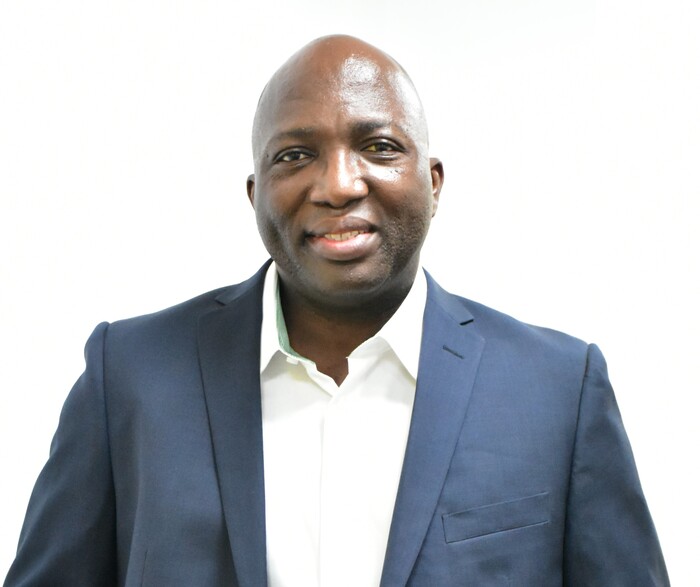
MobileMoney Fintech LTD (MMFL) and MTN Ghana will play leading roles at the 2026 edition of the 3i Africa Summit, one of the continent’s foremost gatherings of fintech innovators, policymakers, regulators, and institutional investors. The summit will be held from May 6 to May 8, 2026, at the Destiny Arena in Accra, Ghana, under the theme “The Next Frontier: Shaping Africa’s Integrated FinTech Future.” At the opening of the summit, MTN Group President & CEO Ralph Mupita will take part in a fireside chat on “The Future of Digital Finance in Emerging Markets,” as African economies accelerate investment in digital financial infrastructure. Senior Vice President, MTN Group—WECA, Ebenezer Twum Asante, will also contribute to discussions on how mobile money, embedded finance, and telecom-led ecosystems are expanding access to financial services across Africa and beyond. Shaibu Haruna, CEO of MobileMoney Fintech LTD, will deliver a keynote on “Strengthening Consumer Protection in High-Velocity Credit & Banking Markets,” examining the growing need for robust safeguards as digital credit and mobile banking services scale rapidly across Africa’s emerging markets. Adoma Owusu, General Manager, Fintech Business Development & Expansion, MTN Group Fintech, will join a panel on “Beyond Trading: Creating Real Utility in Africa,” exploring how virtual assets are being applied to address real-world challenges across payments, financing, and service delivery. Beyond the keynotes, Sylvia Otuo Acheampong, Chief Products & Services Officer of MMFL, and Angela Mensah-Poku, Chief Enterprise Business Officer of MTN Ghana, will add further executive leadership to the summit, moderating panel sessions across the three-day programme. Commenting on the summit, Shaibu Haruna, CEO, MobileMoney Fintech LTD, said the event reflects both the continent’s momentum and MMFL’s commitment to responsible, people-centred financial innovation. “Africa is no longer waiting for the world to define its financial future; we are actively building it. At MobileMoney Fintech LTD, we understand that speed and scale in digital finance must always be matched by responsibility. The 3i Africa Summit is exactly the kind of platform where those conversations must happen, and we are proud to be part of shaping that dialogue,” he said. Now in its third year, the 3i Africa Summit has established itself as a premier continental platform anchored in Innovation, Investment, and Impact. The 2026 edition signals Africa’s shift from observation to structured implementation—integrating virtual assets, tokenisation, artificial intelligence, open banking, and digital public infrastructure to build more resilient financial systems. MMFL and MTN Ghana’s participation underscores the companies’ commitment to responsible financial innovation and to ensuring that Africa’s rapid fintech growth translates into lasting, inclusive economic impact for consumers across the continent. Source: Apexnewsgh.com
Moses Anaba Newsroom Family Extends Support to Orphanage Home in Upper East Region

In a heartwarming display of generosity, broadcast journalist Moses Anaba Azubire and his team, “Moses Anaba Newsroom Family,” have reached out to support an orphanage home in the Bongo District of the Upper East Region. The group donated an assortment of essential food items, including bags of rice, cooking oil, canned foods, and other necessities, to help improve the daily lives of the children at the orphanage. During the presentation, Moses Anaba Azubire highlighted the significance of giving back, especially to vulnerable children in need of care and support. “We believe that every child deserves love, care, and the basic necessities of life. This is our small way of putting smiles on their faces and reminding them that they are not alone,” he said, underscoring the group’s commitment to uplifting underserved communities. The management of the orphanage expressed deep gratitude, describing the gesture as a timely intervention that will significantly ease their burdens. They called on stakeholders, including the government, NGOs, politicians, and traditional leaders, to recognize the needs of the orphanage and provide the necessary financial and academic support to help the children become future leaders. Members of the Moses Anaba Newsroom Family also took time to interact with the children, sharing moments of joy and encouragement. The initiative has drawn praise from the community, with many urging others to follow this example and support the less privileged in society. Source: Apexnewsgh.com
MTN GHANA BRIDGES ACADEMIA AND INDUSTRY WITH HANDS-ON TECH EXPERIENCE FOR 200+ STUDENTS
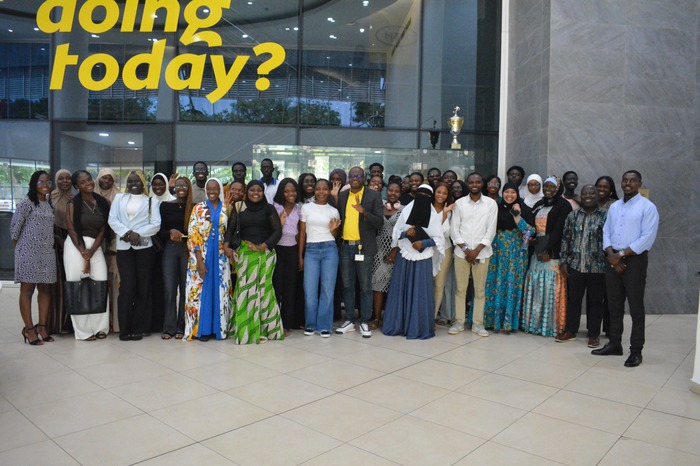
MTN Ghana has hosted more than 200 students from various educational institutions in Accra for an engaging, hands-on technology immersion at MTN House, bringing classroom theory to life and fuelling interest in STEM and digital innovation. Students from Ashesi University, Ghana International School, Cradle Star Academy, and Kinderland School explored MTN Ghana’s rich history, core values, customer-focused innovations, and digital transformation agenda. They were introduced to the company’s sustainability and social impact initiatives, spanning education, youth empowerment, and community development. A key highlight of the visits was a tour of MTN Ghana’s Network Operations Centre (NOC) and data centres. Students gained firsthand exposure to the advanced technology, systems, and expertise powering seamless connectivity for millions daily, offering a rare look into how MTN ensures network performance, security, and resilience. Speaking on the initiative, the Chief Corporate Services and Sustainability Officer at MTN Ghana, Adwoa Wiafe, noted, “Hosting students at MTN House reflects our commitment to shaping Ghana’s digital future. As we deliver our Ambition 2030 strategy, we are deepening investments in youth development through programmes like the Bright Scholarship, the MTN Digital Skills Academy, and collaborations on the One Million Coders Programme and the Girls in ICT initiative led by the Ministry of Communications, Digital Technology and Innovation.” Paschal Paaga, Manager for IT Projects Implementation, emphasised the importance of experiential learning. ‘’By opening our doors, we are helping to bridge the gap between academia and industry. We want young people to see the real-world impact of technology and be inspired to pursue careers in STEM.” For many participants, the experience was transformative. Maame Sapomaa, a Level 300 Information Systems student from Ashesi University, shared, “The visit was incredibly inspiring. Everything we have learned in the classroom came to life, and we were exposed to new concepts beyond our studies. It has motivated me even more to pursue a career in technology.” As MTN Ghana advances its Ambition 2030 vision, the company remains committed to driving digital inclusion, platform-led innovation, and building strategic partnerships that support Ghana’s long-term socio-economic development. Source: Apexnewsgh.com
Mamprugu Youth Association Raises Alarm: “State-Sponsored Ethnic Cleansing” Amidst Alleged Police Killings in Zuarungu
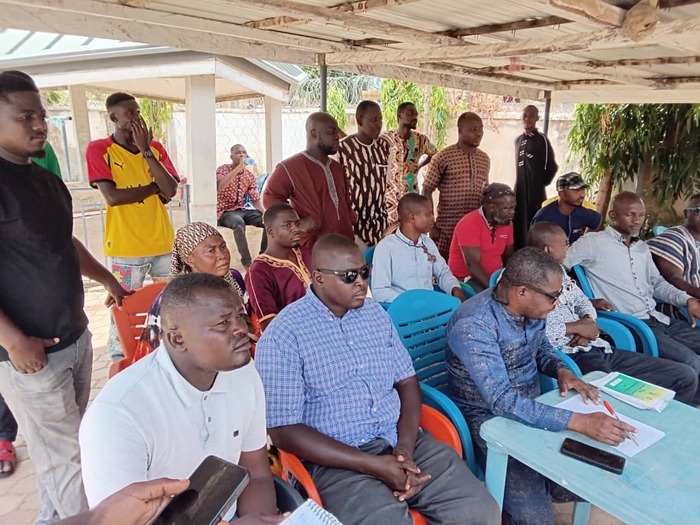
On a somber Wednesday, Dr. Abu Tia Jambedu stood before the press, bearing the weight of a troubled community. As the spokesperson for the Bolgatanga branch of the Mamprugu Youth Association (MAYA), he spoke not only for MAYA but as families gripped by grief and demanding justice. The air was heavy with tension as Dr. Jambedu recounted what MAYA has called a “national disgrace”, a dangerous slide towards what they fear could become state-sponsored ethnic cleansing in Bawku and the Upper East region. Dr. Jambedu recalled MAYA’s earlier press conference in Accra on March 13th, 2026, where the association condemned the extrajudicial killing of Abdul-Aziz Iddrisu (Baaluuse), a 33-year-old Bawku native. Abdul-Aziz died under suspicious circumstances while in the custody of the Ghana Police Service. Despite public assurances of his well-being, the family only learned through vague police statements that he had been killed during detention. MAYA warned then that this was not an isolated tragedy, but the beginning of a disturbing pattern in which state institutions were allegedly being weaponized against the Mamprusi community. The latest incident, Dr. Jambedu explained, unfolded in Zuarungu on the night of April 30th, 2026. Police officers, led by Zuarungu District Commander Mr. Charles Simpa and Regional Commander Mr. John Ferguson Dzineku, stormed a residence and arrested ten individuals. According to family members and eyewitnesses, all ten detainees were seen alive and uninjured when visited at the Zuarungu Police Station that night and the following morning. Four detainees were released on bail; the rest remained in custody. To MAYA, the implications are grave. The association insists that these deaths cannot be dismissed as accidents or justified by unproven robbery allegations, particularly given the suspicious timeline and lack of transparency. They warn that unless Ghanaians demand accountability, “the Ghana Police Service will continue to take lives and fabricate incoherent statements to justify what can only be described as extrajudicial killings.” MAYA further accused elements within the security services of exploiting the Bawku conflict for personal and operational gain, warning that such actions only deepen divisions and erode trust in law enforcement. With conviction, the Mamprugu Youth Association called on President John Dramani Mahama to establish an independent commission of enquiry, promising to provide evidence and expose all those responsible. They demanded full transparency from the Ghana Police Service, accountability for every officer involved, and made it clear that legal action would follow against anyone found culpable. Meanwhile, the Ghana Police Service released its own statement regarding the incident. According to the police, a special intelligence team had dismantled a notorious robbery gang responsible for a spate of violent attacks in the Upper East region, following an operation on April 29th, 2026. The police report stated that suspects Awudu Kasim, Malik Baako, Mohammed Amidu, and Wadud Abdul were arrested at their Zuarungu hideout. During the search, police claimed to have retrieved a G3 rifle loaded with 30 rounds of ammunition, hidden in a motorbike storage compartment allegedly robbed by suspect Samsudeen Mohammed and an accomplice known as “DJ,” who remains at large. Seven other motorbikes believed to be stolen were also seized. The statement further alleged that during interrogation, the suspects confessed to a series of robbery attacks, including a February 4th ambush along the Zuarungu–Kongo road that left a bus driver wounded, a separate attack on a cargo truck driver, and a robbery at the Kejetia mining site in Gbane on March 28th, where gold and cash were stolen. According to the police, Samsudeen Mohammed and Seidu Safianu, now deceased, sustained gunshot injuries during the operation. Their bodies have been transported to the Police Hospital morgue for autopsy and preservation. Four other suspects remain in custody, assisting with investigations, while efforts continue to apprehend other accomplices. The Ghana Police Service assured the public that all outstanding suspects would be arrested and subjected to due legal process. Among those detained, Samsudeen Mohammed and Seidu Safianu were separated for interrogation. Later, the shocking news broke: both men had died, allegedly from gunshot wounds sustained during a supposed police operation to dismantle a robbery gang. Meanwhile, despite all that was captured in the police statement, MAYA and the affected families strongly dispute the police account. They point to inconsistencies in official statements, including erroneous dates, shifting details, and after-the-fact justifications, as evidence of a cover-up. The police claimed the operation was intelligence-led, but families insist the so-called “stolen” motorbikes actually belonged to the suspects and could be properly documented. The association posed urgent questions: When and how did the detainees sustain fatal injuries after being seen alive and healthy in police custody? Why were the injured not taken immediately for medical care? Which version of the police’s ever-changing story should the public believe? Who authorized or supervised the fatal actions? For MAYA and the Mamprugu community, the fight for justice is just beginning, and they have vowed not to remain silent. Meanwhile, during the press conference held by the Mamprugu Youth Association, one of the four students who had been arrested alongside the two now-deceased suspects, who was identified as Tahiru Mrutala, bravely shared his experience, shedding new light on the events of that fateful night. “In my room, what woke me up was the gunshots. They twice and I opened the window to see police officers outside, shouting for us to lie down and demanding the key to the room. They took the key from the one they accused of stealing the motorbike, and immediately, the beatings began,” the student recounted, his voice trembling with the memory. As chaos unfolded, one of the detainees, Safianu, tried to reason with the police commander. “Safianu pleaded, ‘Commander, don’t you know me?’ But the commander coldly replied, ‘Even if I know you today, I don’t know you again.’ Safianu then begged them to stop beating us and just take us to the station if they needed further investigation. They agreed, but the beatings did not stop,” the student recalled. He emphasized that, despite the violence, no one appeared injured
Bank of Ghana Defends Financial Health Amid Scrutiny Over 2025 Losses

The Bank of Ghana (BoG) has moved to reassure the public and policymakers about its financial strength following heightened scrutiny of its 2025 accounts, which revealed a significant GH¢15.6 billion loss. Addressing concerns on Channel One TV’s “Face to Face” on Tuesday, May 5, BoG’s Head of Communications, Bernard Otabil, maintained that the central bank remains fully capable of fulfilling its mandate despite the reported losses. Otabil explained that the institution’s financial position should be understood within the unique context of central banking, where policy effectiveness is prioritized over profitability. “We are policy solvent,” he stated. “If in doubt, you always have to look at the cash flow position. The accounts presented came with other supporting documents, all laid out transparently. There’s nothing to suggest the Central Bank cannot continue its business as usual, nor will any significant part of its operations be curtailed in the foreseeable future.” He pointed to the BoG’s “policy solvency” figure, approximately 5.5 billion, as evidence of the bank’s resilience. According to Otabil, policy solvency demonstrates the Bank’s capacity to fund and sustain its monetary policy operations, including managing liquidity and maintaining price stability across the economy. The BoG’s 2025 financial results have sparked public and political debate, with critics raising concerns about the scale of the central bank’s losses and its negative equity position. However, Otabil urged commentators to interpret these numbers in context, noting that central bank balance sheets often reflect the costs involved in stabilizing economies during turbulent times. He stressed that the central bank’s ability to operate effectively remains unaffected, dismissing suggestions that its financial standing could undermine its core mandate. “If you look at what has been put there, it gives you a strong sense that the Central Bank is still functioning as expected,” he assured. Source: Apexnewsgh.com
Alagumgube Founder Pleads with President Mahama to Rethink 24-Hour Economy
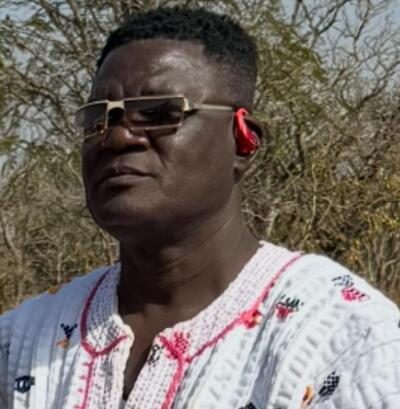
As Ghana prepares for a potential shift to a 24-hour economy, Alagumgube Founder is urging the president to pump the brakes, at least for the northern regions. Mr. Gabriel Agambila, Founder of Alagumgube, has made a passionate appeal to President John Mahama to reconsider specific aspects of the proposed 24-hour economy policy. Speaking from his observations after spending one year away from the diaspora and returning home, Agambila warns that what works in theory may clash sharply with local realities. According to Mr. Agambila, Bolgatanga, the capital of the Upper East Region, effectively shuts down soon after nightfall. “Only a few shops are open past 8 pm,” he noted. He pointed out that even the main market in the regional capital already experiences significant armed robbery during daylight hours. “The situation is alarming during the day,” Agambila said. “So you can imagine what would happen at night in a 24-hour market.” He raised concerns that such markets would likely be located on the outskirts of town, assuming district assemblies can even acquire suitable land for that purpose. Drawing on northern traditions, Agambila explained that in many households, once the main gate is closed at night, no one is permitted to leave. “Even young men, the head of the house has to enter through a ladder at the back of the house,” he described. Beyond tradition, he painted a grim picture of potential consequences: Women would be the primary patrons of night markets, making them vulnerable targets for robbery and rape. Marriages could break down, as husbands might take advantage of wives being away at night to bring in girlfriends or visit their own lovers. Rather than rushing into a full 24-hour economy, Agambila is asking President Mahama to redirect resources toward more immediate, practical upgrades: Powerful floodlights in existing markets Additional police stations and fire tenders Clinics within already established markets He believes these improvements should come first, and stay in place “until such a time that armed robbery is reduced in the region.” Source: Apexnewsgh.com