

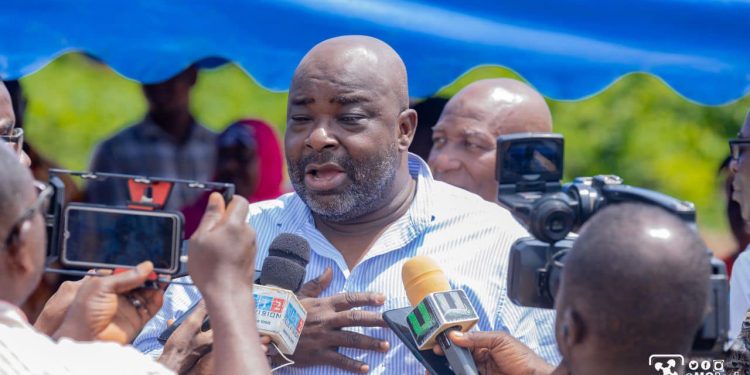

On a somber Wednesday, Dr. Abu Tia Jambedu stood before the press, bearing the weight of a troubled community. As the spokesperson for the Bolgatanga branch of the Mamprugu Youth Association (MAYA), he spoke not only for MAYA but as families gripped by grief and demanding justice.
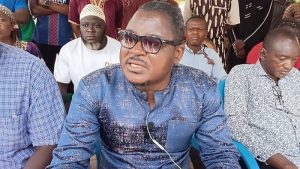
The air was heavy with tension as Dr. Jambedu recounted what MAYA has called a “national disgrace”, a dangerous slide towards what they fear could become state-sponsored ethnic cleansing in Bawku and the Upper East region.
Dr. Jambedu recalled MAYA’s earlier press conference in Accra on March 13th, 2026, where the association condemned the extrajudicial killing of Abdul-Aziz Iddrisu (Baaluuse), a 33-year-old Bawku native. Abdul-Aziz died under suspicious circumstances while in the custody of the Ghana Police Service. Despite public assurances of his well-being, the family only learned through vague police statements that he had been killed during detention. MAYA warned then that this was not an isolated tragedy, but the beginning of a disturbing pattern in which state institutions were allegedly being weaponized against the Mamprusi community.
The latest incident, Dr. Jambedu explained, unfolded in Zuarungu on the night of April 30th, 2026. Police officers, led by Zuarungu District Commander Mr. Charles Simpa and Regional Commander Mr. John Ferguson Dzineku, stormed a residence and arrested ten individuals. According to family members and eyewitnesses, all ten detainees were seen alive and uninjured when visited at the Zuarungu Police Station that night and the following morning. Four detainees were released on bail; the rest remained in custody.
To MAYA, the implications are grave. The association insists that these deaths cannot be dismissed as accidents or justified by unproven robbery allegations, particularly given the suspicious timeline and lack of transparency. They warn that unless Ghanaians demand accountability, “the Ghana Police Service will continue to take lives and fabricate incoherent statements to justify what can only be described as extrajudicial killings.”
MAYA further accused elements within the security services of exploiting the Bawku conflict for personal and operational gain, warning that such actions only deepen divisions and erode trust in law enforcement.
With conviction, the Mamprugu Youth Association called on President John Dramani Mahama to establish an independent commission of enquiry, promising to provide evidence and expose all those responsible. They demanded full transparency from the Ghana Police Service, accountability for every officer involved, and made it clear that legal action would follow against anyone found culpable.
Meanwhile, the Ghana Police Service released its own statement regarding the incident. According to the police, a special intelligence team had dismantled a notorious robbery gang responsible for a spate of violent attacks in the Upper East region, following an operation on April 29th, 2026.
The police report stated that suspects Awudu Kasim, Malik Baako, Mohammed Amidu, and Wadud Abdul were arrested at their Zuarungu hideout. During the search, police claimed to have retrieved a G3 rifle loaded with 30 rounds of ammunition, hidden in a motorbike storage compartment allegedly robbed by suspect Samsudeen Mohammed and an accomplice known as “DJ,” who remains at large. Seven other motorbikes believed to be stolen were also seized.
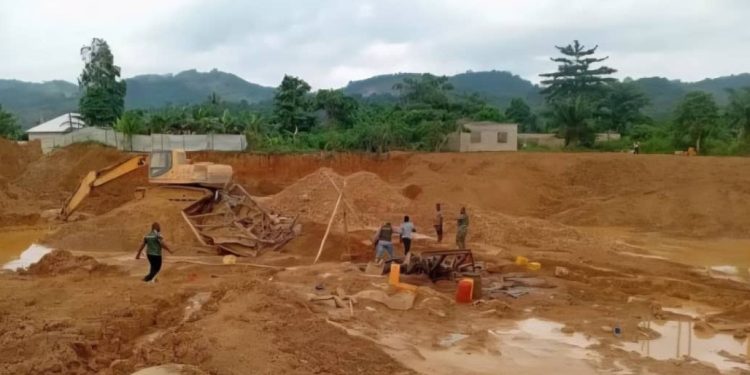
The statement further alleged that during interrogation, the suspects confessed to a series of robbery attacks, including a February 4th ambush along the Zuarungu–Kongo road that left a bus driver wounded, a separate attack on a cargo truck driver, and a robbery at the Kejetia mining site in Gbane on March 28th, where gold and cash were stolen.
According to the police, Samsudeen Mohammed and Seidu Safianu, now deceased, sustained gunshot injuries during the operation. Their bodies have been transported to the Police Hospital morgue for autopsy and preservation. Four other suspects remain in custody, assisting with investigations, while efforts continue to apprehend other accomplices.
The Ghana Police Service assured the public that all outstanding suspects would be arrested and subjected to due legal process.
Among those detained, Samsudeen Mohammed and Seidu Safianu were separated for interrogation. Later, the shocking news broke: both men had died, allegedly from gunshot wounds sustained during a supposed police operation to dismantle a robbery gang.
Meanwhile, despite all that was captured in the police statement, MAYA and the affected families strongly dispute the police account. They point to inconsistencies in official statements, including erroneous dates, shifting details, and after-the-fact justifications, as evidence of a cover-up. The police claimed the operation was intelligence-led, but families insist the so-called “stolen” motorbikes actually belonged to the suspects and could be properly documented.
The association posed urgent questions:
When and how did the detainees sustain fatal injuries after being seen alive and healthy in police custody?
Why were the injured not taken immediately for medical care?
Which version of the police’s ever-changing story should the public believe?
Who authorized or supervised the fatal actions?
For MAYA and the Mamprugu community, the fight for justice is just beginning, and they have vowed not to remain silent.
Meanwhile, during the press conference held by the Mamprugu Youth Association, one of the four students who had been arrested alongside the two now-deceased suspects, who was identified as Tahiru Mrutala, bravely shared his experience, shedding new light on the events of that fateful night.
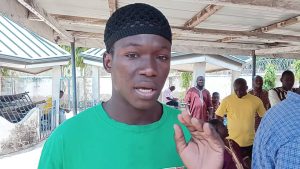
“In my room, what woke me up was the gunshots. They twice and I opened the window to see police officers outside, shouting for us to lie down and demanding the key to the room. They took the key from the one they accused of stealing the motorbike, and immediately, the beatings began,” the student recounted, his voice trembling with the memory.
As chaos unfolded, one of the detainees, Safianu, tried to reason with the police commander.
“Safianu pleaded, ‘Commander, don’t you know me?’ But the commander coldly replied, ‘Even if I know you today, I don’t know you again.’ Safianu then begged them to stop beating us and just take us to the station if they needed further investigation. They agreed, but the beatings did not stop,” the student recalled.
He emphasized that, despite the violence, no one appeared injured during the arrest.
“They shot the gun two times that night, both times by the police. We were all taken to the station, together with the motorbikes they had seized, and placed in the cells.”
“As they tried to lock us up, Safianu again intervened. He pleaded with one of the policemen to have mercy on us students, saying we were too young to endure such a situation. Thankfully, the officer went to the station commander and convinced him to keep us out of the cell for a while. Around 3 a.m., they brought us out, but after the policeman left, we were put back in the cell.”
The student described how, early the next morning, the commander, now in full police uniform, came to the cells.
“He greeted us, even greeted Safianu and asked if he was also part of the group. Safianu replied that he was. The commander laughed and told him, ‘It shall be well.’ At that time, nobody was injured, even the one accused of stealing the motorbike was fine. But we didn’t know they were planning something more sinister.”
According to the student, masked officers, led by the commander, came into the cells and took Safianu away.
“They made him put on his clothes and led him out, leaving us behind. They told us there would be further investigation before we could be released. After that, we didn’t see Safianu again.”
Hours passed. Eventually, the four students were let out of their cells at around 4 p.m.
“The next day, we saw on social media that Safianu had been shot dead during an ‘exchange’ as the police arrested an armed robbery gang. But we know that’s not what happened. Safianu was alive with us in the cell, begging for our release, and even the commander had spoken kindly to him before he was removed.”
With his testimony, the student challenged the official account, insisting that Safianu was not shot in any exchange but was instead alive and pleading for mercy while in police custody.
Source: Apexnewsgh.com