
Gender Minister Details Government’s Efforts to Tackle Child Hawking and Streetism
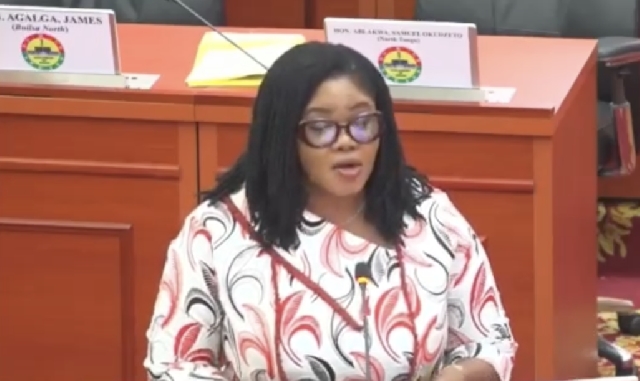
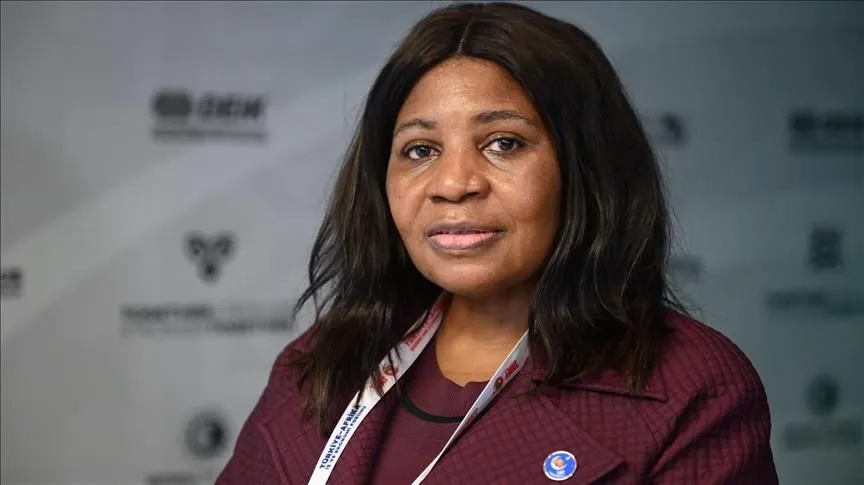
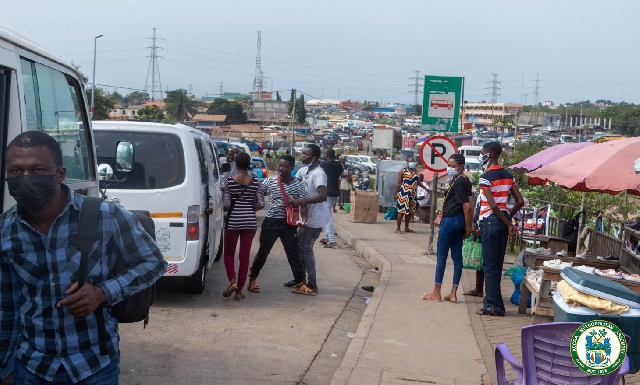
The Minister for Gender, Children and Social Protection, Dr. Agnes Naa Momo Lartey, has outlined a series of government interventions aimed at addressing the rising issue of child hawking and the growing number of children living on the streets. Speaking in Parliament, Dr. Lartey, who also serves as the Member of Parliament for Krowor, expressed deep concern about the plight of vulnerable children and reaffirmed the government’s commitment to their protection. “As the lead coordinating institution for the welfare of children in Ghana, my Ministry is very concerned about this issue,” she told the House. Dr. Lartey reminded Parliament that Section 16(1) of the Children’s Act, 1998, places responsibility on Metropolitan, Municipal, and District Assemblies (MMDAs) to take all necessary steps to remove children from street situations and ensure their welfare. She revealed that her ministry is working closely with MMDAs, the Department of Social Welfare, the Ghana Police Service, civil society organizations, and development partners to identify, rescue, rehabilitate, and reintegrate children found living and working on the streets. She also highlighted the government’s focus on tackling the root causes of child hawking and streetism by strengthening poverty alleviation programmes. Key among these are the Livelihood Empowerment Against Poverty (LEAP) initiative and the Ghana School Feeding Programme, both designed to reduce the economic vulnerabilities that often push children into street life and hazardous labour. In addition, Dr. Lartey announced plans to intensify public education and awareness campaigns on child exploitation. She emphasized that these efforts form part of a broader strategy to protect the rights and welfare of children nationwide. The Minister’s remarks underscore the government’s resolve to work with all stakeholders to ensure that every child in Ghana is given the opportunity for a safe and dignified childhood. Source: Apexnewsgh.com
Chairman Wontumi’s Lawyers Ask High Court to Postpone Judgment in Akonta Mining Case

Lawyers representing Bernard Antwi Boasiako, the Ashanti Regional Chairman of the New Patriotic Party (NPP), popularly known as Chairman Wontumi, have filed an application with the High Court seeking a postponement of the judgment in his ongoing criminal case involving Akonta Mining Company Limited. The request, submitted by newly appointed counsel Samuel Atta Akyea, asks the court to defer the scheduled July 3 verdict in order to allow the defence more time to obtain the certified record of proceedings and prepare written submissions. This development follows the recent withdrawal of Wontumi’s previous lawyer, Andy Appiah-Kubi, who stepped down shortly after the defence concluded its case. While the court rejected an application for leave to withdraw, it clarified that, in criminal cases, a lawyer does not require the court’s permission to cease representing a client, making the matter one for the client and lawyer to resolve. In his supporting affidavit, Atta Akyea explained that he was only appointed on June 19, after the prior counsel’s withdrawal. Since then, he has requested certified copies of proceedings and relevant documents from the court registry, but has yet to receive them. Without access to the complete record, Atta Akyea argues, he cannot adequately review the case or effectively represent his clients. He further emphasized that, given the gravity of the criminal charges and their potential consequences, Wontumi and Akonta Mining Company Limited are entitled to effective legal representation at every stage of the trial. Granting the adjournment, Atta Akyea contends, would not prejudice the prosecution, but would uphold the accused’s constitutional right to a fair trial and bolster public confidence in the justice system. The High Court had originally set July 3, 2026, for judgment following the close of the defence’s case. Chairman Wontumi and his co-accused face allegations related to illegal mining activities, charges they have consistently denied. Atta Akyea insists that the application is not meant to delay justice, but rather to ensure proper legal preparation before a final judgment is delivered. The court is expected to rule on the adjournment request in the coming days. Source: Apexnewsgh.com
Health Minister Launches Ambitious Drive to Train 1,000 Specialised Nurses Annually
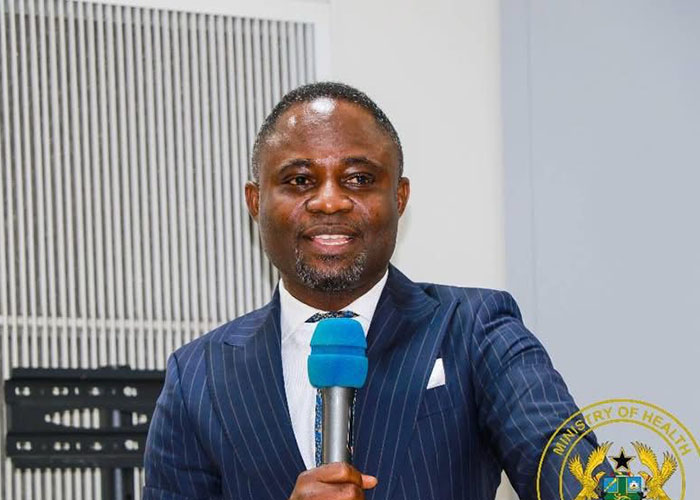
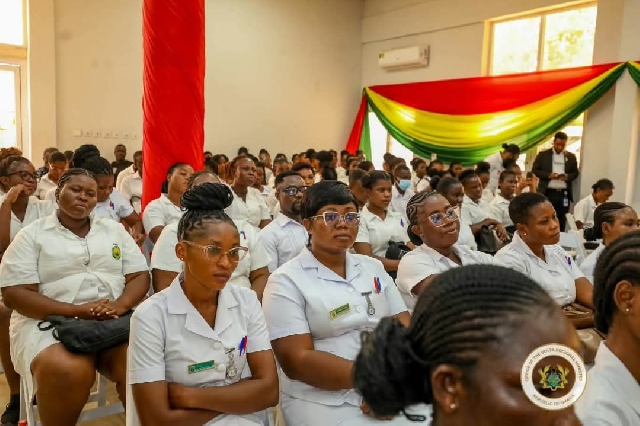
Ghana’s Health Minister, Kwabena Mintah Akandoh, has unveiled a bold new initiative to train at least 1,000 specialised nursing students each year, aiming to close persistent gaps in the nation’s healthcare workforce. Addressing attendees at the joint matriculation ceremony for the Specialised Nursing Programme on Thursday, June 25, the Minister emphasised the urgent need to build advanced skills among nurses and broaden professional opportunities in the health sector. He explained that, while Ghana boasts over 100,000 trained health professionals, there are significant shortages in specialised fields, shortcomings that become especially pronounced when negotiating international health agreements. “These deficiencies in specialised skills are often highlighted by our international partners, who require expertise that we currently lack in sufficient numbers,” Akandoh observed. “I inherited a sector with a large workforce, but the specialised competencies were simply missing.” The Specialised Nursing Programme, which will soon expand to training institutions nationwide, is part of the government’s broader strategy to address these critical gaps. Despite initial scepticism and criticism, the initiative has gained momentum and support, paving the way for further growth. “We are determined to train no fewer than 1,000 students every year,” the Minister declared. “This is just the beginning, and the programme will be replicated in other institutions across the country.” Akandoh urged health sector leaders to focus on practical solutions and to prioritise expanding training opportunities to meet both domestic healthcare needs and international standards. The government’s commitment signals a new chapter for Ghana’s nursing profession, with the potential to strengthen the health system and enhance the country’s reputation on the global stage. Source: Apexnewsgh.com
Education Ministry Urges Vigilance as Drug Networks Infiltrate Ghanaian Schools

The Ministry of Education has issued a strong call to action for teachers and school authorities nationwide to intensify monitoring of students in response to alarming signs that drug networks are making inroads into Ghana’s basic and secondary schools. The warning comes on the heels of intelligence gathered by the Narcotics Control Commission (NACOC), which revealed that drug-related activities are increasingly shifting from the streets into educational environments. Recent enforcement operations have uncovered a rise in the use of opioids and tramadol among young people, sparking concern among educators and policymakers. Speaking to the media on June 25, Deputy Minister for Education, Dr. Clement Apaak, described the trend as part of a broader drug abuse crisis confronting both Ghana and the world. He emphasized the urgent need for intervention and outlined ongoing collaboration between the Ministry, the Ghana Education Service (GES), and the Ghana Technical and Vocational Education and Training (TVET) Service to strengthen surveillance, prevention, and support systems in schools. “Teachers are at the frontline of this fight, they are the first to notice changes in students’ behaviour and can help prevent drug-related activities from gaining ground in our schools,” Dr. Apaak explained. He called on teachers and school administrators to be proactive in searching students’ bags and personal belongings as part of efforts to maintain discipline and ensure campus safety. “We have empowered school managers to conduct thorough checks of luggage, trunks, and chop boxes brought into dormitories,” he added, noting that these measures are a continuation of government efforts to restore discipline in the education sector. Dr. Apaak stressed that tackling the rising threat of drug abuse and trafficking in schools will require coordinated action from teachers, parents, school leaders, and security agencies alike. The Ministry’s latest appeal highlights the urgent need for vigilance to protect students and maintain safe learning environments across the country. Source: Apexnewsgh.com
When Lawyers Become Liars: The Betrayal of Justice in Africa

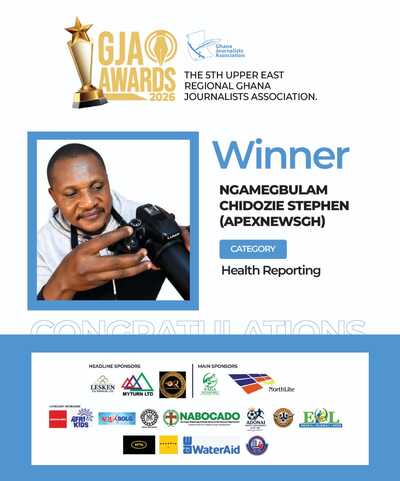
Article Written by Ngamegbulam Chidozie Stephen (Journalist) There is a sacred covenant between a nation and its people: that when they stand before the bar of justice, they will be heard fairly, judged impartially, and protected by those sworn to uphold the law. In Nigeria and across much of the African continent, that covenant has been broken. The guardians of justice have become its executioners. When lawyers become liars, and judges become pawns of power, the common man is left with nowhere to turn. The legal profession in Nigeria was once regarded with reverence, a calling for those who would defend the helpless and speak truth to power. Today, that temple has become a marketplace where justice is negotiated, not delivered. As former Presidents Olusegun Obasanjo and Goodluck Jonathan, alongside the Sultan of Sokoto, recently warned, justice in Nigeria is “too often negotiated, not delivered”. This is not rhetorical flourish; it is an indictment of a system that has drifted from adjudication to auction. What we are witnessing has been aptly described as “judicial rascality”, a culture of lawlessness within the law. Midnight ex parte orders overturn broad daylight realities. Contradictory injunctions issue from courts of coordinate jurisdiction. Bail is dispensed as a favor, not a right. The judge becomes a partisan tactician; the courtroom behaves like a campaign secretariat; the docket bends for the powerful and breaks the poor. When citizens learn that knowing the judge is more valuable than knowing the law, the social contract begins to tear. A widow can wait years to be heard on a small land case, while a developer’s injunction materializes overnight. One buys results; the other buys despair. The erosion of Nigeria’s justice system is driven not only by corrupt judges but by legal practitioners who have abandoned their roles as ministers in the temple of justice for unethical commercialism. Lawyers have become the architects and facilitators of this decay, presenting tainted materials, suppressing facts, and misrepresenting court orders to deceive the bench. Human rights lawyer Victor Giwa’s ordeal offers a chilling illustration. Giwa is being prosecuted for alleged forgery, a case built on claims that the supposed victim, Senior Advocate Awa Kalu, has explicitly denied. Despite Kalu’s formal letter to the Inspector General of Police stating that his letterhead was never forged and that he never lodged any complaint, the police pressed charges anyway. The complainant, a connected individual, allegedly funds the trial and communicates with the court concerning proceedings. Giwa’s motion for the judge to recuse himself was dismissed. A civil society organization has petitioned the Chief Justice of Nigeria to probe what it describes as the “persecution” of this human rights lawyer by judicial officers. Political interference in the judiciary did not creep in quietly, it marched in through appointments weaponized by loyalty tests, through strategic postings, and through the quiet shepherding of “sensitive” cases to particular hands. Underfunding and insecure welfare make virtue lonely. Complex procedures reward obstruction. The consequences are devastating. Human rights lawyer Deji Adeyanju has blamed Nigeria’s “systemic culture of impunity” and executive interference for stalled accountability following the #EndSARS protests. Court judgments awarding damages to victims were simply ignored by the government. As Kunle Edun (SAN) observed: “Disrespect for judgments is an invitation to anarchy, not even a million soldiers can stop it”. The Citizens’ Liberties Committee of the Nigerian Bar Association has decried the persistent disobedience of court orders by government institutions and powerful individuals. Supreme Court judgments affirming local government autonomy remain unenforced. Court orders declaring suspensions illegal are flouted. When the government itself refuses to obey the law, what message does this send to the common citizen? Perhaps most damning is the silence of the Nigerian Bar Association itself, the body created to defend the rule of law and protect the legal order. The family of Nnamdi Kanu has condemned the NBA for remaining silent over what it describes as the unlawful trial of the detained IPOB leader, a trial based on a repealed, non-existent law. “This is not neutrality,” the family declared. “It is aiding injustice by doing nothing”. Former NBA presidential aspirant Ubani has similarly criticized the association’s failure to intervene in the widespread injustices and inefficiencies lawyers face in Nigeria’s judiciary. “The Bar’s silence in the face of these indignities is not only disappointing but deeply troubling,” Ubani stated. “A legal profession that cannot defend its own is doomed to irrelevance”. The fate of those who dare to speak truth to power is instructive. Professor Chidi Anselm Odinkalu, a senior lawyer and former Chairperson of the National Human Rights Commission, has faced professional reprisals for publicly raising concerns about judicial conduct and executive interference in Nigeria. After publishing an article examining improper relationships between senior judicial officers and the executive branch, a senior government minister reportedly petitioned the Body of Benchers to “invite and discipline” him. The Special Rapporteur on the independence of judges and lawyers has expressed serious concern over these developments. Lawyers who defend their clients’ rights are arrested and detained. Aloy Ejimakor, counsel to Nnamdi Kanu, was arrested during a peaceful protest and remanded in Kuje prison. Omoyele Sowore has been arrested multiple times for exercising his constitutional rights. In September 2025, lawyer Chinedu Agu was remanded in prison on criminal defamation charges over opinion articles criticizing the Imo State governor. Across Africa, the story is the same. In Eswatini, lawyers face daunting obstacles in operating independently amid serious and ongoing threats to their lives, intimidation, harassment, and surveillance. Prominent human rights lawyer Thulani Maseko was extrajudicially killed in his home in front of his wife and children in January 2023, and the authorities have failed to bring anyone to justice. Lawyers in Eswatini fear being followed, harassed, threatened, and even killed. Women lawyers are threatened with sexual violence. Lawyers face adverse economic consequences for taking on cases perceived as “political”. In Uganda, human rights lawyer Eron Kiiza was sentenced by a military court, without access to a civilian trial, for “contempt of court”.