



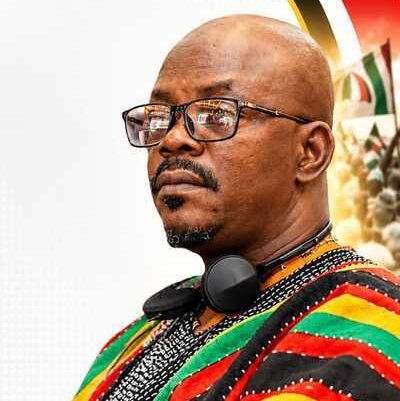

The question of whether the Office of the Special Prosecutor (OSP) has the legal authority to prosecute cases has stirred considerable debate in Ghana’s legal and political circles. Now, one of the country’s prominent legal practitioners has entered the conversation, and his position is clear: the OSP’s prosecutorial powers are not only valid, but they are firmly rooted in Ghana’s Constitution and statutory law.
Ace Kojo Anan Ankomah, in a detailed commentary, anchored his argument in the text of Ghana’s Constitution itself. He pointed out that the Constitution permits criminal prosecutions to be conducted “at the suit of the Attorney-General”, a phrase he argued carries a broader meaning than it might first appear.
To Mr. Ankomah, acting “at the suit of the Attorney-General” does not simply mean the Attorney-General must personally initiate every case. It also encompasses institutions and individuals acting on the Attorney-General’s behalf, a distinction that, in his view, is critical to understanding the OSP’s mandate.
While the Attorney-General retains ultimate prosecutorial authority under the Constitution, Mr. Ankomah noted that Parliament has passed laws enabling that authority to be delegated, provided the delegation is carried out in accordance with the law.
He argued that this condition has been fully satisfied. The OSP Act, together with supporting legislative instruments including LI 2374, explicitly empowers the OSP to determine whether to prosecute cases following its investigations. In his assessment, these instruments provide all the legal scaffolding the OSP needs to act independently within its defined mandate.
Mr. Ankomah also drew attention to the process through which the OSP was established, arguing that it adds further constitutional weight to the office’s authority. The Special Prosecutor is nominated by the Attorney-General, appointed by the President, and approved by Parliament — a three-stage process that, he contended, embeds multiple layers of legal and constitutional legitimacy into the institution from the outset.
Given this framework, Mr. Ankomah argued that requiring additional prosecutorial authorisation for the OSP to act would be both unnecessary and redundant. The authority, he maintained, is already well established under existing statutes and regulations.
Despite his confidence in the legal foundation of the OSP’s powers, Mr. Ankomah acknowledged that the debate is unlikely to be resolved through commentary alone. He suggested that the matter will, in all probability, find its way to the Supreme Court of Ghana and that it may ultimately be the judiciary that delivers a definitive ruling on the question.
Beyond the immediate legal debate, Mr. Ankomah used the opportunity to advocate for a more fundamental structural reform. He proposed a constitutional amendment that would remove prosecutorial powers entirely from the Executive branch and vest them in an independent body, one that would combine the functions of the Director of Public Prosecutions and the OSP.
In his view, such a reform would not only resolve the current ambiguity but would also insulate Ghana’s prosecution machinery from political influence, strengthening the rule of law in the long run.
For now, however, the debate continues, and with the Supreme Court potentially waiting in the wings, the final chapter of this legal saga is yet to be written.
Source: Apexnewsgh.com