


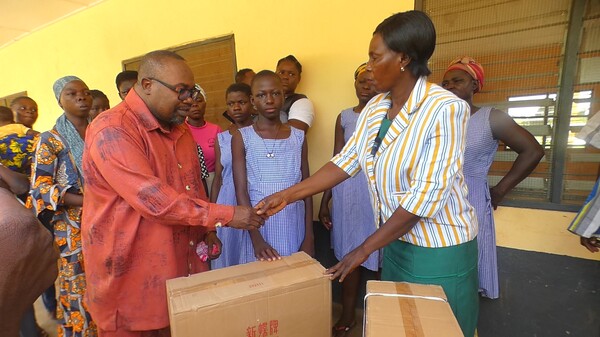







Beneficiaries of the Youth in Agriculture and Employability Programme (YAEP) have received intensive training in agribusiness management strategies aimed at strengthening their knowledge and participation across the agricultural value chain.
The training, held in Bolgatanga in the Upper East Region, forms part of efforts to equip young people with practical skills and entrepreneurial competencies needed to succeed in modern agriculture and agribusiness.
The participants were taken through various opportunities available to value chain actors and value chain enablers within the agribusiness sector. The sessions focused on helping young people identify profitable opportunities in production, processing, aggregation, marketing, and service provision within the agricultural ecosystem. The programme seeks to transform youth from job seekers into job creators by positioning them to take advantage of emerging opportunities in agriculture.
Facilitating the training, the Executive Director of GrowAfrica For Me (GAFM), Mr. Albert Shiebila Mali, urged participants to take advantage of interventions and support systems being provided by the Ministry of Food and Agriculture (MoFA) and other agriculture-focused institutions. According to him, numerous government and development partner programmes exist to support young agripreneurs, but many young people fail to access these opportunities due to lack of information and preparedness.
Mr. Mali advised participants interested in primary agricultural production to conduct thorough market assessments before investing in any commodity. He emphasized that successful agribusiness begins with understanding market demand, warning that production without a ready market often results in post-harvest losses and low returns on investment. He encouraged the youth to adopt a market-oriented approach that prioritizes consumer needs and profitability.
For participants interested in agribusiness trading and agro-processing, Mr. Mali stressed the importance of creating convenience and value for customers. He explained that consumers are often willing to pay more for products that save them time, improve quality, or provide easier access. He therefore encouraged aspiring entrepreneurs to focus on innovation, quality packaging, and customer satisfaction as key drivers of business success.
Addressing participants interested in aggregation, Mr. Mali highlighted the importance of quality control in agricultural commodities. He recommended that aggregators build strong relationships with smallholder farmers and invest in their capacity development. According to him, training farmers on good agronomic practices will help ensure consistency, quality, and reliability in the supply of agricultural products, thereby improving competitiveness and profitability.
The training also emphasized the importance of organizing smallholder farmers into groups, cooperatives, and associations, particularly women-led groups. Participants were encouraged to facilitate the formation of Village Savings and Loans Associations (VSLAs) to improve access to financial services and strengthen the economic resilience of farming communities. Such structures, facilitators noted, can serve as effective platforms for knowledge sharing, collective marketing, and access to credit.
The Youth in Agriculture and Employability Programme is a transformative initiative developed by GrowAfrica For Me to empower young people between the ages of 18 and 35 in Bolgatanga and surrounding communities. Through a one-month intensive training programme, participants receive practical exposure to modern agricultural practices as well as essential business development skills that prepare them for sustainable careers in agribusiness.
The programme was designed in response to growing concerns about youth unemployment in Ghana. Statistics indicate that more than 1.9 million young people are classified as Not in Education, Employment or Training (NEET), highlighting the urgent need for interventions that can create sustainable livelihoods. While agriculture remains a key pillar of Ghana’s economy, many young people have traditionally viewed the sector as unattractive due to limited opportunities, inadequate support systems, and negative perceptions.
Organizers noted that barriers such as limited access to practical skills, lack of entrepreneurial knowledge, poor market access, insufficient financing, and inadequate mentorship have prevented many young people from pursuing careers in agriculture. These challenges have contributed to rising unemployment, increased rural-urban migration, and underutilization of the country’s agricultural potential. YAEP seeks to reverse this trend by positioning agriculture as a viable and profitable career pathway.
The programme’s training component covers a broad range of agribusiness topics designed to provide participants with a strong foundation for success. Areas covered include Foundations of Agribusiness, Agribusiness Model Canvas, Marketing Management, Production and Operations Management, Financial Management, Human Resource Management, and Risk Management in Agribusiness. These modules provide participants with practical tools to establish and manage successful enterprises.
Beyond classroom training, the programme incorporates coaching and mentorship, enterprise matching, and start-up support. Through these components, participants are connected to experienced industry professionals, potential business opportunities, and networks that can help them launch and sustain agribusiness ventures. The holistic design ensures that participants receive continuous support even after completing the training phase.
The overall objective of YAEP is to empower youth with practical agricultural and entrepreneurial skills that enhance employability and promote self-employment. Specific goals include building capacity in modern agricultural practices, developing entrepreneurial competencies, promoting agriculture as a profitable career option, and supporting participants to create sustainable agribusiness models capable of generating long-term income.
Participants are expected to benefit from enhanced technical knowledge, increased confidence, business development support, and access to mentorship and industry insights. Communities, on the other hand, stand to gain from increased youth participation in agriculture, improved food production and security, job creation, and stronger local economies driven by agribusiness activities. In the medium and long term, the programme aims to contribute to sustainable youth employment, growth of local agribusiness ecosystems, and reduction in rural-urban migration.
Source: Apexnewsgh/Prosper Adankai/Contributor