
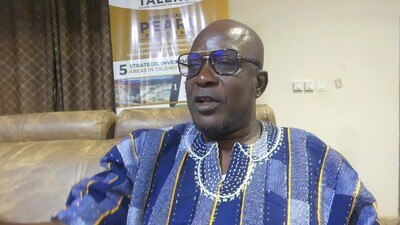


The Executive Director of the Forum for Natural Regeneration (FONAR), Mr. Sumaila S. Saaka, has called for increased national investment and coordinated action to tackle the growing threat posed by Striga, commonly known as witchweed, to cereal production in Northern Ghana.
According to Mr. Saaka, Striga should no longer be treated merely as a farmer’s private challenge but as a national food security threat requiring sustained government attention and investment.
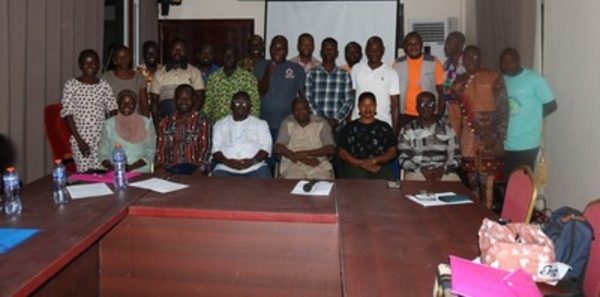
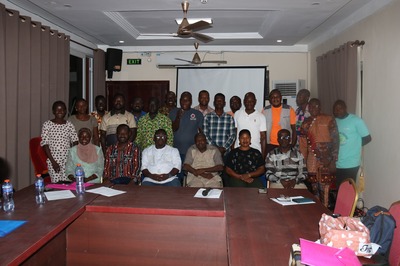
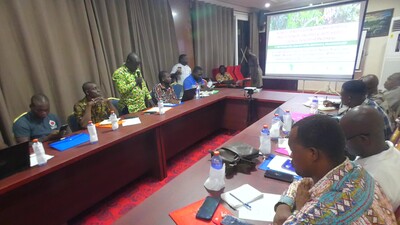
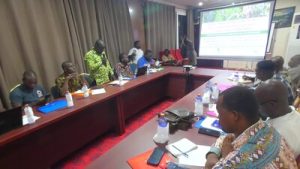
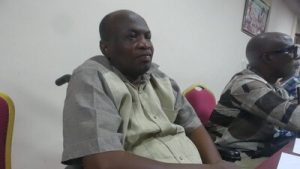
He made the call on Thursday, September 17, 2026, when he delivered the opening remarks at a sensitization forum for media practitioners on Striga control in Northern Ghana, held at the Blue Sky Hotel in Zuarungu in the Bolgatanga East District of the Upper East Region.
The forum was organised in collaboration with the Ministry of Food and Agriculture (MoFA) and the Ghana Journalists Association (GJA), Upper East Region Chapter.
Mr. Saaka explained that Striga poses a serious threat to staple cereal crops, particularly sorghum, millet and maize, because the parasite attaches itself to the roots of crops and draws away essential water and nutrients before becoming visible above the soil.
He noted that by the time the characteristic purple flowers of Striga become visible, significant damage may already have been done to the affected crops.
“For a farmer in the Upper East Region watching sorghum, millet or maize wither in a field that received good rains, Striga is a very familiar and very painful reality,” he said.
The FONAR Executive Director stressed that the organisation views Striga not only as an agricultural pest but also as an indication of deeper challenges associated with declining soil fertility and land degradation.
He said declining soil fertility, loss of tree cover and depletion of organic matter from farmlands create conditions that allow Striga to thrive.
Mr. Saaka therefore advocated an integrated approach that combines direct Striga control measures with long-term land restoration.
He said FONAR’s work in promoting Farmer Managed Natural Regeneration (FMNR), climate-smart agroforestry and integrated soil fertility management was aimed at restoring the health and productivity of degraded agricultural lands.
“Where soil fertility declines, where tree cover is lost, where organic matter is stripped from the land season after season, Striga finds exactly the conditions it needs to thrive,” he stated.
Mr. Saaka also urged journalists to use their platforms to educate farmers and the wider public about Striga and the available control measures.
He said accurate and well-informed journalism could help reach farming communities with practical information while also holding institutions accountable for interventions aimed at addressing the problem.
“A single well-researched broadcast can reach many farming households that no extension officer ever will,” he said, adding that well-told stories could help replace myths and misinformation about Striga with practical knowledge.
He encouraged media practitioners to pay particular attention to the experiences of farmers affected by Striga, describing their lived experiences as an important measure of whether interventions are producing the desired results.
Mr. Saaka further called on the government to invest in community-level biocontrol and awareness programmes, alongside measures to restore degraded soils and strengthen pest-control interventions.
He argued that cereal production in Northern Ghana should receive sustained attention as part of the country’s broader food security strategy.
According to him, Striga infestation could result in substantial yield losses in affected areas, particularly in parts of the Upper East and Upper West Regions.
He warned that continued inaction could contribute to early food shortages and worsen the economic pressures confronting farming households.
“Government cannot treat Striga as a farmer’s private burden. It is a national food security threat, and it demands national investment,” Mr. Saaka said.
FONAR seeks stronger collaboration
Mr. Saaka said FONAR, MoFA and the media needed to strengthen collaboration in addressing the Striga challenge.
He explained that the forum was expected to help journalists understand what Striga is, why it persists, the relationship between the weed and soil health, and the range of available control measures.
He stressed that the agronomic recommendations promoted by MoFA’s extension officers and FONAR’s land restoration and natural regeneration approaches should be viewed as complementary rather than competing interventions.
The forum also provided an opportunity for journalists to hear directly from a farmer affected by Striga and to visit an affected farm as part of efforts to gain a practical understanding of the problem.
Mr. Saaka expressed the hope that the engagement would mark the beginning of a sustained working relationship between FONAR, MoFA and media organisations in promoting public awareness and action on Striga.
He also expressed appreciation to the Awaken Trees Association of Austria for funding the activity, as well as MoFA and the GJA Upper East Regional Chapter for their partnership in organising the forum.
Source: Apexnewsgh.com/Ngamegbulam Chidozie Stephen