
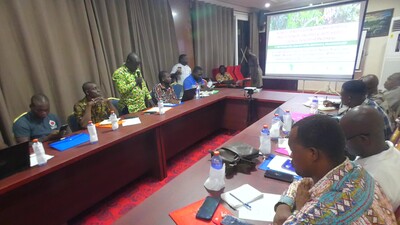
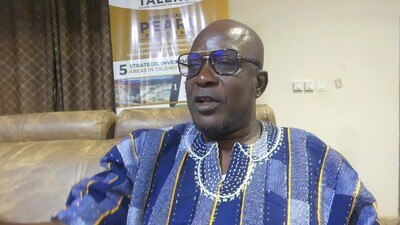



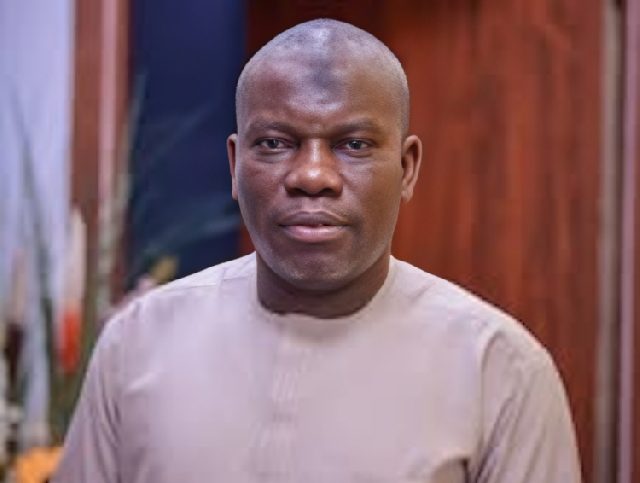
The Director of Livelihood and Agriculture Programme at the Navrongo-Bolgatanga Catholic Diocesan Development Organization (NABOCADO), Dominic Avea Aniah, has highlighted a range of sustainable agricultural practices being promoted among smallholder farmers to improve productivity, build resilience to climate change and reduce dependence on agrochemicals.
With conviction, Mr. Aniah described a new chapter unfolding for the region’s farmers. Gone were the days of relying solely on expensive chemical fertilizers and external inputs. Instead, NABOCADO was ushering in a wave of sustainable, climate-smart practices, methods designed not only to boost yields but also to build resilience against the ever-shifting climate.
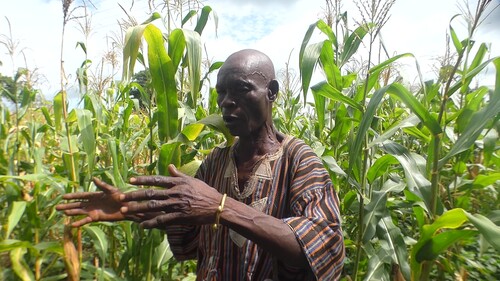
He spoke of compost, made from farm residues and livestock droppings, now replacing synthetic fertilizers. He explained how integrating cereals and legumes, especially nitrogen-fixing beans, replenished soil nutrients and nurtured healthier crops. Crop rotation, he emphasized, was more than tradition: it was a shield against pests and the notorious Striga weed, which once choked maize and other cereals. “When you rotate with soybean, Striga loses its grip,” Mr. Aniah explained, his voice confident.
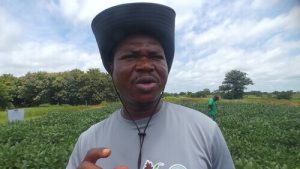
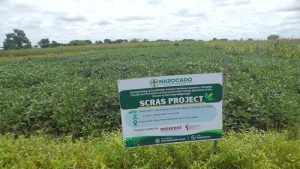
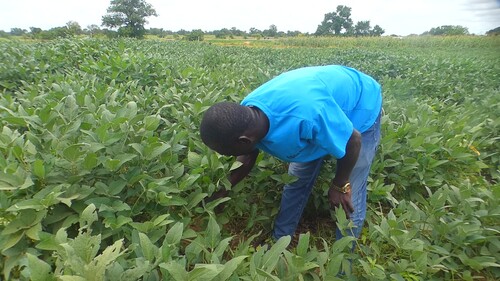
The exchange was not just talk. On demonstration farms, local farmers saw firsthand the results of these innovations. One plot, Mr. Aniah pointed out, had switched from maize to soybean this season. The difference was clear: healthier plants, fewer weeds, and less need for costly inputs. Other demonstration sites showcased cover cropping and plant-based products for pest control, showing that nature’s own resources could replace many chemicals.
The project, funded by Misereor and Bistum Münster, spread across six districts, Kassena-Nankana West, Builsa South, Bongo, West Mamprusi, Nabdam, and Talensi, touching the lives of over 5,000 farmers. Women found new opportunities too, forming savings and lending groups to start businesses and strengthen their households.
Mr. Aniah reminded everyone that the goal was not just bigger harvests, but sustainable progress. Compost, he said, released nutrients gradually, building up the soil year after year, unlike synthetic fertilizers that quickly faded. The SCRAS Project, he concluded, was about practical, affordable farming, methods that protected both land and livelihoods for generations to come.
As the activity ended and farmers prepared to return home, they carried with them more than just new knowledge, they carried hope for a greener, more resilient future for their farms and communities.
Meanwhile, beneficiary farmers, Abdul-Rauf Mahamadu, Yin Bugmah, and Assibi Tiia, stood at the edge of a demonstration farm, their faces beaming with satisfaction. Not long ago, these fields had been like any others in Keta, West Mamprusi, and Nabdam: tilled heavily, dependent on expensive fertilizers, and often plagued by stubborn weeds. But this year was different.
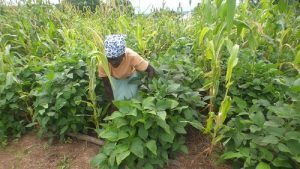
Their journey began when NABOCADO, through the SCRAS Project, invited them to a series of farmer training sessions. “We had always done things the old way,” Abdul-Rauf recalled, his hands tracing the lines of the healthy soybean stalks. “But NABOCADO showed us another path.”
For the first time, the farmers learned to make and use compost, embrace zero tillage, and practice crop rotation, techniques that sounded strange at first, but soon revealed their worth. “Before the training, we didn’t know what compost was for or that you could plant without ploughing the land,” Abdul-Rauf explained. “Now, our crops are stronger and the soil is happier.”
Season after season, they had planted maize and soybeans the same way, never pausing to consider the toll on the land. But with NABOCADO’s guidance, they rotated their crops: soybeans where maize once grew, and vice versa. The result? Lush, green fields and the promise of harvests bigger than ever before. Abdul-Rauf’s eyes sparkled as he estimated four to five bags of soybeans and up to seven of maize from the demonstration plot.
The cost savings were equally striking. Gone were the days of buying bag after bag of fertilizer, herbicides, and insecticides, expenses that often left them with little or nothing after the sale of their grain. “Sometimes, after subtracting all we spent, we made no profit at all,” Abdul-Rauf admitted. But with compost and the new methods, input costs dropped dramatically. “We hardly had to buy anything. And the results are even better than before.”
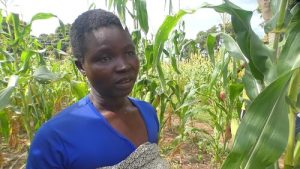
The farm’s transformation drew attention from across the community. Fellow farmers came to watch and learn, eager to try the new practices themselves. Even passing traders stopped to marvel at the thriving soybeans. “They ask me, ‘How did you do it?’ and I tell them, it’s thanks to NABOCADO’s training.”
As the sun set behind the demonstration farm, Abdul-Rauf spoke for his friends and neighbors. “We are grateful to NABOCADO for opening our eyes. We hope more farmers will join us on this new journey, for the good of our land and our future.”
Source: Apexnewsgh/Ngamegbulam Chidozie Stephen