

Minority Caucus Demands Urgent Payment to Cocoa Farmers Amid Growing Crisis
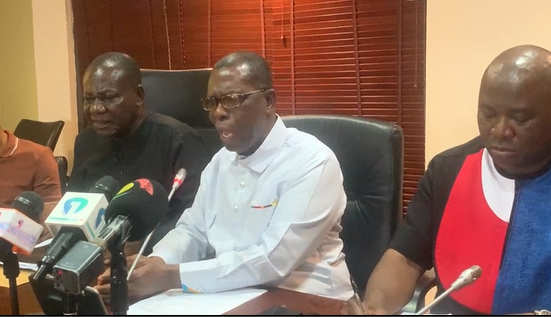
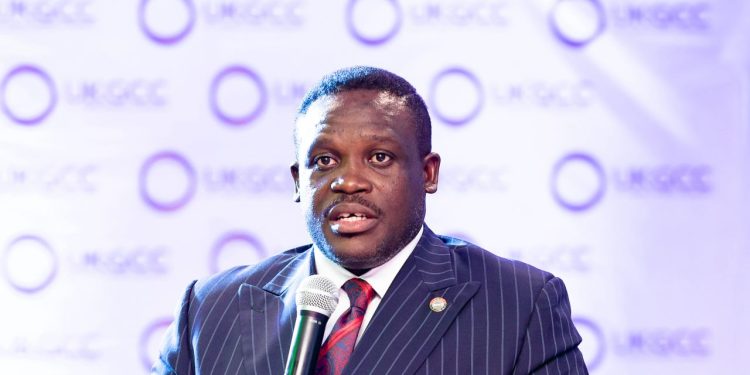
The Ranking Member on Parliament’s Food, Agriculture and Cocoa Affairs Committee, Isaac Yaw Opoku, has sounded the alarm over mounting hardship in Ghana’s cocoa sector, urging the government and the Ghana Cocoa Board (COCOBOD) to immediately pay farmers for beans sold since November 2025. Speaking to journalists in Accra on February 5, Mr. Opoku warned that payment delays are driving both farmers and the industry to the brink of crisis. Mr. Opoku revealed that many cocoa farmers have not received payments for over three months, leaving them unable to afford necessities like medication, school fees, or care for sick relatives. Some, he said, were even forced to forgo Christmas celebrations due to financial strain. The hardship has been compounded by Licensed Buying Companies (LBCs), who, unable to secure reimbursement from COCOBOD for cocoa already delivered, now owe farmers billions of cedis and have had to halt new purchases. “Farmers are being forced to sell on credit, accept heavy discounts, or return home with unsold produce,” Mr. Opoku said, painting a bleak picture of the human and economic toll. He dismissed claims by COCOBOD that sufficient funds had been released as misleading, stating that the reality on the ground was one of financial distress and broken promises. The Ranking Member also criticized the government for failing to deliver on campaign pledges of higher producer prices, noting that the current farmgate price of GH¢3,625 per 64kg bag falls far short of the GH¢6,000–GH¢7,000 per bag promised to farmers before the 2024 elections. He expressed concern over reports that the government might consider reducing the producer price to settle arrears, describing such a move as a betrayal. Beyond the plight of farmers, Mr. Opoku warned that the survival of indigenous cocoa buying companies and transporters is at risk, with capital locked up and operations grinding to a halt. He attributed some of the financial woes to wasteful spending and administrative mismanagement within COCOBOD. The Minority Caucus is demanding immediate payment to cocoa farmers for all outstanding cocoa beans, full reimbursement of LBCs, and prompt settlement of future deliveries. They are also calling for a formal apology from both the government and COCOBOD, insisting that timely payment is not a privilege but a fundamental duty. “Cocoa farmers are not beggars. Paying them on time is an obligation,” Mr. Opoku declared. Source: Apexnewsgh.com
DVLA Reiterates Strict Guidelines for Use of DV Number Plates

The Driver and Vehicle Licensing Authority (DVLA) has issued a firm reminder on the correct use of DV number plates, emphasizing that these plates are strictly reserved for licensed car dealers and vehicle manufacturers and are not intended as a substitute for full vehicle registration. Stephen Attuh, Director of Communication at the DVLA, addressed the issue on the Citi Breakfast Show on Thursday, February 5, in response to increasing public confusion and misuse of DV plates on roads nationwide. He clarified that DV plates are designed for limited, temporary use, such as moving vehicles from a dealer’s lot for repairs, defect fixing, or test drives before final sale. Attuh highlighted a widespread misconception among motorists who believe DV plates can be used indefinitely, even after purchasing a vehicle. He stressed, “You are not required to have a DV plate on your vehicle so long as it is not for purposes of fixing a defect on it or test driving. Once the vehicle is sold to you and you are off the dealer’s facility, you are required by law to register the vehicle to be duly identified before it can be on our roads.” He attributed the growing misuse of DV plates to some car dealers who flout regulations, allowing buyers to use the plates unlawfully. Citing Regulation 23 of Legislative Instrument (LI) 2180, Mr. Attuh underscored that the rules governing trade licences are clear, and any breach is a violation of the law. “The DV plate has many limitations, and its use for ordinary driving is not permitted,” he reiterated. The DVLA’s renewed advisory seeks to curb unlawful practices and ensure that vehicles on Ghana’s roads are properly registered and identifiable, in line with existing legal requirements. Source: Apexnewsgh.com
Ghana and Zambia Sign Landmark Visa Waiver Agreement to Boost Bilateral Ties
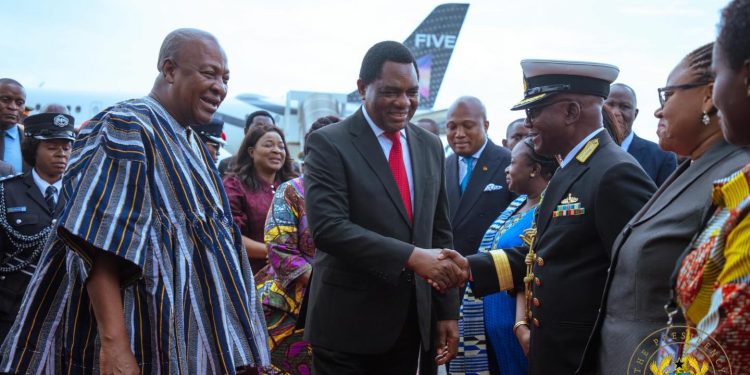
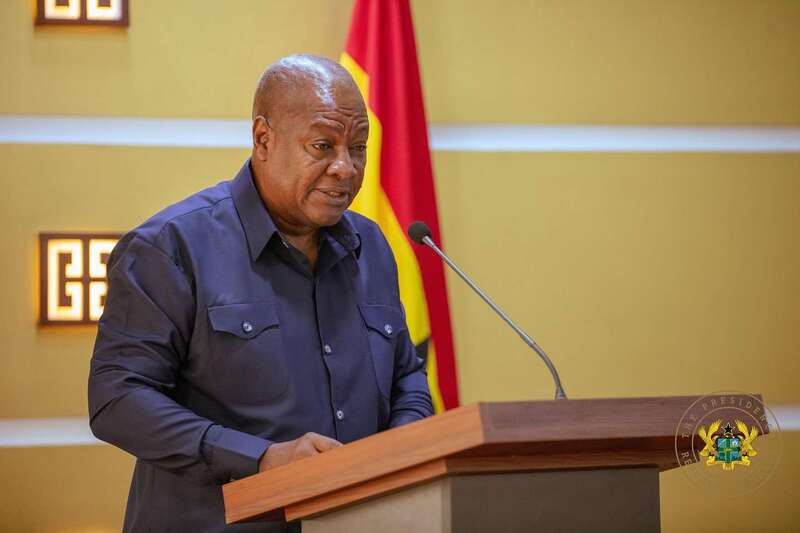
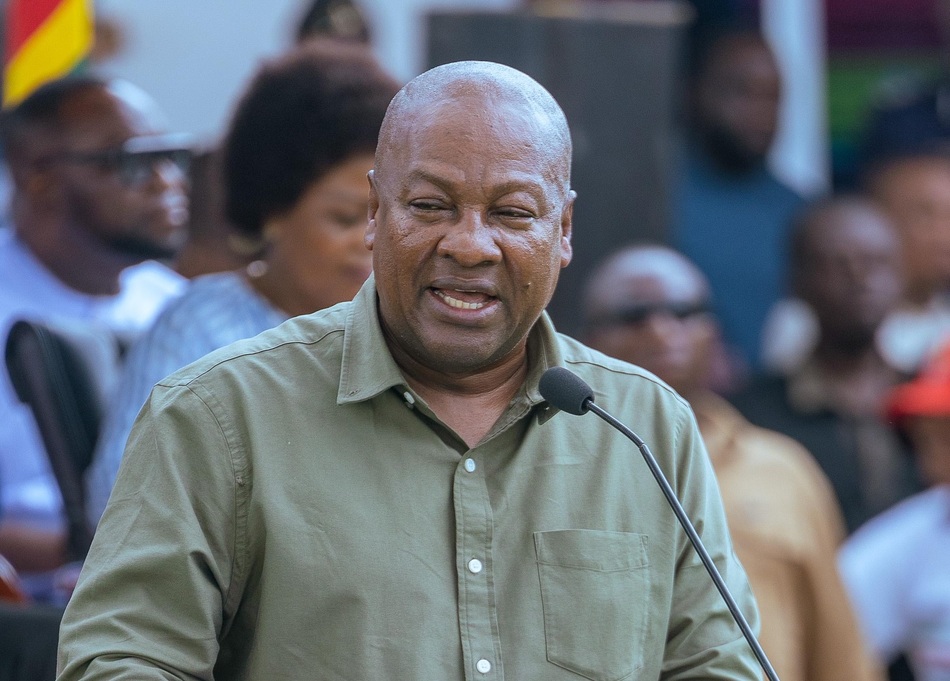
In a historic move to deepen ties and promote seamless mobility, the governments of Ghana and Zambia have signed a landmark visa waiver agreement, allowing citizens of both countries to travel freely without the need for visas. The announcement came during President John Dramani Mahama’s recent three-day state visit to Zambia, where he was welcomed by President Hakainde Hichilema at the Kenneth Kaunda International Airport on February 4. The development was disclosed to the press by Ghana’s Minister for Foreign Affairs, Samuel Okudzeto Ablakwa, who described the visa waiver as one of the most significant outcomes of the high-level visit. Mr. Ablakwa emphasized that the new policy is poised to enhance trade, tourism, investment, and cultural exchange between the two nations, removing long-standing bureaucratic barriers for travelers, including students, businesspeople, professionals, and tourists. According to the Foreign Affairs Minister, the visa-free arrangement was a key directive personally issued by President Mahama as a top priority for the visit. “We are prioritising your smooth mobility, and one of the major outcomes of this state visit is that, for the first time in the history of Ghana-Zambia relations, we are going to have a free visa between our two countries, so you no longer have to stress about visas,” Mr. Ablakwa said. He added that the President had made it clear that the agreement was a non-negotiable condition for the diplomatic trip. The visa waiver agreement signals a new era of cooperation, expected to foster closer diplomatic, economic, and people-to-people relations between Ghana and Zambia. As both countries look to the future, the removal of travel restrictions is set to unlock new opportunities and strengthen the bonds between their citizens. Source: Apexnewsgh.com
Amasaman High Court Reduces Nana Agradaa’s Prison Sentence to 12 Months

The Amasaman High Court has reduced the controversial 15-year prison sentence handed to evangelist Nana Agradaa, citing the original punishment as harsh and excessive. The ruling, delivered this week, affirmed her conviction but lowered her sentence to 12 calendar months, effective from July 3, 2025, the date on which she was initially convicted. Nana Agradaa, a former fetish priestess turned evangelist, was found guilty of charlatanic advertisement and defrauding by false pretence. Her conviction stemmed from a widely broadcast 2022 television appearance in which she claimed to possess spiritual powers that could miraculously double people’s money. Enticed by her promises, several victims handed over large sums of money, only to be disappointed when the promised returns never materialized. While the court acknowledged the seriousness of the offences, it concluded that the original 15-year sentence was disproportionate to the circumstances. Exercising its discretion, the court opted for a downward adjustment, emphasizing the importance of fair and just punishment under the law. With the revised sentence, Nana Agradaa will serve a total of 12 months in prison, marking a significant reduction from her initial punishment while maintaining the court’s stance on accountability for her actions. Source: Apexnewsgh.com
Government Unveils Post-Harvest Initiative to Boost Efficiency and Cut Losses in Agriculture
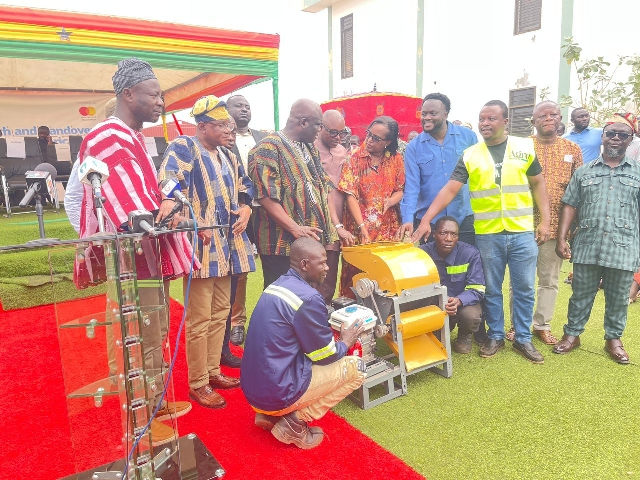
Ghana’s agricultural sector marked a pivotal moment as the Minister for Food and Agriculture, Eric Opoku, reiterated the government’s commitment to building a resilient and efficient food system, one that goes beyond increased production to protecting the hard-earned harvests of farmers. Speaking at the official launch and handover of locally fabricated post-harvest equipment, Minister Opoku described the event as a symbol of Ghana’s deliberate shift towards local innovation, value addition, and sustainability in agriculture. He acknowledged a long-standing challenge: despite investments in boosting output, the country has continued to lose a significant portion of its harvests due to poor post-harvest handling. “Inadequate storage and processing have not only wasted farmers’ effort and income, but have also weakened our national food systems,” the Minister noted. The new initiative seeks to change that narrative by engaging 2,231 youth artisans to fabricate around 300 threshers, 200 for maize and 100 for soybeans, across seven technology solution centres. More than 3,000 farming families nationwide are expected to benefit. Minister Opoku emphasized that the programme is about more than just numbers; it’s about building a skilled workforce to serve Ghana’s agriculture for years to come. The impact will be seen in reduced post-harvest losses, higher farmer incomes, improved produce quality, and stronger rural economies. Sustainability, the Minister stressed, is at the core of the initiative. “Equipment alone is not enough; skills and ongoing technical support are essential,” he said. The programme, therefore, includes comprehensive user training, a technical support system, and the involvement of trained agricultural and engineering graduates to guarantee safety, reliability, and continuity. He underscored that the future of Ghana’s agriculture lies in efficiency, value addition, and the dignity of labour. It also depends on empowering women farmers, equipping young people with relevant skills, and ensuring that every harvest contributes to national development. World Food Programme Country Director praised the initiative as a practical, homegrown solution to Ghana’s persistent post-harvest losses. She noted that significant quantities of maize and soybeans are lost after harvest, undermining incomes, nutrition, and national food security while driving up prices. The WFP supports the holistic approach, which addresses everything from production to processing, storage, and market access. By aligning with Ghana’s Feed Ghana programme and its broader mechanisation agenda, the new initiative promises to enhance food security and transform rural livelihoods for the better. Source: Apexnewsgh.com
Vice President Calls for Empowerment of SMEs, Women, and Youth to Unlock Africa’s Single Market
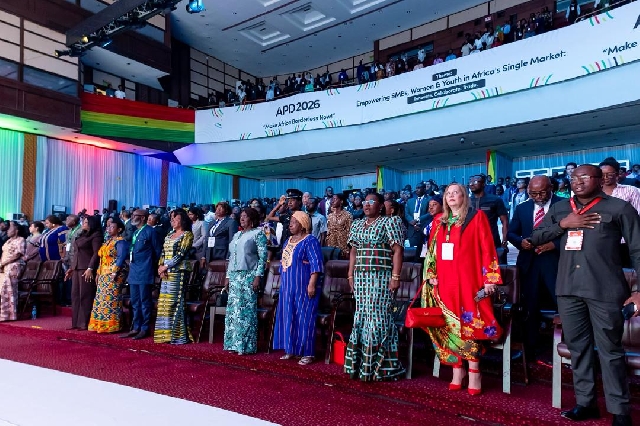
At the Africa Prosperity Dialogues (APD) in Accra on February 4, 2026, Vice President H.E. Prof. Naana Opoku-Agyemang delivered a clarion call for the empowerment of small and medium-sized enterprises (SMEs), women, and young people, positioning them as the driving force behind Africa’s economic transformation. Speaking on behalf of President John Dramani Mahama, Prof. Opoku-Agyemang emphasized that the continent’s future prosperity hinges on shifting away from dependency and fragmented economies toward self-reliance and a unified market. Addressing delegates, she highlighted the critical role of advocacy platforms like the APD in complementing the African Continental Free Trade Area (AfCFTA), headquartered in Accra. These platforms, she noted, foster intra-African trade, investment, and mobility, and are essential for promoting integration and shared growth. Prof. Opoku-Agyemang referenced President Mahama’s recent United Nations address, reiterating that Africa must take charge of its destiny. She stressed that any development excluding youth, women, or small businesses is fundamentally unsustainable, a conviction at the heart of the government’s ‘Reset Agenda.’ Drawing on Ghana’s rich history of Pan-African engagement, she cited initiatives like the Pan-African Festival of Arts and Culture, the Year of Return, and the Diaspora Summit, as well as renewed commitments at the Second AU–CARICOM Summit. These, she said, reflect Ghana’s dedication to bridging both historical and economic divides. Describing the AfCFTA as a historic opportunity, Prof. Opoku-Agyemang pointed to its status as the world’s largest free trade area by number of countries, encompassing a combined market of 1.3 billion people. She underscored the pivotal role of SMEs, which account for roughly 80 percent of employment across Africa, and highlighted the significant contributions of women and youth, women comprising nearly half the workforce and young people over 60 percent of the population, fueling innovation in technology and creative industries. However, she cautioned that fewer than 20 percent of African SMEs currently engage in export trade, and that women and young entrepreneurs face persistent barriers such as limited access to finance, skills, and markets. Without bold action, she warned, African economies risk remaining stuck in low-productivity cycles centered on raw material exports. The Vice President noted that this year’s APD theme, “Empowering SMEs, Women, and Youth in Africa’s Single Market,” highlights the pressing need to address these challenges. She called for sustained investment in infrastructure, innovation, and strong institutions, alongside coordinated industrial strategies, to unlock Africa’s economic potential. Prof. Opoku-Agyemang spotlighted Ghana’s ongoing initiatives, including the 24-Hour Economy and the Big Push infrastructure programme, designed to boost productivity, support trade, and foster regional integration within ECOWAS and the African Union. Concluding her address, she urged African leaders to view borders as instruments for organizing sovereignty in support of shared prosperity, and challenged all participants to ensure that the commitments forged at the dialogue translate into real, concrete outcomes for the continent. Source: Apexnewsgh.com
Ghana Medical Trust Fund Delivers Hope with Heart Surgery Support for Children Nationwide
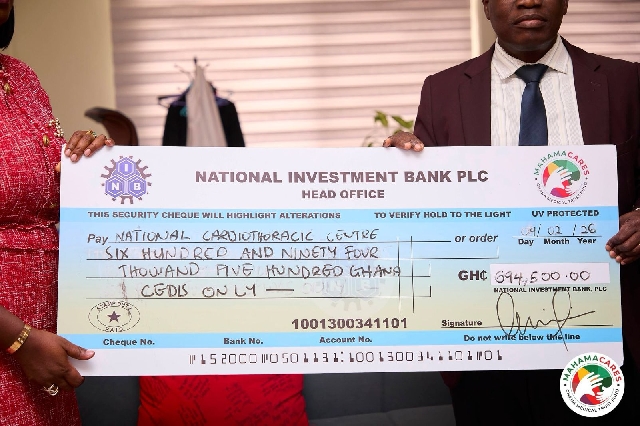
Eight children from various regions of Ghana are now closer to life-saving heart surgeries, thanks to a GH¢1,141,500 intervention by the Ghana Medical Trust Fund at the National Cardiothoracic Centre of Korle Bu Teaching Hospital. The timely support is transforming the lives of children who, under different circumstances, would be spending their days in classrooms and playgrounds instead of preparing for critical operations. Of the eight beneficiaries, five were recently referred to Korle Bu from regions including Northern, Savannah, Bono East, Western North, Western, and Greater Accra, demonstrating the Fund’s reach across the country. Their complex cardiothoracic conditions require urgent surgical attention, and the Trust Fund’s intervention is offering renewed hope to both the children and their families. This initiative is part of a 50-case pilot project preceding the Fund’s full rollout in April. By targeting those most in need, especially children who might otherwise be denied care due to financial barriers, the Ghana Medical Trust Fund is making essential, timely treatment possible for Ghana’s youngest patients. The Fund’s approach goes beyond promises, demonstrating a living commitment to care. For the families of these children, and for many more to come, the Ghana Medical Trust Fund is turning hope into healing, one surgery at a time. Source: Apexnewsgh.com
GHS Deploys Advanced Team to Strengthen Meningitis Season Preparedness in Northern Regions

With the onset of the meningitis season approaching, the Director-General of the Ghana Health Service (GHS), Dr. Samuel Kaba Akoriyea, has taken decisive action by dispatching a specialized team to the five meningitis belt regions in northern Ghana and the Bono East Region. The move is aimed at assessing and enhancing Ghana’s preparedness to respond swiftly to any potential outbreaks. The three-member advance team, comprising a senior laboratory officer from the National Public Health Reference Laboratory, a disease surveillance officer, and a case management clinician, will tour key regions to evaluate the robustness of surveillance systems and laboratory capacities for early detection of meningitis cases. Their mission also involves reviewing case management protocols at selected health facilities to ensure that best practices are in place. As part of a broader proactive strategy, the team will scrutinize existing preparedness and response plans, offer on-the-job technical support to local health teams, and identify urgent gaps that need to be addressed to boost the nation’s overall readiness. Northern Ghana’s meningitis belt remains particularly susceptible to seasonal outbreaks, especially during the dry season. Early planning and coordinated efforts are therefore critical in reducing illness and saving lives. Reaffirming its commitment, the Ghana Health Service emphasized the importance of early detection, effective case management, and timely public health interventions to protect vulnerable communities as the country braces for the meningitis season. Source: Apexnewsgh.com
Calls Grow to Amend National Peace Council Act to Guarantee Youth Representation
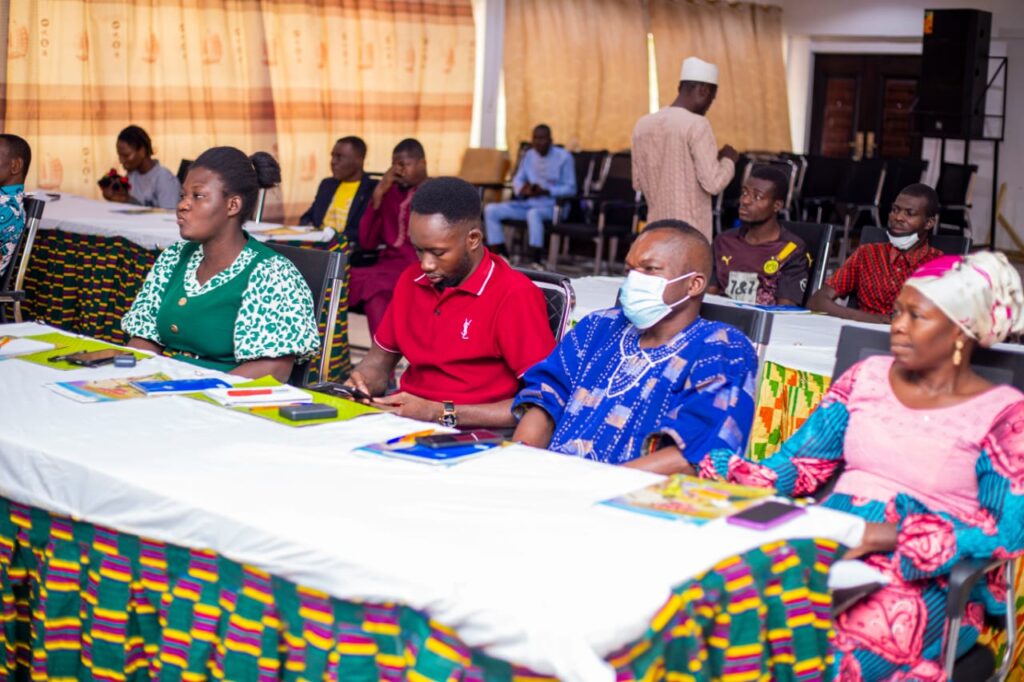
A groundswell of advocacy is emerging from Ghana’s Upper East Region, where youth leaders are urging lawmakers to amend the National Peace Council Act to secure formal youth representation at the national level. The demand comes amid rising consensus that sustainable peacebuilding must reflect Ghana’s youthful demographic and empower young people as central actors in national security policy. The call gained momentum during a two-day consultation in Bolgatanga, where youth, community stakeholders, security agencies, and civil society organisations gathered to contribute to Ghana’s National Action Plan (NAP) on Youth, Peace, and Security. The event, organised by the National Youth Authority (NYA) with support from international and national partners, offered young people a platform to share their experiences, propose policy reforms, and advocate for a more inclusive peace governance structure. While youth are present on local peace committees, participants noted that the absence of a statutory guarantee for their representation at the national level leaves their influence subject to goodwill rather than law. They argued that codifying youth participation in the National Peace Council would elevate their role from symbolic presence to institutional accountability, ensuring their voices help shape crucial peace and security decisions. Discussions drew on United Nations Security Council Resolution 2250, which recognises youth as vital agents in conflict prevention and peacebuilding. With one in four young people worldwide living in or affected by conflict, participants emphasized the urgency of embedding youth voices in peace structures at every level. Francis Takyi-Koranteng, Upper East Regional Director of the NYA, highlighted that young Ghanaians have long been marginalised or unfairly stereotyped as sources of instability. He stressed that, with Ghana’s large youthful population, inclusion is not optional but essential, and the quality of engagement at the consultation demonstrated young people’s readiness to contribute meaningfully to national peace frameworks. UNDP officials commended the consultative process for fostering genuine dialogue and co-creation, moving youth engagement from tokenistic to transformative. They noted that legal backing for youth representation would reinforce the legitimacy and resilience of Ghana’s peace architecture. The Upper East engagement is part of a nationwide effort to craft a National Action Plan that taps into youth creativity and leadership for peaceful, inclusive development. Stakeholders agreed that amending the National Peace Council Act to guarantee youth representation would build trust, accountability, and long-term stability. As Ghana advances its Youth, Peace, and Security agenda, the message from Bolgatanga is clear: young people are not just beneficiaries of peace, they are vital partners whose place at the national table must be protected by law. Source: Apexnewsgh.com
Ghana Signals Strong Investment Climate at Ghana–Korea Business Forum
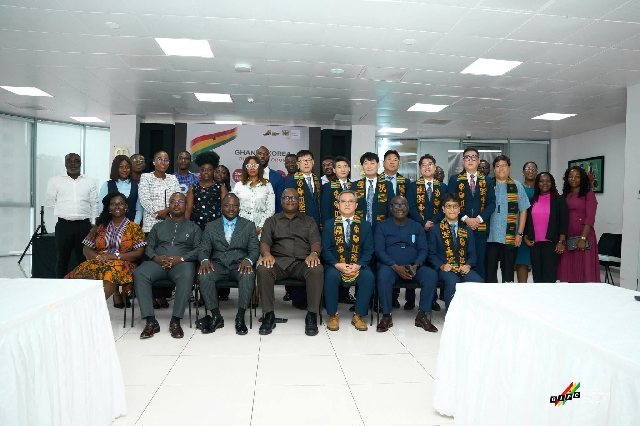
Ghana’s status as a top destination for international investment was on full display at the recent Ghana–Korea Business Forum in Accra, where Mr. Simon Madjie, Chief Executive Officer of the Ghana Investment Promotion Centre (GIPC), declared the country “open for business” and ready to deepen economic and trade ties with South Korea. Addressing a diverse audience, Mr. Madjie emphasized Ghana’s improving macroeconomic outlook and rising investor confidence, underpinned by stabilized inflation at 5.4 percent and successful debt restructuring efforts. These achievements, he noted, have set the stage for sustained economic growth. Looking ahead to 2026, Mr. Madjie outlined three ambitious priority areas: the 24-Hour Economy and Accelerated Export Development Programme (24H+), large-scale infrastructure projects under the Big Push initiative, and an agriculture-led transformation powered by renewable energy investments. The 24-hour economy aims to industrialise and cultivate two million hectares of farmland, while the Big Push will focus on improving connectivity between key cities, food-producing regions, and constructing a 360-kilometre expressway linking Accra to the country’s second capital. Opportunities in clean energy were also spotlighted, with ongoing multi-billion-dollar projects led by the Ministry of Energy and Green Transition. The forum brought together a seven-member Korean delegation, led by Mr. Gaspar Choi, CEO of MK Pollex Company Limited. The group represented sectors such as healthcare, cosmetics, food packaging, industrial machinery, and solar energy. Mr. Hong Koohwang, Director General of the Korea Trade-Investment Promotion Agency (KOTRA), reaffirmed South Korea’s commitment to strengthening economic partnerships with Ghana. With KOTRA’s fourteen-year presence in Ghana, Mr. Koohwang highlighted the agency’s role in facilitating trade missions, business matchmaking, and investment opportunities across a range of sectors. He introduced the visiting South Korean companies, noting their expertise aligns with Ghana’s development goals. “We are ready to connect Ghanaian businesses with Korean partners and deepen mutually beneficial cooperation,” he said. Mr. Alexander Roosevelt Hottordze, Member of Parliament for Central Tongu and chair of the Select Committee on Trade, Industry and Tourism, assured participants of Parliament’s commitment to creating a robust business environment. He called for greater private sector involvement in infrastructure, agriculture, and manufacturing, underscoring Ghana’s strong positioning for long-term investment. Source: Apexnewsgh.com