



Ghana’s Crude Oil Output Hits Six-Year Low as PIAC Calls for Urgent Investment

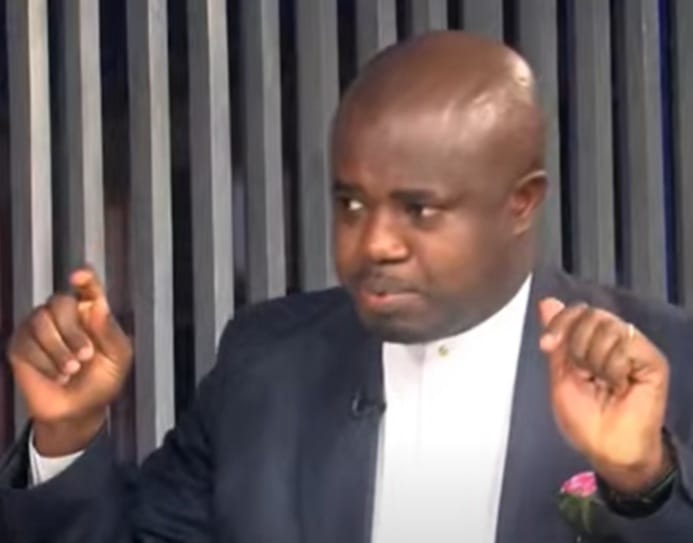
Ghana’s crude oil production has declined for the sixth consecutive year, sliding from a peak of 71.4 million barrels to just 37.3 million barrels in 2025, a compounded annual average decline of 9%, according to the 2025 Annual Report by the Public Interest and Accountability Committee (PIAC). The alarming figures were presented on Wednesday, April 8, when PIAC Chairman Richard Ellimah stepped before the public to highlight the growing crisis gripping the country’s petroleum sector. With each passing year, Ghana’s oil output has continued its downward spiral, raising serious concerns about the nation’s long-term energy revenue and economic stability. “In 2025, crude oil production declined for the sixth consecutive year, falling from a high of 71.4 million barrels to 37.3 million barrels. This represents a compounded annual average decline of 9%, which should be a concern for every Ghanaian,” Ellimah warned. The PIAC Chairman did not stop at sounding the alarm; he came up with recommendations. He urged the government to strengthen its collaboration with the Petroleum Commission to attract fresh investment into the sector and help reverse the troubling downward trend. Central to his recommendations was a call for developing a dedicated framework to boost investment in existing producing fields, with particular attention to the Tweneboa, Enyenra, and Ntomme (TEN) field, where output has consistently underperformed expectations. Beyond reviving existing fields, Ellimah also pressed the government to take proactive steps to court additional investors into Ghana’s oil sector, a move he believes is critical to stabilising and ultimately growing production levels. As Ghana grapples with dwindling oil revenues, the message from PIAC is clear: without decisive action and meaningful investment, the country risks watching its petroleum fortunes continue to erode. Source: Apexnewsgh.com
Ghana’s Economy Grows 7.5% in January 2026, Services Sector Leads Charge
Ghana’s economy kicked off 2026 on a positive note, expanding by 7.5% in January, according to the Ghana Statistical Service. While the figure signals sustained growth momentum at the start of the year, it represents a slight moderation compared to the 8.2% recorded in the same period in 2025. The latest Monthly Indicator of Economic Growth (MIEG) data reveals that the services sector was the clear engine of activity, posting a robust 9.6% growth and contributing 54.3% of total economic expansion. Industry followed with a 7.2% growth, accounting for 29.0% of total growth, while agriculture recorded the slowest performance at 4.5%, contributing 14.0%. Government Statistician Dr. Alhassan Iddrisu noted that the strong showing from services reflects its increasingly dominant role in the economy, reinforcing the view that Ghana’s growth trajectory is tilting firmly toward a service-led model. However, the data also exposes an uneven growth pattern that warrants attention. The relatively sluggish pace in agriculture raises concerns about productivity in a sector that remains a lifeline for jobs and food security. Meanwhile, industry’s performance, though solid, suggests untapped potential for deeper value addition and greater output. As Ghana navigates the rest of 2026, economists and policymakers agree that sustaining the current momentum will require a more balanced approach, one that strengthens industrial capacity, revitalizes agricultural productivity, and harnesses the continued dynamism of the services sector to build broader and more resilient economic growth. Source: Apexnewsgh.com
Leadership Change at IGP’s Special Operations Team Amid Assault Investigation
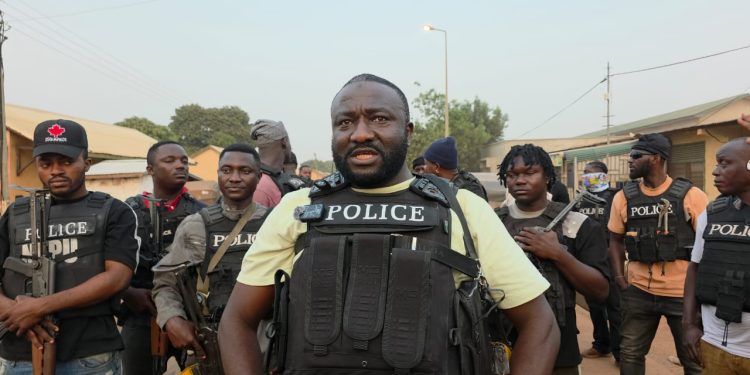
The leader of the Inspector General of Police’s (IGP) Special Operations Team, DSP Bawah Abdul Jalil, has been removed from his post as investigations continue into an alleged assault case against him and members of the team. Jalil and his colleagues are being probed for allegedly assaulting renowned Ghanaian artist Ibrahim Mahama. In a formal ceremony held on April 7, 2026, at the National Police Training School in Accra, DSP Bawah Abdul Jalil officially handed over command responsibilities to his successor, Superintendent Augustine Dawson Amoah, who will be supported by three other senior officers, marking a new chapter in the team’s leadership. Speaking at the ceremony, the outgoing DSP Jalil called on personnel to extend their full cooperation and support to the incoming leadership, stressing the importance of continuity and operational effectiveness within the team. Superintendent Amoah, in his maiden address to the team, struck a tone of resolve and commitment. He assured personnel of his dedication to effective leadership and called for unity, discipline, and professionalism in the execution of their duties as the team moves forward under new command. Source: Apexnewsgh.com
Mahama Nominates Five to Ghana’s Fiscal Council in Bold Push for Fiscal Discipline
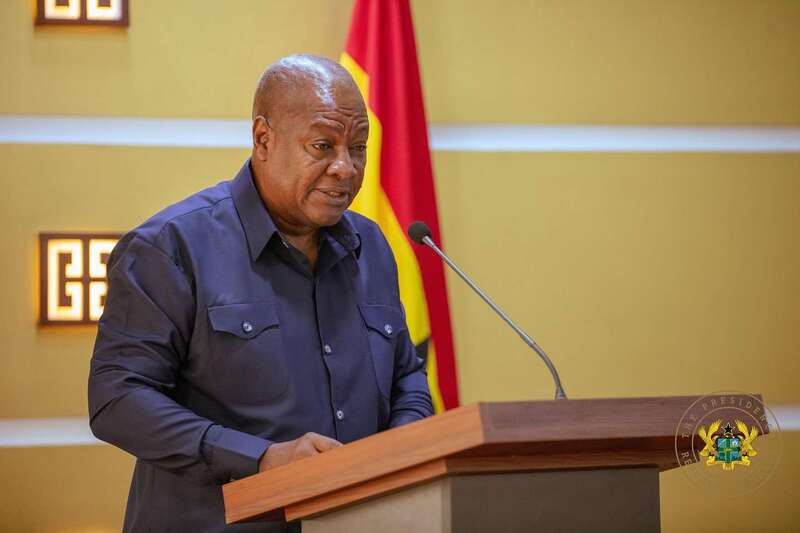
President John Dramani Mahama has nominated five distinguished individuals to serve on Ghana’s newly constituted Fiscal Council. The announcement, made on Wednesday, April 8, 2026, signals the government’s firm commitment to entrenching fiscal discipline and transparency in the management of the country’s economy. The nominations were communicated through a statement issued by Felix Kwakye Ofosu, the President’s Spokesperson and Minister for Government Communications. According to the statement, the appointments were made pursuant to Section 11D of the Public Financial Management Act, 2016 (Act 921), as amended by the Public Financial Management (Amendment) Act, 2025 (Act 1136). Leading the pack of nominees is Dr. Emmanuel Oteng Kumah, who has been designated as Chairperson of the Council. A seasoned international economic consultant and adviser, Dr. Kumah brings with him a wealth of experience drawn from his time at the International Monetary Fund and his tenure as former Board Chairman of Standard Chartered Bank Ghana. Joining him is Associate Professor Patrick Opoku Asuming of the University of Ghana Business School, nominated to represent academia on the Council. A development economist with a PhD from Columbia University, Prof. Asuming has published extensively on health economics and public policy in Ghana, making him a fitting voice for evidence-based fiscal governance. Rounding out the nominees are J. Kweku Bedu-Addo, a former public policy expert from the Finance Ministry, and Dr. Henry Akpenamawu Kofi Wampah, who brings deep central banking experience to the table. Dr. Wampah previously served as Governor of the Bank of Ghana from 2013 to 2016, an appointment made by President Mahama during his first term in office. The Fiscal Council itself is a product of the 2025 amendment to the Public Financial Management Act, which repealed the Fiscal Responsibility Act, 2018 (Act 982) and replaced the Presidential Fiscal Advisory Council that had been in place since 2018. Under the amended law, the Fiscal Council is established as an independent statutory body with the mandate to supervise the government, particularly the Ministry of Finance, in the application of fiscal rules. Notably, the law bars members from holding any position within government, a deliberate measure to protect their independence and ensure impartial oversight. All five nominees are subject to parliamentary approval before the Council becomes operational. Once inaugurated, the Fiscal Council is expected to play a critical role in promoting transparency, accountability, and prudent economic decision-making, helping to ensure that Ghana’s hard-won fiscal gains are sustained well into the future. Source: Apexnewsgh.com
IGP Urged to Act as Extortion Racket Hits Bolgatanga Screening Centre
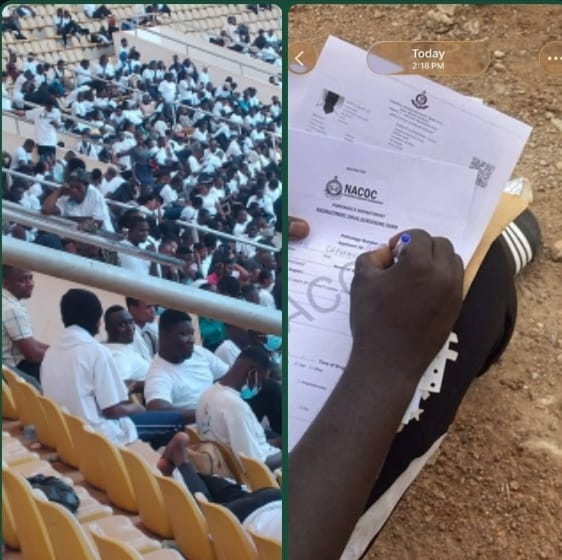
A dark cloud has descended on the Bolgatanga Jubilee Park, where desperate job or recruitment applicants are being squeezed for extra cash in what many are calling a brazen extortion scheme. The park, turned into a screening centre, was meant to be a place of fair process. Instead, it has become a scene of financial anguish. Applicants who had already saved GHC 1,400 for mandatory lab tests are now being told, at the gate, without warning, that they must pay an additional GHC 150. For many young men and women who travelled from remote villages, the news hit like a thunderbolt. Having scraped together the original fee, they now found themselves stranded, phones pressed to their ears as they called parents and relatives back home, begging for emergency money to be sent via mobile transfer. On the fringes of the park, so-called “connection men” are doing brisk business. These middlemen promise one thing: jump the queue and get screened quickly. For a price. They approach anxious applicants, whispering arrangements that bypass the normal process. Those who can pay get ushered ahead. Those who cannot… wait, or walk away broken. “It is pure extortion,” one applicant, who asked not to be named for fear of reprisal, told our reporter. “We are being milked dry, and there is nobody to stop it.” Local witnesses say the atmosphere is thick with frustration and helplessness. Some applicants have camped at the park for days, uncertain if even the extra payment will guarantee their place. In response, civil society voices and concerned citizens are now calling on the Inspector General of Police (IGP) to intervene immediately. They want plain-clothed officers deployed to the Bolgatanga screening centre to arrest the connection men and stamp out the illegal levies. “The IGP must act now,” a youth leader in Bolgatanga pleaded. “These are our children, our brothers and sisters. They are being robbed in broad daylight.” As of press time, officials running the screening had not issued any statement, and the connection men continued their trade, cash changing hands, no questions asked, no receipts given. Source: Apexnewsgh.com
Stability Came at a Price — BoG Governor Asiama Opens Up on the True Cost of Ghana’s Economic Recovery
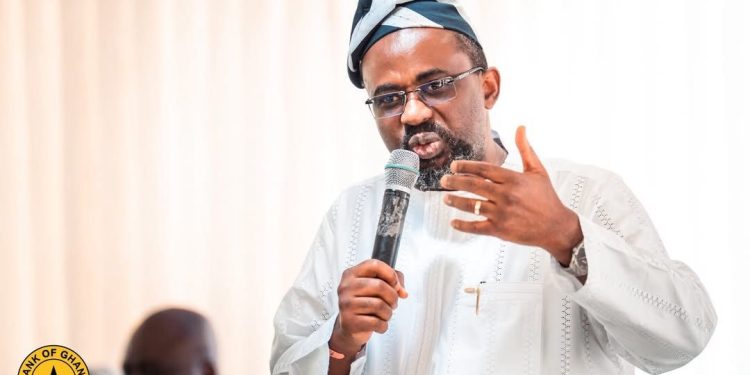
Ghana’s improved economic performance in 2025 did not come for free. That was the candid message from the Governor of the Bank of Ghana, Dr. Johnson Pandit Asiama, who used his appearance at the Kwahu Business Forum 2026 to pull back the curtain on the significant financial burden the central bank bore to deliver the macroeconomic stability that businesses and households have come to enjoy. Speaking at the Governor’s Roundtable session, which served as the closing highlight of the four-day forum, Dr. Asiama painted a picture of an institution that had to make costly, difficult decisions in order to steer Ghana’s economy back from the brink of high inflation and currency instability. “The Cedi is stable and under control,” he told the gathering. But behind that stability, he explained, lay a resource-intensive effort that stretched the central bank’s operations considerably. “Last year was good but expensive for the central bank. It took us a lot of money to mop up excess liquidity and bring inflation down to 5.4% by December 2025,” he said. The Governor was equally frank about the nature of central banking itself, describing it as a discipline defined by difficult choices. “The work we do is always about trade-offs… trying to strike the right balance,” he noted, a remark that resonated with business owners in the audience who understand all too well the tension between cost management and growth. At the heart of those trade-offs is the perennial challenge of controlling inflation without stifling credit and economic activity. To bring inflation down, central banks drain excess liquidity from the financial system — but doing so comes at a price. The higher the volume of liquidity to be absorbed, the greater the cost to the central bank’s balance sheet. In Ghana’s case, that cost was particularly steep in 2025, when inflation was slashed from 23.8% at the close of 2024 to 5.4% by December 2025, a reduction of 18.4 percentage points in a single year. Such an aggressive disinflation required equally aggressive monetary operations, and the Governor made no attempt to downplay the toll it took. Yet, looking ahead, Dr. Asiama offered a more optimistic outlook. With inflation now subdued and the monetary environment more stable, he suggested that the scale of intervention required going forward would be considerably smaller. “If you look at where inflation was at the end of December 2024 and where it is now, it wouldn’t involve the same level of resources to keep it low and stable going forward,” he said. That is welcome news not just for the central bank’s balance sheet, but for the broader economy. A less burdened central bank, operating in a low-inflation environment, is better positioned to support the kind of credit expansion that businesses need to grow. Dr. Asiama underscored this connection directly: “When banks are strong, they can give more credit.” The Governor’s Roundtable brought the 2026 Kwahu Business Forum to a close. The event, which ran from April 3, drew an impressive gathering of business owners, industrialists, investors, policymakers, and development partners, all convened to deliberate on policies capable of stimulating business growth. Among those in attendance were Chief of Staff to the President, Julius Debrah; Eastern Regional Minister, Rita Akosua Adjei Awatey; Economic Advisor to the President, Seth Terkper; and Legal Counsel to the President, Marietta Agyeiwaa Brew. With the forum concluded, the conversations it sparked, about the cost of stability, the future of credit, and the path to sustainable growth, are ones Ghana’s business community will be watching closely as the year unfolds. Source: Apexnewsgh.com
Sachet Water Price Hike Suspended — Government Steps In to Protect Consumers
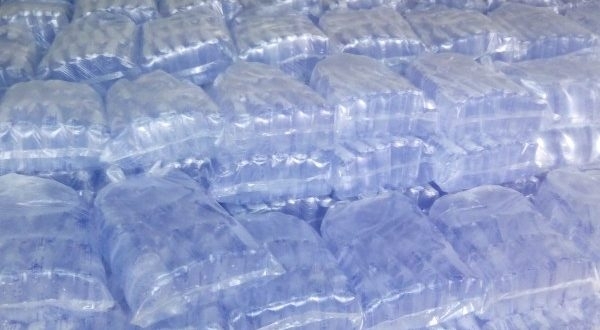
Ghanaians can breathe a sigh of relief, at least for now. The price of sachet water will remain unchanged after a planned increase, which was set to take effect on Monday, April 6, was suspended. The Ministry of Trade, Agribusiness and Industry made the announcement, signalling a timely intervention ahead of what would have been an unwelcome burden on households already navigating economic pressures. In a press statement, the ministry, led by Minister Elizabeth Ofosu-Adjare, commended the Ghana Plastic Manufacturers Association (GPMA) and the National Association of Sachet and Packaged Water Producers for pulling back on the proposed price adjustment. The ministry described the decision as a demonstration of commitment to consumer protection and market stability, assuring the public that no increase has taken effect and that sachet water remains available at its current price. The suspension, however, is only part of the story. Behind the scenes, producers and manufacturers have been grappling with rising production costs, a challenge the government acknowledges cannot be ignored indefinitely. To address this, a meeting has been scheduled for Wednesday, bringing together manufacturers and producers to discuss the factors driving the proposed increase, with production costs expected to take centre stage in the conversation. A key concern raised is Ghana’s heavy reliance on imported raw materials, particularly polymers, the primary ingredient used in sachet production. It is this dependence on imports that has made producers vulnerable to external cost pressures, and it is a vulnerability the government is now actively seeking to address. “As a ministry, we are very concerned about feeding the industry with available raw materials. In fact, that has been our mandate since the government took over,” said Mr. Addo, speaking on behalf of the ministry. “So what we are doing right now is speaking to other stakeholders in the value chain to see if we can have locally available polymers, which are the main ingredients in sachet production,” he added. The push to source raw materials locally is being framed not merely as a cost-saving measure, but as a longer-term strategy to stabilise sachet water prices and insulate the industry from the volatility of global commodity markets. For now, consumers can continue to purchase their daily sachet water without digging deeper into their pockets. But the Wednesday meeting will be a critical test of whether government, manufacturers, and producers can find common ground on a sustainable path forward, one that keeps sachet water affordable without leaving producers unable to cover their costs. Source: Apexnewsgh.com
BoG Governor Asiama Speaks on Ghana’s Economic Progress at Kwahu Business Forum
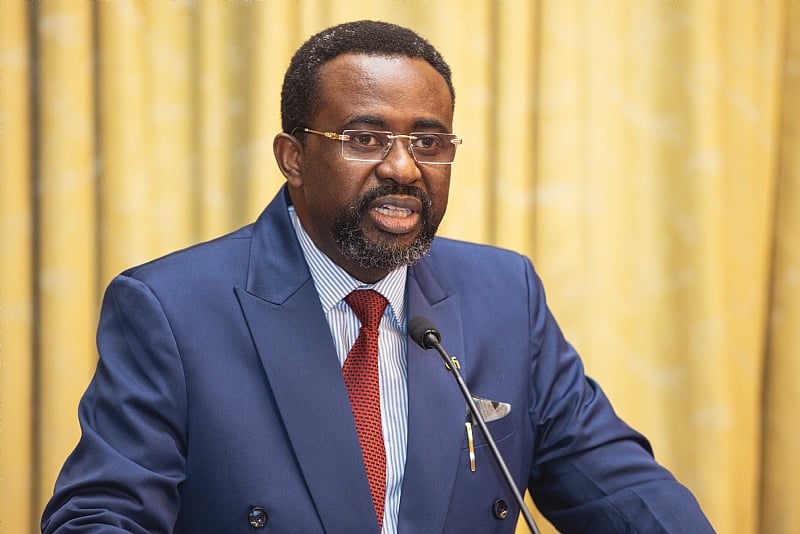
The Governor of the Bank of Ghana, Dr. Johnson Pandit Asiama, on Sunday, April 5, participated in the Kwahu Business Forum Governor’s Roundtable session, where he engaged the business community on Ghana’s economic development and the policy decisions shaping the country’s financial landscape. Governor Asiama used the platform to reflect on Ghana’s economic performance in 2025, acknowledging the significant strides made while also shedding light on the difficult policy trade-offs that central banks face globally. On the subject of inflation, a matter of keen interest to the business community, Dr. Asiama was candid about the price paid to achieve the current low inflation environment. “Last year was good but expensive for the central bank. It took us a lot of money to mop up excess liquidity and bring inflation down to 5.4% by December 2025,” he stated. He also pointed to the stable exchange rate as one of several strong macroeconomic indicators, asserting confidently, “The Cedi is stable and under control.” Elaborating on the nature of central banking, he noted, “The work we do is always about trade-offs… trying to strike the right balance.” Ghana’s inflation story in 2025 is a remarkable one. The rate dropped from 23.8% at end-December 2024 to 5.4% by end-December 2025, a reduction of 18.4 percentage points within a single year. Achieving such a dramatic decline, however, came at a considerable financial cost to the central bank. Central banks, by mandate, are tasked with maintaining economic stability, primarily by keeping inflation low and stable. To do this, they employ monetary policy tools, including Open Market Operations (OMO), which involve draining excess liquidity from the economy. In Ghana’s case, the Bank of Ghana issues BoG Bills purchased by commercial banks. The cost of issuing these bills is heavily influenced by the prevailing policy rate, making large-scale liquidity mop-up exercises particularly expensive. At the last Monetary Policy Committee press briefing, Governor Asiama disclosed that the cost of the Bank’s Open Market Operations rose significantly in 2025 as a result of the aggressive liquidity mop-up exercise. This is a challenge not unique to Ghana, other major monetary authorities, including the US Federal Reserve and the European Central Bank, face similar pressures when deploying tools to rein in inflation. The rationale for bearing such costs, however, is clear. Inflation, left unchecked, erodes the real incomes of citizens. Even when nominal wages remain unchanged, every uptick in inflation reduces the purchasing power of households. Central banks, therefore, cannot afford to be passive bystanders. Despite the heavy cost incurred in 2025, Governor Asiama expressed confidence that the year ahead would tell a different story. “If you look at where inflation was at the end of December 2024 and where it is now, it wouldn’t involve the same level of resources to keep it low and stable going forward,” he said. The logic is straightforward. With current inflation already below 4%, the scale of intervention required to maintain price stability in 2026 is far less demanding than the monumental effort needed to slash inflation by 18.4 percentage points in 2025. The Bank of Ghana’s monetary operations going forward are therefore expected to be less costly, easing pressure on the central bank’s balance sheet. Beyond inflation and monetary policy costs, Governor Asiama underscored the importance of collaboration between the central bank and the broader financial sector. He assured the business community that the Bank of Ghana remains committed to strengthening financial markets and the banking sector. “When banks are strong, they can give more credit,” he noted, a statement that speaks directly to the aspirations of businesses seeking access to financing for growth and expansion. Governor Asiama’s appearance at the Kwahu Business Forum offered a rare and frank window into the inner workings of central banking in Ghana. His remarks painted a picture of an institution that has made difficult, costly decisions in the interest of macroeconomic stability, and one that is now positioned to consolidate those gains at a lower cost. With inflation subdued, the Cedi stable, and a more favourable monetary environment taking shape, 2026 appears to hold genuine promise for Ghana’s economy and its business community. Source: Apexnewsgh.com
Mahama Heads to France for One Health Summit and Bilateral Talks with Macron
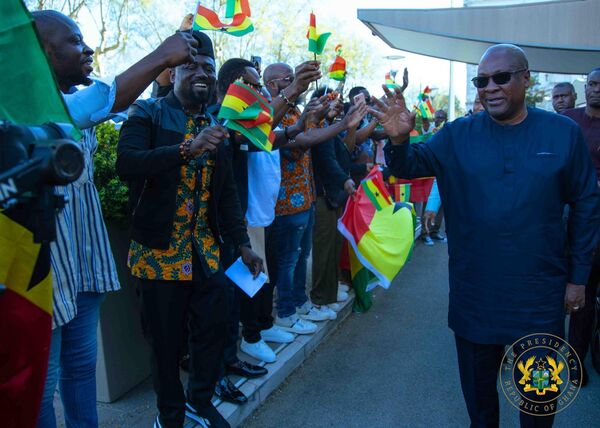
Ghanaian President John Dramani Mahama is set to embark on an official visit to France beginning Monday, April 6, 2026, following a formal invitation from French President Emmanuel Macron. The two-day engagement will take President Mahama across two of France’s most iconic cities, Lyon and Paris, for a packed schedule of global health diplomacy and high-level bilateral discussions. The visit begins in Lyon, where President Mahama will attend the 2026 One Health Summit, a landmark gathering bringing together world leaders, health ministers, and global health experts to tackle some of the most pressing challenges facing humanity, from the reform of global health systems and sustainable food production to coordinated strategies for combating health crises. As founder of the Accra Reset Initiative, President Mahama will take center stage at the summit on Tuesday, co-chairing its high-level segment alongside President Macron. He is scheduled to deliver two keynote addresses during the summit. The first will be at a session on Global Health Architecture, co-chaired by President Macron and Dr. Tedros Adhanom Ghebreyesus, Director-General of the World Health Organization. That session will focus on reforming global health initiatives and endorsing a Political Declaration designed to strengthen international health cooperation. His second keynote will open the high-level segment for heads of state and government, where President Mahama is expected to articulate Ghana’s commitments and perspectives on global health security, signaling the West African nation’s growing role on the world stage. From Lyon, the President will make his way to the French capital. On Wednesday, April 8, 2026, he will be welcomed to the Élysée Palace for a bilateral meeting with President Macron. The talks are expected to center on deepening Ghana–France relations, with discussions spanning health, education, trade, investment, and regional security. Prior to the Élysée meeting, President Mahama will also be received by Gérard Larcher at the Senate House, a gesture that underscores the diplomatic significance of the visit. Following his meeting at the Élysée Palace, President Mahama is expected to return to Accra, closing out what promises to be a consequential chapter in Ghana’s international engagements. The statement was issued by Felix Kwakye Ofosu (MP), Spokesperson to the President and Minister for Government Communications. Source: Apexnewsgh.com
Adongo Commends Alagumgube for Championing Upper East Airport Project
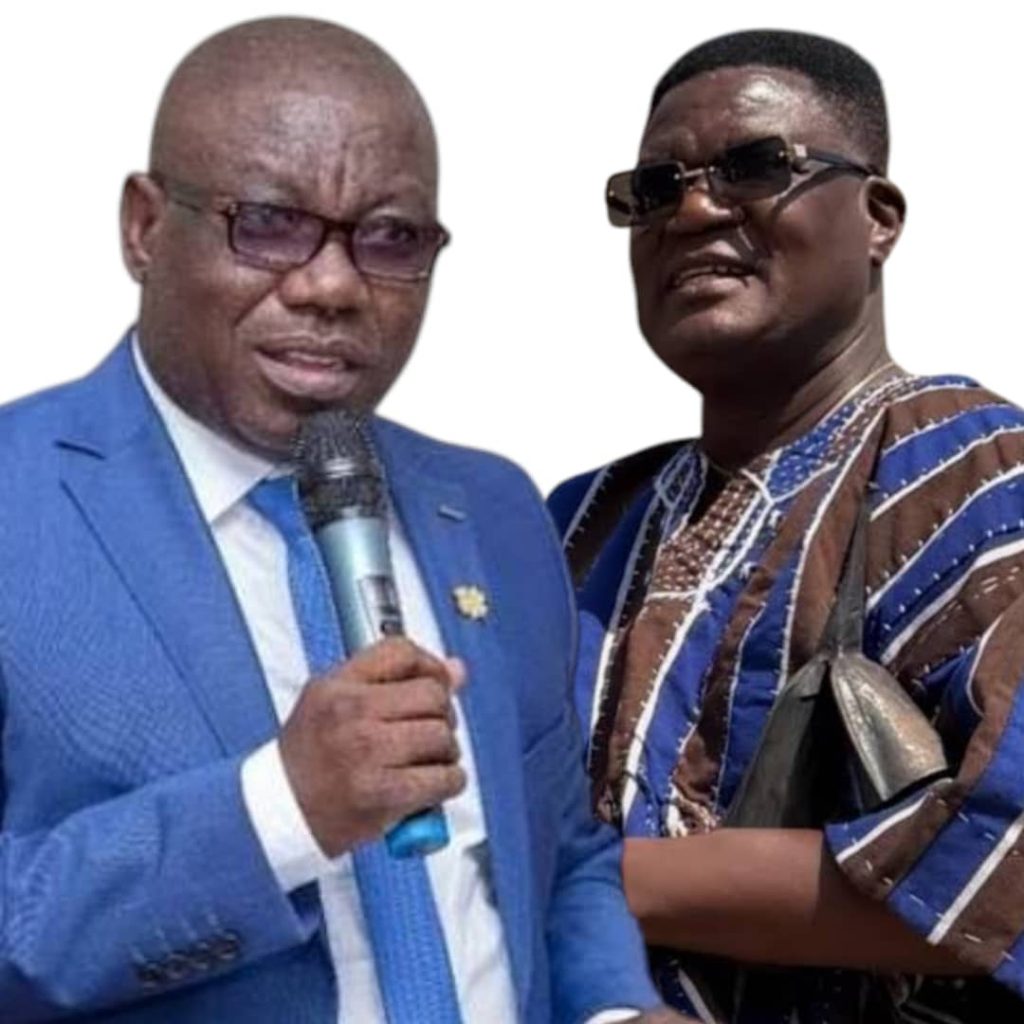
The Member of Parliament for Bolgatanga Central, Isaac Adongo, has lauded the advocacy group Alagumgube for its unwavering commitment to development in the Upper East Region, particularly its efforts in pushing for the demarcation of land for the proposed Upper East Airport. Speaking in an exclusive interview with Dreamz FM, a local radio station in the regional capital, Mr. Adongo praised the group’s dedication and influence in championing critical development issues that affect the people of the region. He acknowledged that Alagumgube’s persistent advocacy has played a significant role in advancing discussions and galvanizing action toward securing land for the long-awaited airport project, an initiative expected to drive economic growth and improve connectivity across the Upper East Region. Beyond the airport campaign, the group, led by Mr. Gabriel Agambila, has made tangible contributions to the region through its own resources, most notably facilitating the establishment of a Passport Application Office for the people of the Upper East Region. The feat stands as a testament to what community-driven advocacy can achieve when pursued with focus and determination. Mr. Adongo underscored the broader importance of such grassroots initiatives, noting that community-led efforts are critical in accelerating development and ensuring that key projects receive the necessary attention from relevant authorities. He called on other groups and stakeholders across the region to take a cue from Alagumgube’s proactive and results-oriented approach, urging them to champion development projects with the same level of vigor and commitment. As the push for the Upper East Airport continues, the MP’s public endorsement of Alagumgube signals growing momentum behind the project and highlights the vital role that civil society organizations play in driving regional development agendas. Source: Apexnewsgh.com