
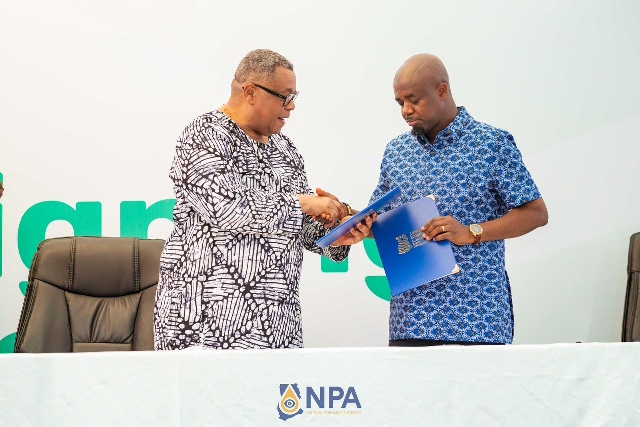




Ghana has taken a significant step toward operationalising its 24-hour economy agenda, with the 24-Hour Economy Authority and the National Petroleum Authority (NPA) signing a Memorandum of Understanding (MoU) to expand round-the-clock operations across the country’s downstream petroleum sector.
The agreement was signed in Accra on March 31, 2026, establishing a formal framework for operational readiness, security coordination, and institutional collaboration, all in service of the government’s broader economic transformation agenda.
Under the terms of the MoU, the NPA will take the lead in developing and enforcing operational standards for 24-hour activities across the petroleum value chain. These standards will span a wide range of areas, including lighting, security, staffing, digital fuel monitoring, and fire safety at fuel stations, refineries, storage depots, and tanker operations. The 24-Hour Economy Authority, for its part, will coordinate broader support systems, overseeing the deployment of security agencies and driving cross-government collaboration to assist operators who receive certification under the new framework.
Officials say the partnership is critical to ensuring a reliable and uninterrupted fuel supply as Ghana pushes forward with its 24-hour economy programme, which is anchored in expanding agro-processing, manufacturing, and logistics infrastructure nationwide.
Presidential Adviser on the initiative, Augustus Goosie Tanoh, underscored that the programme is about more than simply keeping the lights on longer. It is designed, he said, to build industrial capacity and stimulate demand across key economic sectors, a structural shift, not just an extension of business hours.
Implementation will begin with a nationwide pilot targeting approximately 10 percent of the downstream petroleum sector, with an immediate focus on security deployment. The initiative brings together a broad coalition of stakeholders, including petroleum industry groups, transport unions, and key state agencies such as the Ghana Police Service and the Ghana Revenue Authority.
Chief Executive of the NPA, Godwin Kudzo Tameklo, said the agreement squarely aligns the Authority’s regulatory mandate with the national development agenda. He stressed that clear and enforceable standards would be put in place to ensure safety, protect consumers, and safeguard critical infrastructure. The 24-hour economy programme, he added, forms part of a wider national strategy to boost productivity, promote value addition, and accelerate inclusive economic growth across Ghana.
Source: Apexnewsgh.com