
When President John Dramani Mahama launched Ghana’s Free Primary Healthcare Programme, it did not take long for questions to follow. Stakeholders across the country began asking: What exactly is this programme? How will it work? And is it simply the National Health Insurance Scheme (NHIS) under a new name?
To clear the air, the Chief Executive Officer of the National Health Insurance Authority (NHIA), Dr. Victor Asare Bampoe, stepped forward with answers, and what he had to say painted a picture of a healthcare system on the cusp of meaningful change.
Dr. Bampoe was unequivocal on one point: the Free Primary Healthcare Programme is not a rebranding of the NHIS. Rather, it represents a deliberate shift in how Ghana finances and delivers healthcare.
For years, the NHIS has operated largely as a curative-care system, one that responds to illness after it strikes. Preventive and promotive services, by contrast, have remained chronically underfunded and heavily reliant on external support. The new programme, Dr. Bampoe explained, is designed to correct that imbalance.
“The initiative explicitly defines and funds preventive services such as screenings, early detection, and community outreach,” he noted, services that have long existed on the margins of the country’s health financing architecture.
At the heart of the policy is a fundamental change in how healthcare is paid for. Ghana is moving away from a traditional illness-driven financing model toward a population-based payment system — one that is proactive rather than reactive, and focused on managing public health risks before they spiral into crises.
This shift, Dr. Bampoe stressed, is not cosmetic. It reflects a broader ambition to reposition primary healthcare at the centre of Ghana’s health system and to accelerate the country’s progress toward universal health coverage.
One of the most significant changes under the programme concerns access. Under the new framework, individuals will be able to receive initial healthcare services regardless of whether they are enrolled in the NHIS. The goal is simple: ensure that no one is turned away at the first point of contact due to administrative or financial barriers.
“This approach ensures that access to care is no longer delayed by administrative or financial constraints, while also encouraging enrolment into the NHIS through the system itself,” Dr. Bampoe explained.
In practice, this means that early diagnosis becomes more achievable, and with it, better health outcomes for more Ghanaians.
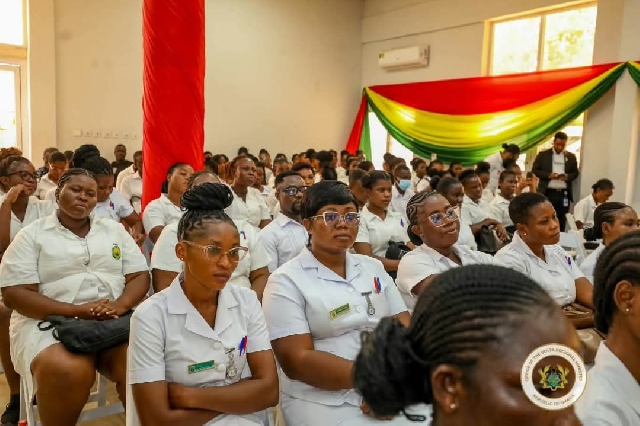
Dr. Bampoe was candid about the need to manage expectations. Implementation will not happen overnight. The programme will roll out in phases, with the first phase prioritising preventive services delivered through Community-based Health Planning and Services (CHPS) compounds, health centres, and polyclinics. Curative services, meanwhile, will continue under existing NHIS arrangements.
To ensure the programme delivers on its promise, the policy includes clearly defined service packages, dedicated funding streams, and integration with NHIS monitoring systems, all designed to guarantee accountability across financing, staffing, medicines, and service delivery.
In closing, Dr. Bampoe framed the initiative not as a short-term intervention, but as a long-term structural reform, one aimed at strengthening preventive care, improving access, and building a healthcare system that is both more resilient and more efficient.
The name “Free Primary Healthcare” may still spark debate, but the vision behind it is clear: a Ghana where health is protected before illness takes hold, and where no citizen is left behind at the door of a clinic.
Source: Apexnewsgh.com