





Israel’s Ambassador to Ghana, Roey Gilad, has broken his silence on why Israel voted against a recent United Nations resolution on reparations for the transatlantic slave trade, and his explanation centres not on a denial of history, but on a dispute over a single word.
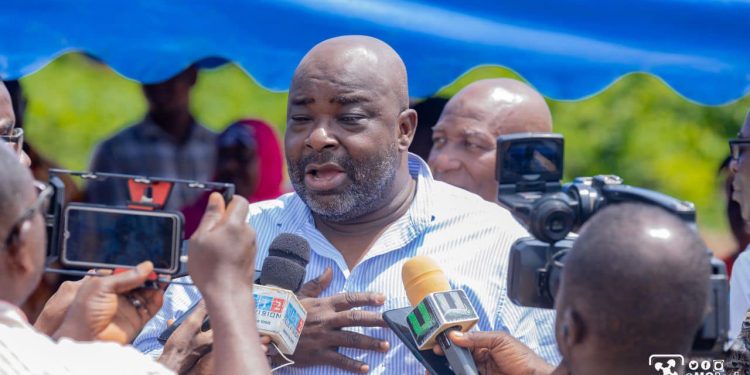
Speaking on JoyNews, Ambassador Gilad said Israel’s opposition was rooted in the resolution’s description of the transatlantic slave trade as the “gravest” crime against humanity, a characterisation he argued amounts to an unacceptable ranking of historical suffering.
“Our problem with this resolution was exactly that, the gravest,” he said. “There were quite several crimes against humanity… Who are we to judge which is the gravest and which is less grave?”
Gilad invoked some of history’s darkest chapters to make his case, the Holocaust, the Armenian genocide, and the Rwandan genocide, arguing that placing such tragedies in a hierarchy diminishes none of them, but distorts all of them. For Israel, a nation whose identity is inseparable from the memory of the Holocaust, the idea of ranking atrocities carries particular weight.
The Ambassador was clear that Israel’s vote should not be misread as indifference to the horrors of the slave trade. “We believe that making a hierarchy and saying which was greater than the other is a mistake,” he said, reiterating that Israel fully recognises the severity and lasting consequences of the transatlantic slave trade.
What makes Israel’s position notable is how close a compromise apparently came. Gilad disclosed that Israel, alongside the United States, the United Kingdom, and members of the European Union, engaged Ghana’s delegation at the United Nations before the vote, proposing a straightforward amendment that the resolution describe the slave trade as “one of the gravest” crimes against humanity rather than simply “the gravest.”
“There is no doubt that had the resolution called the Atlantic slave trade one of the gravest, we had no problem,” he stated plainly.
The proposal, it appears, was not adopted, and the resolution went to a vote with its original language intact. It reportedly received strong backing at the UN, with Ghana among its leading champions. Ghana has been at the forefront of international advocacy for reparations tied to slavery and colonial injustices.
Ambassador Gilad’s remarks offer a window into the complex diplomatic undercurrents surrounding the global reparations debate, where the choice of a single word can determine whether nations stand together or apart. For Israel, the line is not drawn around the recognition of suffering, but around the language used to weigh it.
Source: Apexnewsgh.com