







Alagumgube Endorses Mahama’s Proposed Toll System, Calls for Transparent Electronic Payment Infrastructure

Development Association Outlines Comprehensive Vision for Road Tolls, Energy Conservation, and Accountable Governance. In a bold intervention that has sparked conversation across Ghana’s policy circles, the developmental association Alagumgube has thrown its weight behind President John Dramani Mahama’s proposal to reintroduce road tolls, while simultaneously calling for a complete overhaul of how such collections would be managed to prevent the corruption that plagued previous systems. Gabriel Agambila, founder of Alagumgube Global, has articulated a detailed vision that combines infrastructure development with technological innovation and fiscal responsibility. Speaking on behalf of the association, Agambila emphasized that while toll collection should return, it must be implemented through modern electronic systems that leave no room for revenue leakage. A Modern Vision for Road Tolls “Alagumgube fully supports His Excellency John Dramani Mahama’s thinking about reintroducing the toll system in this country,” Agambila declared. “This would go a long way in putting money back into the system to help maintain existing roads and construct new ones, which will further boost the road industry and create employment opportunities for Ghanaians.” The association’s endorsement comes at a crucial time when Ghana’s road infrastructure faces mounting maintenance challenges despite increased vehicle usage and road deterioration. Agambila noted that the previous removal of tolls, while popular with some segments of the public, has created funding gaps that leave roads in various states of disrepair across the country. However, Alagumgube’s support comes with significant caveats and recommendations designed to ensure that toll revenues serve their intended purpose rather than disappearing into private pockets as has happened with various revenue collection mechanisms in the past. The EZ-Pass Revolution At the heart of Alagumgube’s proposal is the implementation of an automated toll collection system similar to the EZ-Pass used in parts of the United States and similar electronic toll collection systems employed successfully around the world. “We are calling on the Minister for Roads and Transport and whoever is in charge of the Driver and Vehicle Licensing Authority (DVLA) to link all number plates to the credit or debit cards of vehicle owners,” Agambila explained. “This would allow funds to be directly deducted from those accounts automatically when vehicles pass through toll booths.” The proposed system would eliminate the need for physical cash transactions at toll points, significantly reducing opportunities for leakage and corruption while also improving traffic flow. Vehicles would pass through designated lanes equipped with cameras and sensors that read number plates and automatically process payments from linked accounts. Agambila stressed that this technological infrastructure must be fully operational before any toll collection begins. “If we don’t put this system in place first, we will, as usual, be putting money into the pockets of a few individuals to the detriment of the whole country. We have seen this pattern repeat itself too many times in Ghana’s history.” Accommodating International Traffic Recognizing that Ghana’s roads are used not only by locally registered vehicles but also by trucks and cars from neighboring countries, Alagumgube has proposed a practical solution for handling international traffic whose owners may not have Ghanaian bank accounts accessible to the electronic system. “We are asking that a single lane at each toll point be reserved for trucks and cars from foreign countries whose accounts might not be accessible to our system,” Agambila suggested. “This would allow for manual processing where necessary while maintaining the integrity of the electronic system for the majority of vehicles.” This accommodation demonstrates the association’s thoughtful approach to implementation challenges, acknowledging that a hybrid system may be necessary during transition periods and for specific categories of road users. Investing in Aviation Infrastructure Perhaps most notably, Alagumgube has proposed that a portion of toll revenues be directed toward specific aviation infrastructure projects, particularly in northern Ghana. The association is calling for designated funds from toll collections to be allocated to the maintenance of the Sunyani Airport and the completion of the Bolgatanga Airport. “The Bolgatanga Airport project was started by our association, and we have a vested interest in seeing it completed for the benefit of the Upper East Region and indeed all of Ghana,” Agambila stated. “Aviation infrastructure in the north has lagged behind for too long, and this represents an opportunity to address that imbalance using revenues generated from road users.” This proposal reflects Alagumgube’s broader developmental vision, which extends beyond road infrastructure to encompass comprehensive transportation networks that can stimulate economic activity across all regions of the country. Implementation Support In a gesture that underscores the association’s commitment to national development, Agambila announced that Alagumgube stands ready to assist the government in implementing these programs. “The doors of our association are open to helping implement these systems for the country. We have members with expertise in technology, infrastructure development, and public policy who are willing to contribute their time and knowledge to ensure that Ghana gets this right,” he said. This offer of technical assistance could prove valuable to government agencies that may lack the specialized knowledge required to implement sophisticated electronic toll collection systems. Addressing Energy Waste Among Appointees Beyond transportation infrastructure, Alagumgube has raised serious concerns about what it describes as wasteful energy practices among government appointees. The association has called attention to behaviors that not only waste public resources but also demonstrate a disconnect from the realities faced by ordinary Ghanaians. “Our second concern is the waste of energy by appointees who have suddenly forgotten where they came from,” Agambila observed. “These appointees leave their vehicles running for hours while they are seated at programs, as if they descended from a cold climate where this would be necessary. Some of them even have their vehicles running continuously while they are comfortably seated in their air-conditioned offices.” The association has proposed a simple solution to this unnecessary fuel consumption: better communication between appointees and their drivers. “There should be no problem texting your driver five or ten minutes before you need to depart to start the vehicle,” Agambila suggested. “This simple practice would save thousands of cedis in
Civil Society Urges Coordinated, Inclusive Action to Eliminate Neglected Tropical Diseases in Ghana by 2030
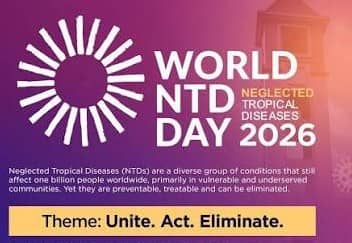
Civil society groups dedicated to tackling Neglected Tropical Diseases (NTDs) in Ghana are calling for a fundamental shift from isolated interventions to collaborative, inclusive strategies if the nation is to achieve the elimination of all NTDs by 2030. The Ghana National Consortium on Neglected Tropical Diseases (Ghac-NTDs) issued this call during World NTD Day, observed on Thursday, January 30, 2026, in Tamale. This year’s global theme, “Unite, Act, Eliminate NTDs and related diseases,” echoed the group’s central message. Ghana has scored significant public health victories, notably eradicating Guinea worm, trachoma, and Human African Trypanosomiasis. However, Ghac-NTDs raised alarms that 14 out of the 21 globally recognised NTDs persist in the country, placing over 12 million Ghanaians at risk, particularly those living in poverty or lacking adequate sanitation. The consortium attributed slow progress towards elimination to what it termed “solo and uncoordinated approaches” among key stakeholders, even as it acknowledged efforts by the Ministry of Health and the Ghana Health Service (GHS). In a statement signed by National Chairman Dr. Peter Ndonwie, Ghac-NTDs highlighted ongoing challenges for civil society organisations (CSOs), including limited access to vital disease data, exclusion from policy-making forums, and insufficient funding for NTD programmes at both national and district levels. “Policy formulation often lacks the ground truth and community-led perspectives that CSOs provide, while the fight against NTDs remains heavily dependent on dwindling donor funding,” the statement noted. To address these issues, the consortium urged the government, through the Ministry of Health and GHS, to formally integrate CSOs into the Intra-Country Coordinating Committee (ICCC) at all administrative levels. Such integration, it argued, would bolster joint planning, implementation, and monitoring of NTD interventions. The group also called for the swift implementation of the End NTDs Fund, announced in 2025, with transparent processes enabling CSOs to access resources for community-based work. On the subject of disease surveillance, Ghac-NTDs proposed the creation of a shared digital platform to facilitate real-time data exchange between government health services and CSO field teams—a move it described as essential for evidence-based policy and planning. The consortium further advocated moving beyond vertical, drug-focused campaigns to adopt person-centred, integrated primary healthcare strategies. These should encompass disability management, mental health support, community rehabilitation, and stigma reduction for individuals affected by NTDs. Reiterating its commitment, Ghac-NTDs affirmed its readiness to mobilise its national network of members, volunteers, and advocates in support of the Ghana NTD Sustainability Plan (2023–2026). “Eliminating NTDs in Ghana is not just a dream, but a target within reach if we act together,” the statement concluded. Source: Apexnewsgh.com