






The experiment of Biochar by the Millar Institute proves massive results

On the fertile fields of the Millar Institute for Transdisciplinary and Development Studies, a quiet revolution is taking root, one that promises to transform the lives of farmers across Ghana and contribute to a greener planet. Last season, the Institute launched the Grass Biochar Experiment, an ambitious initiative to test the power of biochar as a sustainable organic fertilizer. The experiment began on a modest test farm, where researchers blended biochar into the soil and closely monitored its effects on crop growth and soil health. As the weeks unfolded, the results exceeded all expectations: crops grew stronger and healthier, soil fertility improved dramatically, and yields soared. The implications of these findings extend far beyond the test plots. Biochar, produced from plant material, offers a cost-effective and environmentally friendly alternative to traditional synthetic fertilizers. Its use not only boosts agricultural productivity and food security but also holds promise for mitigating climate change by sequestering carbon in the soil. “We are thrilled with the results of the Grass Biochar Experiment,” announced the President of the Millar Institute, reflecting the excitement spreading through the agricultural community. “Biochar has the potential to revolutionize agriculture in Ghana, and we look forward to working with farmers and stakeholders to promote its adoption.” Encouraged by these remarkable outcomes, the Millar Institute is preparing to expand the experiment. Plans are underway to collaborate with farmers throughout Ghana, tailoring biochar techniques to different environments and crop needs. This initiative is part of the Institute’s ongoing commitment to sustainable agriculture, environmental stewardship, and innovative solutions for rural livelihoods. As the Grass Biochar Experiment continues to grow, so does the hope for a more productive, resilient, and environmentally conscious agricultural sector in Ghana. The Millar Institute stands at the forefront of this movement, empowering farmers with new tools and knowledge to nurture their land—and the future. Source: Apexnewsgh.com
The Power of Grass Biochar in Sustainable Agriculture and Mitigating Climate Change

Feature By Ngamegbulam Chidozie Stephen As I traveled through the Upper East, North East, Upper West, Northern, and Savannah regions, I heard a recurring theme from farmers: frustration. The source of their frustration was not drought, pests, or diseases, but rather the high cost of agrochemicals, particularly fertilizers. However, their concerns are deeply intertwined with the escalating impacts of climate change. Farmers in these regions, who rely heavily on agriculture for their livelihoods, expressed their concerns about the escalating prices of fertilizers. They lamented that the high cost of these essential inputs was eating into their profits, making it difficult for them to sustain their farming businesses. Climate change has exacerbated this issue, as rising temperatures and changing rainfall patterns have led to decreased crop yields, forcing farmers to rely more heavily on agrochemicals to maintain productivity. Moreover, the intensive use of chemical fertilizers can lead to soil degradation, water pollution, and loss of biodiversity – all of which are further exacerbated by climate change. As temperatures rise, soil moisture decreases, and extreme weather events become more frequent, the use of chemical fertilizers can have devastating consequences for the environment. The farmers’ concerns are not unfounded. Climate change is projected to increase temperatures in West Africa by up to 3.5°C by 2100, leading to more frequent droughts, floods, and heatwaves. This will have a disproportionate impact on smallholder farmers, who are already struggling to adapt to the changing climate. Grass Biochar a game changer The concept of biochar has been around for over 2,000 years, dating back to the “slash-and-burn” agricultural method practiced by ancient civilizations. However, the modern understanding and application of biochar as a tool for environmental management and climate change mitigation have developed significantly over the past few decades. The term “biochar” emerged in the early 2000s, in conjunction with growing concerns about soil management and carbon sequestration.¹ Since then, research and development of biochar technologies have accelerated, with various organizations and initiatives promoting its use as a sustainable solution for environmental and agricultural challenges. Some notable milestones in the development of biochar include: A. 2001: The International Biochar Initiative (IBI) was established to promote the use of biochar for environmental management and climate change mitigation. B. 2009: The IBI published a report highlighting the potential of biochar to mitigate climate change by sequestering carbon in soils. C. 2012: Researchers began exploring the use of biochar as a soil amendment to improve soil fertility and reduce greenhouse gas emissions. D. 2024: The Biochar Basics series was published, providing introductory information on biochar used as a container substrate component. Today, biochar is recognized as a multifunctional material with various applications, including carbon sequestration, soil fertilization, water filtration, and contaminant immobilization. Innovative Grass Biochar Offers Promising Solutions for Climate Change and Sustainable Agriculture However, despite all these years of Biochar existence, no scientist or researcher has come out with the innovation of ‘Grass Biochar’. Fortunately, following the skyrocketing increase of chemical fertilizers and some other farming inputs which has become huge challenge for farmers especially in the northern parts of Ghana, in a groundbreaking development, Prof. David Millar of the Millar Institute for transdisciplinary and Development Studies (MITDS) went into research and later came out with ‘Grass Biochar’, an organic fertilizer with the potential to significantly combat climate change while promoting sustainable agriculture. This innovative product harnesses the power of biochar, derived from grass, to provide numerous environmental benefits. One of the key advantages of ‘Grass Biochar’ is its ability to store carbon in the soil for extended periods. By converting grass into biochar, the carbon is locked away, effectively reducing atmospheric CO2 levels and helping to slow global warming. Studies indicate that widespread adoption of biochar could remove up to 10 gigatons of CO2-equivalent from the atmosphere annually, with the potential to decrease global greenhouse gas emissions by 10-20%. In addition to its carbon-sequestering properties, Grass Biochar enhances soil health by improving fertility, structure, and water-holding capacity. This leads to better plant growth, reduced soil erosion, and healthier ecosystems, as resilient soils can absorb and store even more carbon. Moreover, Grass Biochar plays a vital role in reducing greenhouse gas emissions. It has shown effectiveness in lowering nitrous oxide (N2O) and methane (CH4) emissions from soils. By promoting efficient nutrient cycling, it minimizes the need for fertilizers, thus further decreasing N2O emissions. Grass Biochar also supports regenerative agriculture practices, which promote soil conservation and biodiversity. By utilizing readily available biomass like grass, its production encourages sustainable land management while also addressing the issue of waste, as grass is often viewed as a nuisance. The benefits of Grass Biochar extend to climate change adaptation as well. Fields enriched with biochar exhibit improved drought resilience and enhanced water retention, helping farmers navigate climate variability and extreme weather conditions effectively. Furthermore, the potential impact goes beyond environmental benefits. The Grass Biochar initiative could create job opportunities in production and application sectors. Enhanced soil fertility leads to improved crop yields, thereby bolstering food security and availability. To fully realize the climate change mitigation potential of Grass Biochar, government support is essential. Recommendations for action include research funding to explore optimal production methods and scalability, as well as policy incentives such as subsidies or carbon credits to encourage farmer adoption. Educating farmers, policymakers, and stakeholders about the benefits of biochar and best practices will also be crucial for successful implementation. Prof. Millar’s Grass Biochar not only presents a viable solution to tackle climate challenges but also promotes sustainable agriculture, ultimately contributing to a more secure food future. Engaging Prof. Millar, he emphasized that the resources required for grass biochar production are readily available at the local level, unlike chemical fertilizers. He revealed the project has reached 11 communities across 5 regions, aims to train women’s groups in the production of grass biochar, a revolutionary organic fertilizer. The impact of this initiative has been nothing short of remarkable. Women who were once struggling to make ends meet are now equipped with the knowledge
Millar Institute Targets District Assemblies to Champion Grass Economy Innovation

Dr. Maxwell Ba-an Tengolzor, a lecturer at the Millar Institute for Transdisciplinary and Development Studies, is leading a project to transform the grass economy in Northern Ghana. Apexnewsgh reports With funding from the Food and Agriculture Organization (FAO), the project aims to turn 10 million tons of grass into productive resources, such as charcoal, briquettes, biochar, and paper. Dr. Ba-an explained that the project is training rural women in three regions – Upper East, Upper West, and Northern Region – to produce these resources and use biochar as a sustainable alternative to chemical fertilizers. The project has already conducted training sessions, conferences, and workshops in all three regions. The ultimate goal is to leverage the grass economy to influence social protection policies at the local government level, particularly in areas such as school feeding programs and poverty alleviation initiatives. To achieve this, Dr. Ba-an and his team have invited technical experts, social welfare directors, agriculture departments, forestry services, and other stakeholders to a national policy forum in Bolgatanga. Professor David Millar, President of the Millar Institute, addressed stakeholders at a forum, emphasizing the institute’s goal to revolutionize the North’s economy through innovation. He highlighted the district assembly as the primary target for this initiative, leveraging the region’s natural advantage as the “grass land” of Ghana. Meanwhile, addressing stakeholders at the forum, Professor Millar encouraged stakeholders to champion this innovation through the assembly, stressing the importance of educating donors about the initiative’s regional focus and potential national benefits. He explained that, although a national dialogue was initially planned, the institute opted to begin with district-level discussions to ensure grassroots engagement and ownership. By focusing on the district assemblies, the Millar Institute aims to empower local communities to drive economic growth and development, positioning the North as a model for sustainable innovation in Ghana. Source: Apexnewsgh.com Thanks for reading from Apexnewsgh as a news publishing website from Ghana. We encourage you to freely share this story via social media platform and follow us on; Facebook on APEXNEWSGH-Tv or Please contact Apexnewsgh.com on email apexnewsgh@gmail.com for your credible news publications. Contact: 0248250270/0256336062.
Mainstreaming Grass Biochar in Agriculture: A way to go for Farmers–Clifford Amoah Adagama

Clifford Amoah Adagama, of Kessena Nankana Cooperative Baobab Processors Union (KANBACU), has emphasized the potential of grass biochar to transform agriculture in the region. Apexnewsgh reports Speaking at a dialogue meeting organized by the Millar Institute for Transdisciplinary and Development Studies (MITDS) in Bolgatanga, Mr. Adagama highlighted the benefits of mainstreaming biochar into agricultural production. Mr. Adagama noted that introducing biochar to dry season farming can help reduce the reliance on chemical fertilizers, promote soil rejuvenation, and increase fertility levels. This innovation has the potential to support women farmers who struggle to access capital for chemical fertilizers. KANBACU has already received training on biochar production and has started initial pilots. Mr. Adagama stressed the need for government support to scale up this innovation, advocating for a seed fund to be established for environmental conservation and protection initiatives. This fund would enable innovators to access resources to develop and scale their technologies, reducing the environmental impact of bushfires in the region. According to him, the adoption of grass biochar in agriculture has the potential to reduce pressure on farmers, promote conservation, and increase household income. Mr. Adagama’s call to action emphasizes the importance of government investment in this innovation to reduce the environmental impacts of bushfires and promote sustainable agriculture practices. Source: Apexnewsgh.com Thanks for reading from Apexnewsgh as a news publishing website from Ghana. We encourage you to freely share this story via social media platform and follow us on; Facebook on APEXNEWSGH-Tv or Please contact Apexnewsgh.com on email apexnewsgh@gmail.com for your credible news publications. Contact: 0248250270/0256336062
Embracing Grass Biochar: A Game-Changer for Farmers in Talensi

Peter Abunga, Department of Social Welfare and Community Development Talensi, has expressed his enthusiasm for grass biochar, a innovation that has the potential to revolutionize farming in the region. Apexnewsgh reports Speaking at a dialogue meeting organized by the Millar Institute for Transdisciplinary and Development Studies (MITDS) in Bolgatanga, Mr. Abunga shared his views on the benefits of grass biochar, highlighting its potential to improve soil fertility, reduce the need for chemical fertilizers, and increase water retention in the soil. Mr. Abunga, who comes from a farming background, emphasized the significance of this innovation for farmers in the region. He noted that the use of chemical fertilizers has become increasingly expensive, making it difficult for farmers to afford. Grass biochar, on the other hand, is a cost-effective and sustainable solution that can help enrich soil fertility, reduce soil erosion, and increase crop yields. The Department and Community Development Talensi official expressed his gratitude to the Millar Institute for introducing this innovation and urged the government to intervene and support the implementation of grass biochar in farming practices. He emphasized that government backing is crucial for the success of this policy, particularly in the context of the Planting for Food and Jobs initiative. Mr. Abunga’s endorsement of grass biochar is a testament to its potential to transform farming in Talensi and beyond. As a community leader, his support is essential in promoting this innovation among farmers and encouraging its adoption. “With government support, grass biochar can become a game-changer for farmers in the region, improving their livelihoods and contributing to food security”. He stressed Source: Apexnewsgh.com Thanks for reading from Apexnewsgh as a news publishing website from Ghana. We encourage you to freely share this story via social media platform and follow us on; Facebook on APEXNEWSGH-Tv or Please contact Apexnewsgh.com on email apexnewsgh@gmail.com for your credible news publications. Contact: 0248250270/0256336062
Grass Biochar: A Natural and Cost-Effective Solution for Soil Fertility–Ali Rapheal Yenbapono

Ali Rapheal Yenbapono, Project Manager of Tuna Women Development Project (TUWODEP), has expressed his enthusiasm for the grass biochar innovation introduced by the Millar Institute for Transdisciplinary and Development Studies. Apexnewsgh reports At a zonal dialogue meeting in Bolgatanga, Mr. Yenbapono shared his views on the potential of this technology to improve soil health, increase productivity, and reduce poverty. Mr. Yenbapono highlighted the abundance of grass in the region, which can be easily accessed and utilized for biochar production. He emphasized the benefits of this innovation, particularly for rural farmers, who can use biochar as a cost-effective alternative to expensive fertilizers. This, in turn, can help reduce soil degradation and improve crop yields. “Prof. Millar has done well identifying this grass biochar innovation. Because, we have a lot of grass in abundance and is something that we don’t even go to buy. And I think, this innovation, if we advocate it well, it will go a long way to help our people especially people in rural areas. Cutting of tree are now becoming too much for us. So, grass is a free thing we have to embrace”. He said Regarding government intervention, Mr. Yenbapono stressed the importance of policy support to promote this innovation. He suggested that government policies, such as incorporating biochar into school curricula or promoting its use through traditional authorities, can go a long way in enhancing its adoption. Mr. Yenbapono also acknowledged the rampant issue of bush fires in the Savannah region and expressed his belief that this innovation can help minimize the occurrence of such fires. By promoting the use of biochar, communities can reduce the amount of dry grass that fuels bush fires. Source: Apexnewsgh.com Thanks for reading from Apexnewsgh as a news publishing website from Ghana. We encourage you to freely share this story via social media platform and follow us on; Facebook on APEXNEWSGH-Tv or Please contact Apexnewsgh.com on email apexnewsgh@gmail.com for your credible news publications. Contact: 0248250270/0256336062
Grass Biochar, a life saver for us as Ghanaians– Abu Dokuwie Alhassan

Abu Dokuwie Alhassan, Executive Director of Capacity Enhancement and Community Support (CAPECS), has emphasized the significance of the Grass biochar innovation introduced by the Millar Institute for Transdisciplinary and Development Studies (MITDS). He describes the innovation as a life saver. Apexnewsgh reports This technology has the potential to restore environmental dignity, improve soil health, and increase productivity. Alhassan highlighted the widespread use of chemical fertilizers by farmers in Ghana, which harms the environment and perpetuates reliance on imported products. He stressed the need to promote indigenous technologies like grass biochar, which can create jobs, generate generational wealth, and improve soil health. “As far as am concerned, biochar is a life saver for us as Ghanaians, biochar serves as a very important manure and you realized in recent times practically every farmer have resorted to the use of chemicals and that is disingenuous to our environment. If we can promote the use of indigenous technology like this biochar that is been introduced by Millar Institute, i think we have the opportunity to make our soil better” Sharing his personal experience as a farmer, Alhassan noted the high cost of chemical fertilizers and the burden it places on rural farmers. He emphasized that adopting indigenous approaches can reduce costs, improve soil health, and increase income for farmers. Alhassan called on the government to promote the use of indigenous technologies and reduce reliance on imported chemical fertilizers. By doing so, Ghana can create a more sustainable and self-sufficient agricultural sector that benefits both farmers and the environment. The benefits of grass biochar include: Improved soil health, Increased productivity, Job creation in the grass economy, Generational wealth creation, Reduced costs for farmers, Improved soil health, Increased income for farmers By embracing this innovation, Ghana can take a significant step towards sustainable agriculture and environmental restoration. Source: Apexnewsgh.com Thanks for reading from Apexnewsgh as a news publishing website from Ghana. We encourage you to freely share this story via social media platform and follow us on; Facebook on APEXNEWSGH-Tv or Please contact Apexnewsgh.com on email apexnewsgh@gmail.com for your credible news publications. Contact: 0248250270/0256336062
Commercializing grass biochar is something we are going to go— Madam Miyella Lydia

Executive Director of Maaltaaba Pesaent Women Farmer Cooperative, Miyella Lydia, has expressed her enthusiasm for the grass biochar innovation, pointing its potential to improve the environment and empower vulnerable widows. Apexnewsgh reports During a zonal dialogue meeting in Bolgatanga, Madam Miyella shared her organization’s experience with grass biochar and their plans to commercialize its production. “Our main focus is on the environment, and when this technology was introduced, I was thrilled,” she said. “Through the Forest and Farm Facility (FFF) project, we have acquired a lot, and Chief has given us land where we have demonstrated the grass biochar. The women I work with cannot afford certain inputs for their farms, so when this technology was introduced, we embraced it.” Madam Miyella explained that her organization has demonstrated grass biochar in their farms, backyard gardens, and Portray farms, encouraging their women to use it. “We know that when there’s enough biochar on the soil, it helps with water retention, which is crucial in the Upper East region where we have drought issues,” she added. She highlighted the benefits of grass biochar, including its ability to take away the scent in Portray farms and its use as fertilizer. “We are planning to commercialize it next year, and we pray that if you want to buy, you can visit Maba, and they will start measuring it in both for people to buy,” she said. Madam Miyella further emphasized that her organization has received the technology wholeheartedly and is committed to promoting it. “It is a very good technology, and we are going to do it because it is something that will help our women,” she concluded. Source: Apexnewsgh.com Thanks for reading from Apexnewsgh as a news publishing website from Ghana. We encourage you to freely share this story via social media platform and follow us on; Facebook on APEXNEWSGH-Tv or Please contact Apexnewsgh.com on email apexnewsgh@gmail.com for your credible news publications. Contact: 0248250270/0256336062
Grass Biochar: Adding Value to grass will go a long way in putting money into people’s pocket—Awal Ahmed Kariama

Alhaji Awal Ahmed Kariama, Executive Director of RISE Ghana, has expressed his enthusiasm for the new grass biochar innovation introduced by the Millar Institute for Transdisciplinary and Development Studies (MITDS). He believes, adding value to grass will go a long way in putting money into people’s pocket. Apexnewsgh reports During a zonal dialogue meeting in Bolgatanga, Alhaji Awal shared more interesting views on the potential of this technology to improve soil health, increase productivity, and reduce poverty. Ahmed highlighted the challenges faced by farmers, including the high cost of inputs, particularly fertilizer. He emphasized that the introduction of briquettes from this innovation will significantly reduce the cost of farming, leading to improved income for farmers and reduced poverty levels. “As for farmers, some challenges that they have is the high cost of inputs and by inputs particularly fertilizers, is very expensive for most of our farmers and so the introduction of grass biochar will go a long way in reducing the cost of farming for our farmers and by reducing the cost of farming that means that the impact in terms of the income the farmer is going to get, is going to improve and when that is improved the level of poverty in the house is improved” He said As an NGO focused on supporting vulnerable groups, RISE Ghana sees the potential for grass biochar to benefit women, persons with disabilities, and other marginalized communities. Ahmed expressed his organization’s commitment to exploring ways to integrate this innovation into their strategic plan, focusing on income generation, promoting inclusion, and reducing economic vulnerability. “If we add value to grass like Prof Millar is trying to do I think it will go a long way to equally put money into people’s pocket, but it will also help protect our environment. So, for me I see it as a very creative idea, and I think everybody who interested in the environment who is interested in reducing poverty should come all out and support this to become a reality” He tressed Regarding policy, Ahmed acknowledged the importance of government support but emphasized the need to leverage existing policies and entry points to promote this innovation. He called on the government to take immediate action to support sustainable agriculture and environmental restoration through innovative technologies like grass biochar. Source: Apexnewsgh.com Thanks for reading from Apexnewsgh as a news publishing website from Ghana. We encourage you to freely share this story via social media platform and follow us on; Facebook on APEXNEWSGH-Tv or Please contact Apexnewsgh.com on email apexnewsgh@gmail.com for your credible news publications. Contact: 0248250270/0256336062
Stakeholders Gather in Wa for Grass Economy Innovation Dialogue
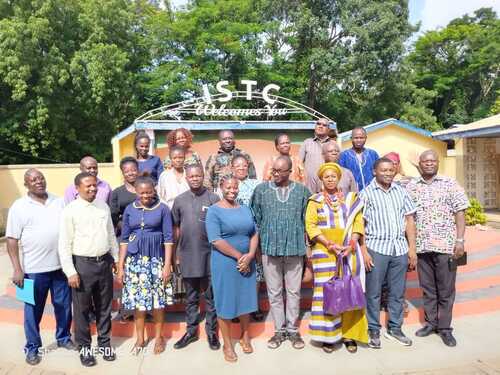
The Millar Institute for Transdisciplinary and Development Studies (MITDS) recently organized a stakeholder’s dialogue in Wa, Upper West, to discuss the innovative grass economy. Apexnewsgh reports The event brought together individuals, organizations, groups, and departments interested in the grass biochar project. Farmers who attended the dialogue were particularly enthusiastic about the potential of grass biochar. They emphasized its ability to improve soil longevity, exceeding three years, unlike chemical fertilizers which only have a one-year span and primarily benefit crops, not the soil. The dialogue provided a platform for participants to make voluntary pledges on promoting and marketing the grass bio project in their communities. The theme of the event was “Reversing Deforestation, Eliminating Bushfires and Land Degradation, Using Grass Economy Innovation as a Vital Entry Point.” The stakeholder’s dialogue was a significant step forward in exploring the potential of grass biochar to address environmental and agricultural challenges in the region. By bringing together diverse stakeholders, MITDS facilitated a collaborative approach to promoting sustainable development and innovation in the Upper West region. Source: Apexnewsgh.com Thanks for reading from Apexnewsgh as a news publishing website from Ghana. We encourage you to freely share this story via social media platform and follow us on; Facebook on APEXNEWSGH-Tv or Please contact Apexnewsgh.com on email apexnewsgh@gmail.com for your credible news publications. Contact: 0248250270/0256336062