




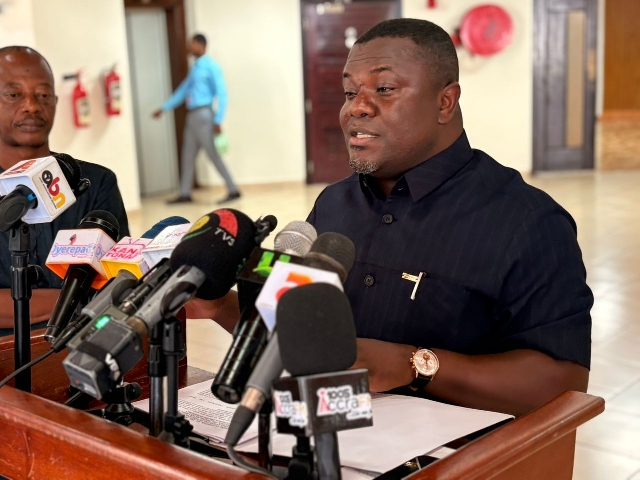
Social justice advocate Nyeya Yen has shared deep concerns over the increasing rate of student riots in schools across the Upper East Region.
Speaking in a documentary engagement with Ngamegbulam Chidozie Stephen of Apexnewsgh in his recent documentary titled “The Broken Chalkboards”, Mr. Yen drew from both his experiences in Ghana and over 30 years of living in the United Kingdom to offer insights and solutions.
He began by challenging the notion that Western countries, particularly the UK, offer a flawless model of education and discipline.
“People tend to have an exaggerated opinion of the United Kingdom. But it is not a perfect society. It has also failed a lot of its young people, particularly in the black community.”
Mr. Yen explained that while Ghana struggles with student unrest, British schools face equally troubling issues such as gang violence, substance abuse, and high dropout rates among black students.
“There was a time in London when almost every week two or three children died, killed by other children. Many of them were black kids from inner-city communities who had no supervision at home.”
Kindly watch the full video here:
https://youtu.be/GSQR3-T6EaE.
Turning back to Ghana, Mr. Yen argued that the root causes of school riots are often practical, with poor food quality topping the list.
“One of the major reasons for school riots is extremely poor food. When children are given food that is not sufficient, they get organized. Many riots have occurred because of poor food.”
He pointed to corruption in food distribution and low salaries of kitchen staff as aggravating factors.
“Sometimes the school may be given 100 bags, but the authorities decide to keep 20. And by the time the food gets to the kitchen, the cooks, who are paid 600 or 1000 cedis, also take some home. In the end, the children suffer.”
Beyond food, Yen stressed the importance of inclusive school management and student participation in decision-making.
“Schools should be run democratically. Get students involved through councils. Even in simple things like the kitchen, discuss with them. Don’t just say, ‘I am in charge.’ That brings resentment, and resentment can lead to riots.”
He also highlighted the role of peer influence, bullying, and substance misuse in fueling unrest. Citing the Zuarungu case linked to the Bawku conflict, he warned against ethnic divisions infiltrating schools.
“My advice to the young people is that we are all Ghanaians. We shouldn’t say, I am Frafra, I am Kusasi, I am Dagomba. Hate is extremely bad, and students should not allow it to divide them.”
On discipline, Mr. Yen clarified that it should not be equated with corporal punishment but with firm, consistent guidance.
“Discipline is not about beating. It is about how you relate to the child. If you say you will withdraw a privilege, follow through. Children know when you are not serious, and they will take liberties.”
He concluded by calling for better supervision, stronger discipline, fair treatment, and meaningful engagement of students as the way forward.
“Some of these students are already 17 or 18, and they are adults, voting age. They should be involved in the running of schools. Only then can we prevent resentment from turning into riots.”
Source: Apexnewsgh.com/Ngamegbulam Chidozie Stephen