
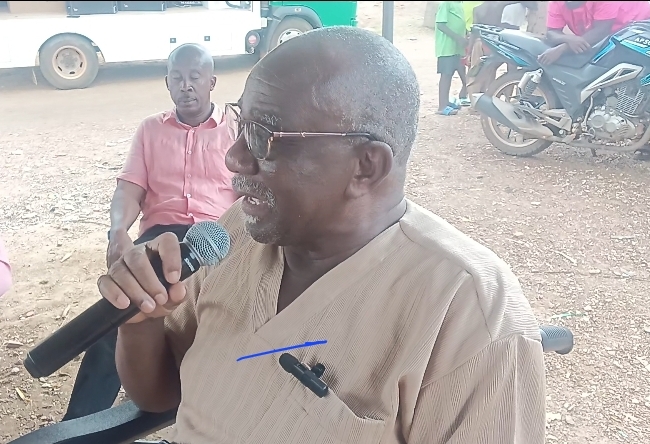
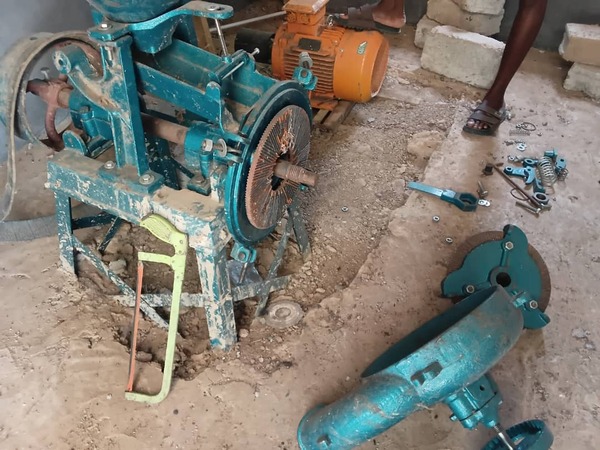
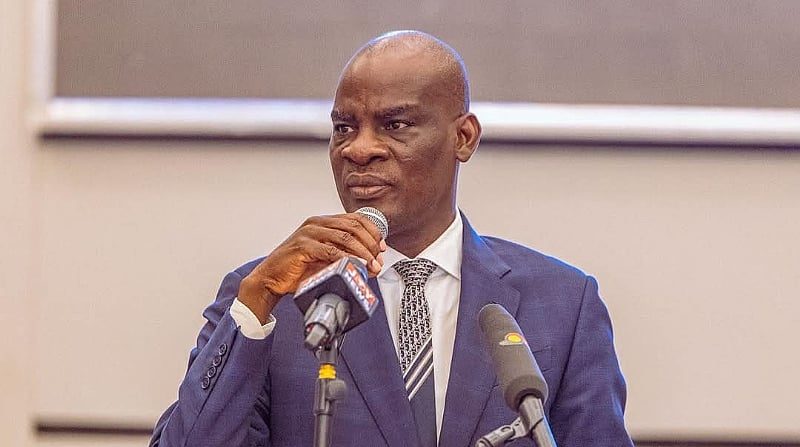

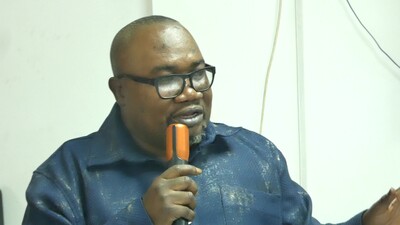

During the commissioning and handover ceremony of a newly built 10-seater pour-flush toilet and a mechanized borehole with a 5-unit shower system at Pelingu, an initiative spearheaded by the Member of Parliament for Nabdam, Dr. Mark Kurt Nawaane, Dr. Thomas More, Executive Director of T-More Enterprise, shared a candid account of the challenges he faces as a local contractor working in rural communities.
Speaking at the short ceremony, Dr. More took the opportunity to reveal the behind-the-scenes realities that local contractors endure. He began by pointing out a deep-rooted issue: while projects are carried out in the district, very few local Nabdam people hold key positions in the assembly. “If you go to the assembly now, how many of you are Nabdams?” he asked. “The coordinating director might not be a Nabdam, the finance officer might not be a Nabdam, and the community health workers are not always Nabdams either.” This, Dr. More explained, means that apart from a few opportunities. such as hiring a local contractor or providing accommodation, locals often gain little else from the projects executed in their own communities.
Dr. More delved into the difficulties of securing labor and resources. He described how the proliferation of contracts in the region has driven up labor costs and made skilled workers scarce. “Labor has become very difficult to come by, and very expensive,” he lamented. Skilled workers are constantly in demand, and contractors often find themselves waiting weeks or even months before someone becomes available. “When the assembly finally pays you, you can’t even find electricians to come and work,” he recounted, highlighting the labor shortages that delay projects.
He painted a vivid picture of the struggle to secure essential services. Dr. More shared how he had to rely on a generator for weeks while waiting for electricity to be connected to a recently completed project. “The demand for electricity is so high that applications pile up for months,” he explained, and some people resort to hiring unofficial workers just to get connected.
Another challenge lies in the economics of labor. With contract work more lucrative than traditional farming, many young people are abandoning agriculture in favor of construction work, yet even then, the returns are modest. “How many bags or rooms will you get for this farm? Multiply that by 300 cedis, and that is what you’ll get in one day,” he observed, underscoring why so few are willing to return to the fields or take on physically demanding jobs for contractors.
Dr. More also spoke about the frustrating unpredictability of payments for completed work. He described how delays in assembly payments force contractors to suspend operations and sometimes leave workers unpaid for months. “If they take three or four months before paying me, it doesn’t matter,” he said, “I have seven people depending on me.”
Despite these hardships, Dr. More expressed gratitude for being given the chance to deliver such projects to his community and called for greater support for local contractors. He appealed to policymakers and community leaders to encourage residents to construct toilets in their homes and to prioritize local involvement in development projects.
Source: Apexnewsgh.com