
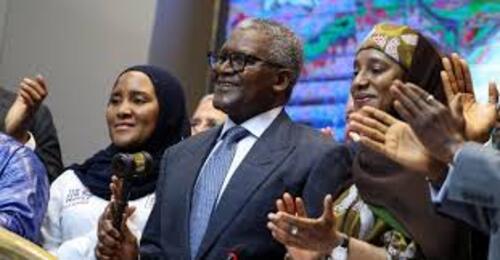
Surge in Support: Dr. Ato Forson Overtakes Rivals in NDC’s 2028 Flagbearer Poll

The Minister for Finance, Dr. Cassiel Ato Forson, has surged ahead in the race to lead the National Democratic Congress (NDC) into the 2028 presidential election. According to the latest poll conducted by Global InfoAnalytics, Dr. Ato Forson has experienced a remarkable 10-percentage-point leap in delegate support, rising from 22% in July to 32% in September. The story of this political momentum began to unfold when the Executive Director of Global InfoAnalytics, Mussa Dankwah, took to Facebook on Monday, September 14, 2026, to share the newest polling figures. The data revealed a significant shift in the NDC’s internal dynamics, with Dr. Forson now holding a commanding nine-point lead over his closest rival, NDC National Chairman Johnson Asiedu Nketia. In stark contrast to Dr. Forson’s rise, Asiedu Nketia’s support has slipped from 27% in July to 23% in September, a four-point drop that has altered the landscape of the contest. Despite Dr. Forson’s impressive gains, the poll highlighted that the race is far from settled. A substantial 28% of delegates remain undecided, though this is a slight decrease from the 30% recorded two months prior. The uncertainty among delegates suggests that while Dr. Forson enjoys new momentum, the outcome could still be swayed in the coming months. Further down the list, the Minister of Education, Haruna Iddrisu, saw his support dip by a point to 5%. Vice President Professor Naana Jane Opoku-Agyemang and Chief of Staff Julius Debrah each garnered 4%, reflecting modest declines from 7% and 5% respectively. Professor Joshua Alabi improved slightly to 2%, while Eric Opoku, the Minister for Food and Agriculture, remained steady at 1%. The poll, which surveyed 3,615 NDC delegates between September 11 and 13, 2026, boasted a 99% confidence level and a margin of error of ±2.17 percentage points. Analysts say these numbers reveal more than just a shift in percentages, they point to a changing tide within the NDC. Dr. Ato Forson stands out as the only leading contender to record a double-digit increase in support, signaling a potential realignment of power as the party looks ahead to 2028. As the dust settles on these latest figures, the focus now turns to how each contender will work to consolidate their support among the still-undecided delegates. With the race for the NDC’s flagbearer wide open, the coming months promise to be pivotal in shaping the party’s future. Source: Apexnewsgh.com
Operation Water Shield Launched to Protect Ghana’s Rivers from Illegal Mining

The National Anti-Illegal Mining Operations Secretariat (NAIMOS) has launched Operation Water Shield, a far-reaching national enforcement campaign designed to safeguard Ghana’s major rivers, watersheds, and other vital water resources from the destructive impacts of illegal mining. Unlike previous one-off raids, Operation Water Shield marks a shift to a sustained, intelligence-led strategy that targets priority river systems, especially those close to downstream communities and water-treatment facilities. The campaign, announced in a statement on Friday, September 11, 2026, will focus on heavily threatened rivers such as the Birim, Ankobra, Tano, Bia, Pra, and Offin, along with affected stretches of the Black and White Volta systems. Strategic source areas and upper catchments critical to downstream water quality will also be given priority. NAIMOS emphasised that the operation will be carried out in partnership with relevant security and state agencies, aiming to protect river sources, deny illegal miners access to riverbanks and waterways, dismantle logistics and financial networks enabling illegal mining, and restore degraded water bodies. Sustained monitoring will be established to prevent reoccupation of cleared areas. “Enforcement under Operation WATER SHIELD will be firm, sustained and uncompromising, within the law,” the Secretariat announced. Illegal miners operating on riverbanks and waterways should expect disruptions to their activities, with equipment such as excavators, changfan machines, Source: Apexnewsgh.com
Roads Minister Calls for Innovative Funding and Private Sector Role to Bridge Ghana’s Transport Gap

Minister for Roads and Highways, Governs Kwame Agbodza, has called for fresh approaches to financing and delivering Ghana’s transport infrastructure, urging a greater role for the private sector to help close the country’s widening infrastructure gap. Speaking at the 2026 Transport Sector Review Conference in Ho, Volta Region, Mr. Agbodza argued that traditional public financing was no longer sufficient to develop and maintain the roads, bridges, and other critical transport links Ghana needs. The conference, held under the theme “Financing and Delivery of Resilient Transport Infrastructure and Services: A Big Push for Sustainable Economic Transformation,” gathered policymakers, development partners, private-sector representatives, transport unions, academia, and industry experts to chart the sector’s future. According to the minister, Ghana must mobilise additional resources, improve spending efficiency, strengthen asset management, and build an environment that attracts private capital. “The government would explore innovative and predictable financing mechanisms to ensure sustainable funding for infrastructure development and maintenance,” he said. Mr. Agbodza stressed that transport infrastructure should be seen as vital economic connectors, not just physical assets—enabling people, businesses, farmers, and communities to play their part in national growth. “This is why the government has placed the Big Push infrastructure programme at the centre of its development agenda,” he said. Launched in September 2025, the Big Push programme represents a bold national investment drive aimed at plugging infrastructure gaps and supporting economic transformation. Achieving its goals, Mr. Agbodza noted, will require effective financing, efficient project execution, and responsible asset management. The Minister also urged engineers and technical professionals to devise simpler, more cost-effective designs that do not sacrifice quality, durability, or safety. “Engineering solutions should take into consideration Ghana’s financial realities while ensuring that infrastructure remained fit for purpose and capable of serving the needs of communities over the long term,” he emphasised. Mr. Agbodza further called for managers of major transport facilities to prioritise safety and accessibility. He advocated for clear emergency exit signage and proper lighting, especially to aid travellers with visual impairments, stating, “Improving accessibility and safety should form an integral part of infrastructure planning rather than being treated as an afterthought.” He concluded by highlighting the necessity of strong collaboration among government, technical institutions, private-sector actors, and other stakeholders to mobilise the resources and expertise needed to transform Ghana’s transport sector. Source: Apexnewsgh.com
Education Minister Challenges Minority Leader on Claims of Crisis in School Placements

Education Minister Haruna Iddrisu has pushed back against claims by Minority Leader Alexander Afenyo-Markin that Ghana’s education sector is facing a crisis over school placements. Speaking on TV3’s “New Day” morning programme, as monitored by Gordon Sackitey, Mr. Iddrisu acknowledged that the government is indeed under significant pressure to respond to the concerns of students and parents, particularly in relation to the placement process. However, he cautioned against labelling the situation as a crisis, arguing that similar challenges have persisted under previous administrations. “Inadequate, for example, I’m struggling with placements. I am. As Minister, I would accept that we have come under overwhelming pressure to respond and be responsive to the needs of Ghanaian students and parents. But it does not mean we should exaggerate it as a crisis,” Mr. Iddrisu stated. A former Minority Leader himself, Mr. Iddrisu also addressed the current Minority leadership, emphasizing that the office carries significant responsibility and requires careful communication and consultation. He commended Mr. Afenyo-Markin’s performance but urged him to consult more widely and work collaboratively with his team. “The Honourable Osahen Alexander Afenyo-Markin is doing well but on a few enterprises of the Minority leadership, he needs to be doing more consultation and work with a team,” he said. Mr. Iddrisu further questioned whether the challenges being described as a crisis were new to Ghana’s education system, asking, “So when the Honourable Afenyo says crisis, did the crisis start one and a half years ago or…? He should provide answers.” Defending Ghana’s democratic credentials, the Minister described the country as a beacon of hope in Africa and stressed the importance of protecting its democratic ethos. He reiterated that the Office of the Minority Leader should be guided by facts and truth, stating, “The Office of the Minority Leader is a very important office. So when you are not sure, don’t speak.” The exchange comes amid renewed political debate over ongoing challenges in the education sector, especially the placement of students into Senior High Schools. Source: Apexnewsgh.com
Ghana Launches Operation WATER SHIELD to Target Illegal Mining Financiers and Equipment Suppliers

The National Anti-Illegal Mining Operations Secretariat (NAIMOS) has unveiled a bold new strategy in the fight against illegal mining, announcing plans to target not just miners, but also the financiers, facilitators, and equipment suppliers fueling the destructive activity known locally as galamsey. In a statement launching Operation WATER SHIELD, NAIMOS outlined a national enforcement campaign aimed at safeguarding Ghana’s major rivers, watersheds, and critical water resources from the ravages of illegal mining. Unlike previous efforts that primarily focused on miners and mining sites, this campaign will pursue the wider criminal and financial networks sustaining galamsey operations. The campaign will increase scrutiny on those who facilitate illegal mining, unauthorized manufacturers of chanfang machines, and individuals or companies that rent or supply excavators, water pumps, and other machinery used in the illicit trade. Enforcement, NAIMOS pledged, will be “firm, sustained and uncompromising, within the law.” Illegal miners working on riverbanks and water bodies should expect their operations to be disrupted, with any seized equipment immobilized or dealt with according to the law. Excavators, chanfang machines, water pumps, and dredging equipment will remain prime targets. Operation WATER SHIELD will focus on some of Ghana’s most threatened river systems, including the Birim, Ankobra, Tano, Bia, Pra, and Offin Rivers, as well as critically impacted sections of the Black and White Volta systems. Strategic source areas and upper catchments, which play a crucial role in downstream water quality, will also receive priority attention. NAIMOS described the campaign as a shift from isolated enforcement actions to a sustained, intelligence-led approach that targets both the source and downstream impact zones of illegal mining. The operation will be conducted in collaboration with security and state agencies to deny illegal miners access to riverbanks and waterways, dismantle their logistics and financing structures, and support the restoration of degraded water bodies. Ultimately, the Secretariat’s goal is to “substantially degrade and contain illegal mining within protected watersheds,” restrict the movement of heavy equipment into sensitive river systems, and disrupt the networks that enable illegal mining to persist. Source: Apexnewsgh.com
Seven Dead, 21 Injured in Tragic Accident on Hwideim-Acherensua Highway

A devastating road crash on the Hwideim-Acherensua Highway in the Ahafo Region has claimed the lives of seven people and left 21 others injured. The accident occurred on Tuesday, September 8, 2026, involving a Mercedes-Benz Sprinter bus (registration GT-9931-09) and a Kia Picanto (registration BA-731-20). According to a statement from the Ghana National Fire Service shared on Facebook, preliminary investigations revealed that the Sprinter bus suffered a tyre burst while traveling along the highway. The driver lost control, causing the vehicle to somersault and collide with the oncoming Kia Picanto. Firefighters from the Hwideim District Fire Station responded swiftly to the scene, rescuing the victims from the wreckage of both vehicles. The injured were immediately transported to the St Elizabeth Hospital in Hwideim for urgent medical attention. Authorities are continuing investigations to determine the full circumstances surrounding the tragic incident. Source: Apexnewsgh.com
Parents in Binduri District Demand Answers as WAEC Fails to Account for BECE Maths Answer Sheets

Parents in the Binduri District of Ghana’s Upper East Region are voicing growing concerns after the West African Examinations Council (WAEC) failed to account for the Mathematics objective answer sheets of 165 candidates who sat for the 2026 Basic Education Certificate Examination (BECE). The missing answer sheets, belonging to students from six schools, Benguri Junior High School (JHS), Christian Academy, Yaligun JHS, Amazing Grace JHS, Good Friends International JHS, and Gumyoko JHS, have sparked fears that the affected candidates could miss out on placement in Senior High School (SHS). The SHS placement process is already underway, intensifying anxiety among parents and students alike. Aruk Gabriel, a parent whose child is among those affected, explained to Citi News that parents initially believed the delay in releasing results was a routine matter that would be resolved in time for SHS placement. However, after following up with education authorities in Bolgatanga, they learned that the Mathematics objective answer sheets could not be found. “Now, are they saying that our children should wait? Should they not go to school until they find the papers, mark them and release the results so that we know whether they will get placement? By then, it will be too late,” Mr. Gabriel lamented. The uncertainty surrounding the missing answer sheets has left 165 candidates and their families in limbo. Parents are now urging the Ministry of Education and WAEC to take immediate action to locate the answer sheets, mark them, and release the results before the SHS placement process concludes. The affected families warn that any further delays could unfairly hinder the educational prospects of their children, and are calling for urgent intervention to resolve the crisis. Source: Apexnewsgh.com
Minority Demands Full Documentary Evidence on South Africa Evacuation Expenditure

The Minority in Parliament has intensified its demand for the government to provide comprehensive documentation detailing the costs incurred during the voluntary evacuation of Ghanaians from South Africa amid recent xenophobic attacks. The renewed call comes after a September 7 briefing by the Minister for Foreign Affairs, Samuel Okudzeto Ablakwa, who revealed that the government spent GH¢49.7 million to evacuate 1,964 Ghanaians from South Africa. While the Minority welcomed the disclosure, they insist that the minister’s statement must be substantiated with verifiable records that would allow Parliament and the public to independently confirm the expenditure. Deputy Ranking Member on Parliament’s Foreign Affairs Committee, Nana Asafo Adjei Ayeh, had previously filed a Right to Information (RTI) request seeking details of the evacuation, including full expense records and information on the individuals and organisations that contributed to the exercise. Addressing the press on Thursday, September 10, Asafo Adjei Ayeh clarified that the Minority is not seeking any private information about evacuees but is calling for documents necessary to verify the government’s financial account. “Nobody is asking government to publish passport, medical diagnosis, bank account numbers or other unnecessary private information. We are asking for enough documentary information to verify the public account,” he explained. The Minority supports the government’s decision to assist citizens wishing to return home and acknowledged the Foreign Affairs Minister’s disclosure as a positive step. However, they argue that public figures announced at a press conference are not sufficient for proper verification. According to Asafo Adjei Ayeh, the government’s claims that the operation is complete, all liabilities settled, 1,964 people evacuated, and GH¢49,721,786 spent must be supported by relevant financial and operational records. “If the books are closed, then let’s open the books. Let the travel ledger reconcile with the payment ledger. Let the first phase manifest reconcile with the final first phase number. Let every commercial batch reconcile with the ticket and invoice,” he urged. He added, “We do not need accusations where documents can provide answers. We do not need speculation where accounts can be established.” The Minority is therefore calling on the government to make a full documentary account of the evacuation operation available, arguing that such transparency would boost public confidence and demonstrate responsible use of public funds. Source: Apexnewsgh.com
President Mahama Flags Low Compliance with Governance Standards Among Public Entities
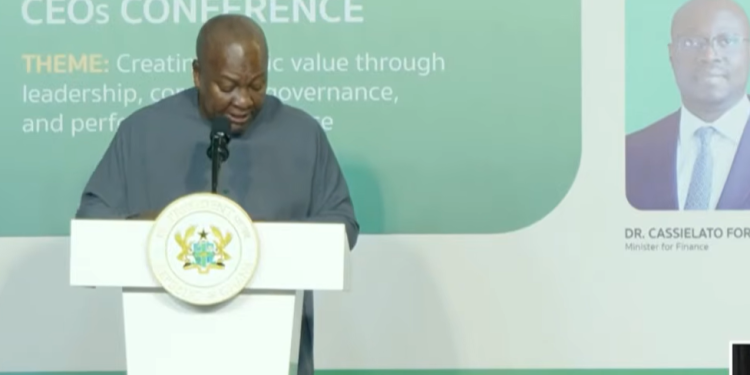
President John Dramani Mahama has expressed serious concerns about the low level of compliance with key governance and accountability requirements among public entities in Ghana. Speaking at the SIGA Governing Boards and CEOs Conference 2026 on Thursday, September 10, the President revealed that only 72 out of the 148 Chief Executive Officers (CEOs) expected to sign performance contracts had done so since his administration took office. While acknowledging improvements in the governance and management of public institutions, President Mahama warned that these positive changes should not be mistaken for the resolution of all governance issues. He pointed out that several entities were still falling short on crucial statutory and administrative obligations, particularly in the submission of audited financial statements, performance contracts, quarterly reports, annual general meetings, and employment data. “We must not confuse improvement with complete success. Only 61 entities submitted their audited financial statements by the statutory deadline of April 30. A significant number of entities either submitted after the deadline or still relied on management and draft accounts,” President Mahama noted. He further highlighted that, in addition to the low number of signed performance contracts, only 71 entities had submitted their quarterly reports, and just 37 out of 177 had held their required annual general or stakeholder meetings. Employment data submissions also declined, dropping from 142 entities in 2024 to 137 in 2025. “These compliance gaps are unacceptable,” President Mahama stressed, urging all public entities to meet their governance and reporting obligations to improve transparency and accountability in the management of state resources. Source: Apexnewsgh.com
President Mahama Warns SOE Boards Against Conflict of Interest and Mismanagement
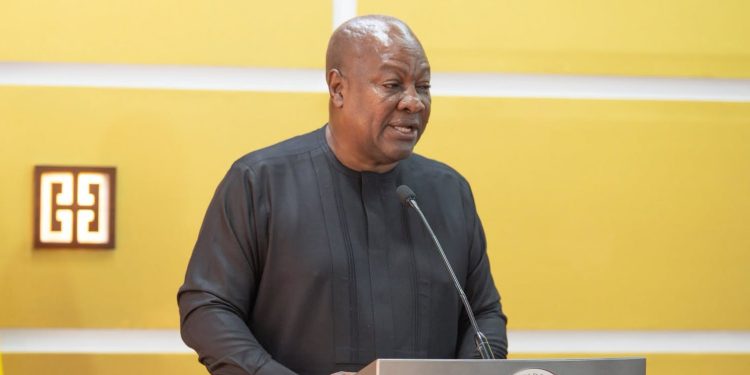
President John Dramani Mahama has delivered a stern warning to members of his administration and governing boards of State-Owned Enterprises (SOEs), cautioning them against conflicts of interest, abuse of office, and the improper management of state resources. Addressing the SIGA Governing Boards and CEOs Conference 2026 on Thursday, September 10, President Mahama emphasized the critical need for integrity, transparency, and accountability among public officials entrusted with managing state institutions and assets. He reminded government appointees and board members of their duty to protect the public interest, insisting that decisions made under their authority should be able to withstand public and official scrutiny. “Ladies and gentlemen, this administration will not tolerate conflict of interest or abuse of office. Procurement must be lawful and follow the guidelines; it must be competitive and transparent,” President Mahama declared. He further stressed that recruitment and promotions should be based strictly on merit, and that contracts, investments, and asset disposals must demonstrate clear value for money. The President made it clear that governing boards must take personal responsibility for state assets in their care—including land, buildings, equipment, and investments. He warned that unauthorized disposal or mismanagement of state assets would not be treated as a minor administrative lapse, but as a serious breach of trust against the people of Ghana. “The government will continue to demand accountability from those entrusted with managing public institutions and resources,” President Mahama stated. The conference brought together governing board members and Chief Executive Officers of SOEs to discuss best practices in governance, accountability, performance, and the effective management of public institutions. Source: Apexnewsgh.com