


Northern Ghana is increasingly caught in a dangerous climate change cycle, prolonged droughts followed by devastating floods, putting the lives and livelihoods of at least 5.8 million people at risk across the five northern regions.
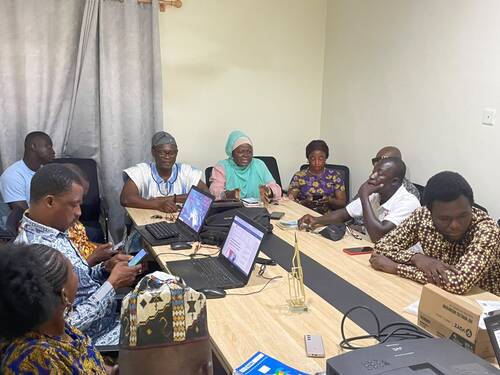
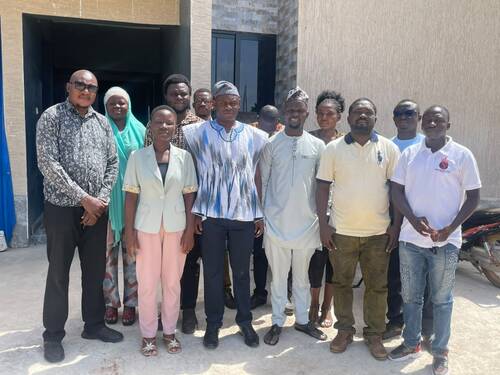
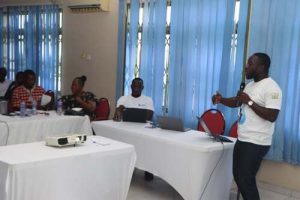
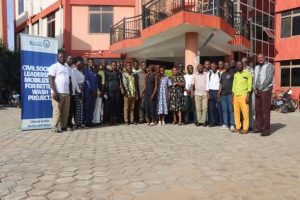
The warning was sounded by Jesse Kazapoe, Head of the White Volta Basin Directorate of Ghana’s Water Resources Commission (WRC), during a three-day climate change advocacy training for 30 WASH (Water, Sanitation, and Hygiene) journalists on climate change reporting, a programme organized by BElim Wusa Development Agency (BEWDA) in partnership with WaterAid Ghana under the SIDA CLIMB Better WASH Partnership.
According to Kazapoe, communities across northern Ghana are experiencing the harsh consequences of changing weather patterns, with drought and flooding emerging as two sides of the same climate crisis.
For many farming communities, the dry season is no longer simply a predictable period of the year. Increasingly prolonged spells of drought are disrupting agricultural activities, reducing crop yields and threatening household food security.
Kazapoe explained that the effects extend beyond agriculture, warning that prolonged droughts are also undermining water security.
As surface water levels decline and groundwater recharge rates fall, both large and small-town water systems struggle to produce sufficient water to meet the needs of communities.
This creates a difficult situation for households already dependent on increasingly unreliable water sources.
Yet, when the rains finally arrive, the crisis often takes another devastating turn.
Kazapoe noted that intense rainfall and flooding frequently cause widespread destruction across northern Ghana. The situation is sometimes worsened by the spillage of excess water from the Bagre Dam in Burkina Faso.
The resulting floods destroy farms, water distribution infrastructure and small-town water systems, while also creating conditions conducive to the spread of water-borne diseases.
Thus, communities that have spent months battling water scarcity can suddenly find themselves struggling with too much water, and the destruction that comes with it.
Kazapoe pointed to several indicators of the changing climate, including the drying of the Volta Basin, shifting rainfall patterns and shorter but more intense wet seasons.
He further noted that temperatures in northern Ghana are rising at a rate of about 0.6 degrees Celsius per decade, faster than the global average.
According to him, the combination of rising temperatures, changing rainfall patterns and the increasing frequency of floods and droughts is having profound consequences for living conditions across the five northern regions.
“For us at the WRC, climate change is ultimately about how the water cycle is changing and how society responds to those changes, because climate change is water change,” Kazapoe said.
His observation highlights an increasingly important reality: the climate crisis is not only an environmental problem but also a water, food, health and development crisis.
While climate change affects entire communities, Kazapoe stressed that its consequences are not evenly distributed.
Vulnerable communities, women, children, persons with disabilities and displaced populations often bear the greatest burden when droughts and floods strike.
For such groups, the loss of farmland, homes, water systems or livelihoods can have long-term consequences, further deepening poverty and inequality.
With rainfall becoming increasingly unpredictable, Kazapoe said Ghana must rethink its dependence on rain-fed agriculture.
He identified irrigation as an increasingly important intervention to protect food production as farmers face unreliable rainfall patterns.
The challenge, however, goes beyond simply expanding irrigation. It requires a broader climate adaptation strategy that strengthens water infrastructure, protects vulnerable communities, improves flood preparedness and ensures that water resources are sustainably managed.
The recurring pattern of drought followed by floods presents northern Ghana with a stark warning: climate change is already reshaping the region’s water cycle, agricultural systems and livelihoods.
For the millions of people living across the five northern regions, responding effectively will require urgent investment, stronger climate adaptation measures and coordinated action to ensure that water remains a source of life rather than a driver of vulnerability.
Source: Apexnewsgh.com/Ngamegbulam Chidozie Stephen