




Ghana Seeks Deeper Partnerships with China for Value-Driven, Sustainable Mining Future
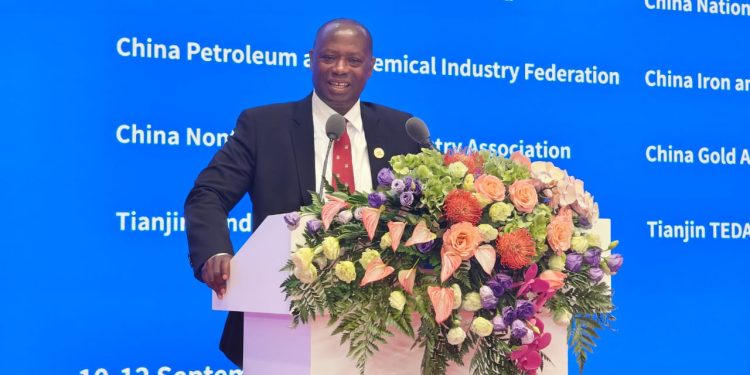
Ghana is charting a new path in its mining sector, calling for stronger partnerships with China and global stakeholders to unlock greater value from its mineral resources. The message was delivered by the Minister for Lands and Natural Resources, Emmanuel Armah-Kofi Buah, at the opening of the 28th China Mining Conference and Exhibition 2026 in Tianjin, China. No longer content with exporting raw minerals, Ghana is seeking cooperation in mineral processing, technology transfer, skills development, and infrastructure to fuel job creation and economic growth. “Our minerals must do more than generate export receipts. They must support value addition, industrial development, skills, jobs and opportunities for our young people,” the Minister emphasized. He stressed that the next chapter of Ghana’s mining industry must prioritize industries, skills, technology, jobs, and stronger communities alongside extraction. To this end, the government is reviewing its minerals and mining framework, formalizing artisanal and small-scale mining, and enhancing transparency and responsible oversight across the gold value chain. Ghana already boasts significant Chinese investments in mining, including Chifeng Gold Group, Shandong Gold, and Zijin Mining. But Mr. Armah-Kofi Buah said future partnerships should go beyond extraction to embrace mineral processing, infrastructure, local supply chains, and skills development. Environmental sustainability also took center stage, with the Minister highlighting measures to combat illegal mining (galamsey), such as the National Anti-Illegal Mining Operations Secretariat (NAIMOS) and the Responsible Cooperative Mining and Skills Development Programme (rCOMSDEP). He appealed for deeper cooperation with China in environmental management, land reclamation, and restoration of mined areas: “A river is not simply an environmental statistic. It is drinking water. It is farming. It is the livelihood of a community. It is an inheritance held in trust for a child not yet born.” Pushing for intelligent mining, Mr. Armah-Kofi Buah outlined Ghana’s efforts to modernize its geological data and digitalize the gold supply chain. He underscored the importance of accurate geological information for attracting investment and ensuring fair negotiations, calling for greater technical exchanges and mining-specific training for Ghanaians. Looking ahead, the Minister said Ghana is focused on refining more gold, advancing an integrated aluminium industry, developing iron ore resources for domestic steel production, and positioning critical minerals for new industries and technologies. This vision will be showcased during Ghana Mining Day at the conference under the theme, “Building Ghana’s Next Frontier: Geology, Value Addition and Investment Partnership.” He invited Chinese and global investors to explore mutually beneficial opportunities, stating, “We have the resources. China has deep experience in capital, technology, processing, infrastructure and industrial development. Between us lies an opportunity to build commercially sound partnerships in which Ghana creates more value at home, investors succeed, communities share in prosperity and both countries emerge stronger.” China’s Vice Premier, He Lifeng, responded by expressing China’s readiness to support developing economies with funding, technology, and fair benefit-sharing through open and transparent partnerships. The 28th China Mining Conference and Exhibition runs in Tianjin from September 10 to 12, 2026, under the theme, “Win-Win Cooperation, Green and Intelligent.” Source: Apexnewsgh.com
NCPTA Warns Parents: Don’t Pay Unauthorized Fees for SHS Prospectus Items

The National Council of Parents-Teachers Associations, Ghana (NCPTA), has sounded a strong warning to parents of first-year Senior High School (SHS) students: do not pay GHS1,617 to EduPack PGL for prospectus items. This follows reports that EduPack PGL, also known as Prospectus Ghana Limited, has been urging parents to pay for a package, including a metal trunk, plastic chop box, Macintosh mattress, and pillow, for collection on SHS campuses. The company allegedly circulated messages via SMS, WhatsApp, and other channels, and is accused of invoking the name of the Ghana Education Service (GES) to legitimize their offer. In a statement issued on Wednesday, September 9, 2026, the NCPTA clarified that the Ghana Education Service had not approved this arrangement, stating, “GES Management has NOT sanctioned, directed or authorized any parent to engage EduPack PGL.” The association instructed parents clearly: “DON’T PAY! We instruct all Ghanaian parents NOT TO PAY ANY MONEY OR BUY ANY ITEM FROM EDUPACK PGL.” The NCPTA emphasized that parents have the right to buy prospectus items from the open market, as has always been the practice. “Every parent retains the full and unqualified liberty to purchase prospectus items on the open market,” the statement added. The association also raised concerns about the attempt to force parents to buy items from a single source at a fixed price on school premises, calling it “illegal commercialization of school admission.” While commending the GES for distancing itself from the practice, the NCPTA called for even stronger action. They urged the GES to use its legal and administrative powers to warn and sanction any school heads who permit such sales, and to consider taking legal action against EduPack PGL and any entity allegedly misusing the GES logo to defraud parents. “Punish the real culprit so others will learn,” the NCPTA stated. Parents were also advised to stay alert and report any such incidents to the NCPTA Secretariat and the GES. The statement was signed by the General Secretary of the NCPTA, Gapson Kofi Raphael. Source: Apexnewsgh.com
Three Companies Advance to Next Stage in Ghana’s 5G Spectrum Race
Ghana’s journey toward 5G connectivity took a major step forward as the National Communications Authority (NCA) announced that three companies have advanced to the next phase of the country’s 5G spectrum licensing process. The companies approved to proceed are Scancom Plc (MTN Ghana), Ghana Telecommunications Company Limited (Telecel Ghana), and Goal Telecommunications Ltd. The NCA disclosed that it had received four applications for the highly anticipated 5G spectrum licences, covering the 700 MHz, 2.3 GHz, and 3 GHz frequency bands. The submission deadline was 5 PM on August 27, 2026. Of the four contenders, Infrava Ltd was the only applicant not to make the cut. The selection process involved a rigorous Eligibility Review and Technical Qualification Assessment, where applicants were evaluated based on technical and qualification submissions contained in what the NCA described as Envelope A. In a statement released on Wednesday, September 9, the NCA confirmed, “Of the four applications received by the submission deadline of 5 PM on August 27, 2026, three applicants have qualified to proceed to the next stage of the selection process.” All applicants have been notified of the results, and reasons for disqualification were provided where relevant. The three successful companies will now move on to Stage 3 of the selection process, which will determine their final ranking and allocation of spectrum. The NCA clarified that “only the Qualified Applicants will proceed to Stage 3 of the selection process. Accordingly, the Envelope B submitted by the Non-qualified Applicant will not be opened.” As the process moves forward, the NCA will separately inform the qualified companies about the date, time, and venue for the opening and ranking of their Best Price Offers. The competition for Ghana’s 5G future is heating up, with only the strongest contenders left in the race. Source: Apexnewsgh.com
Port Congestion, New Fees, and a Surge in Containers: The Story of Ghana’s Shipping Challenge

The atmosphere at Ghana’s ports has never been more charged. Shipping companies and their agents have received a clear directive from the government: begin collecting the approved GH¢720 Container Administrative Charge immediately, no exceptions. This hard stance was revealed by Transport Minister Joseph Bukari Nikpe during an interview on Channel One TV’s The Point of View. His position followed a recent court ruling that dismissed an attempt to block the implementation of the new fee. “Before we will agree, they will have to be collecting or charging the GH¢720 as we communicated to them before we can sit together with them,” Minister Nikpe stated, emphasizing that compliance with the directive is a prerequisite for any further negotiations. The GH¢720 charge, he clarified, is the regulatory ceiling for the Container Administrative Charge applied to all import and export containers, calculated per Twenty-Foot Equivalent Unit (TEU). Despite the firm approach, the government is keeping the door open for dialogue. Minister Nikpe assured shipping companies that discussions could resume, but only after they have started applying the fee as stipulated by the authorities. Meanwhile, a new challenge has emerged: an unprecedented surge in container traffic at Ghana’s ports. According to Minister Nikpe, container volumes have shot up by almost 100 percent, a level not seen in the past twenty years. This dramatic increase has led to significant congestion, especially at the Meridian Port Services (MPS) Terminal in Tema. The congestion has caused delays in cargo clearance and put immense pressure on available terminal space. To address the bottlenecks, the government is taking action on several fronts. Efforts are underway to remove containers that have overstayed at the port, and shipping lines are being urged to evacuate empty containers that continue to occupy valuable space. In a bid to ease the pressure, the Railway Development Authority has been enlisted to temporarily move some of the containers to alternate terminals. Additionally, the Ghana Ports and Harbours Authority has been instructed to acquire two more cranes to speed up cargo handling and reduce delays. As the shipping industry adapts to these new realities, all eyes are on the government and port authorities to see if these interventions will restore smooth operations and keep Ghana’s trade flowing. Source: Apexnewsgh.com
The New Patriotic Party (NPP) Demands Answers: 30-Day Ultimatum for Rural Telephony Report

In a move that has stirred Ghana’s tech and political circles, the New Patriotic Party (NPP) has issued a 30-day ultimatum to the Ministry of Communication, Digital Technology and Innovations. The party wants the Ministry to publish a comprehensive status report on the Ghana Rural Telephony and Digital Inclusion Project, a flagship initiative meant to bridge the digital divide in underserved communities. The demand, spearheaded by the NPP’s Policy Committee on Communications and Digitalization, was made public following a high-level briefing by Communication Minister Samuel Nartey George. The Minister had outlined the government’s plan to upgrade rural telephony sites to at least 4G, but the NPP insists that more transparency is needed on the current state of the project. According to a statement signed by Kojo Oppong Nkrumah, Chairman of the NPP Policy Co-ordination Committee, the party is seeking detailed data: How many sites have been constructed, connected, and are fully operational? How many have been built but remain out of service? The NPP argues that these answers are critical to understanding the real progress made. Rejecting claims that rural connectivity had been neglected in the previous decade, the NPP stated that, contrary to the Minister’s characterization, “the records show significant investments were made under the Akufo-Addo/Bawumia administration.” The Ghana Rural Telephony and Digital Inclusion Project, they pointed out, was launched in 2020 with a €155 million facility from the China EXIM Bank, aiming to build 2,016 sites and connect 3-4 million people. By the end of the last NPP administration in January 2025, the party claims, 1,961 sites had been constructed, with equipment procured for 400 more. But since the change in government, the NPP alleges, progress has stalled. “No new rural telephony site was constructed in 2025 despite the availability of equipment,” the statement read. Even more troubling, the NPP says that many previously operational sites are now offline. The party also pushed back against suggestions that 46 sites could not be connected because they are in hard-to-reach areas. “A satellite hub at the Kofi Annan Centre of Excellence in ICT had already been upgraded to provide backhaul services,” the NPP said. They argue that the issue is not technical, but a matter of administrative delays and commercial arrangements that have yet to be finalized. While the NPP welcomed government plans to upgrade rural infrastructure to 4G, they cautioned against leaving existing sites disconnected or allowing service to lapse. Their demands are clear: The Ministry and the Ghana Investment Fund for Electronic Communications (GIFEC) must publish a deployment schedule for the remaining sites, report on the operational status of the satellite hub, and share a detailed plan, including costs and timelines, for the 4G upgrade. The party also wants Parliament’s Select Committee on Communications to be briefed with verifiable data, not just public statements or claims. Source: Apexnewsgh.com
Robert Sampana Elected Upper East Regional President Of Association Of The Deaf

The Upper East Regional Association of the Deaf (UERAD), a regional branch of the Ghana National Association of the Deaf, has ushered in a new chapter of inclusive leadership following the election of Robert Sampana as its new Regional President. Sampana, a native of Talen Teng from Datoko, brings strong community ties and a firm commitment to advancing the rights and welfare of Deaf people in the Upper East Region. His election is expected to strengthen advocacy for greater inclusion and accessibility, particularly through the mainstreaming of Ghanaian Sign Language (GSL) interpretation at public programmes and engagements. A key priority of his administration will be to address communication barriers that often prevent Deaf persons from accessing vital information and participating fully in public life. Sampana also intends to build stronger partnerships with non-governmental organisations (NGOs), Metropolitan, Municipal and District Assemblies (MMDAs), and healthcare institutions to promote the inclusion of Deaf people in development programmes and improve their access to essential healthcare services. Through these collaborations, his administration seeks to ensure that Deaf persons are not only represented but are also adequately informed, consulted and given equal opportunities to benefit from public services. The new leadership is therefore expected to position UERAD as a stronger voice for the Deaf community while championing a more inclusive and accessible Upper East Region. Source: Apexnewsgh.com
Bank of Ghana Rolls Out Tougher Penalties for Dud Cheque Offenders
The Bank of Ghana (BoG) has introduced a new, tiered penalty system aimed at curbing the issuance of dud cheques, a move designed to protect the integrity of the country’s financial system and encourage responsible banking. Under the revised rules, a dud cheque is defined as one that cannot be honoured due to insufficient funds in a customer’s account. If such a cheque is issued, the bank will reject and return it, and the account holder could face legal action in addition to financial penalties. For first-time offenders, the BoG mandates a penalty of 10% of the cheque’s face value. Offenders will also receive a formal warning outlining the ramifications of future violations. Banks are required to report these cases to both the Credit Reference Bureaus (CRBs) and the central bank. The penalties increase for repeat offenders. A second dud cheque issued within a year of the first attracts a 15% penalty and a renewed warning, with the incident again being reported to CRBs and the BoG. A third offence within the same period will result in a 20% penalty. After the third strike, consequences stiffen significantly: the customer will be banned from issuing cheques for at least three years and denied access to new credit facilities for one year. The BoG will notify all banks and Specialised Deposit-Taking Institutions of the sanction, ensuring the ban is enforced across the sector. The BoG warns that these offences can damage a customer’s creditworthiness, making it harder and more expensive to borrow in the future. Banks must notify customers of a cheque-issuing ban within five working days and recall all unused cheque books, refraining from issuing new ones until the sanction is lifted. Customers who fail to return unused cheque books within ten working days face even stiffer penalties, including a possible ban on operating any current account and inclusion in the BoG’s Directory of High-Risk Cheque Issuers. The central bank is urging all customers to be vigilant about their account balances and not to issue cheques based on anticipated funds unless they are certain the money will be available. Keeping accurate records of issued cheques and their expected presentation dates, and alerting one’s bank in the event of insufficient funds, are also strongly advised. Source: Apexnewsgh.com
Government to Introduce Biometric Verification for SIM Registration Before End of 2026
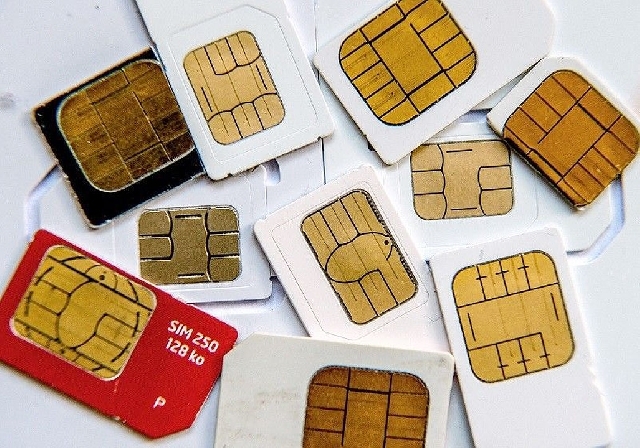
Ghana is set to take a significant leap in digital security, as the government prepares to roll out biometric verification for SIM card registration before the end of 2026. Communications, Digital Technology and Innovations Minister Samuel Nartey George made the announcement at the Government Accountability Series held at Jubilee House in Accra on Monday, September 7. Minister George revealed that Parliament has passed the Legislative Instrument (LI) on SIM registration, clearing the way for this next phase. The new biometric system will require subscribers to provide unique identifiers, such as fingerprints, when registering their SIM cards. This move, he explained, is intended to strengthen the identification of subscribers and enhance the integrity of Ghana’s SIM registration database. “The work is far from finished, and I will not pretend otherwise. But the direction is unmistakable, the results are measurable, and the resolve of this Ministry is unshaken,” Mr George said, underscoring the government’s commitment to improving regulatory frameworks as technology evolves. Authorities believe the introduction of biometric verification will make it much harder for individuals to use fraudulent identities to register SIM cards. It will also improve the traceability of subscribers, helping Ghana’s telecommunications sector combat crime and strengthen national security. With the passage of the LI, the Ministry is expected to collaborate closely with the National Communications Authority (NCA) and telecom operators to roll out the biometric system before the year’s end. Subscribers will be allotted a window to complete the verification process, with possible sanctions for those who fail to comply. This bold step signals a new chapter in Ghana’s digital transformation journey, one focused on security, accountability, and the responsible management of digital identities. Source: Apexnewsgh.com
Sam George: Galamsey Accounts for 25% of Fibre Network Disruptions in Ghana
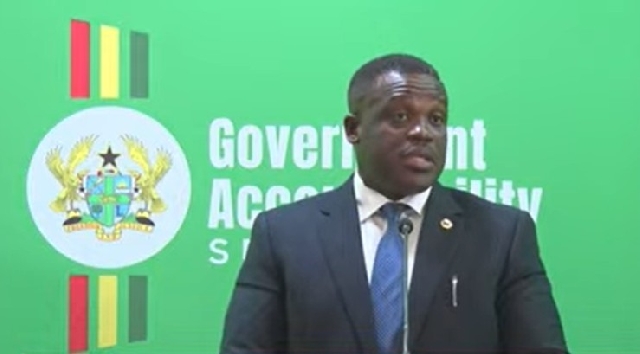
Illegal mining, known locally as galamsey, is fast becoming the unseen saboteur of Ghana’s digital lifelines. At a recent Government Accountability Series event, Communications, Digital Technology and Innovations Minister Samuel Nartey George revealed a troubling statistic: about one in every four fibre-optic cable cuts recorded nationwide can be traced back to the activities of galamsey operators. Beneath Ghana’s bustling towns and quiet villages, a complex web of fibre-optic cables keeps people connected, to each other and to the world. But this vital infrastructure faces a growing threat from those digging for gold. “Twenty-five percent of fibre cuts are a result of galamsey,” Minister George stated. “The telecom industry is one of the worst hit by the activities of galamsey operators.” Unlike road construction crews, who typically alert authorities when their work could disrupt underground cables, illegal miners rarely provide any warning. As they excavate in search of precious minerals, they often damage fibre lines, leaving telecommunications companies scrambling to trace and repair the breaks, often without any idea where to begin. The result is widespread disruption, especially in areas where there are no alternative fibre routes. Voice and data traffic can grind to a halt, leaving entire communities isolated from modern communication. The repercussions ripple far beyond mere inconvenience. Each fibre cut forces telecom companies to deploy teams and equipment at significant cost, straining their resources and threatening the reliability of Ghana’s digital services. Minister George warned that if this trend continues, the backbone of the nation’s telecommunications could be fatally undermined, deepening network disruptions and jeopardizing the country’s digital future. Source: Apexnewsgh.com
Gbane Opinion Leader Raises Security Concerns Over Mining Suspension
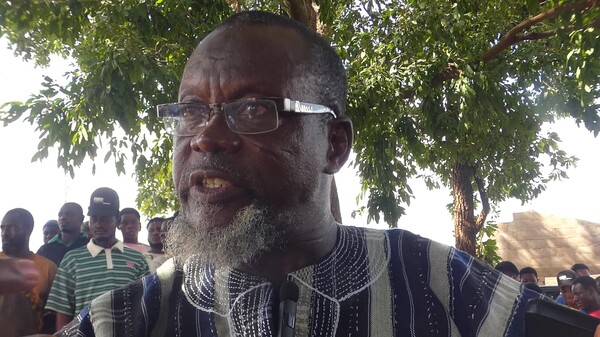
An opinion leader in the Gbane community in the Talensi District of the Upper East Region, Alhaji Fahad Bagremertamme, has expressed concern over the potential security implications following the order by the Inspector of mines ordering Nanlamtaaba Enterprise and Earl International Mining Company to suspend its mining operations. According to Alhaji Fahad, the people of Gbane respect the rule of law and have no objection to the court’s decision if it is implemented according to due process. He, however, questioned the activities of individuals he identified as “Poloo and his associates,” arguing that their actions were creating tension within the community. “We respect the rule of law, and if the judge has said the company should come and work, we have no problem with that because we respect the jurisprudence,” he said. He added that the court’s directive by the Inspector of mines for the company to stop working for two weeks could have serious consequences for the community, particularly given the high level of unemployment and insecurity in the area. Alhaji Fahad said a significant proportion of residents depend directly or indirectly on mining-related activities for their livelihoods, and expressed concern that a sudden suspension of operations could leave many young people without work. “Almost 45 or 50 percent of the people here are working in the mining sector. So, if these guys are asked to stay at home for two weeks, it could bring a lot of disturbance,” he stated. He further raised concerns about the security situation in Gbane, noting that the community has experienced incidents of armed robbery and other security challenges. According to him, there are also concerns surrounding individuals allegedly providing protection for persons involved in the mining dispute. He alleged that some individuals had previously been arrested by the military with AK-47 rifles and sent to court, but said the community was uncertain about the outcome of the case. “These are the same people back there protecting Poloo. So, I don’t know,” he said. The situation, he explained, had heightened fear among residents, particularly those working around mining sites. He recounted concerns about armed individuals allegedly approaching people at mining locations and ordering them to leave, questioning the circumstances under which such actions were taking place. Alhaji Fahad therefore appealed to the government and relevant security authorities to intervene urgently to find a peaceful and lasting solution to the dispute. He warned that if the situation was not addressed, community members could be forced to consider protecting themselves, a development he said could further escalate tensions. He nevertheless stressed that the community’s leadership had been urging the youth to remain calm and avoid retaliation. “We have advised all our youth to calm down and not retaliate. If not for that, by now things could have been worse,” he said. The opinion leader maintained that preserving peace remained the priority, urging the government and security agencies to act swiftly to prevent the mining dispute from developing into a wider security crisis in Gbane. Source: Apexnewsgh.com