
Businessman Ibrahim Mahama Refutes VALCO Acquisition Allegations
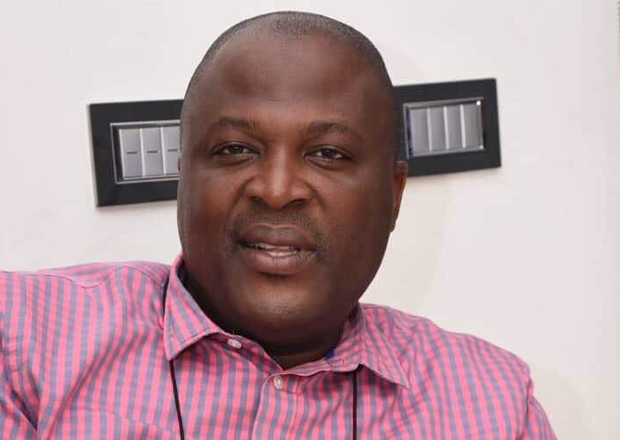
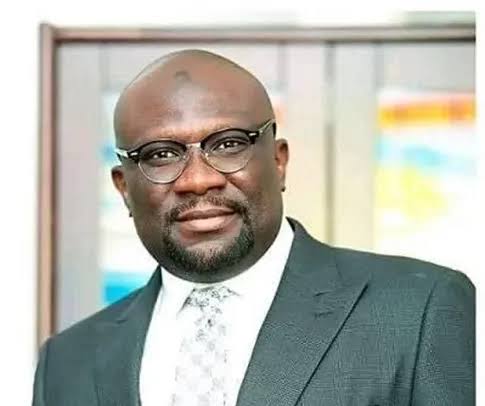
On a quiet Monday morning, the business community in Ghana was stirred by rumors suggesting that prominent businessman Ibrahim Mahama had expressed interest in acquiring the Volta Aluminium Company (VALCO). The whispers spread quickly, casting a shadow on Mr. Mahama’s reputation. However, the entrepreneur was swift to set the record straight. Through a statement released by his Special Aide, Rafik Mahama, on July 27, Mr. Mahama categorically denied any involvement in the alleged acquisition of the state-owned aluminium smelter. “Mr Ibrahim Mahama has no such interest and has not made any such offer to acquire VALCO,” the statement emphasized, leaving no room for doubt. The statement went further to denounce the allegations as yet another attempt to tarnish Mr. Mahama’s image. “Unfortunately, the allegation is the latest in several vile attempts to impute the integrity of Mr Ibrahim Mahama and subject him to needless public engagements,” it lamented. Despite the distractions, Mr. Mahama remains unwavering in his commitment to Ghana’s development. The statement affirmed that he is focused on investing in businesses that generate growth and opportunities both within Ghana and beyond. “He is committed to contributing his quota to the development of Ghana by investing in business opportunities in Ghana and beyond,” it reiterated. Determined to defend his name, Mr. Mahama has instructed his legal team to initiate legal action over the publication and circulation of the false claims. While the statement did not specify the individuals or organizations to be sued, it made clear that the matter would be pursued through the appropriate legal channels. As the story continues to unfold, Mr. Mahama’s resolve to protect his reputation and contribute to Ghana’s progress remains firm, undeterred by unfounded rumors. Source: Apexnewsgh.com
Star Oil Hikes Petrol and Diesel Prices by GH¢0.30 Per Litre, Effective July 26
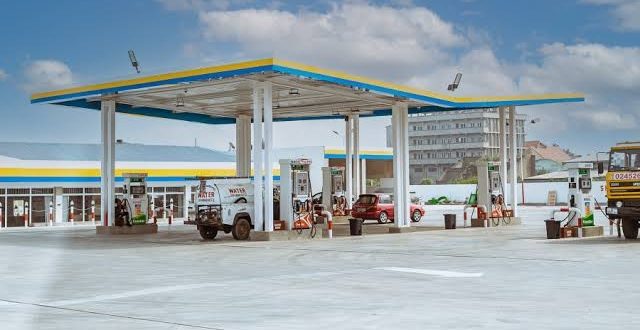
Star Oil has announced an increase in pump prices for both petrol and diesel by GH¢0.30 per litre, with the new rates taking effect from Sunday, July 26, 2026. The oil marketing company attributed the upward adjustment to rising international petroleum product prices and fluctuations in the exchange rate. Under the revised pricing structure, Star Oil’s RON 95 petrol remains unchanged at GH¢16.75 per litre. However, motorists will now pay GH¢0.30 more per litre for both petrol and diesel compared to the previous pricing window. This latest hike makes Star Oil one of the first major Oil Marketing Companies (OMCs) to implement a price adjustment during the current pricing window. As of Saturday, other leading OMCs such as GOIL had not announced any changes to their pump prices, keeping their rates unchanged for now. As a result, motorists who refuel at Star Oil stations will face higher costs starting July 26, while customers of other major OMCs will continue to pay existing prices until further notice. Fuel prices in Ghana are reviewed periodically and are influenced by international crude oil and refined petroleum product prices, the cedi’s exchange rate performance, and other market factors. The latest adjustment is expected to be closely watched by consumers and transport operators, as changes in fuel prices often lead to increases in transportation fares and the overall cost of living. Source: Apexnewsgh.com
Government Considers Listing State-Owned Enterprises on Ghana Stock Exchange to Boost Performance

Finance Minister Dr. Cassiel Ato Forson has revealed that the government is weighing plans to list selected State-Owned Enterprises (SOEs), including state-owned banks, on the Ghana Stock Exchange as part of efforts to enhance their governance, efficiency, and profitability. The initiative forms part of broader reforms aimed at strengthening the performance of public institutions without resorting to outright privatisation or shutting down underperforming entities. Speaking to Citi on July 24, a day after delivering the 2026 Mid-Year Budget Review to Parliament, Dr. Forson explained that several SOEs are under assessment to determine the most effective ways to improve their operations. He emphasized that the plan should not be seen as an attempt to sell state assets, but rather as a way to increase private sector participation through the capital market while maintaining state ownership. “We are assessing a number of SOEs. It’s not about selling, it’s not about shutting down; it’s about listing some of them on the Stock Exchange to improve governance and ensure profitability,” he said. State-owned banks are among the institutions being considered for this initiative. Dr. Forson noted that the government intends to deepen private sector participation in the Agricultural Development Bank (ADB), which is already listed on the Ghana Stock Exchange, by selling additional shares to investors. He added that a similar approach could be applied to other state-owned banks, such as the National Investment Bank (NIB), to strengthen their financial standing and operational effectiveness. “ADB is already there, but we want to deepen it and offload more of those shares to the private sector, to you, to everybody. Everyone can buy some shares. NIB, all of them, we want to,” he explained. The Finance Minister said that listing more SOEs on the stock exchange would improve corporate governance, enhance transparency and accountability, and help these institutions become more efficient and commercially sustainable. Source: Apexnewsgh.com
Oil prices hit $100 for the first time since May
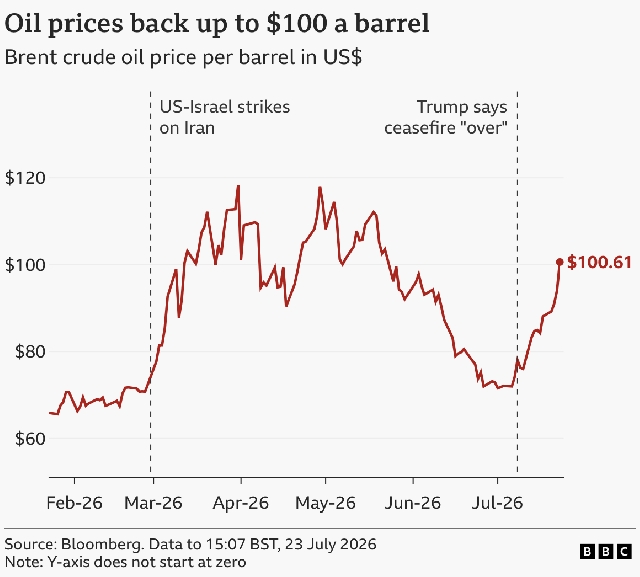
Oil prices hit $100 a barrel for the first time since May as the escalating conflict in the Middle East reignited fears over global energy supplies. Brent crude – the global benchmark for oil prices – rose more than 6% on Thursday following several days of increases as the US stepped up military strikes against Iran. Prices spiked after Houthi militia in Yemen attacked oil tankers in the Red Sea, threatening a key export route that Saudi Arabia has used to bypass the Strait of Hormuz. Gas prices have also risen steadily over the past month, with the benchmark UK gas price currently at around 150 per therm, up from around 98p at the end of June. Oil prices had been falling following a temporary ceasefire between the US and Iran. They dropped back to levels last seen before the US and Israel began military action against Iran on 28 February. However, the ceasefire has failed and this week US Secretary of State Marco Rubio said the people in charge in Iran were “not ready to make a deal”. The ongoing conflict risks pushing up inflation for many countries, including UK and the US leading to higher prices for consumers. Higher oil prices typically lead to petrol and diesel becoming more expensive. While drivers are affected directly, households could also see prices of other goods, such as food, increase due to businesses passing on higher transportation costs to customers. Inflation has fallen both in the UK – down to 2.6% in the year to June helped by slowing diesel and petrol prices – and in the US to 3.5%. But questions remain whether the slow down will prove short-lived due to the renewed conflict in the Middle East. New data released on Thursday showed that UK petrol prices have risen by 5p a litre since the beginning of July, hitting reaching almost £1.56. Diesel is at £1.72 a litre, on average, according to the RAC. Average gasoline prices in the US have surpassed $4 a gallon once more, up from $3.92 a month ago, according to motorist advocacy group AAA. “More expensive fuel and energy can ripple through the wider economy, increasing costs for businesses and ultimately feeding through into the price of food and other goods,” said Jonathan Raymond, investment manager at Quilter Cheviot. “This creates another headache for central banks as they continue their battle against inflation. “If energy prices remain elevated, policymakers may come under pressure to keep interest rates higher for longer or even raise them. This would come as a blow to mortgage holders and borrowers already feeling the strain.” The Bank of England, which sets UK interest rates, has held them at 3.75% in its last four meetings. Paul Dales, chief UK economist at Capital Economics, said he believed the Bank will “almost certainly” hold them again. But he said analysts still expected that interest rates could be cut next year if energy price rises ease. Kevin Warsh, the newly-appointed chair of the US Federal Reserve, last week told Congress that the central bank had “no tolerance to persistently elevated inflation”. US President Donald Trump had pushed Warsh’s predecessor, Jerome Powell, to cut interest rates. Trump has made it clear he expects Warsh to fulfil his demand for reductions in borrowing costs for Americans. But the Fed held US interest rates between 3.5% and 3.75% at Warsh’s first meeting last month. He also told Congress that he was committed to “restoring price stability” in the wake of the Middle East conflict impacting prices. Source: bbc.com
Ghana Gold Board CEO Refutes Minority Allegations of Financial Losses and Mismanagement
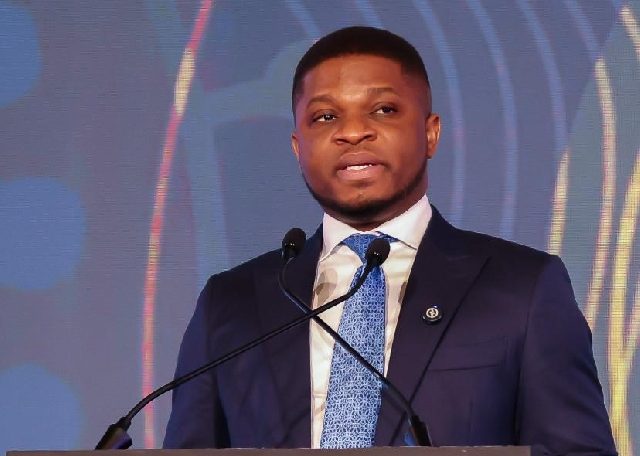
Lawyer Sammy Gyamfi, Chief Executive Officer of the Ghana Gold Board (GOLDBOD), has firmly denied accusations from members of the Minority Caucus in Parliament that the state-owned institution is suffering financial losses and mismanaging public funds. In a statement addressing recent claims, Gyamfi labeled the allegations as “false” and emphasized that GOLDBOD remains financially robust and committed to its mandate. He revealed that for the 2025 financial year, GOLDBOD recorded an operational surplus of GH¢909.7 million and an overall surplus of GH¢5.44 billion, figures documented in the institution’s 2025 audited annual report and financial statements prepared by the Auditor-General and published on GOLDBOD’s website. Despite a decline of over 23 percent in international gold prices since February 2026 and a reduction in pricing incentives following the scaling down of its baseline programme, GOLDBOD has continued to deliver strong results. Gyamfi noted that the institution is on track to meet its 2026 surplus target, making significant strides in gold purchases, foreign exchange generation, support for Ghana’s gold reserve accumulation, local value addition, and sustainability efforts. The CEO urged the public and media to disregard what he called “false and misleading” claims being spread by some Minority members. He specifically criticized Minority Leader Alexander Afenyo-Markin and his colleagues for making what he described as baseless allegations of losses and misappropriation of public funds. Gyamfi reaffirmed GOLDBOD’s commitment to maximizing value from Ghana’s gold resources for national benefit, stating that the institution would remain focused on delivering results and would not be distracted by politically motivated attacks. He expressed confidence that GOLDBOD’s performance and achievements would ultimately overshadow the criticisms faced by the institution. Read statement below: LAWYER SAMMY GYAMFI RESPONDS TO FALSE CLAIMS ABOUT THE GOLDBOD BY SOME ELEMENTS IN THE NPP MINORITY CAUCUS 1. It is an incontrovertible fact that the GoldBod declared an operational surplus of GHS909.7 million and an overall surplus of GHS5.44 billion for the year 2025. These facts are contained in the 2025 audited Annual Report and Financial Statements of the GoldBod prepared by the Auditor General and published on the GoldBod’s website. For evidence, see: https://goldbod.gov.gh/wp-content/uploads/2026/04/2025-Audited-Financial-Statements-Ghana-Gold-Board_compressed.pdf 2. In spite of the substantial slump in international gold prices by over 23% since February this year, the significant reduction of GoldBod’s pricing incentives due to the cutting down of baseline program implementation from about 14% to 6%, the GoldBod has remained on course in achieving remarkable successes relative to the volume of gold purchases, foreign exchange generation, support for gold reserve accumulation, local value addition, support for sustainability initiatives and the achievement of our surplus target for the 2026 financial year. 3. The media and general public are respectfully advised to treat with utmost contempt, the discredited cacophony of lies being rehashed in recent times about GoldBod’s operations by certain elements in the Minority Caucus in Parliament. 4. Led by their pathetically ignorant Leader, Afenyo Markin, these Members of Parliament continue to make spurious claims to the effect that the GoldBod is recording losses and siphoning public funds. These ridiculous claims can only be a figment of the imaginations of these incorrigible MPs who ought to know better. Sadly, they have no interest in learning nor any regard for the truth. You take them serious at your own peril. 5. The GoldBod remains focused on the delivery of its mandate for the benefit of Ghanaians. We will not be distracted by misguided noise. For we know, that the impact of the success story of the GoldBod shall outlive the hate-driven campaign of calumny being waged by our detractors. Source: Apexnewsgh.com
Ghana Faces GH¢111 Billion Domestic Debt Repayment in 2027 and 2028 – Finance Minister Warns
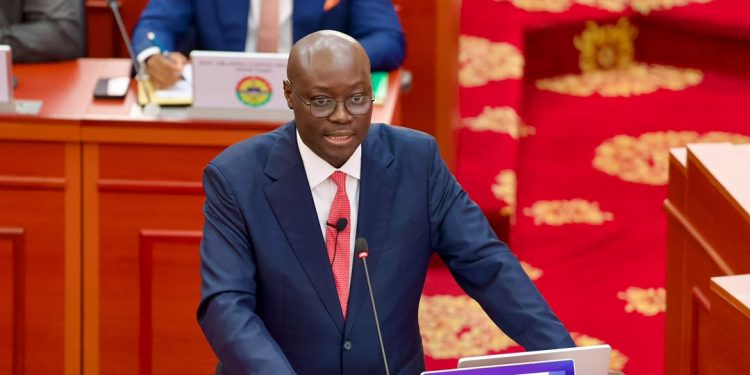
Finance Minister Dr. Cassiel Ato Forson has sounded the alarm over Ghana’s looming domestic debt repayment burden, revealing that GH¢111 billion in Domestic Debt Exchange Programme (DDEP) bonds are set to mature in 2027 and 2028. Presenting the 2026 Mid-Year Budget Review to Parliament on Thursday, July 23, Dr. Ato Forson cautioned that the country must prepare for this significant financial obligation. “In two years alone, Ghana has to repay GH¢111 billion, 111, Mr. Speaker. This is the true Agenda 111 Ghana must deal with,” he stressed. Dr. Ato Forson attributed the massive repayment challenge to the structure of the DDEP, which he argued was never meant to provide a permanent solution to Ghana’s debt problems. Instead, he said, the programme merely postponed repayment, shifting the burden to coming years. “Its architect mortgaged tomorrow to survive today,” the minister remarked. The Finance Minister assured Parliament that government is adopting a proactive, forward-looking debt management strategy to honour these obligations without destabilizing the economy. He emphasized the importance of prudent debt management and careful fiscal planning to restore investor confidence and strengthen Ghana’s long-term economic resilience. The DDEP was a key component of Ghana’s broader debt restructuring efforts, designed to restore macroeconomic stability and secure IMF-backed support. While it provided short-term relief, it also deferred substantial repayments, leaving the country with a formidable challenge in the years ahead. Source: Apexnewsgh.com
Echoes of the Past, Hope for the Future: Alagumgube Association Joins Emancipation Day at Paga Slave Camp
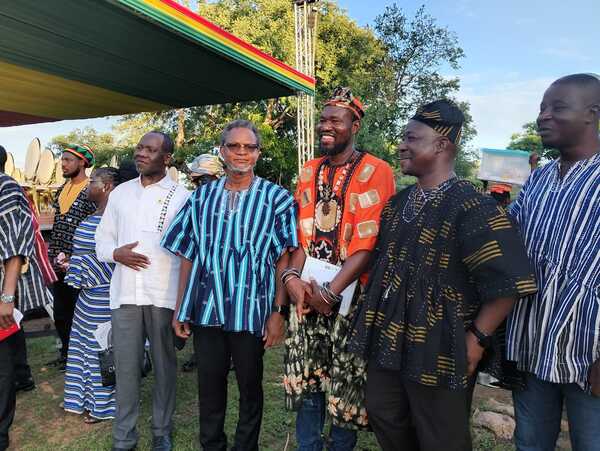
The sun rose over the ancient baobab trees of the Kassena-Nankana West District, casting long shadows across the weathered stones of the Paga Slave Camp. It was a morning heavy with memory, and purpose. As the 2026 Emancipation Day celebrations began, the historic Oikworo Slave Camp stirred to life. Traditional chiefs in their finest kente cloth mingled with government officials, while the rhythmic beat of talking drums welcomed members of the African diaspora who had journeyed from across the ocean to stand on the very ground where their ancestors once suffered. Among the gathering stood a delegation that carried the hopes of the Upper East Region’s cultural preservation. The Alagumgube Association had arrived. Led by Acting Chairman Atibila Aloysius, the group moved through the crowd with quiet determination. Beside him stood Madam Prisca Naam Boma Yenzie, her presence a testament to the women who had kept their ancestors’ stories alive through generations. Apalazo-eya Joshua and other members fanned out among the attendees, their faces reflecting both the weight of history and the fire of commitment. The commemoration was not merely a ceremony, it was a journey. As participants walked the guided tours through the slave camp, they traced the footsteps of millions who had been torn from their homes. The stones seemed to whisper tales of resilience, of families shattered and spirits that refused to break. Cultural performances erupted across the grounds. Dancers in vibrant smocks told stories through movement, their feet pounding the earth in a rhythm that connected the present to the past. Traditional songs rose above the gathering, melodies that had survived centuries of sorrow to become anthems of triumph. The Alagumgube delegation listened intently as speakers took the podium. Messages of peace and unity wove through the air like threads of a grand tapestry. Reconciliation, development, and the power of remembering, these were the themes that bound the diverse gathering together. When it was their turn to speak, Acting Chairman Atibila Aloysius stepped forward with the weight of his Association’s mission on his shoulders. “We stand here not just to remember,” he declared, his voice carrying across the crowd, “but to act. The preservation of our heritage is the preservation of our identity. The Alagumgube Association is committed to protecting these monuments, educating our youth, and building a future that honors our past.” As the afternoon sun softened into gold, the delegation engaged with stakeholders from across the globe. Development partners took note of the Association’s vision. Cultural institutions exchanged contact information, eager to collaborate. The diaspora members, many with tears in their eyes, embraced their Ghanaian hosts, the bonds of shared heritage unbreakable. By day’s end, the echoes of the slave camp had been transformed. What was once a site of suffering had become a beacon of hope, a place where tourism meets education, where economic opportunity grows from historical preservation, and where the wounds of the past find healing in the promise of the future. The Alagumgube Association departed with renewed purpose. Their commitment to the Upper East Region’s cultural and historical heritage burned brighter than ever. They had come to commemorate. They left determined to collaborate, with government institutions, traditional authorities, and development partners—to ensure that the stories of their ancestors would never be forgotten, and that the landmarks that told those stories would stand strong for generations to come. In the fading light of that Emancipation Day, the Association’s delegation looked back at the Paga Slave Camp one last time. The shadows had grown long, but the hope shining from the old stones was brighter still. Source: Apexnewsgh.com
Breaking News: Chairman Wontumi Sentenced to 20 Years for Illegal Mining
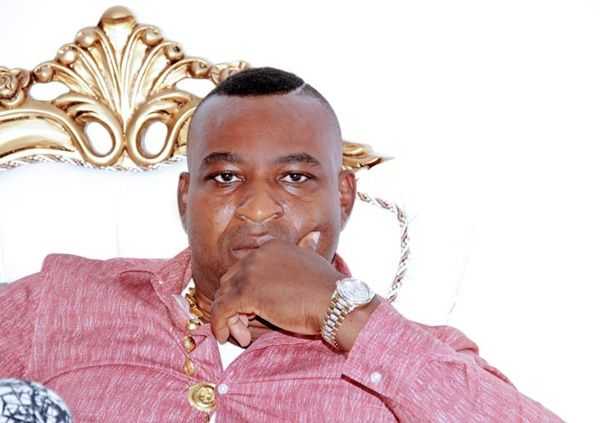
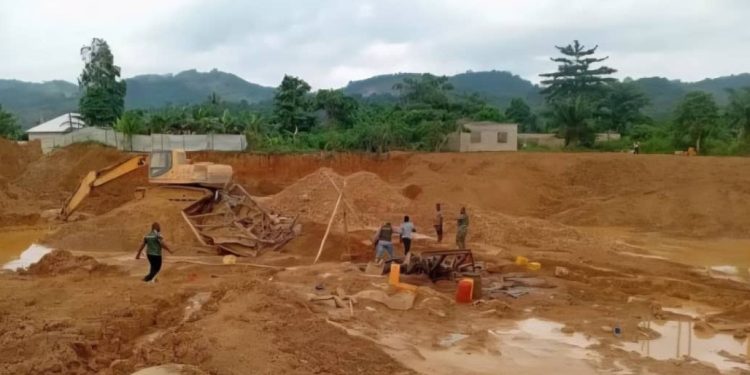
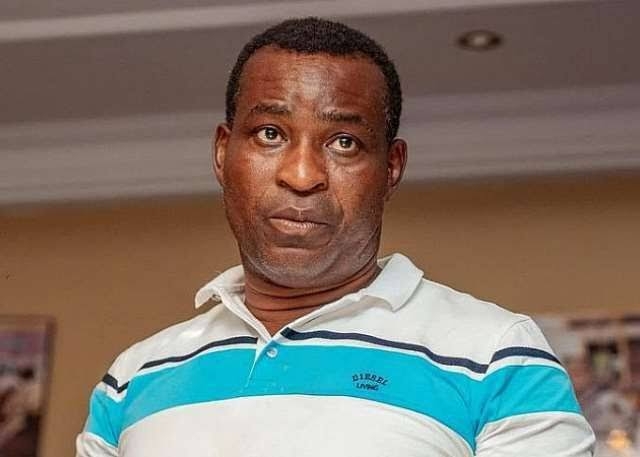
On the morning of July 20, 2026, the Accra High Court became the stage for a landmark moment in Ghana’s fight against illegal mining. Bernard Antwi-Boasiako, better known as Chairman Wontumi and the influential Ashanti Regional Chairman of the New Patriotic Party, stood before Justice Audrey Kocuvie-Tay, awaiting his fate. In a courtroom filled with anticipation, Justice Kocuvie-Tay delivered a decisive verdict: 20 years imprisonment for Chairman Wontumi’s involvement in illegal mining activities on the Samreboi concession in the Western Region. The sentence, handed down shortly after 11:40 am, marked the end of one of the nation’s most closely watched trials. Source: Apexnewsgh.com
Bank of Ghana Publishes Updated Interbank FX Rates, Offering Transparent Benchmark for Cedi Performance
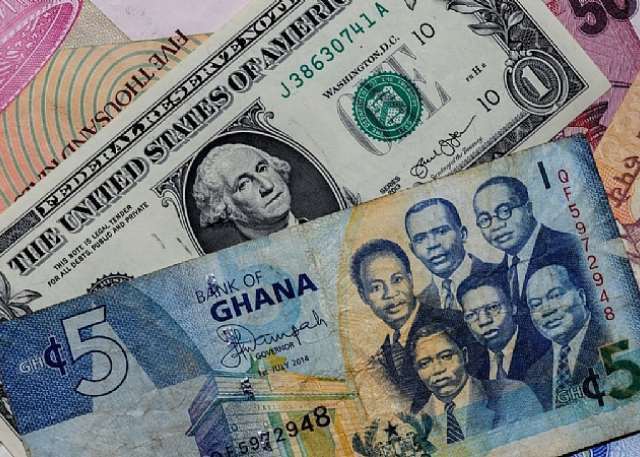
In a move to promote transparency and guide economic activity, the Bank of Ghana has released its latest interbank foreign exchange rates, providing a clear view of how the Ghana cedi is performing against both global and regional currencies. These reference rates, calculated from large foreign exchange transactions of ten thousand dollars or more by licensed commercial banks, serve as a reliable benchmark for travelers, businesses, and international payments. Unlike the fluctuating rates often found at commercial bank counters or local forex bureaux, the central bank’s weighted median approach filters out market volatility, reflecting genuine wholesale trading activity nationwide. As this week’s trading window opens, the Ghana cedi shows stability against major world currencies. The official mid-rate for the US Dollar stands at GH¢11.5500, with a buying rate of GH¢11.5442 and a selling rate of GH¢11.5558. The British Pound Sterling is trading at a mid-rate of GH¢15.5284, while the Euro posts a mid-rate of GH¢13.2118. The Swiss Franc remains steady at GH¢14.3126, and the Canadian Dollar at GH¢8.2407. For cross-border merchants and regional trade, the Bank of Ghana has also updated key African indicators. The cedi is pegged at a mid-rate of GH¢119.00 against the Nigerian Naira, a crucial metric for West Africa’s busiest trading corridor. Meanwhile, the regional CFA Franc is set at a mid-rate of GH¢49.6495, providing vital guidance for businesses managing import costs and currency risks across the ECOWAS sub-region. These official rates, published at the start of each trading week, underscore the central bank’s commitment to providing accurate and actionable data for all market participants, supporting both domestic and international economic planning. Source: Apexnewsgh.com
Upper East Market Traders in Bolgatanga Petition IGP to Retain Black Maria Security Team
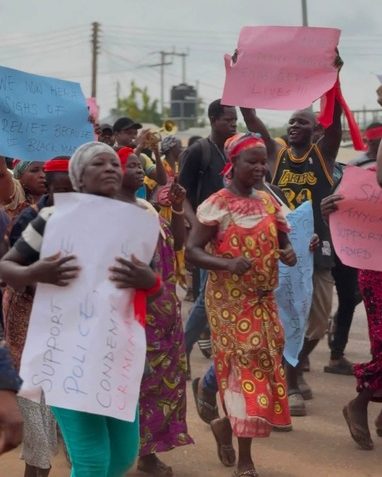
On a bustling Saturday morning in Bolgatanga, the heart of the Upper East Region, a wave of determination swept through the local marketplace. Traders, united by a common cause, gathered to stage a peaceful demonstration, their voices rising above the typical clamor of market life. Their message was clear: they wanted the Inspector-General of Police to retain the Special Operations Team, affectionately known as “Black Maria,” in their region. The demonstration came in response to a recent controversy. Lawyer Anthony Anamoo, the Upper East Regional Chairman of the opposition New Patriotic Party (NPP), had called on the IGP to withdraw the Black Maria team, citing allegations of extra-judicial killings. However, his claims were met with widespread disapproval. Ordinary citizens, market women, and Bolgatanga’s prominent figures alike condemned the call, insisting that the presence of the Black Maria team had brought much-needed security to their community. With banners in hand and resolve in their hearts, the traders marched through the streets and eventually gathered at the Municipal Assembly. There, they presented a petition to Honorable Roland Ayoo, the Municipal Chief Executive for Bolgatanga, who received it on behalf of the Upper East Regional Minister, Hon. Akamugri Donatus Atanga. In accepting the petition, Hon. Ayoo addressed the demonstrators, assuring them that their concerns would be relayed to the appropriate authorities for due consideration. He emphasized the government’s commitment to taking their petition seriously and promised that any necessary actions would be taken. Before the crowd dispersed, Hon. Ayoo commended the traders and residents for the peaceful nature of their demonstration. He reminded everyone that the right to protest is enshrined in law, and urged all citizens to continue exercising that right responsibly. As the traders returned to their stalls, hope lingered in the air, a hope that their collective voice would secure the safety and security they cherished in Bolgatanga. Source: Apexnewsgh.com