

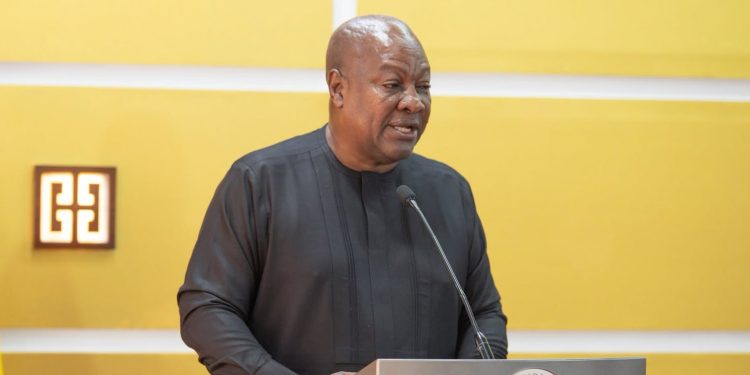
It was a pivotal moment in Accra as Dr. Johnson Asiama, Governor of the Bank of Ghana, addressed the opening of the 130th Monetary Policy Committee (MPC) meeting.
With the city bustling outside, the Governor’s message inside was one of both caution and urgency: Ghana’s economy faces a confluence of external and domestic threats that could undermine the hard-won macroeconomic stability achieved in recent years.
Dr. Asiama placed global energy developments and domestic pressures at the forefront of his address. He highlighted the prolonged Middle East conflict, which continues to inflate global energy prices and ripple through Ghana’s economy. “The protracted Middle East conflict and sustained energy price elevation are all risks which, if not addressed, could dislodge inflation expectations before they are firmly anchored,” he warned.
For an energy-importing country like Ghana, every uptick in crude prices translates to higher fuel and transport costs, with cascading effects on consumer prices and inflation. The Governor described how these external shocks intersect with local vulnerabilities, especially disruptions in domestic energy supply, to create a “dual-channel inflation expectations problem.”
Policymakers, Dr. Asiama said, are increasingly concerned that these risks could undo recent progress in stabilizing inflation. “Without timely policy responses, the current trajectory could reverse recent disinflation gains, complicating monetary policy decisions in the near term,” he cautioned.
Beyond inflation, the Governor drew attention to Ghana’s external balances. Improvements in the current account, he noted, could be short-lived if global headwinds weaken export earnings and limit foreign exchange inflows. “The second risk is the current account and reserve vulnerability issues, fiscal risks from external revenue compression, and the domestic power crisis,” he explained. Fiscal risks are also heightened by possible revenue shortfalls linked to global economic slowdowns and volatile commodity prices.
Dr. Asiama did not downplay the impact of domestic structural problems, particularly in the energy sector. While the power situation is “showing signs of abatement,” it still weighs heavily on the economy. Persistent power supply disruptions have driven up business costs and inflation expectations, raising the stakes for both producers and consumers.
Against this backdrop, the Governor urged his colleagues on the MPC to scrutinize how well monetary policy is working in the current climate. “The current monetary policy transmission is still of concern,” he admitted, questioning whether policy signals are effectively influencing lending and credit growth. The answer, he stressed, would be critical for sustaining broader economic activity as conditions tighten.
As the MPC’s deliberations got underway, it was clear that the stakes had rarely been higher. With risks ranging from global geopolitical tensions to domestic energy and fiscal challenges, the path forward would require a careful balancing act. “These risks will be central to the discussions this week,” Dr. Asiama concluded, underlining the importance of decisive and timely action.
His final message was unmistakable: Ghana’s economic resilience will depend not just on the foundation of past reforms, but on the country’s ability to respond swiftly and effectively to a rapidly changing risk environment.
Source: Apexnewsgh.com