
Historic Gathering Awaits as 7,163 Delegates Prepare for NPP National Congress in Kumasi

On Saturday, October 3, 2026, the vibrant city of Kumasi will become the epicenter of Ghanaian politics as 7,163 delegates from every corner of the nation converge on the Baba Yara Sports Stadium. These delegates, representing the heart and soul of the New Patriotic Party (NPP), will participate in a much-anticipated National Delegates Congress and Officers’ elections, a gathering that promises to shape the party’s future. The congress, meticulously planned to unfold in two distinct parts, is not just about electing new national officers. Delegates will also turn their attention to a slate of proposed amendments to the party’s constitution. According to sources from Apexnewsgh, fewer than 20 amendments are expected to be considered. Some proposals are remnants from the last constitutional amendment session held in Accra in January 2026, while others are new, arising from ongoing reflections on the party’s direction. One of the most pivotal proposals centers on the role of the party’s leader. In January, the NPP introduced a clause making the National Chairman the party leader at all times. But after further debate, a new amendment is on the table: to designate the party’s flagbearer as the true leader. This shift reflects an evolving understanding of leadership within the party. Another significant amendment concerns how Vice Chairpersons are elected. Currently, all candidates vie for the National First Vice Chairman slot, with the top three finishers becoming the First, Second, and Third Vice Chairpersons in order of the votes they receive. The new proposal would see candidates apply for, and contest, specific Vice Chairperson positions, making the process more targeted. Additionally, three Vice Chairpersons would be appointed rather than elected, a move aimed at diversifying party leadership. Other notable amendments include proposals to formalize the appointment of Deputy Communications Officers and to elevate the IT Officer role to full executive status. Drawing on lessons from the Legon conference, the Chairperson of the Constitutional Amendment Committee is expected to present each motion, with delegates casting their votes by voice. But the heart of the congress will be the election of national executives. With 7,163 delegates casting their ballots, the stakes are high. The Ashanti Region will send the largest contingent, 1,122 delegates, followed by Greater Accra and Eastern with 773 and 732 delegates, respectively. At the other end of the spectrum, the Savannah Region will be represented by just 184 delegates, while Western North will have 223. Delegates will also choose key party organisers: 2,745 will vote in the Youth Organiser race, 1,275 in the Women’s Organiser race, and 858 in the NASARA Organiser race. Each vote, each amendment, and each decision will help chart the course for the NPP as it prepares for the challenges and opportunities ahead. Source: Apexnewsgh.com
Minority in Parliament Demands Full Disclosure on Narcotics Seizures and Prosecutions After Major Cocaine Bust
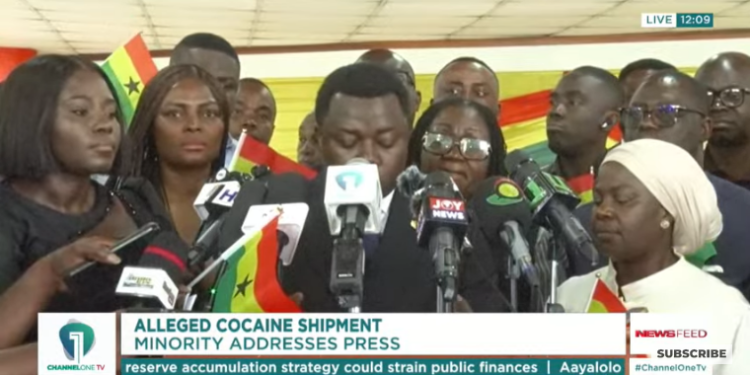
The Minority in Parliament has called for the immediate publication of comprehensive and verifiable data on narcotics seizures, arrests, and prosecutions in Ghana since January 2025. The demand comes on the heels of a major international incident: the seizure of nearly 3.9 tonnes of cocaine at France’s Port of Dunkirk from a container reportedly shipped from Ghana. Speaking ahead of Parliament’s emergency sitting on Tuesday, September 29, Rev. John Ntim Fordjour, representing the Minority, urged the executive branch to release real-time, primary-sourced information on all narcotics-related law enforcement activities. “We no longer want to learn about the state of our borders from foreign customs officers,” Rev. Fordjour stated. He emphasized that Parliament’s role must include scrutinizing institutional and systemic weaknesses, as well as investigating any possible complicity of state agencies. “Parliament is not a spectator in this matter,” he said. “The Constitution gives it the power to appoint committees, to summon and to demand answers.” Rev. Fordjour noted that any parliamentary committee formed would be empowered to compel witnesses, request documents, and conduct public proceedings unless national security dictated otherwise. The Minority stressed that the fight against narcotics should transcend party politics. “The trafficker does not check party cards. The young person destroyed by addiction does not ask which side of the House his member sits on,” Rev. Fordjour remarked, urging bipartisan cooperation. He called on the government to make all relevant data publicly accessible, arguing that transparency would provide Ghanaians with a clearer understanding of the country’s enforcement efforts and challenges surrounding narcotics control. Source: Apexnewsgh.com
NPP Challenges Government’s Cocoa Price Decision, Cites Broken Promises to Farmers
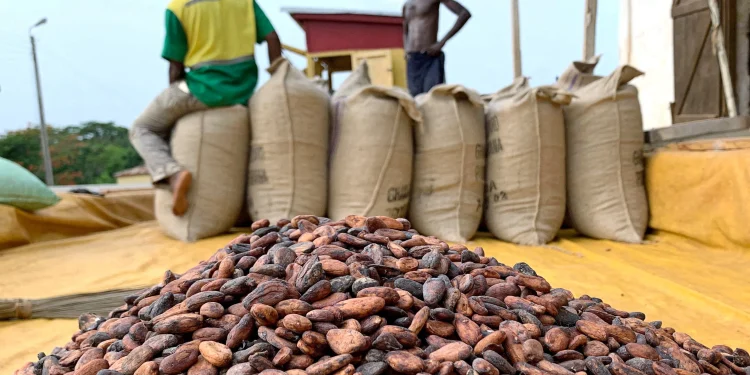
The New Patriotic Party (NPP) has taken aim at the government’s newly announced producer price for cocoa, claiming it falls short of both legal requirements and campaign promises made to Ghana’s farmers. In a press statement dated September 27, the NPP criticized the decision to set the price for the 2026/27 cocoa season at GH¢2,650 per 64-kilogramme bag. The party described the increase, just GH¢63, or 2.4 percent above last season’s price, as inadequate, and alleged that it does not meet the minimum set by law. Citing the Ghana Cocoa Board Act, 2026 (Act 1182), the NPP argued that the law requires the producer price to be at least 70 percent of the Gross Free-on-Board (FOB) price realized by COCOBOD. While the government claims the new price stands at 71.18 percent of this benchmark, the NPP disputes the calculation and called for greater transparency in how the figures were determined. The party’s criticism comes on the heels of the government’s announcement of the new price on September 25. The NPP also accused the administration of failing to live up to promises made on the campaign trail in 2024, when prominent National Democratic Congress (NDC) figures, including President John Dramani Mahama and several ministers, pledged a producer price of GH¢6,000 per bag to farmers. At the time, opposition leaders had labelled the then-current price of GH¢3,100 per bag as exploitative and asserted that farmers deserved at least 70 percent of the world market price. The NPP maintains that the government’s recent pricing decisions have fallen far short of these pledges, leaving many cocoa farmers disappointed and frustrated as the new season approaches. Source: Apexnewsgh.com
Finance Minister Unveils “New Economy” Vision to Spur Local Production and Jobs
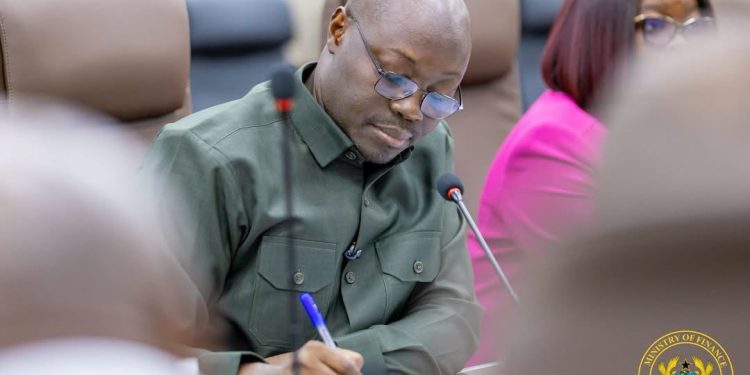
Ghana’s Finance Minister, Dr Cassiel Ato Forson, has outlined an ambitious vision to transform the nation’s economy by boosting local production, cutting back on imports, and generating jobs. Meeting with leaders from the Association of Ghana Industries and top business figures, Dr Forson declared, “Our mission is to produce more of what we consume and create more jobs here at home.” He challenged the country to see every imported product as a call to action: “Every import is an opportunity to ask: why can’t we make it in Ghana?” This shift in thinking is at the heart of the government’s New Economy programme, which aims to channel investment into productive sectors and build a more self-reliant, prosperous nation. “That is the promise of the New Economy: Ghana producing. Ghanaians working. Prosperity growing!” Dr Forson emphasized. The programme, set to launch with the 2027 Budget, will deploy around US$1.6 billion, about one percent of Ghana’s GDP, into key sectors. The focus will be on commercial agriculture, adding value to mining, and expanding energy and transport infrastructure. These areas are seen as engines for sustainable growth and job creation, with investments designed to strengthen the economy and generate returns for future development. In particular, Dr Forson highlighted plans for the energy sector, such as gas-to-power and gas-to-fertilizer projects, aimed at bolstering energy security and supporting industry. The transport sector is also in the spotlight, with the Western Railway Line and other strategic projects poised for potential support. While details are still being finalized, Dr Forson assured that the New Economy blueprint would be unveiled alongside the 2027 Budget, promising more opportunities for the private sector and a new era of growth for Ghana. Source: Apexnewsgh.com
Mahama’s “Crocodile Skin”: How Insults Can’t Break a President
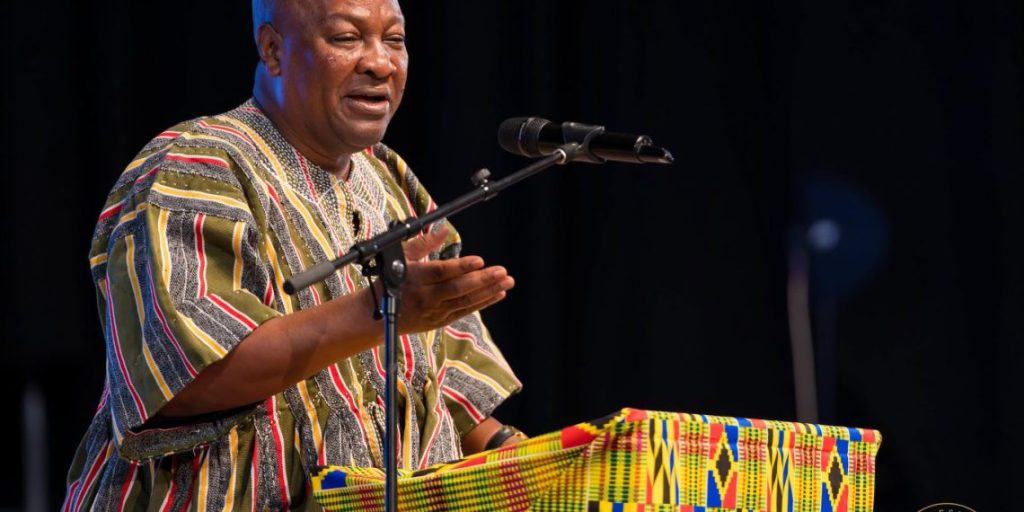
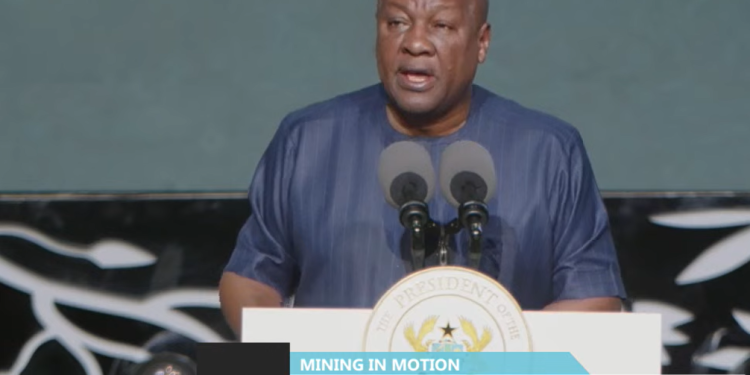
At a recent event, former President John Dramani Mahama stood before a crowd, unfazed by the harsh words often flung his way. With a smile, he described his resilience, joking, “This skin is crocodile skin.” The audience erupted in applause, clearly moved by his candor. Mahama, reflecting on his years in office and the scrutiny that came with it, said he had been insulted, vilified, and even voted out. Yet none of it, he insisted, could shake his commitment to his country: “I don’t mind the insults. I am focused on doing what is right for Ghana and Africa.” The conversation then turned to the world of TikTok and new media. Mahama acknowledged the power, and problems, of online speech. He had no issue with critics who showed their faces and owned their words, but he worried about those who hid behind anonymity to spread hate. He called on groups like the Ghana Journalists Association and the Media Foundation for West Africa to gather stakeholders and chart a way forward: “Let’s all collectively take a decision on what we want to do with the new media.” Mahama warned, however, that regulating online expression was a delicate matter. He urged caution, saying, “Sometimes the police can go to the extreme, and you never know where to stop once you start arresting.” It was time, he argued, for Ghana to decide: regulate online speech, or let the principle of free expression stand. His remarks echoed an earlier chapter in his political journey. In 2015, in the face of strikes and demonstrations, Mahama had famously declared he had developed “dead goat syndrome”, immune to threats and criticism. That phrase, born of frustration during mass labour unrest, became a symbol of his thick skin. Through it all, Mahama’s message remained clear: insults would not deter him. His focus, he said, would always be on serving Ghana and Africa, crocodile skin and all. Source: Apexnewsgh.com
High Court Adjourns Bail Hearing of Salomey Baffoe in Ghana Jollof False Information Case

High Court in Accra has adjourned the bail application hearing of Salomey Baffoe, accused of abetting social media personality Ghana Jollof in the publication of false information. The hearing, originally scheduled for earlier this week, will now take place on September 24, following a request from the prosecution for more time to respond. During the proceedings, Assistant State Attorney Carl Afedzi Forson explained to the court that he was not the main attorney on the case and that the Attorney-General’s office had only received the bail application on Friday. With Monday being a public holiday, the application had not yet been assigned to a lawyer, prompting the prosecution to seek a short adjournment. However, Salomey Baffoe’s counsel, Nana Agyei Baffour Awuah, opposed the request, arguing that matters involving a person’s liberty should not be subjected to the same procedural delays as civil cases. He pointed out that there was proof of service and that the State had not indicated any issue with short service. He further stressed that bail applications could be heard over weekends, and that further delay could see Baffoe spending nearly two weeks in custody before her bail application was even heard. The court acknowledged the seriousness of the liberty at stake and cautioned the prosecution against taking the matter lightly. Ultimately, the case was adjourned to September 24, with the court directing the Republic to file and serve any processes it intended to rely on by 9:00 a.m. on the day of the hearing. The story continues to unfold as both sides prepare for the next appearance, with the issue of timely justice and due process at the forefront. Source: Apexnewsgh.com
Alexis Ayamdor Joins NDC Upper East Regional Secretary Race

The race for the position of Regional Secretary of the National Democratic Congress (NDC) in the Upper East Region is gathering momentum following the declaration of intent by Hon. Alexis Adugdaa Ayamdor to contest the position. In a statement addressed to the NDC family and media houses, Mr. Ayamdor said his decision was reached after what he described as “careful reflection and extensive consultations.” He said he was offering himself to serve the party at the regional level, with a focus on strengthening its organisational structures and preparing it for future political contests. His campaign agenda centres on unity, organisation, discipline, accountability, effective communication, innovation and grassroots mobilisation. Mr. Ayamdor brings to the contest more than two decades of experience in governance, education, international development, project management, administration and community mobilisation. His professional career includes serving as District Chief Executive of the Bongo District Assembly, Programme Management Specialist and Northern Sector Office Coordinator for USAID, Programme Officer with Catholic Relief Services (CRS), Programme Facilitator under the IBIS Public Participation in Local Governance project, and Community Empowerment Programme Officer with TRAX-Ghana. He also served as an ECOWAS Parliament and Commission Intern and previously worked as a pupil-teacher in Bongo. He is currently an Industrial Liaison Officer at Bolgatanga Technical University. Beyond his professional career, Mr. Ayamdor is drawing attention to his longstanding involvement in grassroots politics within the NDC. According to his declaration, his political experience includes serving as a Unit Committee Member, elected Assembly Member, Presiding Member, Branch Secretary and Constituency Campaign Team Member. He also served on the Bongo Constituency Fundraising Committee for the 2024 elections. Mr. Ayamdor is currently the Regional Team-Lead of the Former MMDCEs Forum and serves as Secretary to the Constituency Council of Elders in Bongo. If given the opportunity to serve as Regional Secretary, Mr. Ayamdor says he will prioritise strengthening party structures, improving internal communication and coordination, deepening grassroots mobilisation and promoting accountability within the party. He has also identified greater participation of women and young people in party activities, election preparedness and effective party administration as key areas of focus. Mr. Ayamdor describes himself as a team player, listener, organiser and servant-leader. He says he intends to work closely with regional and constituency executives, branch executives, elected representatives, former leaders, cadres, women, youth and the wider membership of the party. His declaration adds a new dimension to the emerging contest for the NDC Upper East Regional Secretary position, with party organisation, grassroots mobilisation, internal coordination and election preparedness expected to feature prominently in the discussions ahead of the internal election. Mr. Ayamdor is therefore appealing to members of the NDC in the Upper East Region to support his candidature as he seeks to bring his experience, organisational skills and proposed agenda into the party’s conversation about its future direction in the region. Source: Apexnewsgh.com
School Infrastructure, Teacher Accommodation Top Talensi DCE’s Education Agenda
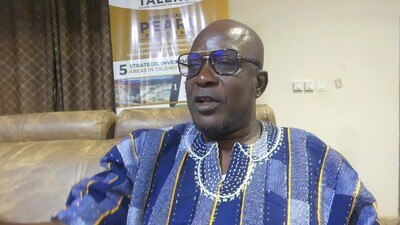
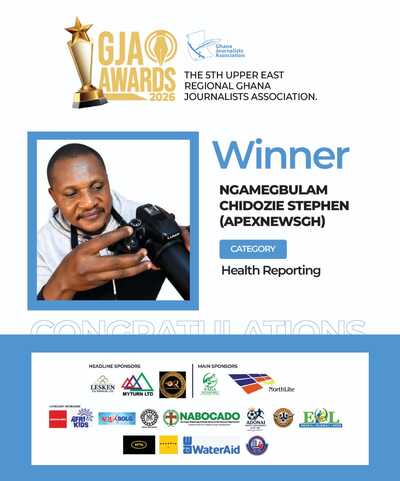
The Talensi District Chief Executive (DCE), Hon. John Millim Nabwomya, has pointed out number of interventions and achievements recorded in the education sector since taking over as District Chief Executive Hon. Nabwomya made the disclosure during an exclusive engagement with Ngamegbulam Chidozie Stephen of Apexnewsgh on the “SPEAKOUT UPPER EAST” programme. According to the DCE, the Talensi District Assembly, with support from the government and other stakeholders, has undertaken a number of projects aimed at improving teaching and learning, providing educational infrastructure and addressing some of the challenges confronting teachers and pupils in the district. Hon. Nabwomya said the Assembly has completed a school block at Gazore under the Social Cohesion (SOCO) programme. Although the facility is yet to be formally handed over, he said it is already being used by pupils. He further disclosed that the Assembly has commissioned a three-unit classroom block with an office at Gbey in the Gazore area. Another three-unit classroom block at Gatu is also expected to be handed over shortly, he said. The DCE also highlighted the completion and handover of a three-unit classroom block at the Tongo Senior High Technical School in the Baare Electoral Area. According to him, the facility includes an office for the head of the school and a changing room for girls and was also completed under the SOCO programme. Hon. Nabwomya said the Assembly has also procured educational furniture to improve the learning environment in schools across the district. He disclosed that approximately 1,200 dual desks have been procured, alongside 24 hexagonal tables for kindergarten pupils and about 240 chairs. He said the furniture was being assembled and prepared for distribution to beneficiary schools. The DCE further spoke about the Assembly’s response to rainstorm damage that affected several schools in the district. He explained that a heavy rainstorm in May caused significant damage to a number of school buildings, with some roofs ripped off. The Assembly, he said, used its internally generated funds (IGF) to begin repairing some of the affected schools. However, he noted that the situation at Gare Primary School became particularly challenging after another heavy rainstorm in August caused further damage to a section of the school that had already been affected. Faced with limited resources, Hon. Nabwomya said he sought assistance from benevolent individuals, including Dr. Martin Kolbil Yamborigya, the Commissioner in charge of Domestic Tax Revenue at the Ghana Revenue Authority. He said the Assembly’s engineers were instructed to assess the damage and prepare an estimate for the rehabilitation. According to the DCE, the affected school block was eventually reroofed using what he described as high-quality aluminium roofing sheets. He said the facility has since been put back into use. Hon. Nabwomya identified teacher accommodation as one of the major challenges affecting education delivery in the district. He explained that teachers posted to remote communities sometimes come from other regions and are faced with difficulties securing accommodation close to their schools. According to him, where teachers are forced to live in nearby towns and travel long distances to their schools every day, valuable teaching time could be lost. To address the challenge, he said the Assembly is conducting feasibility work towards constructing 10 self-contained rooms for teachers, together with a mechanised borehole, a 3,500-litre polytank mounted on a concrete stand and electricity. The proposed accommodation facilities, he explained, will be located at strategic points to serve teachers from clusters of surrounding communities. He said one such facility is currently being commissioned, while preparations are underway for two additional projects. The DCE explained that the cluster approach would allow teachers stationed in nearby communities to access accommodation without necessarily having to travel long distances from larger towns. The Assembly, according to Hon. Nabwomya, has also been supporting programmes organised by the District Education Directorate to promote girl-child education. He cited recent support provided for a Girl Child Day programme organised by the Girl Child Coordinator at the District Education Office. The initiative, he said, was aimed at encouraging girls to remain in school and supporting efforts to reduce challenges that could lead to girls dropping out. Hon. Nabwomya said the interventions form part of the Assembly’s broader commitment to improving educational infrastructure, teacher welfare and the learning environment across Talensi District. He expressed appreciation to the government, development partners, traditional authorities, individuals and other stakeholders whose support, he said, has contributed to the progress recorded in the education sector. The engagement formed part of Apexnewsgh’s “SPEAKOUT UPPER EAST” programme, which provides a platform for district-level leaders to account to residents on development initiatives, achievements and challenges. Source: Apexnewsgh.com
Talensi DCE Outlines Key Health Sector Achievements Under His Administration
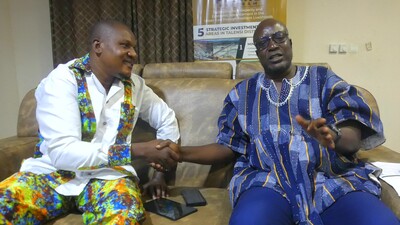
The Talensi District Chief Executive (DCE), Hon. John Millim Nabwomya, has outlined a number of interventions and achievements recorded in the district’s health sector since he assumed office. Hon. Nabwomya made the revelations during an exclusive engagement with Ngamegbulam Chidozie Stephen of Apexnewsgh on the “SPEAKOUT UPPER EAST” programme. According to the DCE, the health sector in Talensi District has witnessed significant improvements through the completion of critical infrastructure, restoration of essential services and collaboration between the assembly, traditional authorities, communities and private sector actors. One of the major achievements highlighted by the DCE is the completion of the Tindongo CHPS Compound, which he said was constructed ahead of schedule. He explained that construction of the facility commenced following a sod-cutting ceremony on October 25, 2025, with the contractor initially given nine months to complete the project. However, the project was completed in six months and subsequently handed over. Hon. Nabwomya noted that the project had particular significance for the Tindongo community, as an earlier attempt to complete it had stalled after the NDC government left office in 2016. He explained that one of the challenges that affected the project was the facility’s distance from the nearest electricity connection point. The assembly therefore used internally generated funds to procure and install electricity poles to connect the CHPS compound to the national grid. The facility, according to the DCE, has also been equipped with a mechanised borehole and polytank to provide a reliable water supply. He said the 20-bed facility also includes a daycare centre and a casework room equipped with a projector, providing additional support for healthcare delivery and community activities. Another major intervention highlighted by the DCE was the restoration of the district’s only ambulance, which had reportedly remained out of service for about three years. Hon. Nabwomya said the ambulance had been left grounded after its engine was removed and sent to Kumasi for repairs, but despite repeated assurances, the engine was not returned. Concerned about the impact of the situation on emergency healthcare delivery, the DCE said he sought support from Unity Mining, a group of small-scale miners operating in the area. He explained that rather than accepting cash directly, the assembly instructed the group to pay the money into the assembly’s official account to ensure transparency and accountability. The funds, he said, were subsequently used to procure a new engine and other necessary parts to restore the ambulance. According to Hon. Nabwomya, the ambulance is now fully operational and has become a major emergency response asset serving Talensi and neighbouring districts. The DCE also spoke about measures taken to address accommodation challenges confronting health professionals in the district. He cited the case of a newly posted doctor who was reportedly evicted from his residence, saying the district leadership responded by renovating an unused government bungalow. The renovation, he said, was completed within 72 hours, allowing the doctor to secure accommodation and continue working in the district. Hon. Nabwomya further attributed some of the improvements in healthcare delivery to regular field visits by himself and his team. He recounted a visit to the chief’s compound at Wakii, where health workers reportedly complained about unstable electricity supply and inadequate water. The challenges, he said, were addressed promptly, contributing to improved working conditions and helping facilitate the return of a midwife to the facility. He noted that the presence of the midwife has contributed to the safe delivery of newborns in the community. The DCE stressed that his administration places considerable emphasis on monitoring projects and health facilities to ensure that public resources are used appropriately. He said joint inspections are conducted with relevant sector directors and engineers to assess ongoing projects and ensure that contractors adhere to approved specifications before facilities are handed over. Beyond infrastructure and emergency healthcare, Hon. Nabwomya said the assembly has also continued to support vulnerable groups, including persons with disabilities. He explained that funds have been distributed to persons with disabilities to enable them to establish income-generating activities and improve their livelihoods. The DCE said the combination of health infrastructure, emergency response, staff welfare, regular monitoring and support for vulnerable groups forms part of the assembly’s broader efforts to improve the wellbeing of residents. He maintained that the progress recorded in the district has been made possible through collaboration among the assembly, traditional leaders, communities, health workers and development partners. The engagement formed part of Apexnewsgh’s “SPEAKOUT UPPER EAST” programme, which provides a platform for district leaders to account to residents on development interventions, achievements and challenges. Source: Apexnewsgh.com
Dangote Launches Africa’s Biggest IPO, Opening Oil Refinery to Public Investment
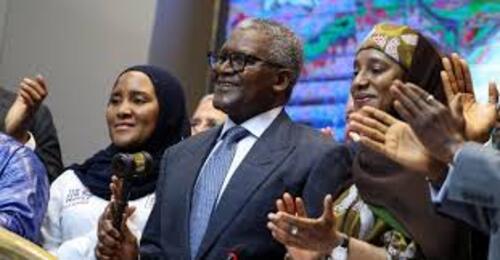
In a landmark move for African capital markets, billionaire industrialist Aliko Dangote on Monday launched Africa’s largest-ever initial public offering (IPO), opening a roughly 3% stake in his state-of-the-art oil refinery to public investors. The offering, dubbed a “people’s IPO” by Dangote, aims to raise as much as $2.1 billion to fund further expansion of the refinery, already the continent’s largest. Dangote, Africa’s richest man, said the IPO is designed to “democratise wealth creation,” giving ordinary Nigerians a chance to share in the refinery’s success. The minimum investment is set at just 10 shares, about $4, making entry accessible through fintech and digital investment platforms. The IPO is expected to raise at least 2.15 trillion naira ($1.6 billion), but could reach $2.1 billion if oversubscribed and the company issues more shares. The launch comes on the heels of a July private placement that raised $2.5 billion for a 6% stake, valuing the company at $40 billion. The IPO, however, moves the refinery’s valuation closer to $49 billion. While retail investors will pay a higher price per share than the institutional buyers in July, company officials say the earlier discount was due to lockup periods and other conditions. Interest in the IPO is high: Nigerian investment app Bamboo reported record traffic, with some users temporarily unable to log in as excitement surged. “I’ll buy 2,000 shares,” said Lagos business owner Chris Chijioke, citing Dangote’s track record despite concerns over pricing. Institutional investors in the refinery already include the Africa Finance Corporation, sovereign wealth funds, and development finance institutions. The United Arab Emirates’ ADNOC has also shown interest, according to Dangote, though details remain under wraps due to confidentiality agreements. Built at a cost of $20 billion and operational since 2024, the refinery has redefined Nigeria’s fuel market. It processes 700,000 barrels of crude daily, with ambitions to double that by 2029. Analysts say the plant has transformed Nigeria from a net importer to a net exporter of refined petroleum products, cementing its role as an economic powerhouse. Dangote revealed plans to eventually list all his conglomerate’s companies, including cement, sugar, and salt divisions, and suggested a possible secondary listing for the refinery in the United States within three to four years. “This IPO is a huge event for Nigeria and a symbol of African self-reliance,” said Charles Robertson, head of macro strategy at FIM Partners. With excitement running high and Nigeria’s equities market booming, the Dangote refinery IPO is poised to reshape the continent’s investment landscape. Source: Apexnewsgh.com