

Parliamentary Service Notifies EC of Kpandai Seat Vacancy, Paving Way for By-Election

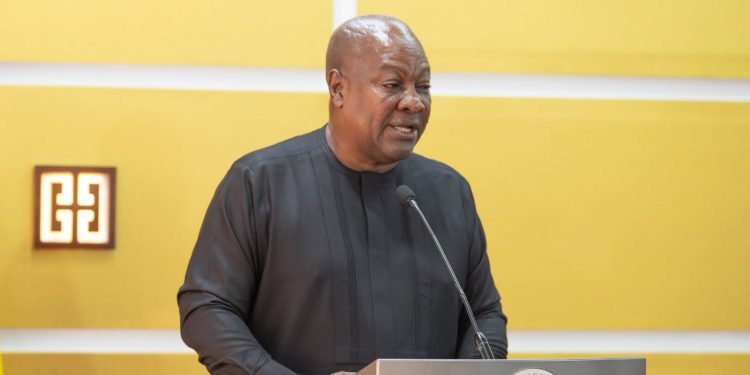
The Parliamentary Service has officially informed the Electoral Commission (EC) of a vacant parliamentary seat in the Kpandai Constituency, setting in motion the process for a re-run of the 2024 Parliamentary Election as directed by the High Court in Tamale. The notification, dated December 4, 2025, signals the beginning of administrative procedures necessary for the EC to prepare for the fresh poll. This development follows a High Court ruling on November 24, 2025, which annulled the previous Kpandai parliamentary election results over significant irregularities and legal inconsistencies. The letter, addressed to EC Chairperson Mrs. Jean Mensa and signed by Clerk to Parliament Mr. Ebenezer Ahumah Djietror, stated that the action was taken “in exercise of the power conferred and the duty imposed on the Clerk to Parliament by Article 112(5), as amended, of the 1992 Constitution of the Republic of Ghana.” In the correspondence, the Clerk formally notified the EC of the vacancy “occasioned by the Order of the High Court, Tamale, for a re-run of the Kpandai Parliamentary Elections,” referencing the relevant court suit. By constitutional requirement, a by-election or re-run must be held within 90 days of the vacancy, unless it occurs within three months of Parliament’s dissolution. With the notification issued on December 4, the EC is now mandated to conduct the election by early March 2026. The move is seen as critical to restoring full political representation for Kpandai residents and has drawn national attention, given its potential implications for the balance of power in Parliament. Major political parties are expected to invest heavily in the upcoming contest, which offers the electorate in Kpandai another chance to select their representative in a closely watched process. The EC is anticipated to release a detailed timetable in the coming weeks, outlining nomination procedures and the specific date for the re-run election. Source: Apexnewsgh.com
Ghana Air Force Takes Over Guard Duties at Jubilee House in Colourful Ceremony
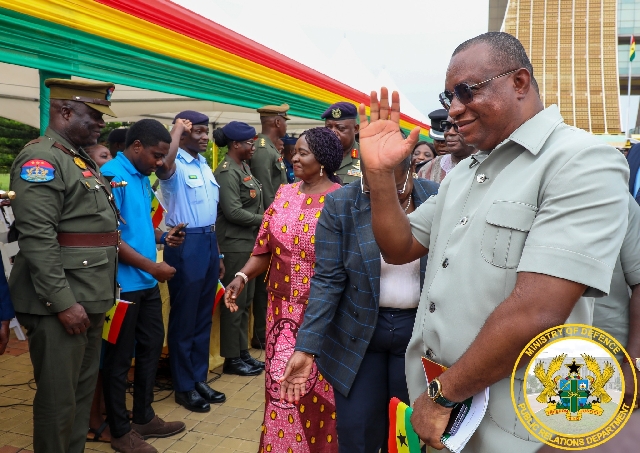
The Ghana Air Force has officially taken over guard responsibilities at the Jubilee House from the Ghana Navy, following a vibrant guard-changing ceremony at the seat of government. The event, which marked the 46th rotation since the tradition began, was highlighted by stirring performances from both the Navy and Air Force regimental bands. With this handover, Air Force personnel will now oversee security at the Presidency for the next three months. The ceremony was attended by Vice President Her Excellency Prof. Jane Naana Opoku-Agyemang, who was joined by key government and military officials, including Chief of Staff Hon. Julius Debrah, Deputy Minister for Defence Hon. Ernest Brogya Genfi, Chief of the Defence Staff Lt. Gen. William Agyapong, Service Chiefs, and several invited dignitaries. The changing of the guard at the Jubilee House remains a cherished ceremonial tradition, symbolising discipline, unity, and the vital collaborative role of Ghana’s security services in safeguarding the nation’s highest office. Source: Apexnewsgh.com
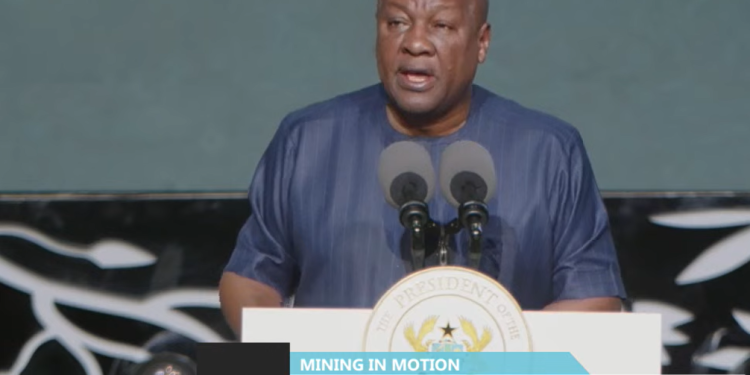
President John Dramani Mahama to Receive Bawku Mediation Report at Jubilee House

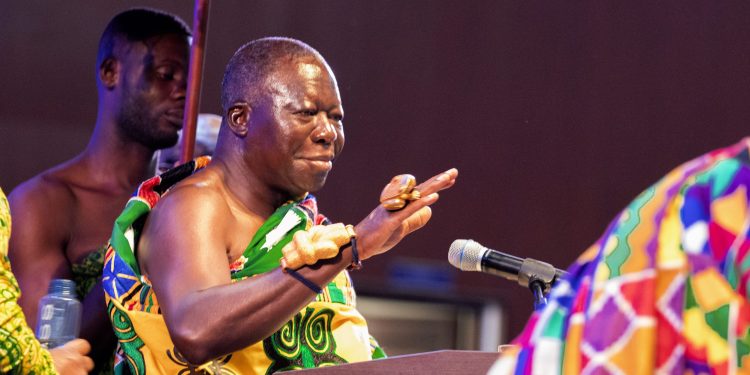
President John Dramani Mahama is set to receive the official Bawku Mediation Report on Thursday, December 11, 2025, at a ceremony scheduled for the Jubilee House in Accra. The event marks a pivotal moment in Ghana’s ongoing efforts to achieve lasting peace and stability in Bawku and neighboring communities. The report, the result of months of intensive mediation led by the Asantehene, Otumfuo Osei Tutu II, encapsulates key recommendations and findings aimed at resolving the longstanding tensions in the region. The Asantehene has played a leading role in the peace process, working alongside local leaders and national stakeholders to foster dialogue and reconciliation. Thursday’s presentation, beginning at 10:00 a.m., will gather senior government officials, traditional rulers, members of the mediation committee, and other distinguished guests. The occasion is expected to underscore the unified commitment of state authorities, faith-based organizations, traditional institutions, and development partners to promote social harmony in northern Ghana. Among the invited institutions are the National Peace Council, the Christian Council, the Office of the National Chief Imam, the Catholic Secretariat, the United Nations Development Programme, the British High Commission, and key regional authorities such as the Ministers for the Upper East and North East Regions. Representatives of the Upper East Regional House of Chiefs and the National Security apparatus will also be present. The formal presentation of the Bawku Mediation Report is anticipated to reaffirm Ghana’s dedication to peace-building and inclusive development in conflict-prone areas. Source: Apexnewsgh.com
NAIMOS Raises Alarm Over Interference by Chiefs and Politicians in Anti-Galamsey Fight

The National Anti-Illegal Mining Operations Secretariat (NAIMOS) has sounded the alarm over persistent interference from powerful individuals, especially chiefs and politicians, that continues to hamper Ghana’s efforts to curb illegal mining, known locally as galamsey. Speaking at a stakeholder meeting in Sekondi on Sunday, December 7, Lieutenant Colonel Joshua Satekla, Deputy Director of Operations at NAIMOS, expressed the secretariat’s unwavering commitment to tackling galamsey. However, he pointed out that interference from influential figures remains a major obstacle to success. Addressing 14 Metropolitan, Municipal, and District Chief Executives (MMDCEs) from the Western Region and two Regional Police Commanders, Lt. Col. Satekla underscored the need for strict enforcement and collaboration at identified illegal mining hotspots. He emphasized that the effectiveness of operations relies heavily on support from local authorities to uphold designated “no-go” zones. Yet, he revealed that such support is often undermined. “Every institution has challenges, and we are no exception. One of our key challenges is interference from influential people. We encounter this from politicians, chiefs, and other stakeholders in areas where we operate, and it is a big problem that must be addressed. Another critical challenge is logistics,” Lt. Col. Satekla stated. Western Regional Minister Joseph Nelson reaffirmed the government’s resolve to end illegal mining and called on all MMDCEs to support President John Dramani Mahama’s campaign to eliminate galamsey, urging unity in the fight for Ghana’s environmental future. Source: Apexnewsgh.com
Former NAFCO Boss Challenges Freezing of Properties in High Court
Former Chief Executive of the National Food and Buffer Stock Company (NAFCO), Abdul-Wahab Hanan, has filed a motion at the High Court seeking to overturn a freezing order placed on four properties linked to him. According to Hanan, the Economic and Organised Crime Office (EOCO) acted in error and wrongfully included assets in the order that he either acquired before his NAFCO appointment or does not own at all. In his affidavit, Hanan listed the affected properties named in the October 21, 2025 order: a three-bedroom house at Kpalsi, Tamale; an uncompleted storey building at Gumani, Tamale; a 0.27-acre plot at Estate Junction, Tamale; and a 0.29-acre plot at Workers College, Tamale. Hanan insists that EOCO obtained the freezing order ex parte, without giving him the opportunity to be heard, and failed to meet legal requirements under sections 33–35 of the Economic and Organised Crime Act, 2010 (Act 804). He claims that the three-bedroom house at Kpalsi was acquired in 2011 and completed in 2013, well before he joined NAFCO, and even served as a venue for his Islamic marriage ceremony, making it unrelated to any alleged wrongdoing. He further argues that EOCO wrongly attributed ownership of two properties to him: the uncompleted building at Gumani and the 0.27-acre plot at Estate Junction, which he says belongs to Al-Qarni Enterprise and was transferred to OSGAF Furniture Enterprise in 2022, prior to EOCO’s investigations. Hanan also alleges procedural violations, stating that after his arrest on June 25, 2025, EOCO detained him for two weeks and searched his homes in Accra and Tamale without a warrant, violating his right to privacy. He says he was only informed of the freezing order on November 26, 2025, when he reported to EOCO as part of his bail conditions, despite the law requiring prompt notice. Maintaining his innocence, Hanan contends that EOCO has not demonstrated that the properties are tainted or linked to criminal proceeds. He argues that the freezing order infringes his constitutional rights to property, privacy, fair hearing, and the presumption of innocence. The High Court is set to hear Hanan’s motion to review the freezing order on December 18, 2025. Source: Apexnewsgh.com
NDC Calls Kufuor’s Remarks Rare Admission of NPP Governance Failures
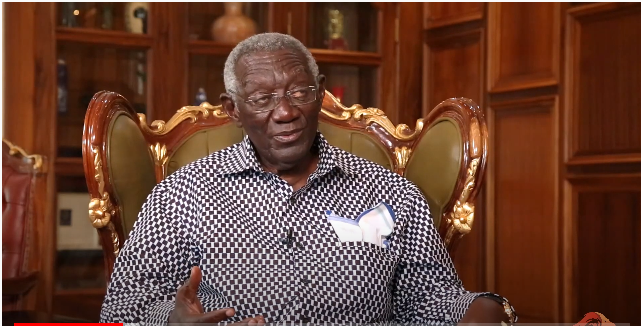
The National Democratic Congress (NDC) has reacted to recent comments by former President John Agyekum Kufuor, describing them as a rare but significant admission of governance failures under the New Patriotic Party (NPP) led by President Nana Addo Dankwa Akufo-Addo. In a statement signed by Deputy National Communication Officer, Godwin Ako Gunn, the NDC asserted that Kufuor’s candid reflections validate the party’s longstanding criticisms. According to the NDC, Kufuor’s remarks confirm that the Akufo-Addo administration was plagued by arrogance, poor judgment, and reckless management of national affairs. The statement noted that President Kufuor admitted the NPP leveraged the legacy of his administration to win the 2016 elections, only to later abandon prudent policies. This, the NDC said, led to decisions that worsened the lives of ordinary Ghanaians. The NDC further highlighted Kufuor’s claim that he was sidelined from key national decisions, including the controversial National Cathedral project, the Domestic Debt Exchange programme, and scandals such as the Power Distribution Services (PDS) case. “These admissions confirm what the NDC consistently highlighted during the period of governance: that the NPP was driven by arrogance, unilateralism, and disregard for collective wisdom,” the statement read. However, the NDC questioned the timing of Kufuor’s statements, suggesting that his silence during the peak of alleged mismanagement contributed to the hardships experienced by Ghanaians. “His recent comments, though welcome, come only after the NPP has suffered electoral defeat and internal disunity. This raises legitimate questions about why he chose not to speak when Ghanaians most needed his voice,” the party stated. Reiterating its core philosophy, the NDC emphasized that governance should prioritize Source: Apexnewsgh.com
Kufuor Warns Politicians: NPP’s 2024 Defeat a Wake-Up Call Against Mismanagement
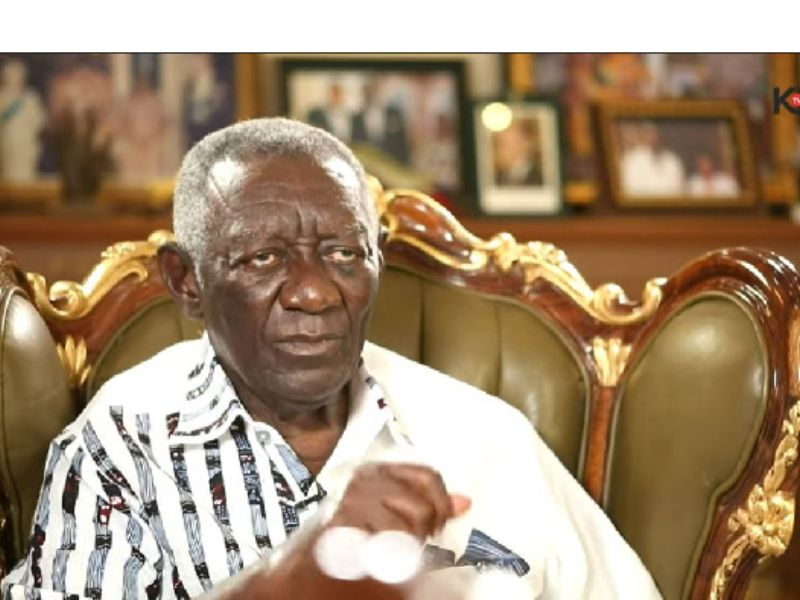
Former President John Agyekum Kufuor has sent a strong message to Ghanaian politicians, urging them to treat the New Patriotic Party’s (NPP) defeat in the 2024 elections as a clear warning: the electorate will not tolerate mismanagement. Appearing on The Delay Show, Mr. Kufuor candidly dissected the reasons behind the party’s loss. He attributed the defeat to several controversial decisions under President Nana Addo Dankwa Akufo-Addo, including the Domestic Debt Exchange Programme (DDEP), the National Cathedral project, and the failed Power Distribution Services (PDS) deal. “The Ghanaian electorate cannot be taken for granted. Politicians must learn from this,” he stressed, emphasizing that the election results reflected widespread public dissatisfaction with these key decisions. Reflecting on the party’s journey, Mr. Kufuor recalled that the NPP’s landslide victory in 2016 was built on the back of his administration’s achievements. “Before 2016, the campaign was anchored on my achievements. The government started well, but things changed after he took office,” he observed, noting a shift in governance priorities after President Akufo-Addo assumed office. The former President highlighted how post-COVID-19 decisions, particularly those affecting the bond market, the handling of the PDS deal, and the National Cathedral project, became flashpoints for public anger. He revealed that he was never consulted about the Cathedral and only learned of the project after construction was underway. He further criticized the demolition of state properties, including housing for judges, to make way for a project that remains incomplete. Mr. Kufuor traced the NPP’s recent electoral trajectory: an overwhelming victory in 2016, a razor-thin and contentious result in 2020 that led to a hung Parliament, and the emphatic defeat in 2024. “We won massively in 2016. The 2020 elections were tight and gave us a hung Parliament, and 2024 was something else altogether,” he stated. Concluding his reflections, Mr. Kufuor delivered a caution to all politicians: to retain the trust of Ghanaians, leaders must govern with transparency, discipline, and a keen sensitivity to the expectations of the people. Source: Apexnewsgh.com
Minority Demands Legal Action Over Ministry of Transport’s GHS10 Million Overspend
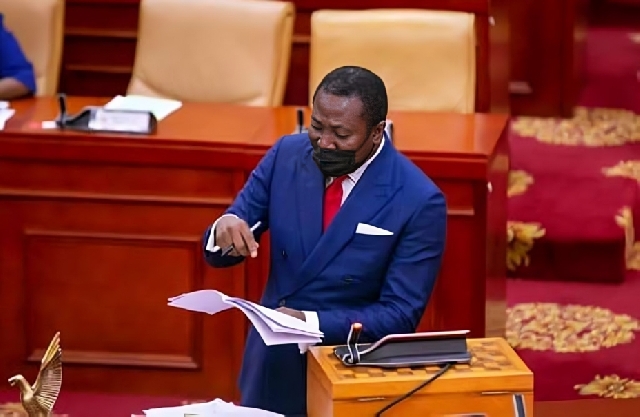
The Minority in Parliament is demanding urgent legal action against officials of the Ministry of Transport following allegations of unauthorised spending of nearly GHS10 million above the ministry’s approved 2025 budget. According to the Minority caucus, Parliament sanctioned GHS83 million for the ministry’s capital expenditure, but reports indicate that the ministry exceeded this figure by approximately GHS10 million, a move the caucus says constitutes a breach of the Public Financial Management Act. During debate on the ministry’s 2026 budget allocation on December 2, 2025, Minority Leader Alexander Afenyo Markin insisted that those responsible must be held accountable. He described the overspend as a serious violation warranting immediate investigation and consequences. Speaking on the floor of Parliament, Afenyo Markin questioned whether any officials had been referred to the Office of the Special Prosecutor, warning that the gravity of the breach could result in prosecutions. The Minority caucus is now calling for a thorough probe to ascertain how the excess funds were spent and why the ministry operated well beyond its authorised budget. Source: Apexnewsgh.com
Parliament Approves GH¢5.3 Billion for Roads Ministry, but Funding Gaps Remain
Parliament has approved GH¢5.3 billion for the Ministry of Roads and Highways for the 2026 financial year, a significant move in the government’s ambitious plan to expand and modernise Ghana’s road network. This allocation is part of a wider infrastructure initiative aimed at strengthening connectivity across the country. Alongside the approved budget, the government has earmarked GH¢30 billion in oil revenue under the Big Push Programme, dedicated to supporting major road development projects nationwide. The goal of this initiative is to finance substantial upgrades, ease transportation bottlenecks, and improve regional access. During the presentation of the Roads and Transport Committee’s report to Parliament, sector minister Governs Agbodza welcomed the allocation but cautioned that it was insufficient to meet the ministry’s actual needs. He revealed that the ministry is currently supervising road contracts valued at over GH¢110 billion, a figure that dwarfs the newly approved budget. Describing the allocation as inadequate, Minister Agbodza stressed that the ministry’s commitments extend far beyond what the 2026 budget provides. “I agree with my colleagues on the GH¢5 billion, but the GH¢5 billion allocated is not enough. Though it may sound like one of the biggest allocations, it is not enough at all,” he emphasized. Despite the funding shortfall, the Ministry of Roads and Highways has reaffirmed its commitment to advancing key road projects. The ministry will continue to work with the government to secure additional resources, aiming to close the funding gap and deliver on its infrastructure promises for the benefit of all Ghanaians. Source: Apexnewsgh.com
Dr. Nawaane cut-sod for transformative projects in Nabdam
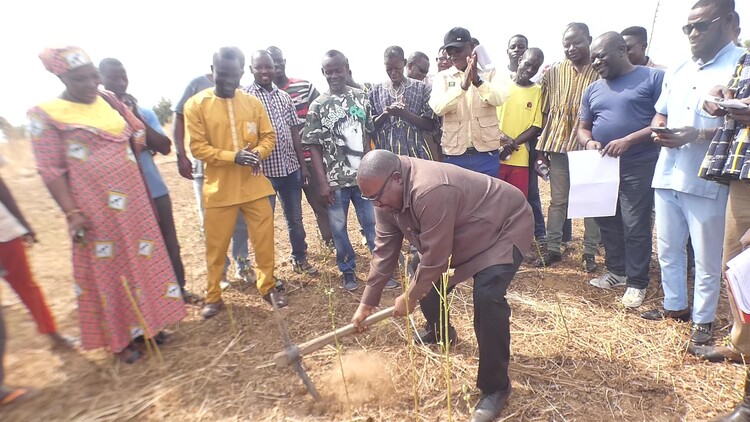
On a bright Monday morning, the Nabdam Constituency in Ghana’s Upper East Region buzzed with unusual excitement. The air was thick with anticipation and hope as community members from far and near gathered in several towns to witness an event that would mark a turning point in their lives. Chiefs in regal attire, elders with wisdom etched on their faces, women carrying children on their backs, and youth eager to see change, all converged for a historic occasion: the sod-cutting ceremonies led by their Member of Parliament, Dr. Mark Kurt Nawaane. The sod-cutting started at Soliga, a community that, for years, had grappled with limited access to basic amenities. As the sun climbed higher, the crowd swelled, filling the open grounds where the ceremony would take place. The chiefs, resplendent in traditional robes, sat at the center, flanked by elders and surrounded by an enthusiastic assembly of townsfolk. Dr. Nawaane arrived to a spirited welcome. There was singing, drumming, and dancing, a celebration that was both a show of gratitude and a rallying call for unity. As he took the stage, the noise faded, replaced by the eager silence of expectation. With humility, Dr. Nawaane began his address. He called it “a great day,” not just for himself, but for the entire district. He explained that this moment was a direct result of a visionary promise made by the President of the Republic, John Dramani Mahama. The President, Dr. Nawaane recalled, had pledged that 80 percent of the District Assembly Common Fund would be allocated to the Assembly, with 10 percent dedicated specifically to health infrastructure and health activities. This policy, he emphasized, was not mere rhetoric; it was bearing fruit in the form of tangible projects that would uplift lives. The crowd listened intently as Dr. Nawaane spoke of the longstanding needs of Soliga. For years, the community had yearned for a health post, a place where mothers could deliver their children safely, where the sick could receive care without traveling miles, and where the elderly would have a measure of comfort in their twilight years. The people had even taken matters into their own hands, constructing a modest building with limited resources, a testament to their determination and resilience. “But today,” Dr. Nawaane declared, “we are here to begin the construction of an official Community-based Health Planning and Services (CHPS) Compound, a health facility worthy of Soliga’s aspirations.” Applause erupted as he spoke, the relief and joy on the faces of the assembled evident for all to see. He paid tribute to the community’s spirit, to the elders who had kept hope alive, to the chief who had advocated tirelessly, and to the women who had borne the brunt of inadequate healthcare. “When this facility is completed, healthcare will be at your doorstep,” he promised. “No longer will you need to journey two or three miles for primary health services.” Among those in attendance was Madam Sadia Salifu, the Nabdam District Health Director. Her excitement was unmistakable. She spoke candidly to the media about the struggles the people of Soliga had endured. The existing community-built structure, she explained, was barely adequate, offering little in the way of comfort or medical safety. “This new facility is good news for more than a thousand people in Soliga,” she said. “It will change lives.” The chief, too, gave his blessings, expressing gratitude not only to the MP and the President but also to the people for their perseverance. There was a palpable sense that something momentous was unfolding, a shift from frustration to fulfillment, from hope deferred to hope realized. The day’s significance did not end in Soliga. Dr. Nawaane’s itinerary included several other communities, each with its unique needs and aspirations. In Damolga, the focus was on education. The community, like Soliga, had struggled with inadequate school infrastructure. The sod-cutting here marked the start of the construction of a modern three-unit classroom block. But this was no ordinary school building. The plans included a headteacher’s office, a storeroom, an ICT lab, a library, a staff common room, an eight-seater KVIP toilet, and two gender-friendly urinals. The design reflected a commitment to holistic education, providing not just classrooms, but the resources and facilities needed for contemporary learning. In Nangodi, two separate projects were underway. The first was the expansion of the Health Directorate Offices. The new building would feature three modern offices, a mini-conference hall, and three water closet toilets. This expansion was vital for improving healthcare administration and ensuring that health workers had a conducive environment in which to serve the people. The second project in Nangodi addressed a different, yet equally pressing need: animal husbandry. The MP cut the sod for a new pen to house stray animals. The facility would include feeding and storage areas, a mechanized borehole for water, and even a bedroom and W/C for the caretaker. This project recognized the importance of agriculture in the local economy and sought to provide humane, organized solutions for managing livestock. In Kongo, Dr. Nawaane turned his attention to food safety and sanitation. The existing slaughterhouse, crucial for the community’s butchers and meat traders, was incomplete and ill-equipped. The new project aimed to finish the construction of the slaughterhouse and fit it with a modern biodigester sanitation system. This innovation would ensure that meat processing was both safe and environmentally friendly, protecting public health and supporting local businesses. The final stop was Pelungu, where the focus was once again on sanitation—a perennial challenge in many rural communities. The planned construction included a ten-seater, four-flat water closet toilet, a five-unit bathhouse, and a mechanized borehole. These facilities would serve hundreds, providing dignity, hygiene, and a better quality of life. Through each speech, handshake, and shovel of earth, Dr. Nawaane’s message was clear: these projects were not isolated acts of charity, but part of a cohesive vision for Nabdam’s future. They were the product of thoughtful policy, community engagement, and a determination to see real, lasting change. The day’s events