



Dome Kwabenya constituency rejects Sarah Adwoa Safo even after sharing them fan yogurts

Mike Oquaye Jnr emerged victorious in the Dome Kwabenya constituency as the New Patriotic Party’s (NPP) parliamentary candidate, unseating his long-time rival Sarah Adwoa Safo. The polls, which took place on Saturday, January 27, 2024, saw a significant margin of victory for Oquaye. The final vote count revealed that Mike Oquaye Jnr received 1,198 votes, while Sarah Adwoa Safo only garnered 328 votes. Sheela Oppong Sakyi secured 186 votes as well. Oquaye’s victory was celebrated by his supporters, marking the end of Adwoa Safo’s reign in the constituency. Adwoa Safo’s defeat, however, did not come as a surprise due to mounting criticism over her extended absence from the constituency. She had been abroad for nearly a year, taking care of her ill child. This absence had prompted disappointment and frustration among her constituents, who felt neglected as she failed to fulfill her parliamentary duties. Upon her return, Sarah Adwoa Safo issued an apology to her constituents, seeking their support to contest and represent them again in parliament in 2025. However, the election results indicate that her constituents have not forgiven her for abandoning them. The overwhelming support for Mike Oquaye Jnr reflects their dissatisfaction and the lack of trust in Adwoa Safo’s commitment to their needs and concerns. With the victory of Mike Oquaye Jnr, a new era begins in the Dome Kwabenya constituency. As the NPP’s parliamentary candidate, Oquaye will have the task of reconnecting with the constituents and addressing their issues, thus aiming to restore the faith of the people in their representative. Meanwhile, Adwoa Safo faces the challenge of rebuilding her reputation and regaining the trust of her constituents before the next election cycle. Please contact Apexnewsgh.com on email apexnewsgh@gmail.com for your credible news publications. Contact: 0256336062
Bank of Ghana Reports Successful Disinflation Process in 2023
The Bank of Ghana has announced that the country’s disinflation process, which began in early 2023, continued successfully throughout the last quarter. This achievement was attributed to strong policies, stable exchange rates, and effective efforts to control liquidity. Governor Ernest Addison revealed that headline inflation saw a significant decline from 54.1% at the end of December 2022 to 23.2% in December 2023. In a press conference following the Monetary Policy Committee meetings, he explained that this decline was driven by lower prices in both food and non-food items. Food inflation dropped from 59.7% in December 2022 to 28.7% in December 2023, while non-food inflation decreased from 49.9% to 18.7% during the same period. Core inflation, which excludes energy and utility, also experienced a substantial decrease, falling from 53.2% to 24.2% in December 2023. Dr. Addison highlighted that inflation expectations among banks, businesses, and consumers have also reduced. Furthermore, he stated that the implementation of fiscal policy aligns well with the requirements of the International Monetary Fund’s Extended Credit Facility-supported program. The Governor shared provisional data, which indicates that the performance criteria targets for the primary fiscal balance, non-accumulation of external debt payment arrears, and no new collateralized debt by central government and public entities are on track for achievement. Additionally, he revealed that based on provisional banking data on budget execution from January to December 2023, the fiscal deficit was approximately 3.0% of GDP, surpassing the target of 5.5% of GDP. Bank of Ghana Monetary Policy Committee Press Release Good morning, Ladies and Gentlemen of the Media and welcome to the press briefing for the 116th Monetary Policy Committee (MPC) meetings, the first for the year. Last week, the Committee deliberated on global and domestic macroeconomic developments including assessment of the performance of the economy and the risks to the outlook for inflation. A summary of the assessments and key considerations that informed the Committee’s decision on the positioning of the monetary policy rate is as follows: Global Developments and Conditions Global economic activity was mixed in 2023, improving in the first half year but moderated in the second half. The mixed performance, on one hand reflected strong growth in the United States amid solid domestic demand and resilient labour markets despite tighter financing conditions. On the other hand, a contraction in Japan, the Euro Area, and the United Kingdom was observed. For Emerging Market and Developing Economies (EMDEs), growth was supported mainly by the rebound in China where policy support and resurgence in consumer spending offset weakness in the property sector. The overall growth outturn for 2023 is expected to remain subdued, weighed down by the lingering weakness in the manufacturing sector alongside effects of the still tight monetary policies, and weak external demand. Given these developments, global growth is projected to end 2023 at 3.0 percent and slow marginally to 2.9 percent in 2024. Global inflationary pressures have eased substantially largely supported by the decline in energy and food prices. Consequently, headline inflation is on a downward trajectory though above targets in many advanced economies and EMDEs due to persistence in core inflation. Longer-term inflation expectations, remain anchored, reflecting the tightened policy stance of central banks and recent declines in headline inflation. In the outlook, the expectation is for continued gradual disinflation as the effects of maintenance of tighter monetary policy stance passes through to core inflation. Notwithstanding the pause in policy rate hikes by central banks in Advanced Economies, lagged effects of previous policy tightening measures continue to transmit to global financing conditions. Longer term bond yields retreated slightly in line Bank of Ghana Monetary Policy Committee Press Release 29 th January, 2024 2 with shifting expectations about the path of future interest rates. Also, lending standards have tightened, and bank credit growth has slowed sharply, while equity markets recovered amid the expectation that central banks in advanced economies have reached the peak of the tightening cycle. Portfolio flows to emerging markets rebounded strongly in the last two months of 2023 supported by expectations that the US Fed will cut policy rate in the near term. Domestic Macroeconomic Conditions At home there is gradual recovery in economic activity, though growth remains below potential. The latest Ghana Statistical Service data showed an expansion in overall real GDP by an annual rate of 2.0 percent driven by the services and agriculture sectors during the third quarter of 2023, relative to 2.7 percent over the same period in 2022. Nonoil GDP growth moderated to 2.1 percent from 3.3 percent over the same comparative period. The Bank’s high frequency real sector indicators point to a significant pickup in activity. The updated Composite Index of Economic Activity (CIEA) rebounded strongly with an annual growth of 9.6 percent in November 2023 – the highest in two years – from a contraction of 6.2 percent a year earlier. Domestic VAT, port activity, industrial consumption of electricity, imports, and tourist arrivals all contributed to the improvement in economic activity observed during the period. The Bank’s latest surveys conducted in December 2023 showed a strong rebound in both consumer and business sentiments, reflective of the signs of recovery. Consumer confidence improved on account of easing inflationary pressures which led to optimism about future economic conditions. Similarly, business confidence increased significantly, signalling improving consumer demand, as firms met short-term targets and expressed positive sentiments about company and industry prospects. The survey findings were broadly aligned with observed trends in Ghana’s Purchasing Managers’ Index (PMI), which improved to 51.8 in December 2023 from 51.6 in the previous month. The disinflation process, which began earlier in the year, continued through to the last quarter of the year supported by strong policies, relative exchange rate stability, and effective liquidity sterilization efforts. Headline inflation sharply decelerated to 23.2 percent in December 2023, from a peak of 54.1 percent at the end of December 2022. The decline in inflation was driven by both easing food and non-food prices. Food inflation decelerated sharply to 28.7 percent in December 2023 from 59.7 percent
Ghana’s Export Commodities Experience Mixed Prices in 2023, Decreasing Trade Surplus

According to the Bank of Ghana, the prices of key export commodities in 2023 showed a mixed trend on the international market. In December 2023, Governor Ernest Addison reported a 5.0% decline in crude oil prices to an average of US$77.3 per barrel. This can be attributed to sluggish energy demand in the United States and China, as well as the easing of concerns regarding disruptions in supply due to tensions in the Red Sea. In contrast, cocoa prices experienced significant growth, with an annual increase of 66.8% to close at an average of US$4,235.60 per tonne. This rise can be attributed to reduced supplies in the market. Furthermore, gold spot prices rose by 13.3%, closing at an average price of US$2,035.43 per fine ounce in December 2023. The weakened dollar and falling bond yields after positive U.S. economic data fueled expectations of interest rate cuts, benefiting the gold market. As a result of the developments in the prices of major export commodities, along with lower production levels in cocoa and crude oil, Ghana’s trade balance experienced a marginal decline. The trade surplus for 2023 totaled US$2.63 billion, lower than the US$2.87 billion recorded in 2022. Governor Addison explained that this decline in the trade surplus was primarily due to a greater decline in export earnings compared to imports. Merchandise exports decreased by 4.9% to US$16.6 billion in 2023. Gold exports increased by 15.0% to US$7.6 billion, benefiting from both volume and price increases. Cocoa beans exports fell marginally by 1.1% to US$1.3 billion, driven by lower volumes and prices. Crude oil exports experienced a significant decrease of 29.3% to US$3.8 billion, primarily due to reduced volumes and lower prices. Imports also decreased, with payments lower by 4.2% to US$14.0 billion. Non-oil imports declined by 4.6% to an estimated value of US$9.5 billion. Furthermore, oil and gas imports decreased by 3.3% to US$4.5 billion. Overall, the prices of Ghana’s key export commodities in 2023 experienced mixed trends, contributing to a marginal decline in the trade balance. The decline in export earnings relative to imports led to a decrease in the trade surplus, which recorded a value of US$2.63 billion for the year. Source: Ngamegbulam Chidozie Stephen Please contact Apexnewsgh.com on email apexnewsgh@gmail.com for your credible news publications. Contact: 0256336062
Youth Empowerment Is Crucial To Promoting Technology In Africa – Selorm Adadevoh

Group Chief Commercial Officer, MTN has emphasized the need to empower the youth through education to drive technological transformation in Africa. He shared this on the second day of the 2024 African Prosperity Dialogue currently going on in Accra, Ghana. Speaking in a panel discussion on “Critical Enablers for Single Market Success – Leveraging Infrastructure, Innovation, and Technology”, Mr. Adadevoh highlighted the advantages of harnessing the power of the youth to push Africa to the forefront of technology. He said, “Africa is lagging behind the rest of the world when it comes to technology. About 50% of the population does not have access to internet services. According to the World Bank, we will need about 1.7 trillion dollars to invest in infrastructure to catch up with the rest of the world in the next 10 to 15 years.” He added, “transformation, I believe, begins with the mindset. The chain of influencing infrastructure transformation starts from what we are willing to do. One area we need to tackle to solve this issue is education. It is not enough to invest in the infrastructure without investing in the skills needed. Africa has the largest youth population in the world. We must harness the power of the youth by transforming our current educational system towards a more digital framework.” Mr. Adadevoh also explained the importance of creating markets within our markets in pushing Africa to the forefront of technology. He further added, “Until we start to create markets within our markets, this will not be economically viable. We must begin to rely on ourselves to find cheaper solutions to our problems. A lot of payment options around the world started on this continent but have been sold. This is because of the barriers in trade across African countries. There must be a collective effort to break these barriers and allow ease of transaction so that we can collaborate towards building the Africa we all wish. The Africa Prosperity Dialogues is a three-day event that has the overarching focus to propose concrete measures to drive Africa’s progress. Themed “Delivering Prosperity in Africa: Produce. Add Value. Trade”, the three-day high-level dialogue brings together government and business leaders from across Africa and beyond to deliberate and exchange ideas on key issues and solutions in building and harnessing Africa’s growth. Source: Ngamegbulam Chidozie Stephen Please contact Apexnewsgh.com on email apexnewsgh@gmail.com for your credible news publications. Contact: 0256336062
Collaborate and Pass a Bylaw with Severe Penalties to Address Witchcraft Accusations and Lynching—Baare Chief to Assembly and Traditional Council
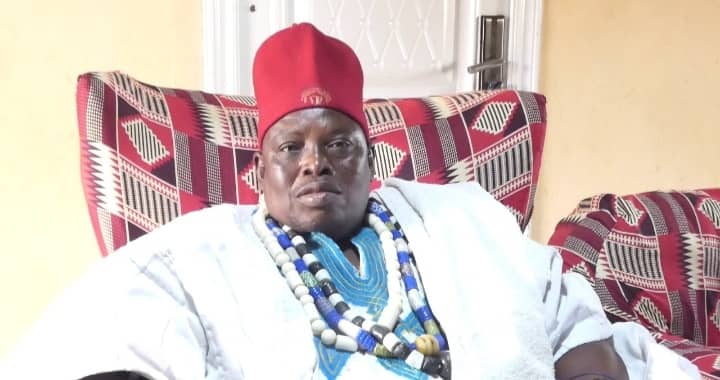
In an effort to combat the alarming issue of witchcraft accusations and the lynching of older individuals, Baare Chief Naab Nyaakora Mantii in the Talensi District of the Upper East Region is urging the Assembly and Traditional Council to pass a bylaw with severe penalties. The Chief acknowledges the gravity of the problem, not only in the Northern part of the country but throughout Ghana and is taking a bold stand to find a solution. Chief Nyaakora Mantii emphasizes the lack of scientific evidence supporting these accusations, highlighting that they are merely allegations without any legal basis. Lynching individuals based on suspicions of witchcraft goes against the laws of the country, an important message that needs to be conveyed to the whole world. The Chief stresses the need for the youth and the general public to understand the consequences of indiscriminately taking the lives of innocent people. Furthermore, Chief Nyaakora Mantii emphasizes the wisdom and knowledge that older individuals possess, highlighting the loss society incurs when these valuable resources are wiped out by mob violence. He urges the community to refrain from participating in such acts and instead tap into the valuable insights offered by the older generation, emphasizing the importance of unity and growth. The Chief calls on the Assembly and Traditional Council to collaborate and implement stricter measures to prevent these acts from occurring. He suggests the establishment of a bylaw with substantial punishments to deter individuals from engaging in witchcraft accusations and lynching. This preventative action will serve as a crucial step towards resolving this concerning issue. However, Chief Nyaakora Mantii suggests the need for education and awareness programs to help people differentiate between right and wrong. He acknowledges that ignorance plays a pivotal role in these accusations and believes that sensitization efforts, especially through media outlets, will greatly contribute to combating this problem. The Chief expresses gratitude for the opportunity to voice their concerns and pledges to spread the message within the council and community. Through a documentary titled “The Horrors of Witchcraft Accusation,” produced by Ngamegbulam Chidozie Stephen, which was sponsored by MRG and supported by MPEC, Chief Nyaakora Mantii opens up about the urgent need to address witchcraft accusations and lynching. He recognizes the importance of educating both the community members and chiefs on this matter to ensure a comprehensive solution. Source: Ngamegbulam Chidozie Stephen Please contact Apexnewsgh.com on email apexnewsgh@gmail.com for your credible news publications. Contact: 0256336062
Bishop of Tamale Diocese Expresses Concerns Over Modern Prophets and Witchcraft Accusations

In a thought-provoking documentary titled “The Horrors of Witchcraft Accusation,” the Bishop of Tamale Diocese, Right Revd Dennis Debukari Tong, revealed his difficulty in distinguishing the activities of modern prophets from those of soothsayers. The Anglican Bishop expressed his concern about the increasing trend of self-proclaimed prophets accusing family members of their congregants as witches and wizards. According to him, sometimes during his sermons, he raised questions about the absurdity of these accusations. He questioned how a mother, who has taken care of her child and supported them throughout their lives, could suddenly become a source of harm and destruction. He encouraged people not to believe pastors and prophets who blame their mothers for their misfortunes, emphasizing that it is often a result of personal choices or hard work. Bishop Tong expressed his dissatisfaction with the public nature of these accusations. He questioned why pastors and prophets couldn’t approach individuals privately if they believed they had a prophetic message for them. He argued that publicly shaming someone as a witch or pointing fingers in a group setting was irresponsible and could lead to the unraveling of families. Although Bishop Tong believes in prophecy, he emphasized that it should come with a solution or guidance on how to change the situation. He criticized prophets who accuse others without possessing the power to deliver them from their alleged afflictions. He maintained that if one is accusing someone of witchcraft, they should also possess the power to cure them, or else their prophecy is incomplete. Bishop Tong also highlighted the blurred lines between modern prophets and soothsayers, stating that some soothsayers have now taken on the appearance of prophets. He expressed disappointment that these activities have tarnished the image of the church, which should instead represent the teachings of Jesus. He reminded believers of the story in the book of John Chapter 8, where Jesus intervened and questioned the authority of those condemning a woman caught in adultery, urging them to examine their own faults. Bishop Dennis Debukari Tong shared these views in the documentary “The Horrors of Witchcraft Accusation,” produced by Ngamegbulam Chidozie Stephen. The documentary was sponsored by MRG, with support from MPEC. Source: Ngamegbulam Chidozie Stephen Please contact Apexnewsgh.com on email apexnewsgh@gmail.com for your credible news publications. Contact: 0256336062