


EC Outlines Alternative Verification Methods Following Fire Incident in Ablekuma North Constituency

In a significant development regarding the Ablekuma North Constituency Parliamentary election, the Electoral Commission has reassured citizens that alternative methods are in place to verify election results, despite the unfortunate destruction of ballot papers in a fire. Apexnewsgh reports On Tuesday, December 17, 2024, a fire at the Kwashieman Cluster of Schools led to the loss of essential electoral materials, including ballot papers and pink sheets, raising concerns about the integrity of the election results. Dr. Serebour Quaicoe, the Director for Training at the Electoral Commission, addressed these concerns during an interview with Citi News at an event hosted by the Ghana Center for Democratic Development (CDD) on Wednesday, December 18, 2024. He emphasized that while the fire had destroyed the ballot boxes, other verification methods were readily available to ensure the election outcomes would be accurately collated. “We have results in other forms,” Dr. Quaicoe explained. “So, once we can gather the results from these various methods and ensure they are complete, we can proceed with the collation process.” He stressed the importance of upholding the voters’ decision and warned against setting a dangerous precedent where the electoral process could be disrupted or manipulated. Dr. Quaicoe passionately stated, “My point is that we should not set the precedent so that somebody can truncate the process. If it becomes like the survival of the fittest, the one who can bully his way, or her way becomes the winner. I do not think we should get there. If that is the decision of the voter, it should be upheld. So, we should do anything that will uphold the decision of the voter, not technicalities.” As the Electoral Commission navigates this challenging situation, the commitment to transparency and the integrity of the electoral process remains paramount. Source: Apexnewsgh.com
Afenyo-Markin Predicts NDC MPs May Face Redundancy Amid Lean Government Plans
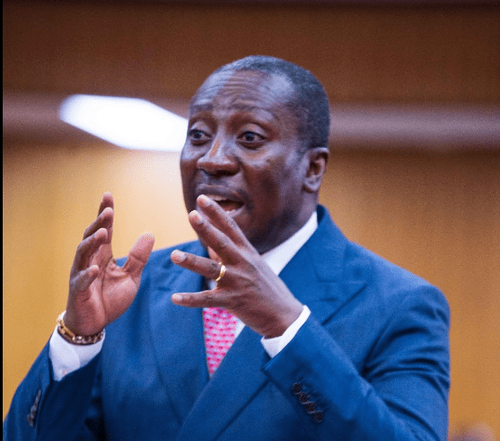
Alexander Afenyo-Markin, the Member of Parliament for Effutu, has forecasted significant changes for the National Democratic Congress (NDC) as the party aims to establish a lean government. Apexnewsgh reports With the NDC currently holding a commanding majority in Parliament, Afenyo-Markin believes that many MPs could find themselves sidelined due to the party’s commitment to a reduced cabinet size. The NDC has publicly pledged to operate with just 60 ministers, consisting of both full and deputy positions. Afenyo-Markin estimates that this could lead to around 35 to 40 MPs being appointed to ministerial roles. This leaves approximately 140 of their over 170 Members of Parliament facing the prospect of becoming largely irrelevant in legislative functions, as they may not occupy the roles they had initially anticipated. Speaking on JoyNews, Afenyo-Markin expressed concern, stating, “I can foresee a lot of their MPs being redundant. They promised 60 ministers, and out of that, some will have to come from Parliament because of the constitutional custom.” His comments underline the potential challenges these MPs may encounter as they continue to manage their constituencies with limited resources. He highlighted the inevitable tensions that could arise from this situation, noting that these MPs will still have the demands of their constituents but might struggle to address them adequately. “The money will not be there because only a few will have ministerial appointments, and that is where their struggles will begin,” he added. Afenyo-Markin recalled the difficulties experienced by the previous administration, which faced challenges in keeping its members present in the Parliamentary chamber. “It got to a point where it was very difficult to get our members into the chamber. Very soon I will tell their majority leader to look behind him; though they have 170-plus, their MPs might not be present,” he warned. As the NDC moves forward with its plans, the implications for its MPs and their effectiveness in Parliament remain to be seen, with Afenyo-Markin’s assertions raising important questions about the party’s governance strategies and the impact on its representatives. Source: Apexnewsgh reports
President Approves 2025 Budget Estimates for Key Institutions

President Akufo-Addo has given the green light to the 2025 budget estimates for the Judicial Service, Audit Service, and Parliament. Apexnewsgh reports The announcement was made by Speaker Alban Bagbin during a parliamentary session held on December 18, 2024. These approved budget estimates are a constitutional necessity as they await the formal presentation of the “Expenditure in Advance of Appropriation” by the Finance Minister. Speaker Bagbin shared the President’s communication detailing the proposed budget allocations for the first quarter of the upcoming financial year, which are crucial for the functioning of these institutions and will undergo thorough parliamentary scrutiny following the Minister’s submission. The budget for the Judicial Service was submitted by Chief Justice Gertrude Torkornoo on October 21, 2024, in line with Article 179(3) of the Constitution. The total financial requirement for the judiciary and judicial service in the first quarter of 2025 comes to GHS 276,499,903. This allocation covers various needs, including compensation, goods and services, and capital expenditure. Similarly, the Audit Service, represented by its board chairman Professor Edward Dua Agyeman, put forth its budget request on October 27, 2024. The proposed funding for the Audit Service stands at GHS 217,342,587 and also encompasses compensation, goods and services, and capital projects, adhering to Section 27(2) of the Audit Service Act, 2000 (Act 584). Parliament and the Parliamentary Service also presented their budget, with Speaker Bagbin officially submitting their request on October 29, 2024. The financial allocation for the first quarter of 2025 amounts to GHS 450,578,877.29, aimed at covering operational necessities including salaries and services. While the President’s approval marks a vital step forward, Speaker Bagbin reminded his colleagues that these budget estimates are still pending formal consideration. They will be laid before Parliament after the Finance Minister presents the mini-budget, which will detail expenditures prior to appropriation. “Until the budget is properly presented, these estimates are just for your information. Once the Finance Minister presents the mini-budget, the appropriate committees will examine them for further deliberation and reporting to the House,” stated Speaker Bagbin. As Parliament awaits this critical presentation, it is evident that the timely allocation of funds is essential for sustaining the operations of these key institutions well into 2025. This development underscores the government’s commitment to maintaining the independence and functionality of the Judicial Service, Audit Service, and Parliament, all while emphasizing transparency in the budgetary process. Source: Apexnewsgh.com
Former Law School Director Condemns Petition to Remove Chief Justice Torkonoo as “Mischievous”

Kwaku Ansah-Asare, the former Director of the Ghana School of Law, harshly criticized a petition calling for the removal of Chief Justice Gertrude Torkonoo. Apexnewsgh reports He labeled the petition as “mischievous” and urged that it be dismissed, pointing out its lack of merit. The controversial petition was submitted on December 17, 2024, by Stephen Kwaku Asare, a Ghanaian-American professor and lawyer. It accuses Chief Justice Torkonoo of engaging in constitutional and administrative breaches, claiming her actions have undermined the credibility and integrity of Ghana’s judiciary. Asare argues that her removal is essential to maintain public confidence in the country’s legal system. The basis of the petition rests on allegations of misconduct and incompetence, referencing Article 146 of the 1992 Constitution of Ghana, which outlines the procedures for removing a Chief Justice. However, the timing of the petition has raised eyebrows, coinciding with the impending conclusion of President Akufo-Addo’s term. Critics question whether the motivations behind the petition are genuine, especially since the president will need to adhere to constitutional protocols in addressing the matter. In his remarks, Ansah-Asare firmly dismissed the accusations against Chief Justice Torkonoo. He explained that her role encompasses significant authority over the judiciary, including the power to transfer judges—a responsibility he deems well within her legal rights. He further elaborated that administrative transfers are standard procedure and should not be considered grounds for impeachment unless they disrupt ongoing cases. Concluding his defense, Ansah-Asare reiterated his belief that the petition is without substance, characterizing it as “mischievous or wholly without merit,” and he called for it to be tossed aside. Source: Apexnewsgh.com
Supreme Court Dismisses Challenge to Controversial Anti-LGBTQ+ Bill

In a significant ruling, the Supreme Court has unanimously dismissed a case brought forth by media personality Richard Dela Sky and Dr. Amanda Odoi, a researcher at the University of Ghana, who challenged the Human Sexual Rights and Family Values Bill, commonly referred to as the Anti-LGBTQ+ Bill. Apexnewsgh reports During the court proceedings, presiding Judge Justice Lovelace Johnson emphasized that the case was premature, as the bill has not yet received presidential assent and therefore cannot be subjected to judicial review. This critical point of law highlighted that a bill must first be enacted before any question of its constitutionality can be examined by the judiciary. Richard Sky’s petition argued that the bill infringes upon various provisions of the 1992 Constitution, specifically citing violations of Articles 33(5), 12(1) and (2), 15(1), 17(1) and (2), 18(2), and 21(1)(a)(b)(d) among others. Among the eight reliefs sought, Sky claimed that the Speaker of Parliament had contravened Article 108(a)(ii) by allowing the passage of legislation that imposes financial obligations on the Consolidated Fund and public resources. Furthermore, he sought an injunction to block the implementation of the bill, labeling it unconstitutional and a misuse of legislative authority. However, the Supreme Court found no merit in the claims presented and dismissed the case in its entirety. This ruling reinforces the notion that judicial scrutiny of a bill’s constitutionality is contingent upon its enactment into law, marking a crucial moment in the public discourse surrounding the contentious bill. Source: Apexnewsgh.com
PMMC Accuses NDC National Organiser of Attempting to Steal Bullion Bars

In a startling incident that has raised concerns over the integrity of Ghana’s bullion market, the Precious Minerals Marketing Company (PMMC) has accused Joseph Yamin, the National Organiser of the National Democratic Congress (NDC), and others of trying to interfere with bullion bars belonging to the Bank of Ghana (BoG). Apexnewsgh reports The PMMC released a statement on Wednesday, December 18, detailing the events that transpired the previous day. The bullion bars in question were part of the Bank of Ghana’s Domestic Gold Purchase Programme (DGPP), a crucial initiative aimed at strengthening the nation’s gold reserves and enhancing economic stability. According to the PMMC, the situation escalated into a standoff that required police intervention. After several hours of tension, an agreement was reached for the bullion bars to be transferred to the Greater Accra Regional Police Command for safekeeping while efforts were made to resolve the underlying issue. The disruption not only affected the PMMC but also impacted a private exporter, who had been processing gold for export at the time of the incident. The PMMC described the whole affair as “unfortunate,” highlighting how it disrupted lawful operations and created unnecessary tension. In their press release, the PMMC condemned the incident as an “unlawful action” that threatens Ghana’s international reputation in the bullion market. They warned that such disruptions could undermine the confidence of global gold buyers and jeopardize Ghana’s standing as a reliable player in the international gold trade. The company urged all stakeholders to act responsibly to safeguard the country’s economic interests and maintain its international credibility. “The Precious Minerals Marketing Company (PMMC), which by law acts as The National Assayer, has noted with deep concern an incident that occurred at the National Assay Centre located at the Aviance Cargo Terminal, where a mob led by a gentleman who identified himself as Mr. Joseph Yamin, the National Organiser of the National Democratic Congress (NDC), forcibly attempted to seize bullion bars being processed by PMMC for the Central Bank of Ghana,” the statement read. The troubling incident occurred on Tuesday, December 17, 2024, starting around 4:00 PM and lasting until midnight, leaving many to wonder about the implications for Ghana’s gold industry and its global standing.
Arch Duncan-Williams Optimistic About a New Era Under President-elect Mahama
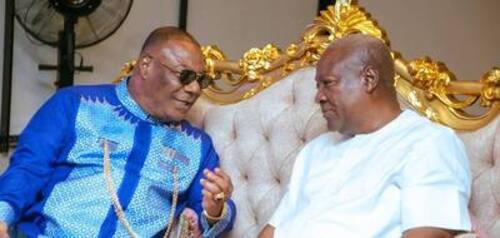
Archbishop Nicholas Duncan-Williams, Founder and General Overseer of Action Chapel International, shared his profound optimism for a transformative future for Ghana. Apexnewsgh reports Surrounded by members of the Apostolic Fathers, the Archbishop conveyed his strong belief that Mr. Mahama’s leadership would herald a new wave of hope and progress, effectively tackling the challenges and negative sentiments that have previously surrounded past administrations. Archbishop Duncan-Williams expressed his faith in divine guidance during the meeting, stating, “I believe that by God’s grace, who preserved you, kept you alive, and you didn’t die but lived and are still here, He will guide you, protect you, and give you what it takes to move this nation according to His mandate to where He wants to take this nation.” He emphasized the need for change, stating, “We want to pray and believe that during your time in office, the negative narratives that have plagued governments of this country will change, and we will see a new and beautiful Ghana by the grace of God.” Reflecting on previous prophetic insights communicated to Mr. Mahama, the Archbishop recalled their discussions from 2016, where he shared his belief that the former president would eventually return to power. “I remember that when we spoke in 2016, I mentioned to you what I felt prophetically – that you would have to leave, and at the right time, you would come again,” he recounted. He also referred to a later meeting in 2020, affirming his confidence in Mahama’s political resurgence, stating, “When 2020 ended, I was very confident, irrespective of whatever anybody said, that it was your time to come back to fulfil the mandate and finish your unfinished business.” With these encouraging words, Archbishop Duncan-Williams left the meeting resolutely believing that Mahama’s leadership would pave the way for a brighter future in Ghana. Source: Apexnewsgh.com
New Anti-Corruption Task Force Established Under President-Elect Mahama’s Leadership

In a decisive move to combat corruption and restore public trust in governance, President-elect John Dramani Mahama has appointed Samuel Okudzeto Ablakwa, the esteemed Member of Parliament for North Tongu, to chair a newly formed anti-corruption task force named Operation Recover All Loot (ORAL). Apexnewsgh reports This innovative initiative aims to tackle pressing reports of corruption and enhance accountability within the nation’s governance framework. On Wednesday, December 18, the Mahama Transition Team released an official press statement detailing the objectives of ORAL. Described as a citizen-centric platform, the task force invites the public to report corruption-related issues and boasts a robust structure designed to proactively address the pervasive challenge of corruption in Ghana. At the helm of ORAL, Ablakwa will be supported by a distinguished team including Daniel Domelevo, the former Auditor-General, Nathaniel Kofi Boakye, a retired Commissioner of Police, Martin Kpebu, a reputable private legal practitioner, and Raymond Archer, an investigative journalist known for his commitment to uncovering the truth. The collective expertise of this diverse team is seen as essential for bolstering existing anti-corruption measures and reinforcing institutional accountability. The press statement emphasized the government’s unwavering commitment to responsible resource management, stating, “This initiative underscores our resolve to hold public officials accountable and encourage citizen participation in the governance process.” As the task force chair, Ablakwa is tasked with leading investigations, recovering misappropriated funds, and fostering greater transparency in public administration. In alignment with Mahama’s broader vision for a more accountable government founded on constitutional principles, ORAL is set to work closely with various institutions to ensure timely resolutions to cases of corruption. The Transition Team made it clear that this task force will not only target corruption at all levels but also play a pivotal role in restoring confidence in the integrity of public institutions. With ORAL’s creation, the Mahama administration is taking a significant step toward a future rooted in accountability and transparency, ensuring that the voices of citizens are heard and valued in the governance process. Source: Apexnewsgh.com
Zelenskyy Seeks Strengthened Military Support in Critical Brussels Talks Amid Ongoing Russian Aggression

Ukrainian President Volodymyr Zelenskyy was in Brussels this past Wednesday, engaged in crucial discussions with NATO chief Mark Rutte and several European leaders as part of Ukraine’s ongoing efforts to strengthen its defenses against the escalating threat from Russian forces. The urgency of the situation was palpable. Just the day before, Zelenskyy emphasized the need for increased military support for Ukraine, particularly in terms of air defense systems. “We must do everything possible to destroy Russia’s ability to wage war from as far away as possible,” he stated, calling for more drones, modern artillery, and long-range missiles to bolster Ukraine’s military capabilities. As Zelenskyy prepared for the talks, concern loomed over the future of U.S. support, particularly with the upcoming inauguration of President Donald Trump a month away. The shifting political landscape added a layer of uncertainty to Ukraine’s already precarious situation. Among the notable figures joining Zelenskyy in Brussels were German Chancellor Olaf Scholz, Polish Prime Minister Donald Tusk, Italian Prime Minister Giorgia Meloni, Denmark’s Prime Minister Mette Frederiksen, European Council President António Costa, and European Commission President Ursula von der Leyen. They gathered at a crucial time, especially as Russia launched further aerial attacks overnight, intensifying the urgency of their discussions. In the backdrop of the meeting, Ukrainian air defenses were hard at work. Ihor Taburets, the governor of Ukraine’s Cherkasy region, reported that Ukrainian forces successfully shot down 13 drones without causing any damage to local infrastructure. Similarly, Khmelnytskyi Governor Serhii Tiurin confirmed that they too had intercepted two drones, showcasing the resilience of Ukraine’s defense efforts. On the Russian side, their Defense Ministry claimed the destruction of two Ukrainian aerial drones over the Belgorod region, along with additional interceptions over Bryansk and Kursk, highlighting the ongoing back-and-forth skirmishes in the conflict. Adding another layer of complexity to the narrative, Russia announced the detention of a suspect in the killing of Lt. Gen. Igor Kirillov, a prominent figure overseeing the military’s nuclear, biological, and chemical protection forces. Authorities identified the suspect as a citizen of Uzbekistan, allegedly recruited by Ukrainian intelligence to execute the attack in Moscow. The Ukrainian Security Service, or SBU, took responsibility for the operation, labeling Kirillov a “war criminal and an entirely legitimate target.” His actions during the nearly three-year war in Ukraine had already led to sanctions against him from several countries, including Britain and Canada. As these high-stakes meetings and military engagements unfolded, the situation remained tense, underscoring the critical importance of international support and strategic defense measures in the ongoing conflict.
Cyclone Chido Devastates Northern Mozambique, Leaving Destruction and Displacement in Its Wake

In the early hours of Monday, Cyclone Chido unleashed its devastating fury on northern Mozambique, leaving a trail of destruction that would haunt the region for months to come. As the storm made landfall in the district of Mecufi, it brought with it relentless winds and torrential rains, resulting in catastrophic damage, particularly in Cabo Delgado province. The chair of Mozambique’s National Institute for Disaster Risk Management and Reduction, Luisa Meque, surveyed the aftermath firsthand, revealing that at least 34 lives had been lost and 43 more injured. With rescue teams desperately combing through the rubble, she noted that these figures were only preliminary. The effects of the cyclone were far-reaching, with reports indicating that around 2.5 million people had been impacted. Among those who felt the cyclone’s wrath was Canjar Amade, who recounted his harrowing experience through a WhatsApp message. The cyclone tore apart his house overnight, with the winds wrenching the roof sheets away and ultimately collapsing the structure by morning. His story echoed the accounts of many others in the capital, Pemba, and surrounding districts, where destruction was near-total and few homes remained intact. As the nation grappled with the immediate aftermath, meteorologist Acacio Tembe warned that the remnants of Cyclone Chido still lingered, causing ongoing rains and strong winds across Niassa, Cabo Delgado, and other areas. The storm’s impact extended beyond Mozambique, as it also battered parts of Malawi and the island of Mayotte. Experts anticipated that the system would eventually dissipate near Zimbabwe by late Tuesday, but the damage had already etched itself into the lives of countless individuals. Mozambique, a country frequently besieged by the forces of nature, faces the harsh realities of climate change. The annual rainy season, spanning from October to April, often brings severe flooding and tropical cyclones. With predictions of a potential La Nina effect in southern Africa in early 2025, experts warned that the frequency and intensity of severe weather, including heavy rains and storms, were likely to increase. This prediction looms Source: Apexnewsgh.com