




Saving Gas Without Sacrificing Security: Practical Strategies for Multi‑Chain DeFi Users
Whoa! Gas fees still sting. Really? Yeah—they do. At first glance, gas optimization feels like a math puzzle for bots. My gut said it was all about timing trades and sniffing for low-fee windows. But actually, there’s more nuance; you can tune wallet behavior, smart contract interactions, and portfolio strategies to cut costs while keeping your risk profile intact. Here’s the thing. Short cuts that save a few gwei can backfire if they expose you to failed txs or front‑running. So this piece walks through practical, user-level tactics that reduce fee spend across chains, with an eye on security and portfolio tracking. I’ll be honest: I’m biased toward tools that simulate and visualize trades before you hit send. That part bugs me when wallets skip it. First—let’s set a mental map. Gas optimization has three levers: how you transact (when and how), where you transact (which chain or layer), and what tooling you use (wallet features, relayers, bundlers). On one hand you can chase micro-savings by tweaking priority fees. On the other hand you can restructure your activity to avoid native-chain fees entirely. Though actually, the smart move is to combine both approaches depending on your use case and portfolio size. Practical transaction habits that save gas (and time) Ok, so check this out—small behavior changes add up. Start by batching actions when possible. Instead of approving and then swapping, look for protocols that support permit-like approvals or aggregated calls so you reduce two transactions to one. My instinct told me to always use “fast” gas for big trades, but after tracking costs I realized a carefully chosen priority fee often does the job without adding risk if you simulate first. Simulate every high-value transaction. Seriously? Yes. Simulation shows whether a call will revert or be sandwiched, and it reveals the gas estimate so you can set realistic caps. Use wallets or relayers that run a dry‑run on the RPC before broadcasting. This alone prevents wasted gas from failed executions, which is often the biggest avoidable cost for DeFi traders. Nonce management matters too. When you have multiple pending txs, a stuck low-fee transaction blocks others and forces replacements (which cost extra). Use wallets that let you set nonces or cancel transactions with sane fee estimates instead of blindly resubmitting. For recurring actions, batch them. For liquidity management, consider single-transaction rebalances where contracts support it. If you’re doing repetitive portfolio moves, tooling that aggregates or schedules transactions can slash gas by grouping state changes together. Pick the right chain or layer Layer‑2s and sidechains exist for a reason. Move stable, repeatable flows (yield harvesting, stable swaps, bridging) to L2s when security and liquidity line up. But don’t just jump to the cheapest chain—assess composability and counterparty risk first. Something felt off about cheap chains with shallow liquidity; they can hide slippage costs that negate gas savings. Bridges can help, but bridge fees and waiting times must be part of the math. Use optimistic or zk L2s depending on your time horizon. For instant needs, native chain may still be best even if it costs more—speed matters for some strategies. Also consider transaction routing options that swap on-chain via cheaper pools or perform “meta” swaps that reduce hops. Each hop is another gas bill, so fewer steps equal less spend and fewer failure points. Advanced tooling: relayers, bundlers, and protected broadcasts Flashbots and private relay-ish services can reduce sandwich risk. Hmm… they’re more developer-facing, but as a user you can benefit when your wallet supports private submission or bundled transactions that avoid public mempool exposure. These methods can lower effective costs by reducing slippage and MEV losses that masquerade as gas. Meta‑transactions are underrated. They allow a relayer to pay gas while you pay them in tokens or subscription credits. For frequent small moves—like micro-rebalances or gasless claim flows—this pattern can be a huge saver. Just vet the relayer model and the security assumptions carefully; trust boundaries shift. Another angle: use RPC providers that offer reliable fee estimation and quicker propagation. Bad RPCs under-estimate fees and lead to failed txs. Use rate-limited, well-maintained endpoints and, when possible, give your wallet a failover RPC to avoid bottlenecks. Wallet features that matter — and why they should be on your checklist I’ll be blunt: not all wallets are equal. A good multi-chain wallet will offer clear gas controls, simulation, nonce editing, transaction batching, and portfolio visibility. It’s a convenience thing, but convenience often equals money saved (and stress reduced). For example, wallets that simulate trades before signing let you see the gas estimate and the potential slippage side‑by‑side, which means you can decide to wait, rebalance, or use a different route. I use tools that show projected gas costs as USD alongside token amounts—seeing the real-dollar tradeoff changes behavior fast. One wallet I keep recommending is rabby wallet. It’s multi‑chain, emphasizes transaction simulation, and has portfolio tracking features that make it easy to see where gas is being eaten. I’m biased, but the way it surfaces gas details and allows manual fee tweaks has saved me real money across multiple chains. (Oh, and by the way—if a wallet hides the gas line item, walk away.) Portfolio tracking: where visibility turns into optimization Spend a few minutes to categorize your positions by activity frequency. Some holdings are “set and forget.” Others are active strategies. If 80% of your portfolio sits idle, pay L1 security for it. If 20% is actively trading, move those funds to L2s or DEXs that minimize per‑trade cost. Track gas spend as a line item in portfolio performance. Yes, it’s annoying to add, but it quickly reveals which strategies are profit‑positive after fees. I once thought a yield farm was great until my ledger showed otherwise; that was an “aha” moment. You’ll want a wallet that aggregates gas spent by chain and by transaction type—visibility drives smarter choices. Use alerts for anomalous gas spikes. If a batch job or contract suddenly starts using more gas than usual, you want
Ghana Launches Work Abroad Program to Connect Youth with Global Job Opportunities

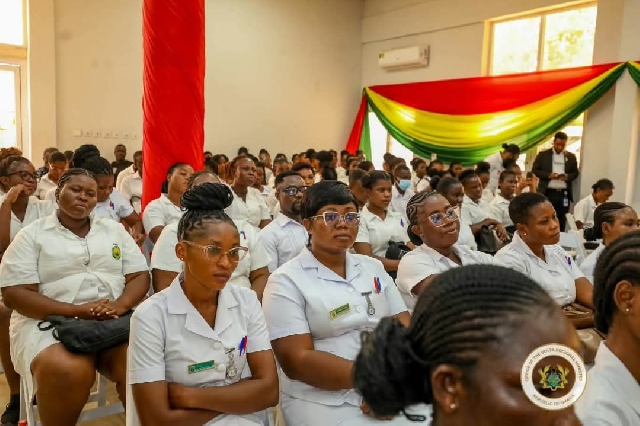
In a move to provide Ghanaian youth with access to global employment opportunities, the Minister of Labour, Jobs, and Employment, Dr. Abdul-Rashid Hassan Pelpuo, has launched the Ghana Work Abroad Program. Apexnewsgh reports This initiative, in partnership with the Youth Employment Agency (YEA), aims to connect Ghanaian talent with safe and structured job opportunities abroad. Speaking at the launch event, Dr. Pelpuo emphasized that this program is more than just about finding jobs – it’s about changing lives. “Every young person deserves a chance to build a better future, whether here in Ghana or abroad,” he said. The program provides a legal and safe pathway for Ghanaian youth to gain skills, earn an income, and contribute to Ghana’s economy through remittances. The Ghana Work Abroad Program focuses on industries such as artisanship, hospitality, transportation, agriculture, and construction. Applicants will undergo a transparent selection process, receive certified training in Romania, and be placed in ethical, well-monitored jobs overseas. To ensure fair treatment and proper working conditions, the government will establish bilateral agreements with host countries. For young professionals like Kwame Asare, a trained welder from Kumasi, this program offers a lifeline. “I’ve struggled to find consistent work despite my skills. This gives me a real chance to earn, save, and support my family,” he shared. The Youth Employment Agency (YEA) will oversee the registration and training of selected applicants. CEO of YEA, Mr. Malik Basintale, noted that the program is part of a larger vision to combat unemployment through innovative and sustainable means. The Ghana Work Abroad Program also addresses the dangers of irregular migration by providing a safer alternative. With backing from international partners, including the European Union, GIZ, IOM, ICMPD, and the ILO, the program is poised for success. Inter-ministerial steering and Technical Committees have been put in place to oversee policy implementation and ensure smooth coordination. For many Ghanaian youth, this initiative represents a chance to redefine their future. The Ghana Work Abroad Program is a beacon of hope, promising new beginnings and a brighter future. Source: Apexnewsgh.com
Afenyo-Markin Slams Minister’s Explanation on Akwatia MP’s Arrest

Minority Leader Alexander Afenyo-Markin has strongly criticized the Minister of Interior’s explanation regarding the arrest of Akwatia Member of Parliament, Ernest Yaw Kumi. Speaking at a press briefing, Afenyo-Markin questioned the Minister’s justification of the National Investigation Bureau’s (NIB) actions, suggesting possible collusion between the government and the Koforidua High Court to enforce laws selectively. Afenyo-Markin argued that the Minister’s claim—that the court order was executed by the National Security Coordinator’s representative in the Eastern Region, who then relayed it to the NIB—contradicts Ghana’s legal framework. He announced plans to file an urgent question in Parliament, summoning the Minister to clarify the alleged collusion between the Judiciary in the Eastern Region and the National Security Coordinator. As a Minority Leader, Afenyo-Markin has been a staunch advocate for transparency and accountability in governance. His concerns over the arrest of Ernest Yaw Kumi underscore the need for greater scrutiny in the application of the law in Ghana. Notably, Afenyo-Markin had previously assured that the Minority caucus would take necessary steps to ensure Kumi complies with the law, following the Koforidua High Court’s conviction of Kumi for contempt. Afenyo-Markin’s criticism of the Minister’s explanation highlights the ongoing debate about the rule of law and accountability in Ghana. As the Minority Leader pushes for clarity on the circumstances surrounding Kumi’s arrest, the government faces mounting pressure to demonstrate its commitment to transparency and justice. source: Apexnewsgh.com
Committee Presents Report to Combat Illegal Mining in Ghana

In a significant step towards combating illegal mining in Ghana, a technical committee jointly established by the Ministries of Lands and Natural Resources and Environment, Science and Technology has presented its report to the Minister of Lands and Natural Resources, Mr. Emmanuel Armah-Kofi Buah. Apexnewsgh reports The report, presented on Wednesday, March 19, 2025, outlines key recommendations to tackle the issue of illegal mining, including: – Revocation of Mining Licenses: All mining licenses granted after the 2024 elections will be revoked. – Overhaul of Community Mining Scheme: The existing Community Mining Scheme will be disbanded and replaced with Small-Scale Cooperatives that will actually serve and benefit the communities. – Decentralization of Mining Licenses: The issuance of mining licenses will be decentralized. – Repeal of LI 2462: The law that gives the President the right to sanction mining in forest reserves will be repealed. Mr. Armah-Kofi Buah commended the experts on the committee for their incredible service to the nation, noting that their report will serve as the blueprint for the government’s actions against illegal mining. The Minister of Environment, Science and Technology, Ibrahim Murtala Muhammad, reiterated that the galamsey fight is a moral battle for the protection of Ghanaian lives and warned that even members of the NDC caught behind the menace will not be spared from punitive actions. Source: Apexnewsgh.com
Dr. Jacob Paarechuga Anankware Appointed Deputy Chief Executive Officer of EPA

The Upper East Regional Executive Committee of the National Democratic Congress (NDC) has congratulated Dr. Jacob Paarechuga Anankware on his appointment as Deputy Chief Executive Officer of the Environmental Protection Agency (EPA) in charge of General Services. Apexnewsgh reports This well-deserved appointment is a testament to Dr. Anankware’s outstanding contributions to environmental sustainability, scientific research, and agricultural innovation. With his extensive background in entomology, food security, and sustainable environmental practices, Dr. Anankware is poised to bring dynamic and results-oriented leadership to the EPA. His expertise and strategic vision will undoubtedly contribute significantly to Ghana’s efforts in environmental conservation, climate resilience, and sustainable development. Dr. Anankware’s impressive track record includes working as a Senior Lecturer and Head of the Department of Horticulture and Crop Production at the University of Energy and Natural Resources, as well as serving as a consultant at Vestergaard Frandsen. He has also worked with various organizations, including Fish for Africa and Aspire Food Group, and has received numerous awards and grants for his research and innovative projects. The NDC expressed their profound appreciation to H.E. John Dramani Mahama for this appointment, which is expected to have a significant impact on Ghana’s environmental conservation efforts. As Dr. Anankware assumes this critical role, he is expected to advance policies and programs that safeguard Ghana’s natural resources for future generations. Source: Apexnewsgh.com
MP Mahama Ayariga Condemns Military Brutalities in Bawku

Member of Parliament for Bawku Central, Mahama Ayariga, has denounced the alleged military brutalities inflicted on civilians in Bawku on the night of Tuesday, March 18, 2025. Apexnewsgh reports The MP described the actions of the military as unacceptable and expressed deep concern over reports that women, children, and elderly residents were subjected to violence following the killing of a military officer by an unknown gunman. Ayariga vowed to demand full accountability from the military regarding their conduct, emphasizing that retaliatory attacks on innocent civilians are unjustifiable. “I regret the accidental killing of a military personnel and I condemn that dastardly act,” he stated. “However, ransacking homes, beating innocent civilians, and holding the entire town to ransom cannot be justified. The rule of law must prevail, and those responsible for maintaining order should never engage in such acts of violence.” The Bawku Central MP called on the military leadership and local authorities to collaborate in investigating the killing of the soldier rather than resorting to indiscriminate aggression. He extended his condolences to the bereaved family of the fallen soldier and urged restraint on all sides. Ayariga expressed disappointment that his earlier appeals for the military to act with caution were ignored, lamenting, “I regret that the military command did not heed my appeal not to react violently, and they went ahead to do what they did. We need to work together to restore peace.” Looking ahead, Ayariga expressed hope that all parties involved in the Bawku conflict would trust in the peace mediation efforts led by the Asantehene, Otumfuo Nana Osei Tutu II. “I have confidence that all sides will repose trust in His Majesty the Asantehene to bring finality to the situation in Bawku and end the violence we are experiencing,” he stated. The MP reiterated his commitment to advocating for peace and ensuring that justice is served for the victims of both the initial attack and the military’s response. Source: Apexnewsgh.com
VRA Staff Unions Reject Abdul Jalil’s Appointment as Director of Public Affairs

The Senior Staff Association (SSA) and the Public Services Workers Union (PSWU) of the Volta River Authority (VRA) have expressed strong opposition to the reported appointment of R.A. Abdul Jalil as the Director of Public Affairs. Apexnewsgh reports In a press release issued on Tuesday, March 19, 2025, the staff unions condemned the move, describing it as irregular and a violation of the VRA Act 46, as well as the authority’s recruitment policies and procedures. According to the unions, Abdul Jalil’s appointment undermines the established recruitment protocols, which emphasize merit-based selection for managerial and directorate positions. They argued that such positions should be filled through a competitive process to maintain professional standards, rather than being subject to political appointments or directives from the Office of the President. The staff unions outlined several reasons for rejecting the appointment, including: Violation of Recruitment Policies: The appointment contravenes the VRA’s recruitment policies and procedures. Breach of Conditions of Service: The appointment violates the Senior Staff Conditions of Service and the Collective Agreement between VRA management and the PSWU. Disregard for Experienced Staff: The appointment undermines long-serving VRA professionals who have built expertise and institutional knowledge over the years. The unions urged the Acting Chief Executive of VRA to resist any pressure to implement the appointment and demanded that Abdul Jalil, if qualified, go through the normal recruitment process and compete fairly when a vacancy arises. They also called on the Minister of Energy and Green Transition to intervene and withdraw the appointment to prevent further industrial unrest within the authority. The SSA and PSWU warned that they would take all legitimate steps to resist what they see as political interference in VRA’s affairs, vowing to protect the institution’s integrity and ensure that recruitment remains free from political influence. Source: Apexnewsgh.com