
President Mahama Tasks New Envoys to Champion Economic Diplomacy and Innovation
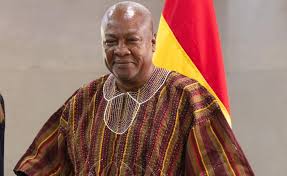
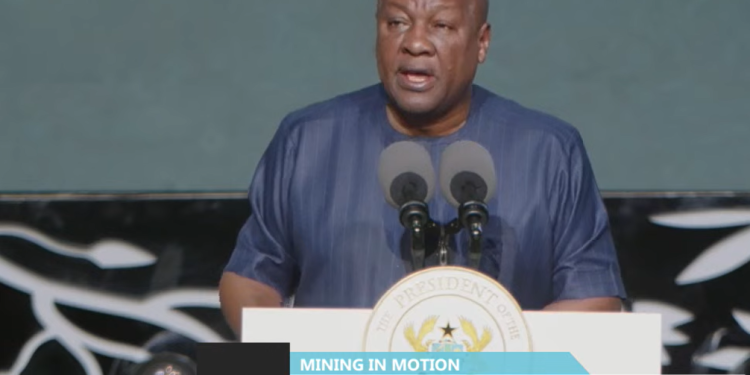
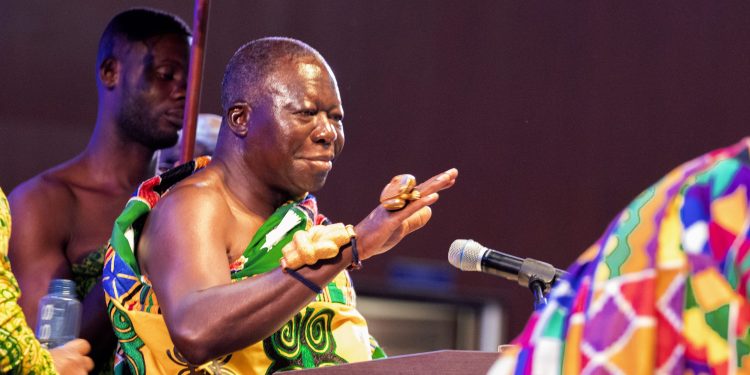
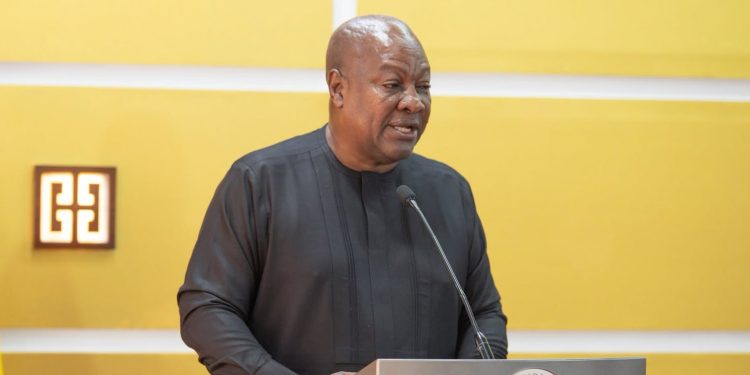
President John Dramani Mahama has charged Ghana’s newly appointed high commissioners and ambassadors to place economic diplomacy at the heart of their mission, urging them to project Ghana as a beacon of opportunity and innovation on the world stage. Speaking at a swearing-in ceremony in Accra, President Mahama described the appointments as a testament to the envoys’ distinguished records in both public service and the private sector. He urged them to deliver measurable results and uphold accountability, noting that Ghana’s foreign service faces a pivotal moment. In a move he called historic, President Mahama announced the introduction of key performance indicators (KPIs) for embassies and missions abroad. These KPIs, he explained, are not just administrative requirements but essential instruments to ensure that every diplomatic action advances Ghana’s national priorities. “I will personally monitor progress as part of our commitment to results-oriented diplomacy,” he stated. The president outlined the government’s Reset Agenda as the guiding blueprint for restoring hope, rebuilding trust, and fostering inclusive prosperity. He tasked the new envoys to extend this agenda globally by forging partnerships, attracting investment, and strengthening Ghana’s influence in international affairs. While reaffirming Ghana’s long-standing foreign policy of Pan-Africanism, peaceful co-existence, and justice, President Mahama called for a more agile and innovative approach to diplomacy in light of rapid changes in global geopolitics, economics, and technology. “I expect you to be the vanguards of Ghana’s economic diplomacy. Let your missions become dynamic hubs of export promotion, investment attraction, tourism marketing, diaspora mobilisation, and innovation,” he charged the envoys. Concluding, President Mahama reminded them that their mandate extends beyond representation, demanding strong leadership, fairness in administration, and ethical stewardship of Ghana’s resources. Source: Apexnewsgh.com
Mediterranean’s Dark Catch: Climate Change and Lax Oversight Enable IUU Fishing
Illegal fishing continues to infiltrate European markets, driven by weak import controls, opaque ownership structures, and loopholes in port inspections. A recent study commissioned by Oceana reveals that the EU’s long-distance fleet is more than twice as large as officially reported when foreign-flagged vessels owned by EU companies are included. But experts warn that climate change is compounding the problem, creating new pressures on fish stocks and pushing illegal operators deeper into the shadows. Warming seas and shifting fish populations are making once-abundant species harder to find in traditional fishing grounds. This fuels competition, driving some operators to cut corners or deliberately bypass rules. “Climate change reduces availability in certain areas, and when demand stays high, illegal fishing fills the gap,” said one investigator. Weakened stocks also make it easier for fishers to launder catches. When species decline due to warming waters, it becomes harder for authorities to distinguish between legally caught and illegally sourced fish, especially when imports rely on paper-based catch certificates that are easy to forge. At major landing sites, like Palermo in Italy, investigators uncovered networks of intermediaries and “fishlanders” mixing illegal and legal catches. “It’s like a fish laundry, once mixed, you cannot tell which fish is legal and which is not,” one source explained. Transforming and processing plants add another layer of opacity, where forged certificates enable illegally caught fish to be exported to the EU undetected. Industrial vessels are supposed to carry AIS satellite trackers, but many disappear from platforms such as MarineTraffic or Global Fishing Watch. Climate-driven changes in fish distribution mean fleets travel further and stay at sea longer, sometimes transferring catches to container ships offshore to avoid scrutiny. Meanwhile, powerful artisanal vessels, such as those seen in Tunisia, remain invisible to tracking systems despite operating with industrial-scale engines. Ownership remains one of the weakest points of oversight. Many vessels are linked to shell companies in tax havens, making accountability nearly impossible. In Malta, authorities uncovered a “company” that turned out to be little more than a postbox, shielding Russian owners behind layers of intermediaries. A global review of 19,000 large vessels found that 62% had no ownership records in leading databases. Spain, France, China, and Taiwan, all major fleets, were among the worst performers. The EU’s footprint is even larger than reported: more than 344 EU-owned vessels are flagged in 43 non-EU countries, from Panama to Senegal. Spain, the Netherlands, and Italy dominate these offshore registrations. In some cases, one in four vessels is flagged to countries with poor fisheries governance, flagged as tax havens, or already warned by the EU. This undermines both EU rules and global fisheries agreements. As rising sea temperatures and acidification drive species into new waters, weak governance and opaque ownership will continue to enable illegal actors to profit. Without strong digital certification systems, transparent ownership registries, and stricter port inspections, climate change will only widen the gap between demand and legal supply. “If we don’t know who owns the vessels, where the fish really comes from, or how it gets to our plates, illegal fishing will continue to thrive, and climate change makes the problem even worse.” Source: Apexnewsgh.com Email: apexnewsgh@gmail.com
Weak Controls and Hidden Owners: How Illegal Fishing Slips Into EU Markets
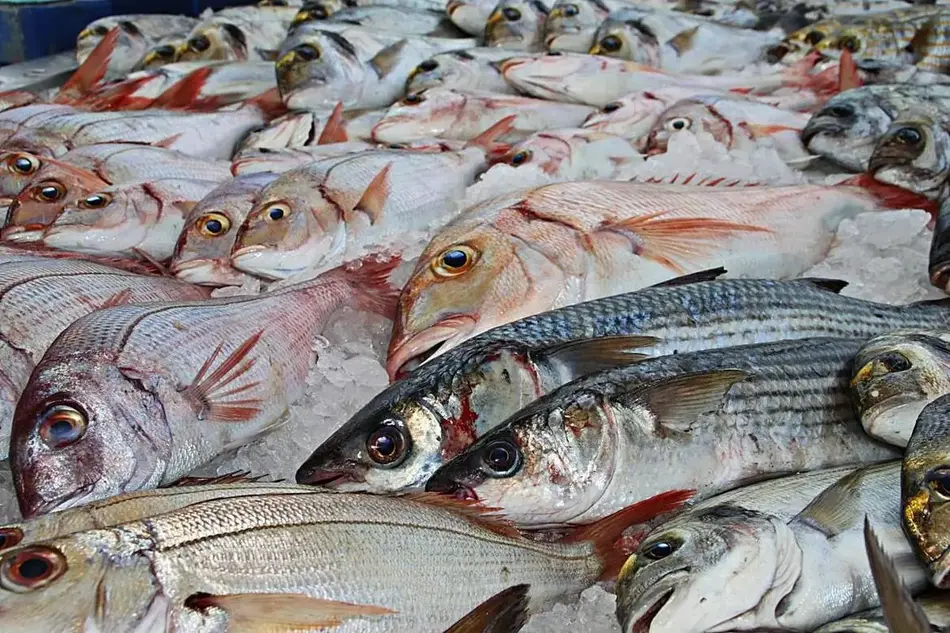
A lack of transparency, weak import controls, and complex ownership structures are enabling illegal fishing to flourish in Europe’s seafood supply chain, a new study commissioned by Oceana has revealed. The research shows that the EU’s long-distance fishing fleet is more than twice as large as officially documented when foreign-flagged vessels owned by EU companies are included. This raises red flags about how much illegal or unreported seafood may be slipping into European markets. Investigators describe landing sites as hotspots for illegal activity. In Palermo, Italy, one journalist discovered that intermediaries and “fishlanders” act as powerful brokers, mixing legally caught fish with illegal catches. “It’s like a fish laundry, what is legal and what is illegal can be mixed until it’s impossible to tell the difference.” Catch certificates, which are still largely paper-based, are another weak link. Forged documents allow illegally caught fish to be exported into the EU with ease. While industrial vessels are supposed to be tracked by satellite systems like AIS, many disappear from monitoring platforms such as MarineTraffic or Global Fishing Watch. Investigators say some fleets deliberately disable or avoid tracking to hide illicit activities. “When vessels vanish from the map, it’s not always a technical error, sometimes it’s a deliberate act to conceal illegal fishing.” Small but powerful artisanal vessels, especially in Tunisia, further complicate surveillance. Despite their size, they carry industrial-scale engines and hauls, but remain invisible to tracking systems. Tracing vessel ownership is another challenge. Many operators use shell companies and front businesses in tax havens to disguise the real beneficiaries. A case in Malta revealed a “company” that turned out to be nothing more than a post box, hiding Russian owners behind a network of intermediaries. “Illegal fishers know how to exploit weak governance; they change flags, change names, and hide behind paper companies.” A recent global study of 19,000 large-scale vessels found that 62% had no ownership information available in top maritime databases. Spain, France, China, and Taiwan — some of the largest fleets — had particularly poor transparency records. Within Europe, the study revealed that more than 344 EU-owned vessels are flagged outside the bloc, in countries ranging from Argentina to Panama. This means the EU’s actual long-distance fleet is nearly double its official size. Alarmingly, one in four of these vessels are registered under flags of convenience, tax havens, or countries already warned by the EU for weak fisheries controls. Spain, the Netherlands, and Italy top the list of countries owning foreign-flagged vessels, with Spain alone effectively operating 427 vessels, twice its official count. These loopholes undermine both EU and global efforts to combat illegal fishing. Not only do they allow illegal fish to enter European markets, but they also strip coastal states of fair revenues and erode trust in fisheries management. “Without transparency, EU consumers risk eating fish caught illegally, while profits flow to hidden owners abroad.” Experts argue that EU member states must start requiring companies and citizens to register ownership of foreign-flagged vessels and make this data public. Stronger digital systems for catch certificates, tighter port inspections, and international cooperation are also urgently needed. “If we don’t know who owns the vessels, where the fish really comes from, or how it gets to our plates, illegal fishing will continue to thrive in the shadows.” Source: Apexnewsgh.com Email: apexnewsgh@gmail.com
Burkina Faso’s parliament votes to outlaw homosexual acts
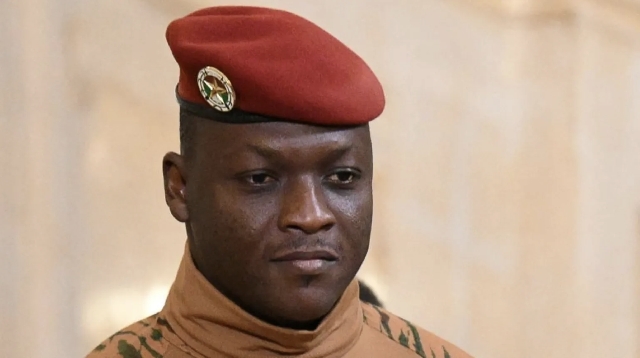
Burkina Faso’s unelected transitional parliament has passed a bill banning homosexual acts, a little over a year after a draft of an amended family code that criminalised homosexuality was adopted by the country’s cabinet. The new measure unanimously voted through on Monday imposes punishments of up to five years in jail, and has become part of a broader crackdown on same-sex relationships across the continent. Justice Minister Edasso Rodrigue Bayala announced on state-run media that, “the law provides for a prison sentence of between two and five years as well as fines”. He added that foreign nationals caught breaking the law would also be deported. The next step for the legislation is obtaining the signature of the country’s military leader Capt Ibrahim Traoré, the Reuters news agency reports. Capt Traoré seized power in 2022, after forcing another military ruler, Lt Col Paul-Henri Damiba, from office. The Sahel nation had previously been among just 22 out of 54 African countries that allowed same-sex relations, which are punishable by death or lengthy prison terms in some states. After gaining independence from France in 1960, Burkina Faso did not inherit anti-homosexuality laws unlike Britain’s former colonies on the continent. The country is socially conservative and religious with less than 10% of people thought to not follow any faith at all. Burkina Faso’s new law is in keeping with increasing crackdowns on LGBT relationships across the continent. Last year, neighbouring Mali, an ally of Burkina Faso and also ruled by a junta, adopted legislation criminalising homosexuality. There has been significant backlash and criticism against countries that have toughened their anti-gay stance in recent years, including from the World Bank that had put in place a ban on loaning money to Uganda due to their anti-LGBT stance. The ban has since been lifted. Nigeria is also among the countries on the continent that have enacted laws banning homosexuality. Ghana’s parliament passed an anti-homosexuality bill last year, but the then-president did not sign it into law. Of all the countries, Uganda adopted the toughest provisions, making what it describes as “aggravated homosexuality” a capital offense and imposing life sentences for consensual same-sex relations. Source: bbc.com
GFA Vows to Address Sports Ministry’s Budget Remarks After World Cup Qualifiers
The Ghana Football Association (GFA) has announced that it will issue a detailed response to recent statements from the Ministry of Sports and Recreation regarding the Black Stars’ budget for the 2026 FIFA World Cup Qualifiers, promising clarifications on the issues raised. In a statement released on Wednesday, September 3, 2025, the GFA, under the leadership of President Kurt Simeon-Okraku, acknowledged the ministry’s comments delivered at a press briefing the previous day. The Association assured stakeholders that, as the custodian of Ghana football, it would “in due course, provide clarifications to the issues raised.” However, the GFA stressed that its immediate focus remains on supporting the Black Stars as they prepare for their critical qualifying matches against Chad and Mali. “We deem it prudent at this time to maintain our collective focus on the immediate national task at hand,” the statement read, urging all stakeholders to rally behind the team. The GFA emphasized the importance of national unity and the unwavering support of Ghanaians, which it described as the Black Stars’ greatest strength. The Association assured the public that comprehensive remarks on the Ministry’s statements would be delivered after the match against Mali on September 8, 2025. “We extend our sincere appreciation to all Ghanaians for their understanding and their continued support for the Black Stars and all our national teams,” the GFA concluded. Source: Apexnewsgh.com
Sports Ministry Announces Major Cost Savings on Black Stars’ World Cup Qualifier Budget

The Ministry of Sports and Recreation has unveiled significant cost savings on the Black Stars’ budget for the September 2026 FIFA World Cup qualifying matches against Chad and Mali, following a directive from President John Mahama to ensure transparency and prudent public spending. At a press briefing in Accra, Sports Minister Kofi Adams disclosed that the government approved a total budget of $1,320,490 for the two key fixtures—a sharp reduction from the Ghana Football Association’s (GFA) original proposal of $2,053,240. The adjustment resulted in overall savings of $732,750 for the nation. Minister Adams detailed the four-stage budgeting process: the GFA submitted its estimates for travel, accommodation, bonuses, training, and logistics; the Ministry reviewed and adjusted these items to fit government fiscal policy; the Presidency vetted and approved the revisions; and finally, clearance was given for the Ministry of Finance to release the necessary funds. For the away match against Chad on September 4 in N’Djamena, the government approved $856,890—down from the GFA’s $1,239,090 request—delivering savings of $382,200. Funded items included player and official travel, a chartered flight, and accommodation and meals, while savings came from reducing imprest, scrapping certain fees, and halving player bonuses and staff allowances. For the home fixture against Mali on September 8 in Accra, the government approved $463,600 instead of the GFA’s request of $814,150, resulting in a savings of $350,550. The budget covered key expenses, including players’ accommodation, per diems, and medical costs, with further savings achieved through cuts to transportation, allowances, and bonuses. Minister Adams emphasized that these measures reflect the government’s commitment to accountability and value-for-money spending. “Across both match windows, we have realised total savings of $732,750. This demonstrates our resolve to protect taxpayers while still providing the essentials needed for the Black Stars to deliver,” he said. He commended the GFA for its cooperation and praised the players for accepting the revised bonus structures that reflect the country’s economic realities. Adams reaffirmed the Ministry’s ongoing collaboration with the GFA to ensure realistic national team budgets aligned with Ghana’s fiscal priorities. Source: Apexnewsgh.com
Foreign Affairs Minister and AfCFTA Secretary-General Discuss Boosting Africa’s Economic Integration
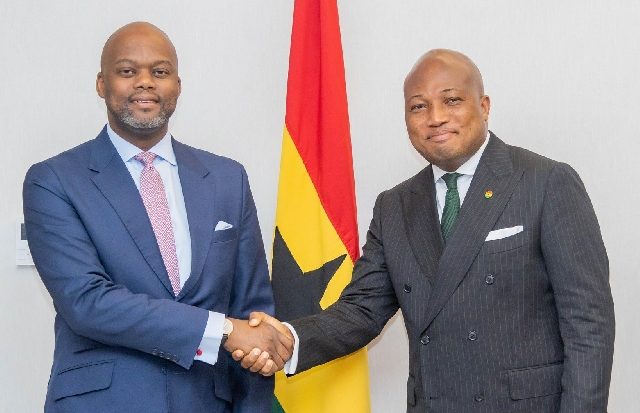
Ghana’s Minister for Foreign Affairs and Regional Integration, Samuel Okudzeto Ablakwa, has engaged in high-level talks with H.E. Wamkele Mene, Secretary-General of the African Continental Free Trade Area (AfCFTA), focusing on strategies to accelerate Africa’s economic integration and industrialisation. During the meeting, Ghana, host of the AfCFTA Secretariat in Accra, reiterated its unwavering commitment to supporting the Secretariat’s effective operations by guaranteeing all necessary privileges and courtesies. Minister Ablakwa underscored the historic and strategic importance of the AfCFTA, tracing its roots to the vision of Osagyefo Dr. Kwame Nkrumah. He emphasized that the continental free trade agreement is vital to Africa’s ambition for industrialisation and transformation. “With a market of 1.3 billion people and a combined GDP of US$3.4 trillion, leveraging the AfCFTA is not just an option but an absolute imperative as we prioritise economic diplomacy,” Ablakwa said. The talks signal renewed momentum in advancing Africa’s integration agenda, with both leaders expressing hope that the AfCFTA will drive sustainable growth and prosperity across the continent. Source: Apexnewsgh.com
Former Law School Director Criticizes Sophia Akuffo Over Chief Justice Removal Controversy
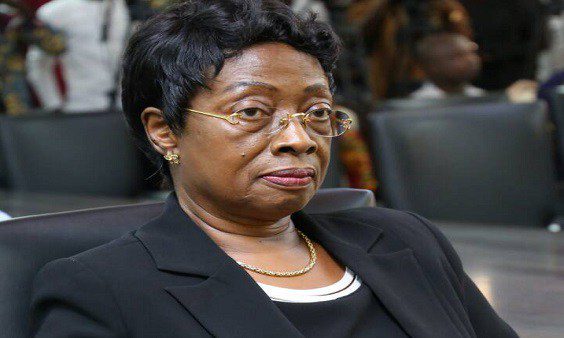
The fallout from the removal of Chief Justice Gertrude Torkornoo has deepened, with former Director of the Ghana School of Law, Kwaku Ansa-Asare, launching a sharp rebuke at former Chief Justice and Council of State member, Sophia Akuffo. Ansa-Asare accused Akuffo of breaching the sacred trust of her office, following her outspoken criticism of the process that led to Justice Torkornoo’s dismissal. In a strongly worded statement, Ansa-Asare insisted that members of the Council of State take an oath that binds them to uphold the integrity of the office, and described Akuffo’s remarks as a violation of that trust. “Any deviation from its obligations undermines the integrity of the office,” he said, calling Akuffo’s actions a “breach of the trust imposed in her as a Council of State member.” His comments came in response to Akuffo’s public condemnation of President John Dramani Mahama’s decision to remove Chief Justice Torkornoo. Appearing on TV3, Akuffo described the process as unjust and deeply troubling for Ghana’s judiciary. “I pray to God that no Chief Justice, no Judge should go through this rigmarole again,” she stated, adding that the inquiry into Torkornoo’s conduct resembled a political witch-hunt and denied her fair treatment. “Even though it is not a trial strictly speaking, it was handled as though it were a treason trial,” Akuffo lamented. The controversy stems from President Mahama’s suspension of Chief Justice Torkornoo on April 22, 2025, following a prima facie case established by three confidential petitions. Acting under Article 146(6) of the 1992 Constitution and after consulting the Council of State, the president appointed a five-member panel to investigate, chaired by Justice Gabriel Scott Pwamang. The legal community has been roiled by the decision. The Ghana Bar Association (GBA) and the Centre for Democratic Movement (CDM) condemned the process as unconstitutional and a threat to judicial independence. They questioned the transparency and impartiality of the inquiry, while Chief Justice Torkornoo herself has called the proceedings arbitrary and refused to resign, insisting on her right to defend herself. The political opposition, including the NPP, echoed these concerns, warning that the removal jeopardizes Ghana’s democratic foundations. Despite the criticism, President Mahama acted on the inquiry’s recommendation, and Torkornoo was officially removed on September 1 for stated misbehaviour. As debate rages on, Ansa-Asare’s censure of Sophia Akuffo adds another layer to a saga that has shaken faith in Ghana’s constitutional processes and the independence of its judiciary. Source: Apexnewsgh.com
President Mahama Raises Concern Over the Ofankor-Nsawam Road Project Delays
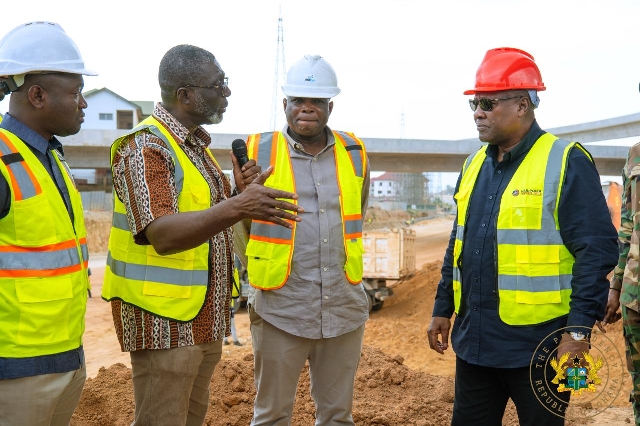
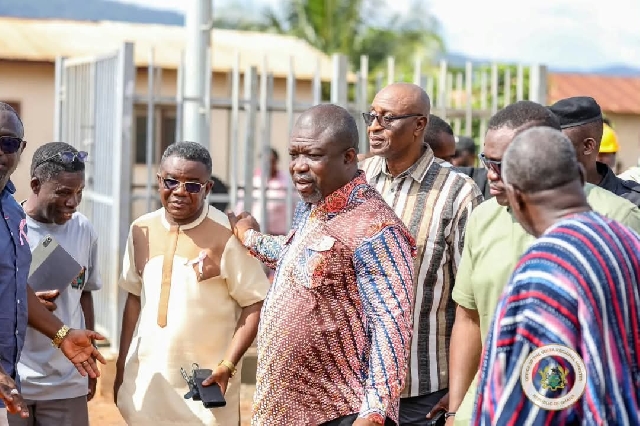
President John Dramani Mahama has voiced serious concerns regarding delays and mismanagement in the construction of the Ofankor-Nsawam dual carriage road, a crucial arterial route linking Accra and the country’s western regions. During a recent inspection of the project site, President Mahama emphasized the importance of proper site management to ensure that traffic could continue to flow smoothly even as construction progressed. He questioned why the initial loan allocated for the road had been exhausted before the project’s completion, a situation that forced the government to inject an additional GHS78 million of its own funds. The president demanded clarity on whether the issue stemmed from poor estimation or mismanagement. Addressing the financial aspects, President Mahama announced that the Ofankor-Nsawam road project would now fall under the government’s Big Push Programme, which has earmarked GHS14 billion for infrastructure this year and GHS30 billion next year. He assured contractors of steady funding but urged them to accelerate their work and use quality materials to deliver a durable road that would serve the nation for years. Chief Resident Engineer for the project, Kwabena Bempong, responded to the president’s concerns by assuring him that construction would be completed by the second quarter of 2026. As work continues, all eyes are on the Ofankor-Nsawam road, a vital link whose timely completion is seen as essential for Ghana’s economic growth and daily commuters alike. Source: Apexnewsgh.com
MP Michael Okyere Baafi Again Threatens to Quit Politics Over Election Monetisation

Member of Parliament for New Juaben South, Michael Okyere Baafi, has issued a stark warning about the future of his political career, declaring he will not contest in future elections if the increasing monetisation of Ghana’s electoral process is not addressed. Following the Akwatia by-election held on September 2, 2025, Okyere Baafi voiced his deep concern over the growing practice of vote buying, which he described as a grave threat to Ghana’s democracy. He specifically accused the opposition National Democratic Congress (NDC) of influencing voters by distributing cash and items such as hair dryers and spraying machines. According to the MP, individuals received amounts ranging from GH₵500 to GH₵1,000 on polling day. “If this is how our election is going to be, then I will not contest as MP in the next election,” Okyere Baafi declared during an interview with AsaasePa on Tuesday, September 2. Okyere Baafi also took the opportunity to apologise for a previous statement in which he had vowed to resign if his party, the New Patriotic Party (NPP), lost the Akwatia by-election. He explained that his comment was intended to motivate his campaign team but admitted he had “gone a step too far.” “I apologise to Ghanaians for that. Looking at the work we had done, there was no way we could have lost the election,” he said, while reiterating that the widespread vote buying ultimately shaped the outcome. The MP’s candid remarks have sparked renewed debate over electoral integrity and the urgent need for reforms to safeguard Ghana’s democracy. Source: Apexnewsgh.com