


CSA Raises Alarm Over Surge in Cybercrime Across Ghana

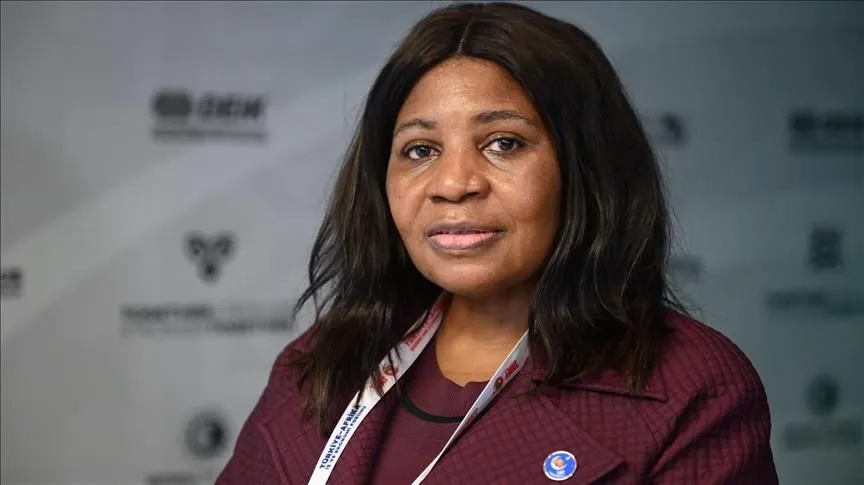
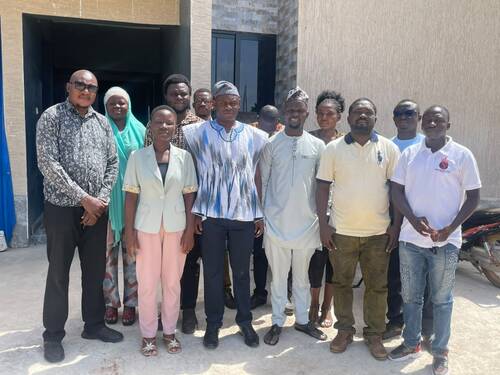
Ghana’s Cyber Security Authority (CSA) has sounded the alarm on the country’s escalating cybercrime crisis, warning of growing threats to both online safety and national security. Recent figures released by the CSA reveal a sharp spike in reported cybercrime cases—from 1,317 in the first half of 2024 to 2,008 in the same period of 2025. The most prevalent offenses include online fraud (36%), cyberbullying (25%), and online blackmail (14%). Financial losses resulting from these crimes have also surged by 17% year-on-year, reaching GH₵14.94 million. Notably, online fraud and impersonation alone account for more than 90% of these losses. At the launch of the 2025 Cybersecurity Awareness Month, held on Wednesday, September 3, CSA Director-General Divine Selasi Agbeti emphasized the urgent need to make online safety a national priority as digitalization deepens in Ghana. “Concerns over data security and online privacy are growing, which in turn breeds distrust and undermines national security efforts. This year’s awareness month will address these concerns and promote the ethical use of technology,” he stated. Themed “Building a Safe, Informed, and Accountable Digital Space,” this year’s awareness campaign aims to educate the public on digital risks and responsible behavior online. Joining the call for action, the Director-General of the Criminal Investigations Department (CID), COP Lydia Yaako Donkor, advocated for increased government investment in cybersecurity infrastructure and enforcement. She urged the private sector to strengthen its own defenses and to report cyber incidents without delay. “Silence empowers criminals, but collaboration helps us all,” Donkor remarked. As cyber threats continue to mount, authorities are rallying government, business, and the public to work together to secure Ghana’s digital future. Source: Apexnewsgh.com
Government to Launch Solar-Powered Irrigation Pumps to Boost Agriculture

At the seventh meeting of the International Solar Alliance (ISA) regional committee for Africa, Ghana’s Minister for Energy and Green Transition, John Jinapor, unveiled an ambitious plan to roll out solar-powered irrigation pumps nationwide. Addressing the media, Jinapor explained that this initiative aims to reduce the nation’s reliance on rain-fed farming and build greater resilience among farmers. “I have had very good fruitful discussions with the Director General [of the International Solar Alliance], and immediately, what we want to set forth is to work to deploy solar irrigation pumps across the country,” he said. He highlighted the urgency for such a solution: “For some part of the country, for close to like six months during the dry season, because our farmers depend on rain-fed agriculture, they virtually have nothing to do.” Jinapor pointed to India’s successful implementation of solar irrigation and noted Ghana’s intention to follow suit. “They have agreed that they will work and collaborate with us so that we can install these solar pumps. By installing these solar pumps, what will happen is that Ghanaians will be able to engage in productive all year round. We have signed some MoUs,” he added. The meeting also featured a major announcement from the International Solar Alliance’s Director-General, Ashish Khanna, who revealed a $200 million funding facility to accelerate solar adoption across Africa. “We were proud and privileged to have 19 ministers from African countries and 39 countries represented. They heard and ratified the strategy of the International Solar Alliance of moving from ambition to action by having the support of an African solar facility, which is a catalytic finance of $200 million, with the first $75 million to be operationalized before the end of 2025,” Khanna said. This facility is expected to leverage more than $800 million in investments for decentralized renewable energy in Africa, with the first fund set to launch in Nigeria. The Ministerial Session on the African Solar Facility (ASF) focused on mobilizing domestic finance and attracting private capital to scale up solar deployment. Ministers and partners emphasized the need for transparent procurement, secure payment systems, and targeted equity support to ensure the bankability and sustainability of solar projects. The session concluded that the ASF will serve as a key instrument for scalable, sustainable, and bankable solar projects, advancing ISA’s goal of action-oriented, country-led implementation to transform Africa’s energy landscape. Source: Apexnewsgh.com
MTN Ghana Plans Careful Transition Away from 2G and 3G Networks

The spotlight fell on a critical topic for millions of mobile users: the future of Ghana’s mobile networks. Stephen Blewett, CEO of telecommunications giant MTN Ghana, addressed the press with a message of reassurance and foresight. “We are not rushing,” Blewett told reporters. “Many of our valued customers still rely on 2G and 3G services, and we understand their concerns.” He explained that while 4G coverage is extensive, the transition requires sensitivity. Some subscribers, Blewett noted, intentionally stick with 3G to better control their data usage. Others simply do not own devices that support the newer, faster network. “A lot of our customers are still operating on 3G. Even though 4G is widely available, some choose to stay on 3G because they feel data usage is faster on 4G. Others, however, use older devices that don’t support 4G,” he said. Blewett emphasized that while MTN is committed to making the most of its network spectrum and will eventually phase out 2G and 3G, the company is determined to do so responsibly. “If we push to shut down 2G and 3G without ensuring customers have affordable 4G devices, we risk leaving people behind.” With this cautious approach, MTN Ghana intends to give customers ample time and support to make the switch, ensuring no one is left disconnected as technology advances. Source: Apexnewsgh.com