


Former Kassena-Nankana MCE Challenges Bryan Acheampong Over Fertilizer Claims: “You Can’t Run From Your Shadow”
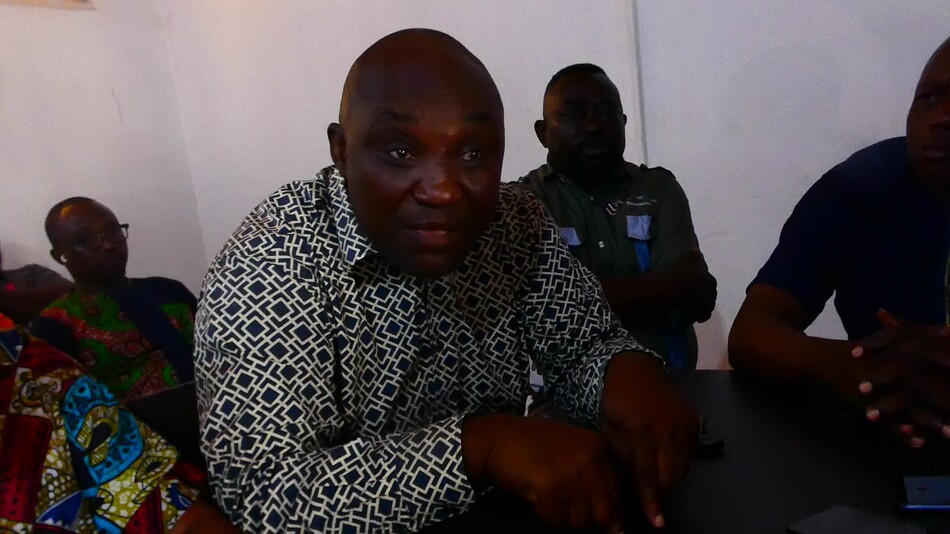
The ongoing controversy over the distribution of fertilizer during Ghana’s 2024 Dry Spell Intervention Programme has taken a new turn, as the former Municipal Chief Executive (MCE) for Kassena-Nankana Municipal, Joseph Adongo, publicly challenged former Minister for Agriculture, Dr. Bryan Acheampong, over what he called “an attempt to run away from his own shadow.” In recent days, a viral video surfaced in which Dr. Acheampong alleged that all fertilizer earmarked for the emergency intervention was dispatched to the country’s districts months before the December 2024 elections. He further accused Metropolitan, Municipal, and District Chief Executives (MMDCEs) of hoarding the fertilizer for personal gain, a claim that has ignited swift and passionate responses from officials on the ground. Speaking at a press gathering, MCE Joseph Adongo questioned not only the veracity of Dr. Acheampong’s statements but also his motives. “He wants to run away from his own shadow. He knows very well that the people on the ground are not happy with what happened with the fertilizer,” Adongo stated. “He was fully in charge. He was the person who was supposed to make sure that the fertilizer got to the ground for the people. The fertilizer was not supplied on time and not even in the right quantities.” Adongo pressed the media to investigate the situation further, highlighting the inconsistencies in the distribution process. “Can we even ask ourselves, you are the media, I want you to go further. Isn’t it intriguing that when you look at the various constituencies, you just go and drop, if you need about 18,000, you’re given 5,000? You go here and drop 2,000. Why was this so?” He argued that Dr. Acheampong’s accusations were a diversionary tactic, intended to deflect blame for a botched process in which he, as sector minister, had direct oversight. “He knows that this is what is waiting for him, so he has to make sure he brings other people in to bear the consequences. In any case, he wrote the letters to the directors, municipal and district directors of Agriculture. Why is he bringing this in?” Adongo further questioned why the burden of responsibility was being shifted onto MMDCEs when the distribution was, in reality, handled by the relevant agricultural departments. “The director said that they wanted to distribute, and we refused, the DCs refused. So why is it coming to us? This thing was directed; if it was for a party, it would not be for a party; it is for the government. Therefore, you had a department that was in charge of it. So the thing was sent to the department to do the distribution. So how come it is coming back onto MMDCs?” He insisted that unless Dr. Acheampong could provide concrete evidence that MMDCs had actively blocked or diverted fertilizer intended for farmers, the allegations should be dismissed. “Unless he has evidence that they wanted to share them and some MMDCs or all the MMDCs came together and said, ‘Do not share the fertilizer.’ So I think this is the reason why he’s running up and down and trying to bring up this. But it will catch up with him.” In a call to action, the MDCESs invited journalists and the public to examine the documentary evidence available at the municipal and district offices. “We have the documents here and we want you to pick the documents and find out from the departments: When did you receive this? Why didn’t you share them? And maybe you can go further and ask, what have you done with what came?” The former MCE’s remarks underscore the frustration felt by many local officials, who have found themselves caught between national directives and the expectations of their constituents. For many in Kassena-Nankana and other affected districts, the dry spell of 2024 was a period of immense hardship. Farmers faced crop failures and reduced yields, only to be met with delays and confusion over promised government assistance. Adongo’s comments also reflect a broader sentiment among local leaders that the real issues lie not with the MMDCEs, but with the central administration’s planning and execution of the intervention. “This was not for the party, it was for the government,” he emphasized, reiterating that official channels and departments were responsible for the process. “You had a department that is in charge of it.” As the debate continues, the call for transparency and accountability has grown louder. Adongo’s challenge to Dr. Acheampong is clear: face the facts and accept responsibility, rather than shifting blame to others. “It will catch up with him,” Adongo warned, confident that the truth would ultimately prevail. As the dust settles on this controversy, the people of Kassena-Nankana and the wider Upper East Region continue to seek answers and hope for future interventions that will truly meet their needs, delivered with honesty and integrity. Source: Apexnewsgh.com/Ngamegbulam Chidozie Stephen
Former Upper East MDCEs Refute Fertilizer Hoarding Allegations, Demand Retraction from Bryan Acheampong

Former municipal and district chief executives (MDCEs) of the Akufo-Addo administration in the Upper East Region have strongly rejected what they describe as “false and misleading” claims made by the former Minister for Food and Agriculture, Dr. Bryan Acheampong. Apexnewsgh reports The group, led by former Builsa South District Chief Executive and Upper East Dean of MDCEs, Kwame Gariba, called a press conference to set the record straight regarding the distribution of fertilizer under the government’s Dry Spell Intervention Programme during the 2024 farming season. In a widely circulated video, Dr. Acheampong had alleged that all fertilizer earmarked for the Dry Spell Intervention Programme was dispatched to districts months before the December 2024 general elections. He further accused MMDCEs of hoarding the fertilizer for personal gain, casting aspersions on their integrity and the reputation of the Akufo-Addo government. “These allegations are false, unfounded, and an unfortunate attempt to malign our reputation and the integrity of the Akufo-Addo administration,” declared Gariba, speaking on behalf of his colleagues. He provided a detailed timeline and background to the fertilizer initiative, underscoring the severe challenges faced by farmers in northern Ghana, including the Upper East, due to the protracted dry spell between June and August 2024. This climatic setback led to crop failures, reduced yields, and heightened food insecurity, prompting the government to launch an emergency intervention with support from the World Bank. The emergency response included the provision of fertilizer, maize, and cash support to help smallholder farmers recover. At a high-level meeting in Accra on August 24, 2024, attended by all affected MMDCEs, it was agreed that each registered farmer would receive two bags of urea, one bag of NPK fertilizer, two bags of maize, and GH₵1,000 in cash. Registration of beneficiaries was handled locally by agricultural officers, with lists forwarded to the Ministry of Food and Agriculture for verification and distribution. Gariba countered Dr. Acheampong’s claims, stating, “Contrary to his assertion, fertilizer was not delivered months before the 2024 elections.” He referenced an official allocation letter from the Ministry, dated November 27, 2024, signed on behalf of Dr. Acheampong himself. This letter outlined the quantities of fertilizer and maize to be distributed, but only around 5% of the total allocation actually reached districts during election week. “It was impossible to carry out meaningful distribution due to the timing and other logistical challenges,” he explained. He illustrated the issues with concrete examples: “In Binduri District, 45,000 farmers registered, but only 25,000 were approved, entitling them to 75,000 bags of fertilizer. Yet, they received just 3,000 bags, three days before the elections. Who were they going to give it to and leave out? Distributing such a limited supply at the last minute would have been chaotic and potentially damaging to the party’s electoral fortunes.” The former MDCEs also noted that the intense campaign season left officials preoccupied, making timely distribution impossible. Gariba questioned the logic of Acheampong’s accusation: “Is it realistic to think that all the MDCEs in 15 Upper East constituencies, six in the North East, and eleven in the Upper West colluded to hoard fertilizer? The reality is, the allocations were far too small, and the timing was wrong.” He emphasized that the remaining consignments had not been delivered by the time MDCEs left office. “Any claim that we hoarded or diverted fertilizer for personal gain is completely false, malicious, and without basis. It is deeply troubling that Dr. Acheampong, who was directly involved and aware of the program’s challenges, would mislead the public for political gain.” Asserting their integrity and commitment, Gariba declared, “We, the former MDCEs of the Upper East Region, take great pride in the service we rendered to our country and our districts. We acted with integrity, transparency, and accountability. We will not sit quietly while falsehoods are peddled to undermine our reputation or the work we did under the Akufo-Addo administration.” The group demanded an immediate retraction and public apology from Dr. Acheampong. They also called on the media and the public to treat his claims “with the contempt they deserve.” In closing, Gariba reaffirmed their ongoing commitment to truth and public service: “We remain committed to the truth and to the progress of our party, the NPP, and the nation. As former public servants, we will continue to uphold the values of honesty, accountability, and service to our people.” The statement drew strong support from those present, who echoed the call for facts and fair discourse as Ghana moves forward. The press conference ended with a renewed sense of unity among the former MDCEs and a clear message: they would not allow their reputations or the integrity of their service to be tarnished by political misrepresentation. Below are some pieces of evidence: Maize waybill img20241127_14582068_021600 builsa South dry spell- maize builsa South dry spell_ NPK Source: Apexnewsgh.com/Ngamegbulam Chidozie Stephen
Upper East Regional Minister Celebrates Passport Centre Milestone, Calls for Next Frontier of Regional Development
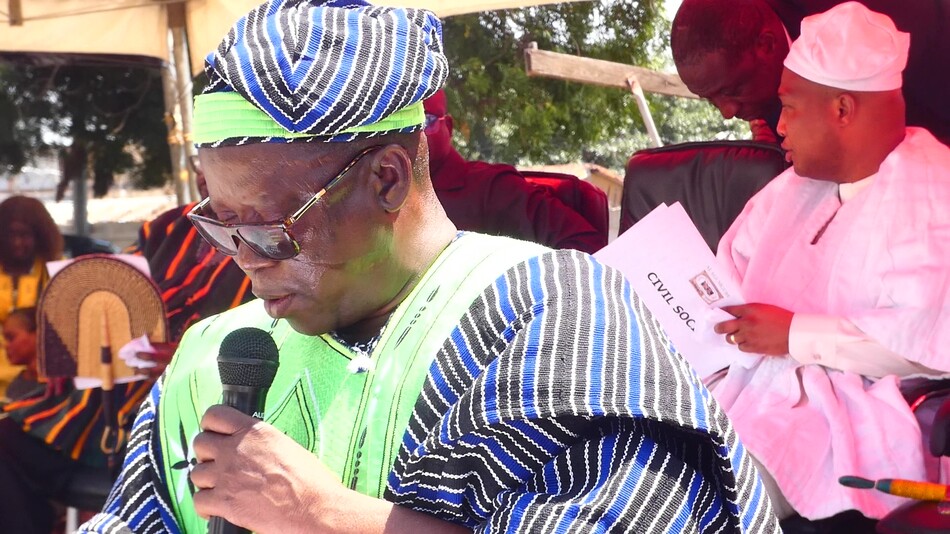
The Upper East Region witnessed a landmark moment as the new Regional Passport Application Center was officially commissioned, a testament to Ghana’s ongoing journey toward administrative decentralization and inclusive development. Apexnewsgh reports In his keynote address at the opening, Upper East Regional Minister Donatus Akamugre captured the significance of this achievement, reflecting both on the struggles of the past and the aspirations for the region’s future. “Today marks a defining moment in our regional journey towards administrative decentralization and inclusive development,” Minister Akamugre told an audience of dignitaries, traditional leaders, and enthusiastic residents. “For far too long, residents of the Upper East Region have had to endure long and costly travels to access basic passport services. The opening of this passport office is not merely an inauguration of an office, but a symbol of hope, integrity, and the NDC government’s responsiveness to the needs of its citizens, regardless of geographical location.” The new passport centre, the Minister stressed, is not just an expanded service; it is a strong statement of the government’s commitment to true decentralization, accessibility, and equitable national service delivery. “This facility, although temporary, its impact will have a permanent impact as it bridges the gap between the government and the citizens of Ghana in this region.” He extended deep gratitude to the President, His Excellency John Dramani Mahama, and Foreign Affairs Minister Samuel Okudzeto Ablakwa, for their dedication and vision. “The region is indeed grateful, and we salute you for walking the talk.” Akamugre reserved special praise for community involvement, particularly the Alagumgube Association. “A dedicated and spirited community-based organization, Alagumgube has played a very instrumental role in mobilizing public interest and supporting the renovation of this facility. Without them, we would not have gathered here in the first place.” He lauded the tireless efforts of founder Mr. Gabriel Agambila, the revered chiefs who serve as patrons, and the entire membership, urging others to emulate their spirit of partnership and commitment to the public good. The Minister also commended the management of Ghana Commercial Bank for releasing their facility for the project and acknowledged the support of the Regional Coordinating Council, MMDCs, Members of Parliament, and individuals who contributed resources and expertise. “You have each written your name onto the development history of the region,” he declared. While celebrating this milestone, Akamugre looked ahead to the next frontier for the region’s transformation: air transportation. “Permit me to use this moment to re-echo the collective aspiration of the people of Upper East Region that the next frontier for our region’s transformation lies in air transportation and connectivity. This request is a strategic necessity that will unlock the region’s vast economic, tourism, and trade potentials.” He outlined the region’s growing population, strategic proximity to Burkina Faso and Togo, and the influx of international mining firms as reasons why an airport would have undeniable benefits. “The demand for the airport is strong, real, and the benefits are undeniable. The NDC, as a social democratic party and government of the people, cannot have a better legacy in the region than to see to the full realization of this airport project. This will affirm His Excellency John Dramani Mahama’s reset agenda and the NDC vision of balanced regional development and integration.” He revealed that just two weeks prior, he submitted the indenture for the proposed airport land to the Ghana Airport Company Limited in Accra, covering 4,218.43 acres. “Out of this, a two-kilometer runway has since been cleared to the satisfaction of the Ghana Airport Company Limited. I am humbly appealing to the Minister of Transport to prioritize the commencement of the construction of the Bolgatanga Airport as a crucial step towards realizing His Excellency John Dramani Mahama’s vision of a truly connected Ghana.” Mr. Akamugre extended heartfelt appreciation to the Tindamas, the landowners, chiefs, elders, and the entire Sumburungu community for their generosity in releasing 4,218.43 acres of ancestral land—free of charge, for the airport project. “We recognize the cultural, economic, and spiritual value of land in our communities. For this selfless gesture, the people of Sumburungu have demonstrated leadership and a true spirit of development partnership. May this airport stand as a lasting symbol of your generosity, vision, and the enduring legacy of the Sumburungu as a community that boldly chose progress for the benefit of all.” As the Upper East Region celebrates the opening of its Passport Application Centre, Minister Akamugre’s address served both as a reflection on how far the region has come and as a rallying call for the next chapter in regional transformation. The new centre stands as a beacon of access, hope, and partnership, while the vision of an airport promises to propel the region even further on its path toward balanced, inclusive, and sustainable development. Source: Apexnewsgh.com/Ngamegbulam Chidozie Stephen
MP for Nabdam Applauds Bold Step to Open Upper East Passport Centre– Says NPP Past 8 Years was Only Talk Talk
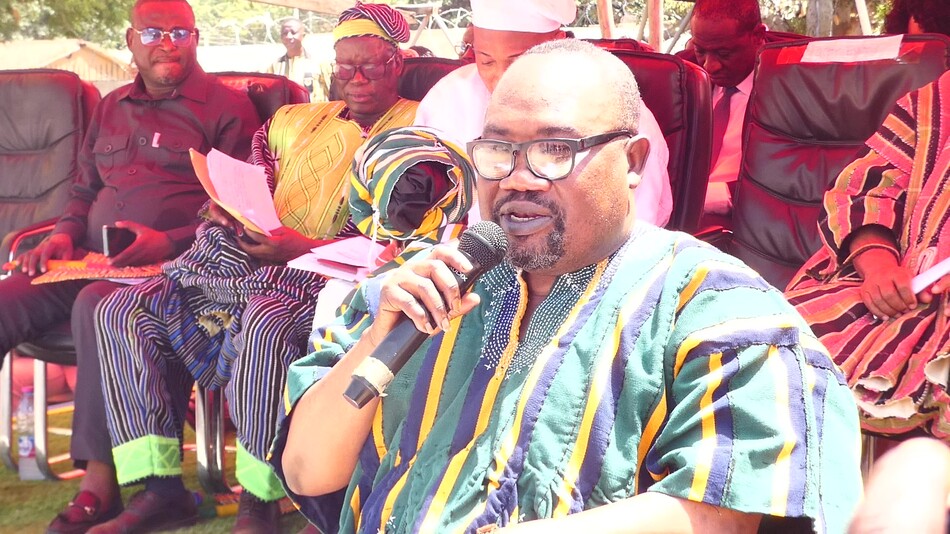
For the people of Ghana’s Upper East Region, the commissioning of the new Regional Passport Application Centre in Bolgatanga marks more than just a bureaucratic milestone; it is a victory over years of unfulfilled promises and a testament to decisive leadership. Apexnewsgh reports At the heart of this event, the Member of Parliament for Nabdam Constituency, Dr. Mark Kurt Nawaane, delivered a speech, reflecting on the journey that brought the much-needed facility to fruition. “For the past eight years, there has been talk and talk and talk of establishing the passport office,” Dr. Nawaane told the gathered crowd, his words echoing the shared frustrations of many residents. “A structure that is being built for the passport office, and I looked at it, it is far from completion.” His remarks highlighted a reality that many in the region have come to know all too well: plans for decentralizing essential public services often stall, leaving communities waiting and hoping. With the opposition New Patriotic Party (NPP) in power for the last eight years, Dr. Nawaane noted, there had been much discussion about setting up a regional passport centre, but little action. The unfinished building meant for the centre stood as a daily reminder of those unmet promises. Yet, Dr. Nawaane was quick to point out that progress sometimes requires bold action. “It needed somebody brave, strong, experienced to know that, no, these people need the services. We don’t have to wait until that building is completed before we start giving passports to people. Somebody has to make that decision.” He credited the breakthrough to the Minister for Foreign Affairs and Regional Integration, Hon. Samuel Okudzeto Ablakwa. “The person who took that decision is here with us. And that is the Honorable Okudzeto Ablakwa. It needed one person to agree that this thing you have been talking about should come to being. And he did it.” Dr. Nawaane’s praise for Hon. Ablakwa was met with applause. “Let’s clap for him,” he urged, acknowledging the Minister’s role in transforming years of empty rhetoric into real, accessible services. Thanks to this intervention, an existing structure in Bolgatanga was renovated and quickly repurposed, allowing the region’s residents to access passport services without delay. The MP’s comments also touched on a broader issue affecting the Upper East and many other regions: the need for decentralized agencies and services. “The members of parliament from the Upper East Region have observed that a lot of the decentralized agencies and structures are not in the region,” he explained. “And some of them are also not in the districts. And so we continue to discuss what we can do to get some of these things to our regions and districts.” As an example, Dr. Nawaane shared ongoing efforts to expand essential services in his own constituency. “As I am speaking now, by January, the National Health Insurance Authority will have an office in Nabdam. That is a structure that is not there.” He further noted the absence of a Health Facilities Regulatory Authority office in the region, which he is actively advocating for as a board member. “Because there are hospitals in Bolgatanga that also need to be regulated. Why don’t we open that office and get people employed? That’s the most important thing.” Employment and local management, Dr. Nawaane stressed, should be central to these efforts. “Let them manage the place and we can, you know, be thinking of more and more. So that is what we are doing in Accra. Here, all of us, we are trying as much as possible to get the decentralized authorities to open their offices in the region and in the districts.” The MP expressed gratitude for the support he and his colleagues have received from the region. “I use this opportunity to thank you very much for the goodwill that we have been enjoying from you.” He also called on their constituents to remain patient with their Members of Parliament, assuring them of continued engagement. “We’ve been very busy throughout the year, but we hope that we’ll come back, especially during the Christmas and New Year festivities. We’ll be with you and engage you and I believe that you’ll be happy with us.” Dr. Nawaane’s words captured both the relief and renewed optimism felt throughout the Upper East Region as the passport centre opened its doors. His speech served as both a celebration of what had been accomplished and a call for continued advocacy to bring more decentralized services to every corner of the region. As the ceremony concluded, the sense of accomplishment was palpable. No longer would Upper East residents need to journey long distances for a simple passport application. Source: Apexnewsgh.com/Ngamegbulam Chidozie Stephen