






Cut the “Dumsor Levy” by Half — COPEC Urges Government for Immediate Fuel Relief

Ghana’s Chamber of Petroleum Consumers (COPEC) is calling on the government to slash the Energy Sector Shortfall and Recovery Levy, popularly known as the “dumsor levy”, by 50 percent for a limited period, as part of a package of measures aimed at bringing down fuel costs for ordinary Ghanaians. The proposal was contained in a statement released on Friday, April 10, in response to the government’s ongoing review of taxes and levies within the petroleum price build-up, a review that has raised public expectations of relief at the pumps. Under COPEC’s proposal, the levy would be temporarily reduced from GH¢1 to 50 pesewas per litre, a cut the Chamber says would translate directly into a 50 pesewa reduction in fuel prices for consumers. According to COPEC, the impact would be immediate and tangible, significantly reducing household expenditure on transport and energy at a time when public anxiety over rising fuel costs and the prospect of renewed power outages is running high. COPEC framed the proposal not just as consumer relief, but as a strategic balancing act for the government. By retaining half of the levy rather than scrapping it entirely, authorities would continue to collect revenue to support the energy sector and keep power plants running, reducing the risk of costly emergency power procurement and protecting industrial productivity. The Chamber argued that sustaining a revenue stream, even at half the current rate, would also help shield long-term tax revenues from the kind of disruption that a complete removal of the levy might trigger. COPEC was candid about the limits of its own proposal. A 50 percent cut in the levy would inevitably reduce funds set aside for servicing energy sector debts, and could slow planned maintenance activities if the intervention stretches beyond its intended window. That is precisely why, the Chamber stressed, the reduction must be strictly time-bound. COPEC proposed a one-month window, a timeframe it described as sufficient to deliver meaningful economic relief while remaining short enough to avoid long-term disruptions to the energy sector. The Chamber argued that such targeted, time-limited measures demonstrate genuine responsiveness to public concerns without sacrificing fiscal prudence. Urging policymakers to act with urgency, COPEC called on the government to give the proposal serious consideration as part of its broader short-term strategy to cushion consumers against rising global petroleum prices. Source: Apexnewsgh.com
Court Eases Bail Conditions for Ex-National Service Boss Amid Ghost Names Trial
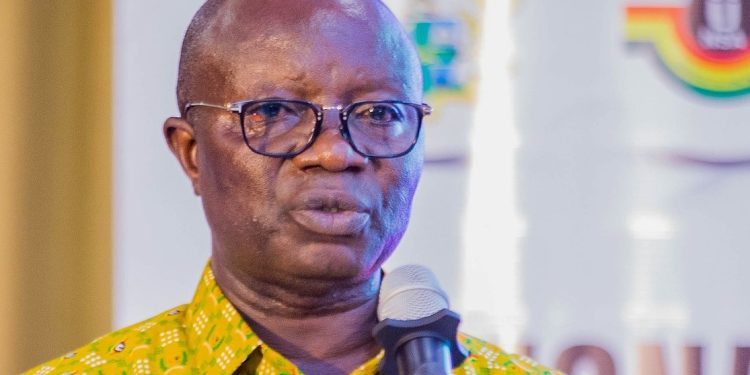
The High Court in Accra has amended the bail conditions of former Executive Director of the National Service Authority, Osei Assibey Antwi, permitting him to report to the Kumasi office of the National Intelligence Bureau (NIB) rather than making the trip to Accra, a concession his legal team had sought and the state did not resist. The development came during court proceedings on Monday, where the defense applied for a variation of the bail terms alongside a request for additional time to review case materials. Prosecutors informed the court that 49 documents had already been disclosed to the defense, with further disclosures still to come. The defense, citing the need to thoroughly examine the materials, requested a one-month adjournment. The presiding judge granted both applications, adjourning the case to May 13. Mr. Antwi faces serious charges, including stealing, money laundering, and causing financial loss to the state, all stemming from his tenure at the National Service Authority. But beyond the bail amendment, Monday’s proceedings also shed light on significant revisions to the charges themselves. The principal allegation of causing financial loss to the state has been amended in two notable ways. Originally, prosecutors alleged that Mr. Antwi authorised payments totalling GH¢500,861,744.02 to more than 60,000 purported “ghost” national service personnel. The amended charge tells a somewhat different story, reducing the alleged financial loss to GH¢431,761,556.76 and replacing the reference to “ghost names” with the broader description of “non-service personnel and unverified individuals.” Investigations by the National Intelligence Bureau paint a troubling picture of what allegedly transpired at the Authority over several years. Findings reportedly indicate that 63,672 unverified registrants were submitted into the payment system between 2018 and 2024 for service allowances or vendor payments. Between August 2021 and February 2025, the Authority is alleged to have disbursed GH¢431,761,556.76 to individuals who either did not undertake national service or whose identities could not be verified, a staggering sum at the centre of what has become one of Ghana’s most closely watched public sector fraud cases. The case returns to court on May 13. Source: Apexnewsgh.com
Port Transport Drivers Call Off Strike After Breakthrough Talks with Ghana Shippers’ Authority
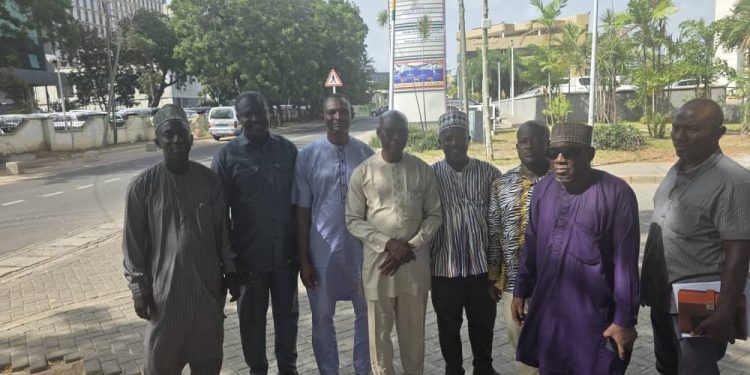
A threatened sit-down strike by port transport drivers has been averted following a productive emergency meeting between the Joint Association of Port Transport Drivers (JAPTU) Ghana and the Ghana Shippers’ Authority (GSA). The strike, which had been planned in protest against new regulatory measures affecting port transport operators, was called off after both parties reached a consensus on the key issues that had sparked the standoff. Speaking to Citi News on Monday, April 13, JAPTU’s Executive Secretary Ibrahim Musah explained that a critical clarification from the government played a decisive role in resolving the tension. Drivers had harboured concerns that the GSA’s planned registration exercise was aimed at individual operators, a prospect that had alarmed many within the sector. Those fears, Musah said, were put to rest. The government made clear that the registration exercise targets corporate transport entities, not individual drivers. That single clarification, he noted, addressed one of the most significant grievances that had been driving JAPTU toward industrial action. With the assurance on the table, JAPTU’s leadership announced its decision to withdraw the strike in the interest of continued dialogue and constructive engagement. The agreement reached goes beyond simply standing down the strike. As part of the understanding between the two parties, the Ghana Shippers’ Authority is expected to facilitate further discussions between JAPTU and the Minister of Roads and Highways on concerns surrounding the new axle load control regime, an issue that remains a live concern for transport operators. JAPTU’s leadership expressed optimism that the ongoing engagements will lead to a more inclusive approach to policy implementation within the transport sector, signalling a shift from confrontation to collaboration. Musah was generous in his praise for how the GSA handled the situation. “The leadership of JAPTU Ghana is happy to announce that we are calling off our intended sit-down strike after a very fruitful dialogue session with the leadership of the Ghana Shippers’ Authority,” he said. “We want to also take this opportunity to commend the Chief Executive of the Ghana Shippers’ Authority and his team members for the swift manner in which they reacted to the concern that we brought up,” he added. The resolution is expected to ease tensions across the port transport industry and ensure the smooth movement of goods through Ghana’s ports as consultations between all parties continue. Source: Apexnewsgh.com
Israel Opposed UN Slavery Reparations Resolution Over “Gravest Crime” Language, Ambassador Explains

Israel’s Ambassador to Ghana, Roey Gilad, has broken his silence on why Israel voted against a recent United Nations resolution on reparations for the transatlantic slave trade, and his explanation centres not on a denial of history, but on a dispute over a single word. Speaking on JoyNews, Ambassador Gilad said Israel’s opposition was rooted in the resolution’s description of the transatlantic slave trade as the “gravest” crime against humanity, a characterisation he argued amounts to an unacceptable ranking of historical suffering. “Our problem with this resolution was exactly that, the gravest,” he said. “There were quite several crimes against humanity… Who are we to judge which is the gravest and which is less grave?” Gilad invoked some of history’s darkest chapters to make his case, the Holocaust, the Armenian genocide, and the Rwandan genocide, arguing that placing such tragedies in a hierarchy diminishes none of them, but distorts all of them. For Israel, a nation whose identity is inseparable from the memory of the Holocaust, the idea of ranking atrocities carries particular weight. The Ambassador was clear that Israel’s vote should not be misread as indifference to the horrors of the slave trade. “We believe that making a hierarchy and saying which was greater than the other is a mistake,” he said, reiterating that Israel fully recognises the severity and lasting consequences of the transatlantic slave trade. What makes Israel’s position notable is how close a compromise apparently came. Gilad disclosed that Israel, alongside the United States, the United Kingdom, and members of the European Union, engaged Ghana’s delegation at the United Nations before the vote, proposing a straightforward amendment that the resolution describe the slave trade as “one of the gravest” crimes against humanity rather than simply “the gravest.” “There is no doubt that had the resolution called the Atlantic slave trade one of the gravest, we had no problem,” he stated plainly. The proposal, it appears, was not adopted, and the resolution went to a vote with its original language intact. It reportedly received strong backing at the UN, with Ghana among its leading champions. Ghana has been at the forefront of international advocacy for reparations tied to slavery and colonial injustices. Ambassador Gilad’s remarks offer a window into the complex diplomatic undercurrents surrounding the global reparations debate, where the choice of a single word can determine whether nations stand together or apart. For Israel, the line is not drawn around the recognition of suffering, but around the language used to weigh it. Source: Apexnewsgh.com
Ghana Signs Major Agro-Industrial Deal to End Fertiliser Imports and Boost Food Processing
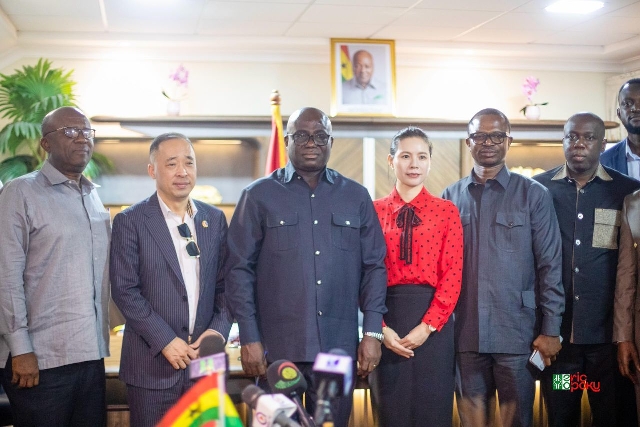
Ghana has taken a significant stride toward transforming its agricultural sector, with the Ministry of Food and Agriculture (MoFA) signing a landmark partnership agreement with Sentuo Group Limited aimed at industrialising the country’s food production and ending decades of dependence on imported fertilisers. The signing ceremony, held in Accra on Monday, April 13, 2026, was accompanied by a media engagement at which Minister for Food and Agriculture Eric Opoku described the deal as a “bold and deliberate step” toward repositioning Ghana’s agriculture under the leadership of President John Dramani Mahama. At its core, the agreement rests on two key pillars: the development of large-scale agro-processing infrastructure and the establishment of a national fertiliser manufacturing plant backed by an integrated agricultural input supply system. The initiative will target key commodities, cashew, maize, rice, soybean, and oil palm, with the overarching goal of shifting Ghana away from a raw commodity-based economy toward a value-driven, industrialised agricultural sector. Perhaps the most consequential aspect of the deal is its fertiliser component. For decades, Ghana has relied heavily on fertiliser imports, leaving farmers vulnerable to global price fluctuations, supply chain disruptions, and the pressures of foreign exchange constraints. “With this agreement, we are taking a decisive step toward fertiliser independence,” Minister Opoku declared, noting that the project will enable local production of a wide range of fertiliser types, including NPK, urea-based, blended, organic, and specialty formulations. The Minister also highlighted the government’s existing support for farmers through the 2026 budget, which includes the distribution of 272,000 metric tonnes of fertilisers nationwide, targeted supplies exceeding 164,000 metric tonnes for intensified crop production, and a GH¢2.7 billion allocation for cocoa fertiliser support benefiting over 661,000 farmers. He was quick to stress, however, that government support alone is not sustainable without local production, making the Sentuo Group partnership what he described as “strategic and transformational.” The Minister commended Sentuo Group’s representative, Ningquan Xu, for the company’s commitment to finance, design, construct, and operate the proposed facilities under a Public-Private Partnership arrangement, a structure aligned with Ghana’s Public-Private Partnership Act 2020. He said the deal signals growing investor confidence in the country’s economic direction. Mr. Opoku was also keen to reassure the public about safeguards built into the agreement. The Memorandum of Understanding signed is a non-binding framework, he clarified, with all subsequent stages subject to feasibility studies, environmental and social assessments, regulatory approvals, and government oversight to ensure transparency and protect national interest. Beyond fertiliser production, the partnership is expected to catalyse broader development across Ghana’s agro-industrial ecosystem through the establishment of processing plants, warehousing systems, packaging facilities, and export-oriented production infrastructure. The anticipated benefits are wide-ranging: reduced post-harvest losses, increased export earnings, stabilised input costs, job creation, improved food security, and stronger economic resilience. The Ministry also plans to align the project with key national initiatives, including the Feed Ghana Programme and the 24-Hour Economy Policy. “Today’s signing is not just an agreement, it is a signal that Ghana is ready for serious, long-term industrial investment,” Mr. Opoku stated, reaffirming the government’s commitment to building a modern agricultural economy capable of delivering sustainable benefits for generations to come. Source: Apexnewsgh.com
Warehouses Full, Promises Empty: Asutsuare Rice Farmers Cry Out for Help
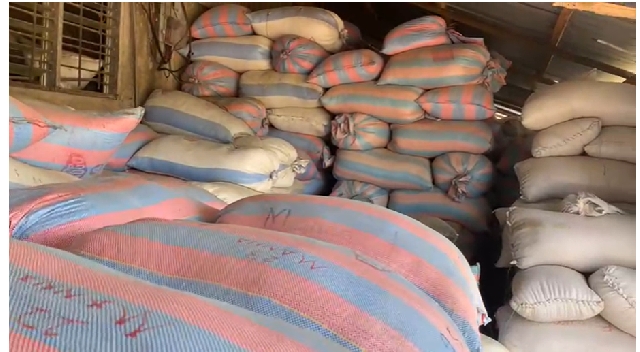
Rice farmers in Asutsuare, Kadjanya, and Akuse in the Shai Osudoku District of the Eastern Region are sinking into a financial crisis, as large quantities of harvested rice sit unsold and post-harvest losses mount with each passing day. The situation is most acute at the Asutsuare rice irrigation scheme, one of Ghana’s major rice-producing hubs, spanning over 4,000 hectares and supporting thousands of smallholder and commercial farmers. Warehouses have been filled to capacity, leaving farmers with no choice but to leave excess produce exposed to the elements, where it risks spoilage. Despite significant investments in mechanisation and irrigation, farmers say the absence of a reliable market is steadily eroding their hard work and livelihoods. The hardship has gone beyond financial strain. Reports indicate that a farmer identified as Zola allegedly died by suicide after struggling to repay a bank loan tied to his farming activities, a tragic development that has cast a dark shadow over the farming communities. Authorities have yet to publicly confirm the details surrounding the incident. The story of Zola, however, has put a human face on what might otherwise be seen as an economic statistic, underscoring the very real and personal consequences of the crisis gripping the region. Philip Akpoka Anumah, President of the Osudoku Rice Farmers Association, has been vocal about the pricing crisis at the centre of the problem. He pointed out that buffer stock authorities are offering just GHS350 per bag, a figure that falls below production costs, meaning farmers are effectively selling at a loss. The situation is made worse by the continued influx of imported rice, which farmers say is suppressing demand for locally produced rice and driving prices even lower. Adding to the frustration is what farmers describe as unfulfilled assurances from the highest levels of government. The Minister for Food and Agriculture, Eric Opoku, and the Minister for Finance, Cassiel Ato Forson, reportedly visited the area and pledged interventions, including buffer stock purchases. Those promises, farmers say, have yet to translate into action, deepening their sense of abandonment. Compounding the crisis further, rehabilitation works on sections of the irrigation scheme have stalled, leaving more than a thousand farmers idle for over a year, unable to farm, unable to earn, and increasingly unable to cope. With their backs against the wall, the farmers are now issuing an urgent call for government intervention. Their demands are straightforward: improved market access, fair and realistic pricing for their produce, and the completion of long-delayed infrastructure projects. They warn that continued inaction will not only devastate local rice production but could permanently damage rural livelihoods across the district, a consequence, they say, that the government cannot afford to ignore. Source: Apexnewsgh.com
UTAG Demands Sacking of GTEC Top Officials Over Governance Failures
The University Teachers Association of Ghana (UTAG) has issued a bold ultimatum to the government, demanding the immediate dismissal of the Director-General and Deputy Director-General of the Ghana Tertiary Education Commission (GTEC), Ahmed Jinapor Abdulai and Augustine Ocloo, over what it describes as persistent overreach and governance lapses threatening the stability of Ghana’s public universities. Speaking at a press briefing in Accra, UTAG President Vera Fiador revealed that the association had first raised the alarm through a formal petition to the Presidency on February 17, 2026, outlining serious concerns about unilateral decision-making and an increasingly coercive leadership style at the Commission. Nearly two months on, UTAG says it has received no response, a silence that has now compelled the association to take its grievances public. At the heart of UTAG’s frustration is what it sees as a systematic overstepping of GTEC’s regulatory boundaries. The association argues that the Commission’s actions are eroding institutional autonomy, academic freedom, staff welfare, and the overall stability of public universities — values it considers non-negotiable in a healthy tertiary education system. UTAG levelled a string of specific accusations against the GTEC leadership, including interference in internal university governance, overriding decisions made by governing councils and academic boards, introducing unapproved appointment requirements, and disregarding established institutional statutes. The association further alleged that GTEC has wielded excessive discretionary powers, including threats to withdraw accreditation and funding, and the abrupt abolition of certain administrative roles without due process. UTAG also trained its sights on directives issued by GTEC in September and October 2025, particularly those affecting post-retirement contracts and salary administration. According to the association, these measures directly conflict with agreed conditions of service, breed uncertainty among staff, and are disrupting core academic functions including teaching and research. The association warned that the deteriorating situation is straining labour relations and could tip over into industrial action if the government fails to act. Pointing to reputational damage already done, UTAG cited a 2025 incident involving the University of Cape Coast, where GTEC temporarily withdrew accreditation services before reversing course, a move that, according to the association, created significant uncertainty for students and damaged Ghana’s standing with international academic partners. UTAG’s demands are unambiguous: the removal of GTEC’s top officials, the reversal of all contentious directives, and the swift passage of a Legislative Instrument to give full effect to the Education Regulatory Bodies Act, 2020. The association also called for the protection of existing post-retirement arrangements and meaningful stakeholder engagement in future regulatory decisions. In a firm closing warning, UTAG gave the government 14 days to act, making clear that failure to address these concerns within that window will trigger further, unspecified action. Source: Apexnewsgh.com