





UDS Names Prof. Mohammed Muniru Iddrisu as New Vice-Chancellor
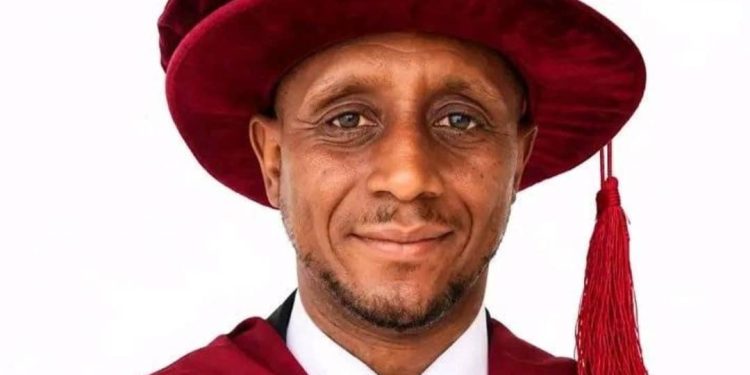
The University for Development Studies (UDS) has a new helmsman. The university’s Governing Council has appointed Professor Mohammed Muniru Iddrisu as Vice-Chancellor, a decision that signals the institution’s confidence in a leader who has spent years shaping its academic identity from within. The appointment was made at a Council meeting held on Thursday, April 16, 2026. Professor Iddrisu will officially assume the role on June 27, 2026, and will serve until August 31, 2030. Professor Iddrisu is no stranger to UDS. He currently serves as Principal of the university’s Nyankpala Campus, a role that has placed him at the heart of the institution’s academic and administrative operations. His elevation to Vice-Chancellor is, in many ways, the natural progression of a career defined by service to the university and its mission. He is widely regarded as a visionary leader with a strong record in teaching, research, and community engagement, qualities that align closely with the development-focused mandate that UDS was founded to fulfil. His scholarly contributions and active involvement in knowledge generation have earned him the respect of peers and students alike. As Vice-Chancellor, Professor Iddrisu will take on one of the most demanding leadership roles in Ghana’s public university system. He will be responsible for providing overall academic and administrative direction, steering the university’s long-term strategic vision, and ensuring that UDS continues to deliver quality higher education that meets both national priorities and global standards. It is a broad mandate, and one that arrives at a time when universities across the country face growing pressure to innovate, expand access, and deepen their relevance to the communities they serve. For UDS, the appointment of a leader of Professor Iddrisu’s standing suggests the Governing Council is betting on continuity, experience, and a deep institutional knowledge to carry the university forward into its next chapter. Source: Apexnewsgh.com
MTN Ghana CEO Fires Back at Data Theft Claims: “There’s Zero Incentive for Us to Do That”
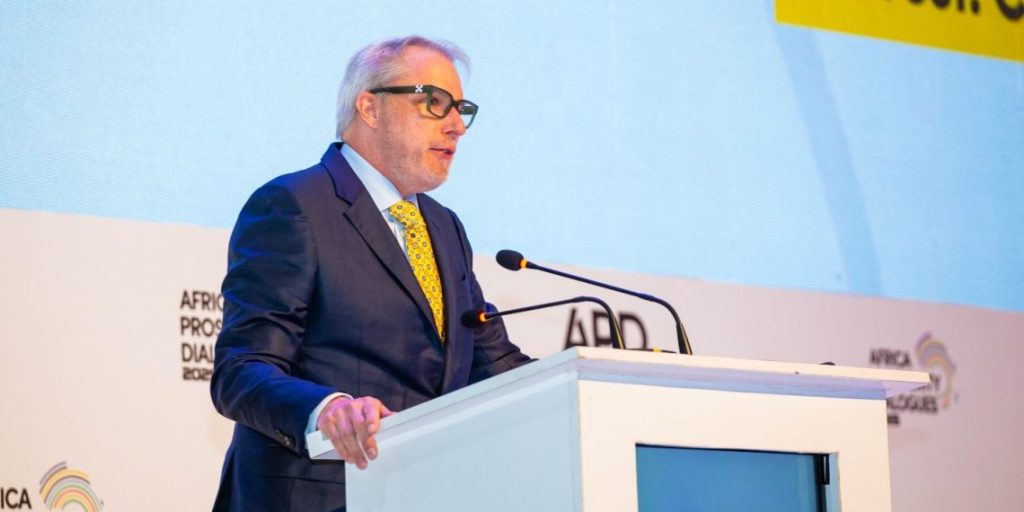
The complaints have been growing louder. Ghanaian subscribers of MTN have taken to social media and public forums in increasing numbers, frustrated by data bundles that seem to vanish faster than they should, or disappear entirely without explanation. For many, the finger has pointed squarely at the telecom giant itself. Now, MTN Ghana’s Chief Executive Officer has had enough. And he wants the public to know exactly where the company stands. Addressing the controversy on Friday, April 17, MTN Ghana CEO Stephen Blewett flatly dismissed allegations that the company is stealing customers’ data. His argument was direct: MTN simply has nothing to gain from it. “There’s zero incentive for MTN to steal data from you. Because it will just chase people away. It’s not something we do; it’s not part of our values,” he said. In his view, any telecom company that manipulated customer data would be signing its own death warrant, eroding the trust that keeps subscribers on its network and ultimately driving them to competitors. It is, he argued, bad business sense as much as it is a breach of integrity. If MTN is not the culprit, then what is? According to Blewett, the answer lies in how dramatically smartphone usage has changed, and how little many users understand about what their devices are doing in the background. He pointed to three key drivers of data consumption that often go unnoticed: background activity from mobile applications running silently without the user’s knowledge, automatic updates downloading software in the background, and the growing appetite for high-definition video streaming, which consumes data at a far higher rate than most people realise. Together, these factors, he argued, explain why data appears to drain so quickly, not fraud, but the realities of modern digital life. Blewett did not stop at defending the company. He turned the spotlight on subscribers as well, urging them to take a more active role in managing their own data consumption. Practical steps, he suggested, include monitoring which applications are running in the background, reviewing app permissions, and adjusting video streaming quality settings to reduce unnecessary data use. “So there’s a lot that we have to do as customers. We have to be very responsible,” he said. It is a message that is unlikely to fully satisfy frustrated subscribers, many of whom remain unconvinced. But for MTN Ghana’s CEO, the position is clear: the company is not the enemy, and understanding how data is consumed in today’s smartphone era is the first step toward resolving the dispute. Source: Apexnewsgh.com
Beware the Fake Job Offer: NACOC Sounds Alarm Over Recruitment Scams
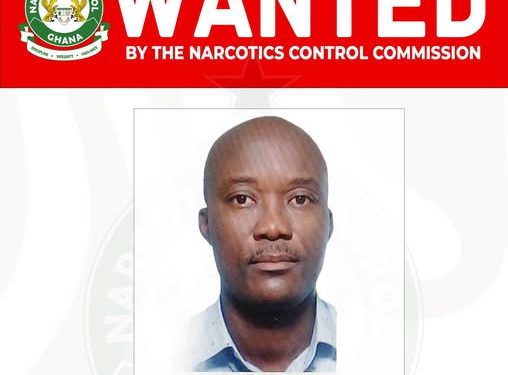
If someone has promised you a job at the Narcotics Control Commission, do not pay a pesewa; it is a scam. That is the stark warning from the Narcotics Control Commission (NACOC), which has issued a public alert over a surge in fraudulent recruitment schemes falsely carried out in its name. The agency says it has not opened any hiring process, and that anyone claiming otherwise is lying. The scam follows a pattern that has become all too familiar in Ghana, fraudsters exploiting the names of credible state institutions to prey on unemployed youth desperate for work. By attaching themselves to a recognised agency like NACOC, these individuals and groups lend false legitimacy to their schemes, making it easier to deceive unsuspecting victims. In a statement issued on April 16, NACOC moved to cut through the deception. The Commission stated clearly that it had “not commenced any recruitment exercise” and that it had not authorised, contracted, or engaged any person or organisation to recruit on its behalf. At the centre of most of these scams is a familiar demand: money or personal information. NACOC specifically cautioned the public against complying with either. “The public is strongly advised not to pay money or provide personal details to anyone claiming to offer recruitment into the Commission,” the statement read. The agency was equally direct about the consequences for those running these schemes, warning that “persons involved in such fraudulent activities will be arrested and prosecuted.” NACOC’s message is simple: no legitimate recruitment from the Commission is currently underway, and no third party has been given the authority to hire on its behalf. Anyone approaching members of the public with such an offer is acting fraudulently. If you or someone you know has been approached by individuals claiming to offer jobs at NACOC, do not engage, and report it to the appropriate authorities. Source: Apexnewsgh.com
NAiMOS Strikes Twice Along the Offin River, Netting 19 Arrests in 48 Hours
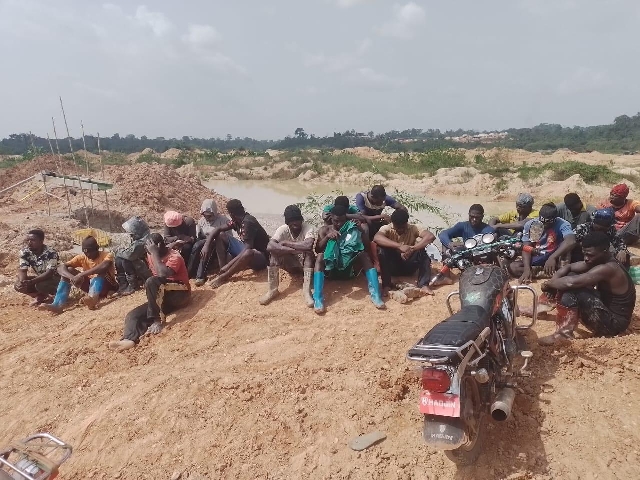
In two swift, intelligence-driven operations carried out within 48 hours of each other, the National Anti-Illegal Mining Operations Secretariat (NAiMOS) has sent a firm message to illegal miners along the Offin River: the crackdown is real, and it is closing in. The operations, executed by a NAiMOS taskforce stationed at Manso Adubia, targeted illegal mining hotspots at Droso and Eniamoah in the Amansie South enclave, areas authorities describe as among the most heavily exploited stretches of the river. When the dust settled, nineteen people were in custody, and dozens of pieces of equipment had been seized. On April 12, 2026, NAiMOS operatives moved on Droso, acting on intelligence gathered from local sources. What they found when they arrived confirmed the tip-offs: miners were actively working along the banks of the Offin River, machinery humming, the operation in full swing. The task force moved quickly. Nineteen suspects, men and women aged between 23 and 35, were arrested at the scene. Others, sensing the approach of security personnel, fled before they could be caught. The haul from the raid was telling: eight water-pumping machines, five motorbikes, an excavator monitor, and an excavator key were all recovered, painting a picture of a well-resourced and organised illegal mining operation. A day later, on April 13, the task force was back in the field. This time, the target was Eniamoah, near Ntoboroso, where fresh intelligence pointed to ongoing galamsey activity along the same river. When operatives arrived, the scale of what they encountered was striking — extensive illegal mining operations spread along the riverbanks. But word had apparently travelled fast. The miners abandoned the site and fled before they could be apprehended. They left behind, however, fifteen motorbikes — a detail that speaks volumes about the size and coordination of the network operating in the area. NAiMOS officials say the evidence uncovered at Eniamoah underscores just how much pressure the Offin River is under from illegal mining activity. With the operations concluded, NAiMOS is not standing down. The Secretariat has announced plans to deploy Blue Water Guards to intensify patrols across the Eniamoah and Ntoboroso areas, ensuring that those who fled cannot simply return once the immediate heat dies down. Officials also highlighted the role of inter-agency intelligence-sharing in making both operations possible, describing it as a model for how the fight against galamsey must be conducted, not reactively, but proactively, with information leading the way. NAiMOS has reaffirmed its commitment to maintaining a sustained operational presence along the Offin River until illegal mining is completely eradicated from the area. The message from the Secretariat is unambiguous: the Offin River is no longer a haven for galamsey operators, and the operations of the past two days are proof that the authorities mean business. Source: Apexnewsgh.com
After Nine Years, New Buses Finally Hit the Road for Metro Mass Transit

For the first time in over nine years, Metro Mass Transit (MMT) has received a significant boost, and for the millions of Ghanaians who depend on public transport daily, it is a long-overdue development. The government has taken delivery of a new fleet of buses for MMT, marking the most substantial addition to the company’s fleet in nearly a decade. It is a moment that signals not just new vehicles on the road, but a renewed commitment to fixing one of the country’s most pressing everyday challenges: getting people from one place to another reliably and affordably. The Deputy Minister for Transport, Dorcas Affo Toffey, confirmed that the first batch of 100 buses, out of a planned total of 300, has been successfully inspected and received. She announced the Chief Executive Officer of MMT, Kale Ceasar, during a pre-inspection of the newly arrived buses. Standing before the fleet, the Deputy Minister was unambiguous about what comes next. More buses are on the way, she assured, and their arrival will further strengthen MMT’s capacity to deliver smooth and reliable transport services across the country. The acquisition, according to Deputy Minister Affo Toffey, is far more than a routine procurement exercise. It is a strategic intervention, one designed to respond to the growing demand for dependable and affordable transit options and to ease the commuting challenges that have long frustrated Ghanaians in both urban and rural areas. She credited the initiative to the Ministry of Transport, led by Minister Joseph Bukari Nikpe, with the backing of President John Dramani Mahama, describing it as part of a broader effort to improve mobility and transform the public transport experience nationwide. The 100 buses currently on Ghanaian soil are only the beginning. Additional batches are expected to arrive in the coming months, gradually expanding MMT’s operational capacity and extending its reach across the country’s transport network. The initiative sits within the government’s wider agenda to modernise public transport infrastructure, improve service delivery, and restore public confidence in a sector that has struggled with ageing vehicles and inconsistent coverage for years. With new buses now on the ground and more on the horizon, the wheels of change, quite literally, are in motion. Source: Apexnewsgh.com
OSP’s Prosecutorial Powers Are Legally Sound — Ace Ankomah
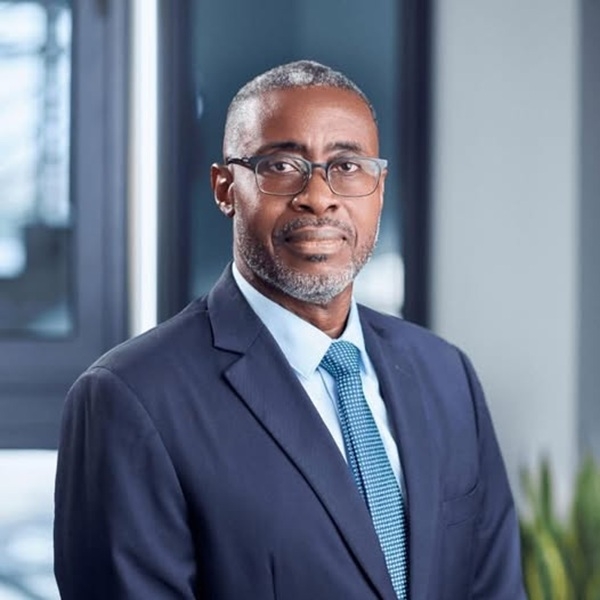
The question of whether the Office of the Special Prosecutor (OSP) has the legal authority to prosecute cases has stirred considerable debate in Ghana’s legal and political circles. Now, one of the country’s prominent legal practitioners has entered the conversation, and his position is clear: the OSP’s prosecutorial powers are not only valid, but they are firmly rooted in Ghana’s Constitution and statutory law. Ace Kojo Anan Ankomah, in a detailed commentary, anchored his argument in the text of Ghana’s Constitution itself. He pointed out that the Constitution permits criminal prosecutions to be conducted “at the suit of the Attorney-General”, a phrase he argued carries a broader meaning than it might first appear. To Mr. Ankomah, acting “at the suit of the Attorney-General” does not simply mean the Attorney-General must personally initiate every case. It also encompasses institutions and individuals acting on the Attorney-General’s behalf, a distinction that, in his view, is critical to understanding the OSP’s mandate. While the Attorney-General retains ultimate prosecutorial authority under the Constitution, Mr. Ankomah noted that Parliament has passed laws enabling that authority to be delegated, provided the delegation is carried out in accordance with the law. He argued that this condition has been fully satisfied. The OSP Act, together with supporting legislative instruments including LI 2374, explicitly empowers the OSP to determine whether to prosecute cases following its investigations. In his assessment, these instruments provide all the legal scaffolding the OSP needs to act independently within its defined mandate. Mr. Ankomah also drew attention to the process through which the OSP was established, arguing that it adds further constitutional weight to the office’s authority. The Special Prosecutor is nominated by the Attorney-General, appointed by the President, and approved by Parliament — a three-stage process that, he contended, embeds multiple layers of legal and constitutional legitimacy into the institution from the outset. Given this framework, Mr. Ankomah argued that requiring additional prosecutorial authorisation for the OSP to act would be both unnecessary and redundant. The authority, he maintained, is already well established under existing statutes and regulations. Despite his confidence in the legal foundation of the OSP’s powers, Mr. Ankomah acknowledged that the debate is unlikely to be resolved through commentary alone. He suggested that the matter will, in all probability, find its way to the Supreme Court of Ghana and that it may ultimately be the judiciary that delivers a definitive ruling on the question. Beyond the immediate legal debate, Mr. Ankomah used the opportunity to advocate for a more fundamental structural reform. He proposed a constitutional amendment that would remove prosecutorial powers entirely from the Executive branch and vest them in an independent body, one that would combine the functions of the Director of Public Prosecutions and the OSP. In his view, such a reform would not only resolve the current ambiguity but would also insulate Ghana’s prosecution machinery from political influence, strengthening the rule of law in the long run. For now, however, the debate continues, and with the Supreme Court potentially waiting in the wings, the final chapter of this legal saga is yet to be written. Source: Apexnewsgh.com
Ghana’s Free Primary Healthcare Programme: What You Need to Know
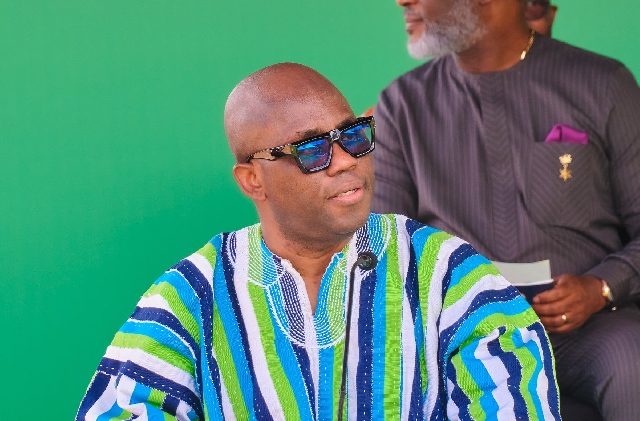
When President John Dramani Mahama launched Ghana’s Free Primary Healthcare Programme, it did not take long for questions to follow. Stakeholders across the country began asking: What exactly is this programme? How will it work? And is it simply the National Health Insurance Scheme (NHIS) under a new name? To clear the air, the Chief Executive Officer of the National Health Insurance Authority (NHIA), Dr. Victor Asare Bampoe, stepped forward with answers, and what he had to say painted a picture of a healthcare system on the cusp of meaningful change. Dr. Bampoe was unequivocal on one point: the Free Primary Healthcare Programme is not a rebranding of the NHIS. Rather, it represents a deliberate shift in how Ghana finances and delivers healthcare. For years, the NHIS has operated largely as a curative-care system, one that responds to illness after it strikes. Preventive and promotive services, by contrast, have remained chronically underfunded and heavily reliant on external support. The new programme, Dr. Bampoe explained, is designed to correct that imbalance. “The initiative explicitly defines and funds preventive services such as screenings, early detection, and community outreach,” he noted, services that have long existed on the margins of the country’s health financing architecture. At the heart of the policy is a fundamental change in how healthcare is paid for. Ghana is moving away from a traditional illness-driven financing model toward a population-based payment system — one that is proactive rather than reactive, and focused on managing public health risks before they spiral into crises. This shift, Dr. Bampoe stressed, is not cosmetic. It reflects a broader ambition to reposition primary healthcare at the centre of Ghana’s health system and to accelerate the country’s progress toward universal health coverage. One of the most significant changes under the programme concerns access. Under the new framework, individuals will be able to receive initial healthcare services regardless of whether they are enrolled in the NHIS. The goal is simple: ensure that no one is turned away at the first point of contact due to administrative or financial barriers. “This approach ensures that access to care is no longer delayed by administrative or financial constraints, while also encouraging enrolment into the NHIS through the system itself,” Dr. Bampoe explained. In practice, this means that early diagnosis becomes more achievable, and with it, better health outcomes for more Ghanaians. Dr. Bampoe was candid about the need to manage expectations. Implementation will not happen overnight. The programme will roll out in phases, with the first phase prioritising preventive services delivered through Community-based Health Planning and Services (CHPS) compounds, health centres, and polyclinics. Curative services, meanwhile, will continue under existing NHIS arrangements. To ensure the programme delivers on its promise, the policy includes clearly defined service packages, dedicated funding streams, and integration with NHIS monitoring systems, all designed to guarantee accountability across financing, staffing, medicines, and service delivery. In closing, Dr. Bampoe framed the initiative not as a short-term intervention, but as a long-term structural reform, one aimed at strengthening preventive care, improving access, and building a healthcare system that is both more resilient and more efficient. The name “Free Primary Healthcare” may still spark debate, but the vision behind it is clear: a Ghana where health is protected before illness takes hold, and where no citizen is left behind at the door of a clinic. Source: Apexnewsgh.com