
Prof. David Millar Challenges Planners to Rethink the Meaning of Markets at PEARL Launch
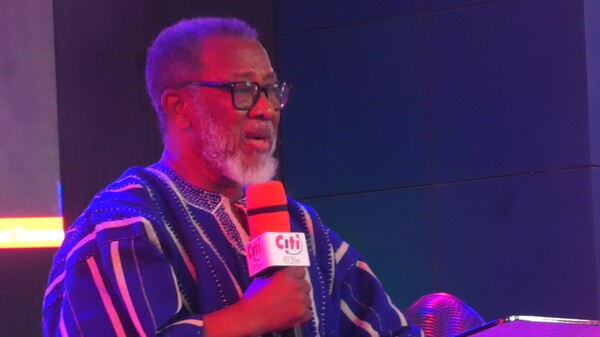
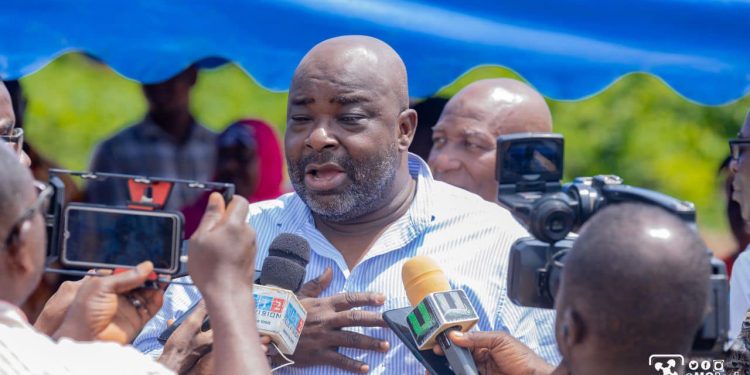
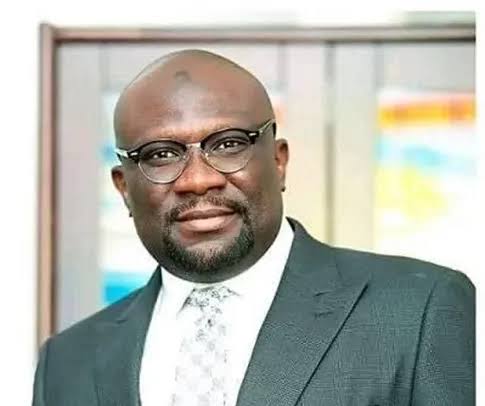
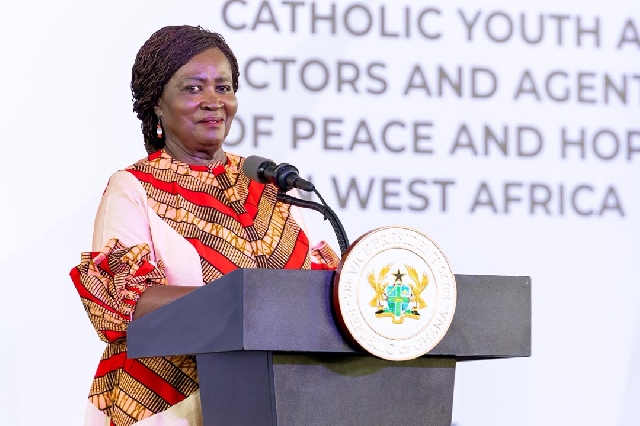
At the grand launch of Prosperity through Enterprise, Agriculture, Resilience and Livelihoods (PEARL) framework, a visionary 10-year framework plan for the Upper East Region, Professor David Millar, serving as Chairman, took center stage to address the congregation. The initiative, spearheaded by the Regional Coordinating Council, drew stakeholders from across the region, eager to hear from one of its most respected academics. As he spoke, Prof. Millar offered a thought-provoking perspective on the heart of economic development. “A market economy,” he began, “is just a space and a place.” He paused, glancing around the room before continuing, “I’ve heard comments like, ‘Oh, they are just building markets.’ But marketing, as many great economists will affirm, is a transaction arena. You don’t even need a physical structure for a market to exist, it’s all about transactions.” To illustrate, he pointed to the example of gold. “If there were no market for gold, we wouldn’t even be talking about it. No one would be struggling to sell it. That is the essence of a market.” Prof. Millar then turned to the concept of a 24-hour economy, a term buzzing in policy circles. “For us, at my university, the 24-hour economy is not just about a structural m arket. It’s about a transactional space, and we are positioning ourselves to contribute to this broader discourse.” He emphasized that the real value lies in the transactional spaces created for the benefit of the entire economy. “Physical structures can be labeled NDC or NPP,” he cautioned, referencing the leading political parties, “but the economy itself is more generic, more nationalist. I hope the planners capture this in their designs.” With a gentle challenge, Prof. Millar urged the planners not to fall into the trap of viewing markets as mere buildings equipped with electricity and cell towers. “The true price of the challenge,” he concluded, “is to look beyond the visible structures and focus on the vibrant transactions that drive our economy.” His words set a thoughtful tone for the event, reminding everyone present that the future of the Upper East Region depends not just on what is built, but on how people connect, trade, and innovate within those spaces. Source: Apexnewsgh.com
Prof. David Millar Calls for a Complete Slave Route Narrative and Links Tourism to Reparations at PEARL Launch
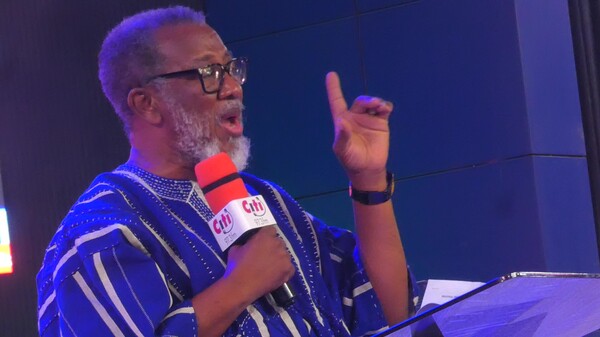
At the launch of PEARL, a transformative 10-year framework plan for the Upper East Region, Professor David Millar, serving as Chairman, addressed the gathered congregation with a message that blended history, identity, and the promise of economic renewal. The event, organized by the Regional Coordinating Council, saw Prof. Millar share his forward-thinking views about the role of tourism in regional development, particularly through the lens of historical truth and reparative justice. “The tourism sector needs to be looked at,” Prof. Millar began, his voice resonating with conviction. “In my university, we are redefining the slave routes. If you go into the archives, you will find that these routes are usually traced from Salaga and run to the coast, the exit points. But that’s an incomplete or checkered history.” He described a new approach his university is pioneering: a ‘ground-through’ methodology. “We walk the actual distance of the slave route and redesign the slave maps to show clearly that the coast was just an exit point. If I were to put it simply, it was like a lorry park, the people came from somewhere to board those lorries.” Prof. Millar called on local chiefs and community members to champion this fuller story. “We will map the route and the languages spoken along it. This will provide proof, so when we reach the end, if the last set of slaves weren’t speaking Twi or Fante, it means they didn’t make those trips. If they spoke Guruni, Frafra, Dagare, or Sisala, then that is their route.” He noted that this important project was made possible by support from the Kingdom of the Netherlands, who wished for the story to be completed. “Right now, the map of the slave route only starts from Salaga, Kintampo, and down to the coast.” Highlighting the significance of this initiative, Prof. Millar stressed its place in the region’s development plan. “This positions us for the reparation efforts of the president. Many communities may be waiting for financial support for reparations, but we want to position ourselves and make clear, legally, that we are the source of the slavery, while the south is the sink. We need both the source and the sink for a genuine claim.” He urged that the region link its reparation claims to tourism. “When those in the diaspora visit, it is good to see the sink, but it is excellent to visit the source as well. That makes sense for tourism and its potential.” Source: Apexnewsgh.com
Hajia Charity Challenges Dr. Bawumia: Demand Accountability from Cecilia Dapaah Over World Bank Funds
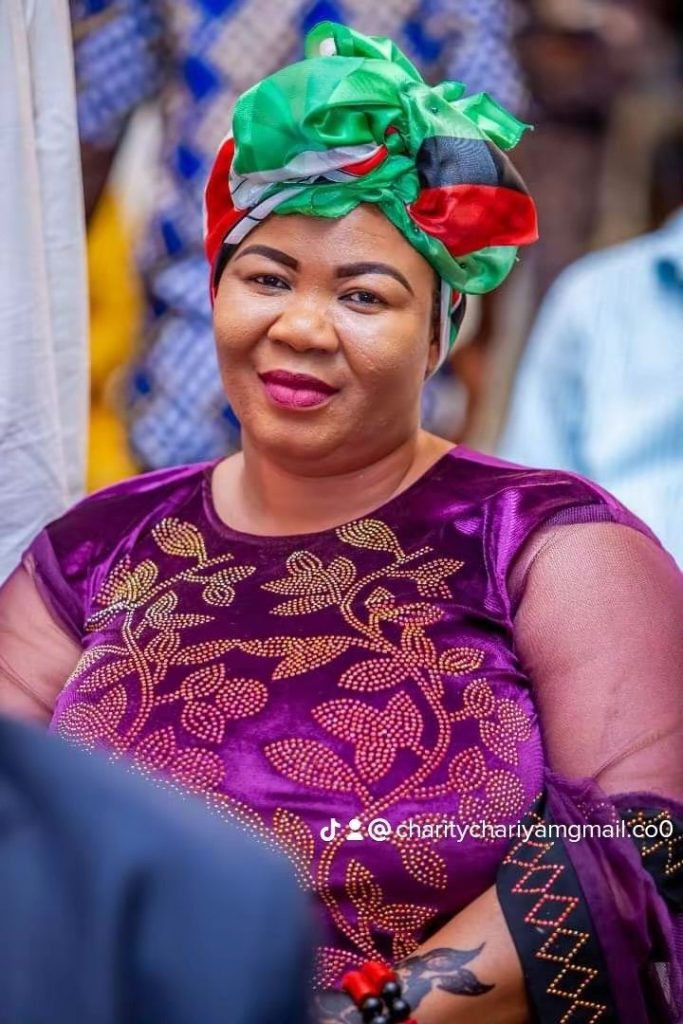
As torrential rains battered Accra, leaving over a dozen dead and tens of thousands of families displaced, the city’s heartbreak quickly turned into a political battleground. Among the most outspoken voices was Hajia Charity Rahinatu Asoemah, Deputy Director General in charge of Stores at NADMO, who condemned what she called a legacy of neglect and corruption that led to the catastrophe. Standing amid devastated communities and overwhelmed rescue workers, Hajia Charity did not mince words. “This flooding is not just a natural disaster; it’s the direct result of failed leadership and abandoned promises,” she declared to gathered to Apexnewsgh. According to her, the previous administration received substantial World Bank funding specifically earmarked for desilting and constructing drainage along the Odur River—a project that could have averted the disaster. “Ask Cecilia Dapaah what she did with the World Bank money,” Hajia Charity challenged, referring to the former Minister for Sanitation. “If those funds had been used as intended, we wouldn’t be facing such destruction and loss today.” Her frustration extended to Dr. Mahamudu Bawumia, the former Vice President and now presidential candidate for the New Patriotic Party. As Dr. Bawumia arrived to console victims, Hajia Charity called him out for not using his office to demand accountability when the funds were disbursed. “Instead of crying foul now, Dr. Bawumia should have tackled corruption when he had the chance,” she admonished. “The innocent people of Accra are suffering because leaders failed to act.” The streets, now rivers of mud and debris, became the stage for a fierce debate over responsibility. Critics argued that the NPP government’s failure to act on the Odur River project was not a mere oversight but a deliberate betrayal. “They had a singular responsibility to protect our city, and they chose to do nothing,” Hajia Charity insisted, gesturing toward the overflowing waterway. Public anger swelled as residents and journalists pressed for answers about the World Bank funds. The absence of visible progress along the Odur River fueled suspicions of mismanagement or misappropriation of donor resources. The question echoed from one flooded neighborhood to the next: if the money was released and agreements signed, where did it all go? Amid the storm of accusations, Dr. Bawumia opted for a conciliatory tone. He urged Ghanaians to unite beyond political lines, calling for President John Dramani Mahama to assemble a multi-partisan panel of experts to craft a lasting solution to the capital’s flooding woes. “Floods do not care about party colors—they devastate all Ghanaians alike,” Dr. Bawumia said, sidestepping direct engagement with the allegations. But for Hajia Charity and many ordinary citizens, technical solutions must go hand in hand with accountability. “We cannot build a safer future on a foundation of distrust,” she warned. As families sought refuge in schools and churches, the city’s wounds remained raw, and the most pressing question lingered in every conversation: with all the funds and promises, why does Accra still drown in preventable disaster? Source: Apexnewsgh.com