





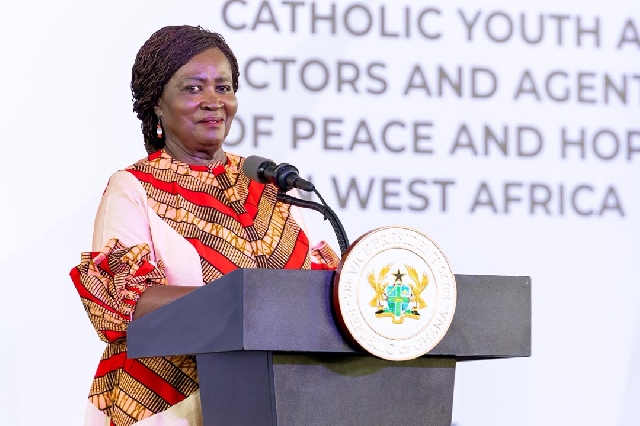
At the launch of PEARL, a transformative 10-year framework plan for the Upper East Region, Professor David Millar, serving as Chairman, addressed the gathered congregation with a message that blended history, identity, and the promise of economic renewal.
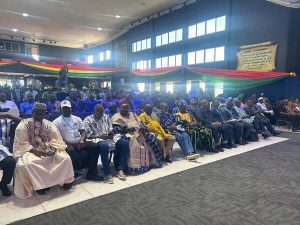
The event, organized by the Regional Coordinating Council, saw Prof. Millar share his forward-thinking views about the role of tourism in regional development, particularly through the lens of historical truth and reparative justice.
“The tourism sector needs to be looked at,” Prof. Millar began, his voice resonating with conviction. “In my university, we are redefining the slave routes. If you go into the archives, you will find that these routes are usually traced from Salaga and run to the coast, the exit points. But that’s an incomplete or checkered history.”
He described a new approach his university is pioneering: a ‘ground-through’ methodology. “We walk the actual distance of the slave route and redesign the slave maps to show clearly that the coast was just an exit point. If I were to put it simply, it was like a lorry park, the people came from somewhere to board those lorries.”
Prof. Millar called on local chiefs and community members to champion this fuller story. “We will map the route and the languages spoken along it. This will provide proof, so when we reach the end, if the last set of slaves weren’t speaking Twi or Fante, it means they didn’t make those trips. If they spoke Guruni, Frafra, Dagare, or Sisala, then that is their route.”

He noted that this important project was made possible by support from the Kingdom of the Netherlands, who wished for the story to be completed. “Right now, the map of the slave route only starts from Salaga, Kintampo, and down to the coast.”
Highlighting the significance of this initiative, Prof. Millar stressed its place in the region’s development plan. “This positions us for the reparation efforts of the president. Many communities may be waiting for financial support for reparations, but we want to position ourselves and make clear, legally, that we are the source of the slavery, while the south is the sink. We need both the source and the sink for a genuine claim.”
He urged that the region link its reparation claims to tourism. “When those in the diaspora visit, it is good to see the sink, but it is excellent to visit the source as well. That makes sense for tourism and its potential.”
Source: Apexnewsgh.com