
Medical and Dental Council Registrar Highlights Regulation as Key to Universal Health Coverage at AMCOA Conference
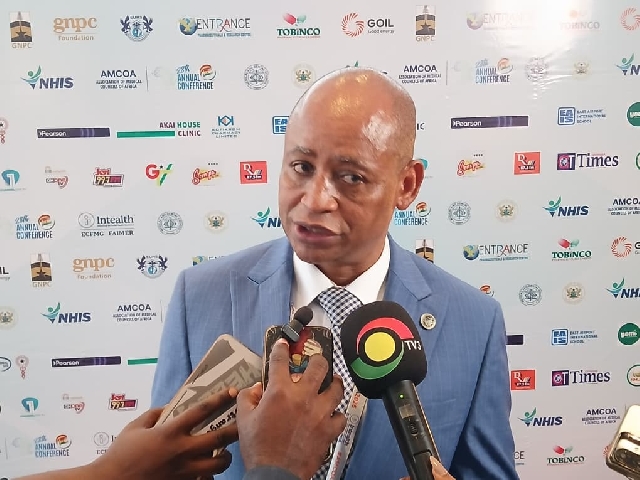
The 28th Annual International Conference of the Association of Medical Councils of Africa (AMCOA) opened in Accra with a resounding message from Dr. Divine N. Banyubala, Registrar of the Medical and Dental Council of Ghana. Speaking on the sidelines of the event, Dr. Banyubala underscored the indispensable role of health professional regulation in achieving Universal Health Coverage (UHC) in Ghana and across the continent. This year’s conference, themed “Responsive Regulation for Safer Communities towards Universal Health Coverage,” brought together over 350 delegates at the Movenpick Ambassador Hotel from August 23-27, 2026. The gathering aims to strengthen regulatory frameworks to ensure safer, more accountable healthcare for all Africans. Dr. Banyubala drew a direct link between the conference theme and President John Dramani Mahama’s free primary healthcare policy. “Universal health coverage, as His Excellency the President eloquently laid out and anchored on his free primary health care policy, means there should be no barrier to access to care by anyone in Ghana,” he explained. However, Dr. Banyubala cautioned that expanding access alone is not enough. “At the heart of it as regulators is not simply just expanding access. If you expand access and the care is not safe or that the practitioner providing the care is not properly trained or is not registered and licensed, or when there is misconduct with no accountability mechanism, then access in this sense may be harmful.” He emphasized that regulation forms the foundation of quality and safe universal access. “We set standards for training, for practice, for entry into the profession, and for professional and ethical conduct. Where things do not go well, we have the statutory obligation to ensure accountability mechanisms work,” Dr. Banyubala noted. According to the Registrar, health professional regulators are, above all, public interest regulators. “Our primary object is to protect the public, the patients. We are all potential patients, and so all of us have a role to play in health professional regulation in general.” Dr. Banyubala concluded by reiterating that regulation is at the heart of the President’s free primary health care policy and is essential for ensuring universal access to quality, basic, and safe care for every Ghanaian. As the AMCOA 2026 conference continues, delegates are set to deliberate on ways to make health regulation even more responsive, building safer communities and moving closer to the goal of universal health coverage. Source: Apexnewsgh.com
Minority Leader Afenyo-Markin Finally Sues GoldBod CEO Over Extortion Allegations
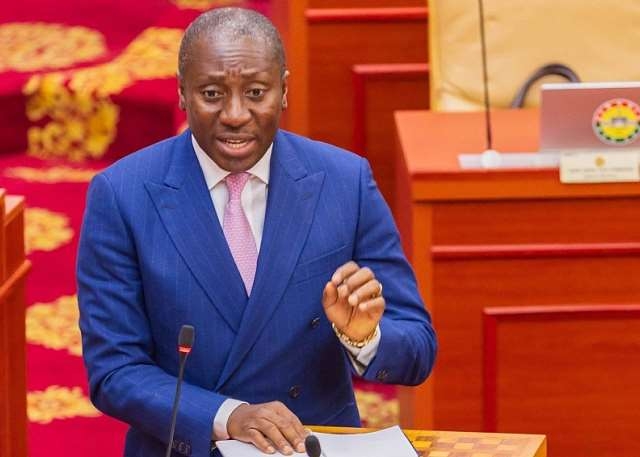
Parliament resumed on Monday, August 24, 2026, under a cloud of controversy as Minority Leader Alexander Afenyo-Markin announced that he had begun legal proceedings against Sammy Gyamfi, Chief Executive Officer of the Ghana Gold Board (GoldBod). The Effutu MP’s lawsuit, revealed on the floor of Parliament, marks a new escalation in the ongoing dispute over the financial management of the Domestic Gold Purchase Programme (DGPP). At the heart of the matter is a reported US$1.7 billion loss recorded by the Bank of Ghana in 2025, which Mr. Afenyo-Markin has repeatedly cited in his calls for government and GoldBod accountability. Mr. Gyamfi, however, has staunchly defended his agency, rejecting the Minority Leader’s interpretation and insisting the losses cannot be laid at GoldBod’s door. Tensions reached a boiling point when Mr. Gyamfi described Mr. Afenyo-Markin as an “extortionist” amid intensifying scrutiny of the gold purchasing initiative. The Minority Leader responded by informing Parliament that he has not only sued Mr. Gyamfi but has also initiated legal action against media outlets that published or broadcast the disputed remarks. “I am ready to submit myself to the Office of the Special Prosecutor and the other agencies for more investigations,” Mr. Afenyo-Markin said, confidently asserting that the courts would determine the truth based on evidence and the law. He stressed the importance of maintaining decorum in public discourse, stating, “There is a limit to political discourse and there are lines that must not be crossed, and once crossed, there must be dealt with.” Mr. Afenyo-Markin further affirmed his commitment to integrity, hard work, and service to Parliament and his constituents, declaring his readiness to defend his actions and statements in court. He revealed details of the lawsuits, stating, “I have accordingly caused writs to be filed in Suit Number GT/1029/2026, titled Osahen Alexander Afenyo-Markin versus Samuel Adu Gyamfi and Multimedia Group Limited at the Accra High Court, and Suit Number GR/ACH/CC/C5/02/2026, titled Osahen Alexander Afenyo-Markin versus Eric Adjei and Peace FM at the Achimota Circuit Court.” Throwing down the gauntlet, he challenged his accusers to “muster courage to report the issue to the various security agencies for further investigation.” As the legal battle unfolds, the nation watches closely, with the outcome likely to set a precedent for the boundaries of political debate and accountability in Ghana’s Parliament. Source: Apexnewsgh.com
Climate Change Whiplash Threatens Water, Food Security Across Northern Ghana
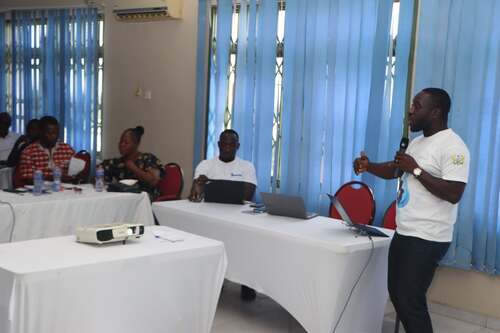
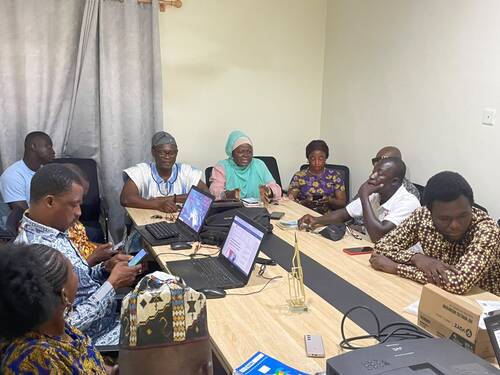
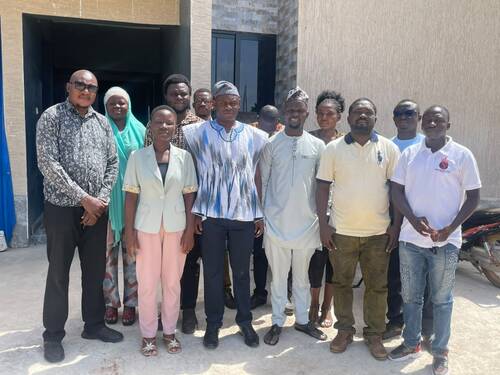
Northern Ghana is increasingly caught in a dangerous climate change cycle, prolonged droughts followed by devastating floods, putting the lives and livelihoods of at least 5.8 million people at risk across the five northern regions. The warning was sounded by Jesse Kazapoe, Head of the White Volta Basin Directorate of Ghana’s Water Resources Commission (WRC), during a three-day climate change advocacy training for 30 WASH (Water, Sanitation, and Hygiene) journalists on climate change reporting, a programme organized by BElim Wusa Development Agency (BEWDA) in partnership with WaterAid Ghana under the SIDA CLIMB Better WASH Partnership. According to Kazapoe, communities across northern Ghana are experiencing the harsh consequences of changing weather patterns, with drought and flooding emerging as two sides of the same climate crisis. For many farming communities, the dry season is no longer simply a predictable period of the year. Increasingly prolonged spells of drought are disrupting agricultural activities, reducing crop yields and threatening household food security. Kazapoe explained that the effects extend beyond agriculture, warning that prolonged droughts are also undermining water security. As surface water levels decline and groundwater recharge rates fall, both large and small-town water systems struggle to produce sufficient water to meet the needs of communities. This creates a difficult situation for households already dependent on increasingly unreliable water sources. Yet, when the rains finally arrive, the crisis often takes another devastating turn. Kazapoe noted that intense rainfall and flooding frequently cause widespread destruction across northern Ghana. The situation is sometimes worsened by the spillage of excess water from the Bagre Dam in Burkina Faso. The resulting floods destroy farms, water distribution infrastructure and small-town water systems, while also creating conditions conducive to the spread of water-borne diseases. Thus, communities that have spent months battling water scarcity can suddenly find themselves struggling with too much water, and the destruction that comes with it. Kazapoe pointed to several indicators of the changing climate, including the drying of the Volta Basin, shifting rainfall patterns and shorter but more intense wet seasons. He further noted that temperatures in northern Ghana are rising at a rate of about 0.6 degrees Celsius per decade, faster than the global average. According to him, the combination of rising temperatures, changing rainfall patterns and the increasing frequency of floods and droughts is having profound consequences for living conditions across the five northern regions. “For us at the WRC, climate change is ultimately about how the water cycle is changing and how society responds to those changes, because climate change is water change,” Kazapoe said. His observation highlights an increasingly important reality: the climate crisis is not only an environmental problem but also a water, food, health and development crisis. While climate change affects entire communities, Kazapoe stressed that its consequences are not evenly distributed. Vulnerable communities, women, children, persons with disabilities and displaced populations often bear the greatest burden when droughts and floods strike. For such groups, the loss of farmland, homes, water systems or livelihoods can have long-term consequences, further deepening poverty and inequality. With rainfall becoming increasingly unpredictable, Kazapoe said Ghana must rethink its dependence on rain-fed agriculture. He identified irrigation as an increasingly important intervention to protect food production as farmers face unreliable rainfall patterns. The challenge, however, goes beyond simply expanding irrigation. It requires a broader climate adaptation strategy that strengthens water infrastructure, protects vulnerable communities, improves flood preparedness and ensures that water resources are sustainably managed. The recurring pattern of drought followed by floods presents northern Ghana with a stark warning: climate change is already reshaping the region’s water cycle, agricultural systems and livelihoods. For the millions of people living across the five northern regions, responding effectively will require urgent investment, stronger climate adaptation measures and coordinated action to ensure that water remains a source of life rather than a driver of vulnerability. Source: Apexnewsgh.com/Ngamegbulam Chidozie Stephen
Minority Leader Afenyo-Markin Brushes Off Legal Threats Over “Extortionist” Tag, Focuses on Accountability
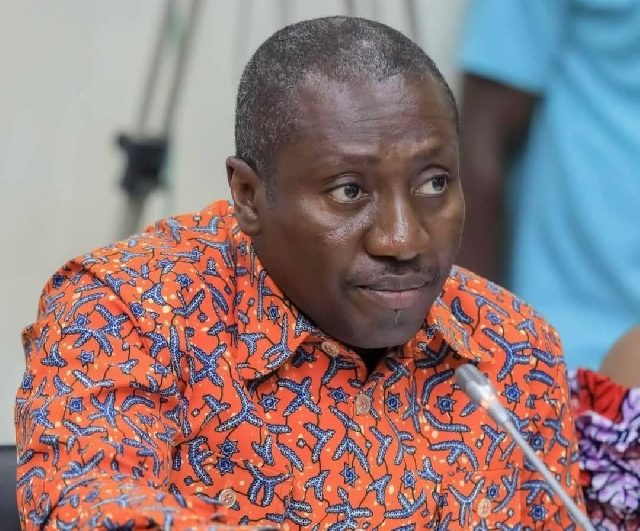
Minority Leader Alexander Afenyo-Markin found himself at the center of a political storm when Gold Board (GOLDBOD) Chief Executive, Sammy Gyamfi, publicly labeled him an “extortionist.” The tension unfolded during an appearance on Joy News’ The Probe, where Mr. Afenyo-Markin addressed the accusation with characteristic composure and a clear sense of purpose. Rather than threaten legal action, Mr. Afenyo-Markin indicated that he was unlikely to pursue the matter in court. He explained that he recognized the political maneuvering behind Mr. Gyamfi’s comments and refused to let the allegation sidetrack him from his duties. “In the Bible, Jesus was accused. Wild allegations. He kept quiet. He could have done anything, but when you’re dealing with situations, the people of Ghana expect a level of maturity from me,” he reflected, emphasizing the importance of staying focused amid provocation. The backdrop to this clash was the Minority’s demand for clarity over an International Monetary Fund (IMF) report, which referenced a $1.7 billion loss involving GOLDBOD and the Bank of Ghana’s Domestic Gold Purchase Programme. Mr. Afenyo-Markin had previously warned that Mr. Gyamfi could face stringent bail conditions if arrested over the matter. In response, Mr. Gyamfi dismissed the suggestion, claiming such consequences existed only in the Minority Leader’s imagination, before turning the tables by calling Mr. Afenyo-Markin an “extortionist.” Unfazed, Mr. Afenyo-Markin denied the accusation but remained circumspect about any legal response, while Mr. Gyamfi stood by his words, insisting he could substantiate them. Yet, for Mr. Afenyo-Markin, the episode was a familiar page from the political playbook: “There’s always a bait in politics. But don’t also underestimate. Opponents always have a strategy.” Drawing on his experience as a former Majority Leader, Mr. Afenyo-Markin spoke of the tactics governments use to distract from pressing issues. “I know how government can divert attention, because the government must hold itself today. So it can be: ‘Today, let’s throw this in. Today on social media let’s divert attention, let’s stain the man’,” he explained. He even referenced the prosecution of current Finance Minister Dr. Cassiel Ato Forson under the New Patriotic Party (NPP) as a case in point. Despite the heated rhetoric, Mr. Afenyo-Markin assured supporters and critics alike that he remained steadfast in his commitment to holding the government accountable. “We’ll work hard [as] the people of Ghana expect us to do nothing less. They expect us as Minority to be forthright, to work hard, to hold the feet of government to the fire. We’ll do that. All other things that will come, we’ll deal with it.” In this unfolding story of accusation and resilience, Afenyo-Markin’s focus remains unchanged: serving the people and ensuring transparency in governance. Source: Apexnewsgh.com
Political Currents and Predictions: Why Lawyer Lamtiig Apanga Believes Bawumia Will Replace Afenyo-Markin as Minority Leader
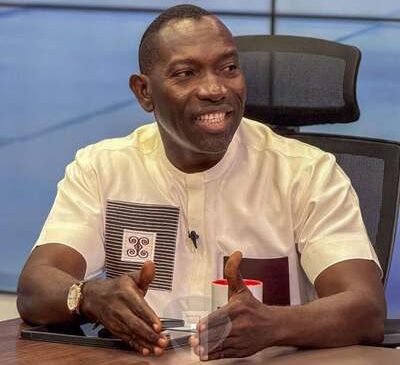
In the vibrant world of Ghanaian politics, predictions are as common as debates. But when a seasoned observer and Deputy Chief Executive Officer of the Gaming Commission, Lamtiig Apanga, shares his insights, the political class tends to listen. In a frank and exclusive conversation with Apexnewsgh, Lawyer Apanga made a prediction that has stirred conversations within the New Patriotic Party (NPP) and beyond: Dr. Mahamudu Bawumia, the NPP’s 2028 flagbearer, could soon replace Alexander Afenyo-Markin as Minority Leader in Parliament. Apanga, drawing on his background as both a politician and a student of political science, explained that his forecast isn’t based on mere speculation but on careful observation of political trends. He recalled the internal dynamics leading up to the NPP’s presidential primaries, where Afenyo-Markin openly supported rival candidate Kennedy Agyapong over Bawumia and He is not also in good relationship with Samira Bawumia, the wife of the elected NPP flagbearer. That decision, Apanga argued, created a rift between Afenyo-Markin and the Bawumia camp, a divide that was further reflected in voting patterns in the central region and in subsequent committee appointments, where key supporters of Ken, including Afenyo-Markin, found themselves sidelined. But the story does not end with personal relationships. Apanga pointed out that Afenyo-Markin has presided over a significant shift in the NPP’s Parliamentary fortunes, moving from majority to minority status under his leadership. Coupled with perceived dissatisfaction from party insiders and the Bawumia camp, Apanga sees a clear path toward change at the top. “It’s only a matter of time,” he predicted, before Bawumia moves to replace the current Minority Leader. As for who might step into the role, Apanga remains uncertain, but his certainty about an imminent shake-up is unwavering. Naturally, such predictions invite debate. Some NPP supporters have been quick to defend Afenyo-Markin’s record, pointing to his vocal defense of party interests in Parliament. But Apanga is undeterred. “Disagreement is the beauty of democracy,” he noted, insisting that defending the party is simply part of the job description for any Minority Leader. Yet, Apanga argues that Afenyo-Markin’s conduct and body language reveal a leader fighting to stay relevant amidst mounting internal dissatisfaction. He points to the party’s loss of seats in Parliament as a key indicator, coupled with controversial decisions and public statements, such as recent comments on the Gold Board and Bank of Ghana issue, that, in Apanga’s view, have left the Minority Leader vulnerable to criticism and accusations of integrity lapses. Ultimately, Lawyer Apanga’s assessment is not just a critique of one politician, but an example of how shifting alliances, performance metrics, and public perception can converge to shape political fortunes in Ghana. Whether or not his prediction comes to pass, the ongoing debate underscores the dynamic, and sometimes unpredictable, nature of leadership within the NPP and the country’s broader political landscape. Source: Apexnewsgh.com
BOGISS PTA Condemns Alleged Defilement, Demands Justice and Reassures Parents
The Parent-Teacher Association (PTA) of Bolgatanga Girls Senior High School (BOGISS) has broken its silence amid recent media reports and public concern over the alleged defilement of a student involving two security personnel attached to the school. In a strongly-worded statement signed by Professor Albert Luguterah and Stanley Akamiri Abopaam, BOGISS PTA Executive, the Association voiced deep concern and unequivocally condemned the alleged abuse. “No child entrusted to the care of BOGISS should ever suffer any form of sexual abuse, exploitation, or harm,” the PTA declared, describing the allegations as extremely disturbing. The PTA commended the swift action taken by authorities, including the arrest of the two suspects by the Ghana Police Service and their interdiction by the Ghana Education Service (GES). The Association called for a full, transparent, and expeditious investigation, stressing that the harshest sanctions must be applied to anyone found culpable under the law. Beyond seeking justice, the PTA appealed to the GES, Department of Social Welfare, and child-protection agencies to provide the affected student with counselling, medical care, and protection. They emphasized that the student’s welfare, dignity, and educational future must be safeguarded throughout the process and that any decisions affecting her status as a student should prioritize her best interests. The PTA also addressed the media, supporting the right to report on the case but cautioning against speculative or unbalanced coverage. They urged journalists and commentators to distinguish between confirmed facts and allegations, avoid prejudicing the investigation, and refrain from actions that could traumatize the student or unfairly implicate school authorities who have acted responsibly. To parents and guardians, the PTA offered reassurance that student safety remains their top priority. The Association is working with school management and the GES to review and strengthen safeguarding protocols, including stricter vetting of security staff, tighter access controls, and clearer reporting channels for concerns. Periodic safety audits are also planned to ensure a secure environment for all students. “We will not relent in holding all stakeholders accountable,” the statement emphasized, “to ensure that every child at BOGISS learns, boards, and grows in an environment that is safe, secure, and protective of her dignity.” The PTA encouraged anyone with concerns to report them promptly to school management, the PTA executive, or the appropriate authorities, pledging continued engagement and transparent communication with all stakeholders. Source: Apexnewsgh.com
Concerns Mount Over Future of Aayalolo Terminals Amid Demolition and Redevelopment Plans in Accra

In Accra, growing unease is spreading among urban transport stakeholders as key Aayalolo terminals face uncertain futures. Facilities once hailed as pillars of the city’s modern transport system are now at the centre of debates that could impact efforts to decongest the capital and improve public mobility. At the heart of the controversy lies the Kinbu Terminal, situated in Accra’s bustling Central Business District (CBD). Built with World Bank support as part of the Urban Transport Project, the terminal serves as a critical hub for Aayalolo bus operations. However, recent plans to construct stalls on the premises have sparked tension among drivers, who worry that shrinking parking space could disrupt their services and undermine the terminal’s original purpose. Stakeholders are questioning whether commercial activities are being prioritised over public transportation needs and if the Aayalolo service’s operational requirements are still being considered in long-term planning. Simultaneously, reports of the demolition of the Achimota New Station Bus Terminal to make way for a proposed 24-hour market have alarmed transport experts. The Achimota terminal, also developed under the Urban Transport Project, was designed to serve as a gateway for northbound vehicles and to prevent unnecessary traffic in the CBD. Its removal, stakeholders argue, risks undoing years of progress toward a more integrated and efficient transport system for the city. Concerns go beyond infrastructure. Transport operators say the Aayalolo Bus Rapid Transit (BRT) system, inaugurated in 2016 and operated by GAPTE, has yet to reach its full potential. While the service offers subsidized fares as a social intervention, it continues to buy fuel at commercial rates and lacks sustained government financial backing. The gradual loss of dedicated BRT lanes has forced buses to compete with private vehicles, reducing efficiency and reliability. Promised government interventions, such as additional buses, have often benefited inter-city operators rather than GAPTE’s intra-city routes. Stakeholders highlight that the 2026 Mid-Year Budget Review mentioned plans for more buses, but did not earmark any specifically for GAPTE. As a result, calls are intensifying for the government to provide targeted support: restoring dedicated bus lanes, investing in infrastructure, and ensuring GAPTE receives additional vehicles to ease congestion, especially with increased demand expected during the festive season. With Michael Kpakpo Allotey, Accra’s Metropolitan Chief Executive, also chairing GAPTE’s board, stakeholders are demanding transparency about terminal management and long-term urban transport plans. They warn that Ghana’s investment in modern infrastructure will only pay off if protected and properly managed. As Accra’s population swells and traffic pressures mount, the fate of its urban transport system—and the daily experience of commuters, may hinge on how these pivotal decisions about infrastructure and investment are resolved. Source: Apexnewsgh.com
Rev Charles Owusu Demands Answers Over Gold Losses, Rejects Shielding of GOLDBOD Boss

Rev Charles Owusu has added his voice to the growing chorus of calls for greater transparency over Ghana’s reported gold sector losses, insisting that whether the loss occurred at the Bank of Ghana or the Gold Board (GOLDBOD), the public deserves clear answers. Speaking candidly on Peace FM, Rev Owusu questioned why GOLDBOD Chief Executive Sammy Gyamfi appeared to be shielded from proper scrutiny. While he acknowledged that GOLDBOD has brought significant inflows, over $10 billion, into the country, he argued that this achievement does not excuse the need for accountability regarding the reported $1.7 billion (GH¢22 billion) loss. “So what you’re saying is we shouldn’t question this? Is it because you say you’ve brought over $10 billion into the country and so if there’s a $1.7 billion loss, we shouldn’t ask questions over it?” Rev Owusu challenged, calling for open and honest discussion of the facts. He also pointed out that the Bank of Ghana has not disputed the International Monetary Fund’s (IMF) figure regarding the loss, raising further questions about the lack of accountability. Rev Owusu suggested that GOLDBOD may be receiving special treatment simply because of its current leadership, and questioned whether the same leniency would be extended if the roles were reversed. “Would the NDC ask us to be quiet about it if the NPP had made such a loss in a gold for oil transaction?” he asked pointedly. With the controversy showing no signs of fading, Rev Owusu’s remarks add renewed urgency to calls for transparency and accountability in the management of Ghana’s gold resources. Source: Apexnewsgh.com
Fiifi Boafo Urges GOLDBOD to Address Gold Losses, Not Trade Insults
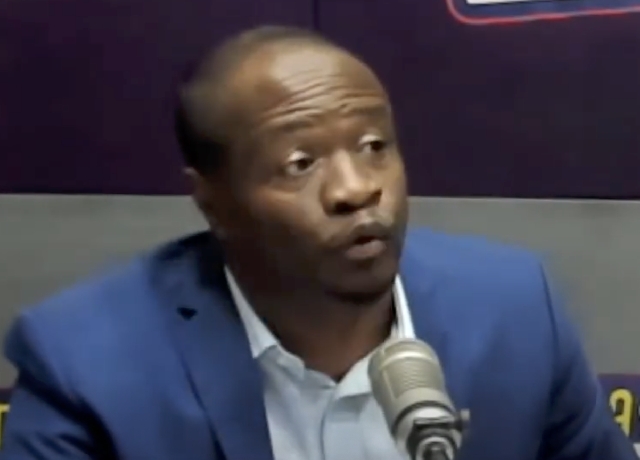
A fresh wave of controversy has erupted over Ghana’s gold transactions, with Fiifi Boafo, spokesperson for former Vice President Dr. Mahamudu Bawumia, taking aim at the Gold Board (GOLDBOD) for its recent handling of public concerns about reported losses. During an interview on Asempa FM, Mr. Boafo criticized the tone and substance of recent statements from GOLDBOD Chief Executive Sammy Gyamfi and NDC communicator Eric Adjei. According to Boafo, instead of providing clarity on the reported $1.7 billion loss, GOLDBOD’s response had become overly emotional and focused on personal attacks, rather than the facts. “If you listen to Sammy Gyamfi’s press conference and Eric Adjei’s comments, it proves that instead of addressing the issues, now emotions are driving the conversation, which should not be the case,” he observed. Boafo referenced an IMF report which, in his view, confirmed that the government incurred losses through gold sales managed by GOLDBOD. “It is true government made losses, and it was through gold, and GOLDBOD went to buy it,” he asserted. He argued that GOLDBOD should have responded by explaining its role in the losses instead of “turning its response into insults and casting aspersions.” The spokesperson drew a contrast with Dr. Bawumia’s measured response to previous allegations linking him to the Hubtel online payment platform, suggesting that GOLDBOD’s leadership should similarly maintain decorum. He added, “We expect GOLDBOD to come and say the loss is not from them but the Bank of Ghana.” Boafo also criticized Sammy Gyamfi’s reaction to Minority Leader Alexander Afenyo-Markin’s remarks about possible bail conditions if the GOLDBOD CEO were to be arrested over the reported loss. “You called Akufo-Addo and Bawumia criminals, but you are upset over talk about bail terms for you? I want him to learn a lesson here, that the whip used on one child will be used on the other child soon after,” Boafo commented pointedly. Recalling the earlier uproar over a GH¢400 million loss under the Gold-for-Oil programme, Boafo said the current government should be especially open to scrutiny. He accused the government of shielding GOLDBOD’s CEO due to his status as an NDC “darling boy” and demanded assurances that such losses would not recur. “We need the assurance that going forward, we will not experience this sort of loss,” Boafo insisted, emphasizing that interventions by the Bank of Ghana involve taxpayers’ money. He concluded that Ghanaians deserve full transparency and accountability regarding how public funds are being managed in the gold sector. Source: Apexnewsgh.com
GOLDBOD Boss Dares Minority to Pursue Parliamentary Probe Over $1.7bn Loss

A heated exchange is brewing between the leadership of Ghana’s Gold Board (GOLDBOD) and the Minority in Parliament, following allegations of massive financial losses at the state-owned agency. Sammy Gyamfi, the Chief Executive Officer of GOLDBOD, has thrown down the gauntlet, calling on the Minority to set aside public rhetoric and instead use parliamentary channels to investigate the agency’s reported $1.7 billion loss in 2025. The Minority, spearheaded by Effutu MP Alexander Afenyo-Markin, has been vocal in its demands for a thorough probe, pushing for Mr. Gyamfi to appear before Parliament and answer questions about the agency’s finances. The issue has sparked press conferences and media debates, keeping the matter in the public eye. But Mr. Gyamfi, speaking boldly on Joy News’ News File program, dismissed suggestions that he was dodging scrutiny. “Do I, Sammy Gyamfi, look like somebody who will be afraid of a Parliamentary probe?” he quipped, urging his critics to channel their efforts through the appropriate committees. He emphasized that Parliament’s committee system provides the mechanisms for accountability, and challenged the Minority to make use of these structures, rather than relying on motions and press releases. “Parliament works in committees, haven’t you heard that phrase? You don’t even need any motion because GOLDBOD is under the oversight of the committee on economy with Kojo Oppong Nkrumah as a ranking member. Not too long ago, they came to GOLDBOD to engage us and ask me questions. They can order me to produce documents,” Gyamfi stated. As the public debate continues, all eyes are now on Parliament to see if the Minority will heed the call and formally initiate committee investigations into GOLDBOD’s operations. Source: Apexnewsgh.com