
NABOCADO Equips Upper East Journalists with Conflict-Sensitive Reporting Skills to Promote Peace
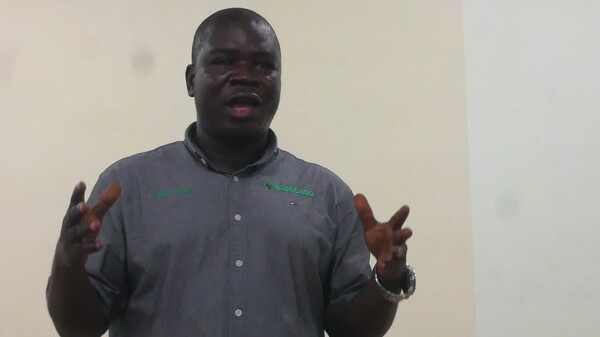
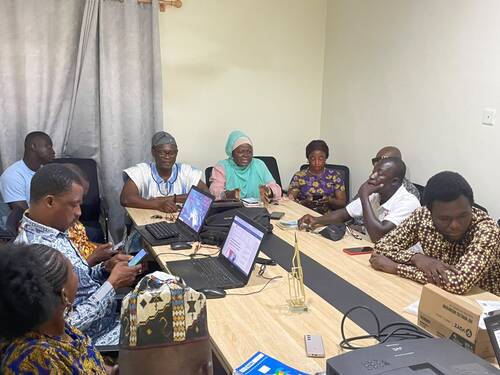
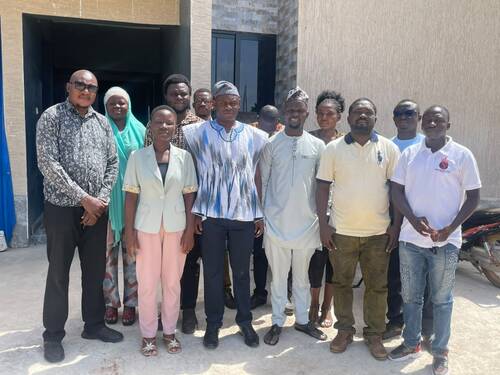
The Navrongo-Bolgatanga Catholic Diocese (NABOCADO) has stepped up efforts to strengthen peacebuilding in the Upper East and North East Regions by training journalists and members of the Ghana Journalists Association (GJA) on conflict-sensitive reporting. The training, held under NABOCADO’s Integrated Peace Building for Improved Food and Nutrition Supply (INPEACE) Project, forms part of a broader strategy to reduce violent conflicts and promote peaceful coexistence in communities affected by recurring tensions. Speaking at the event, the Director of Justice, Peace and Humanitarian Response (JPHR) at NABOCADO, Mr. Theophilus Abolga, explained that the INPEACE Project, which runs from June 2026 to May 2029, is designed to improve social cohesion while reducing violent conflicts across selected communities in the Upper East and North East Regions. According to him, the project is being implemented in four districts, including Bawku Municipality and Kasena Nankana West in the Upper East Region, as well as Nakpanduri and Yunyoo-Nasuan in the North East Region. Mr. Abolga noted that the media remains one of the most influential institutions in society, capable of either promoting peace or escalating tensions through the way conflicts are reported. He said the training was therefore intended to equip journalists with practical tools to ensure their reports contribute to reconciliation rather than deepen divisions. He observed that for many years, conflicts, particularly the protracted Bawku conflict, have shaped public perception of the region, overshadowing its positive developments. He stressed that NABOCADO wants journalists to help rewrite that narrative by highlighting stories that foster unity, peaceful coexistence and hope. “We want media reports to become instruments for building trust and social cohesion instead of unintentionally fuelling violence,” he said, adding that responsible journalism is critical to creating an environment where development can thrive. Mr. Abolga further revealed that significant progress has already been made through the peacebuilding project. He explained that many communities are now taking ownership of peace initiatives by establishing youth groups and community peace structures dedicated to preventing violence. He said NABOCADO has also established peace trackers in project communities to monitor early warning signs of conflict and report them promptly to the relevant authorities for timely intervention before situations escalate. The JPHR Director praised traditional leaders for their growing commitment to peacebuilding, explaining that although chieftaincy disputes have at times contributed to conflicts, chiefs have equally demonstrated their ability to become powerful agents of reconciliation when given the necessary support. He cited examples from Doba, Kandiga and parts of the Bawku area, where traditional authorities have worked closely with NABOCADO, the National Peace Council and other stakeholders to restore peace. Speaking on behalf of the Ghana Journalists Association, Mr. Apubeo commended NABOCADO for consistently investing in the capacity building of journalists. He described the training as timely and necessary, noting that the media has a responsibility not only to inform the public but also to educate citizens, shape public opinion and contribute to peaceful coexistence. Mr. Apubeo called for sustained collaboration between media organisations and peacebuilding institutions to ensure journalists continue to receive the skills and knowledge needed to report conflict-related issues accurately, fairly and in ways that strengthen peace and social cohesion. Source: Apexnewsgh.com/Ngamegbulam Chidozie Stephen
Peace Expert Urges Media to Amplify Peacebuilding Efforts Across Upper East
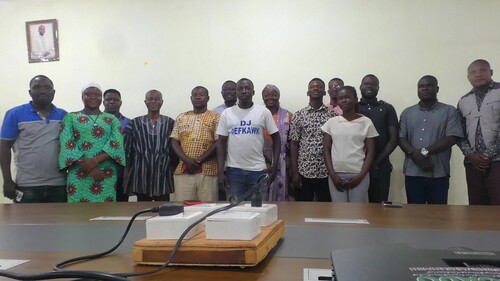
A peacebuilding expert and former Regional Secretary of the Upper East Regional Peace Council, Mr. Ali Anankpang, has urged journalists to dig deeper into conflict-related issues and provide the public with a balanced understanding of both the causes of conflicts and ongoing efforts to promote peace. He said the media had a critical responsibility to amplify peacebuilding initiatives across the Upper East Region, particularly in conflict-affected areas such as Bolgatanga, Doba-Kandiga and Bawku. Mr. Anankpang made the call on Tuesday during a media training engagement organised by the Navrongo-Bolgatanga Catholic Diocesan Development Organisation (NABOCADO) under the Integrated Peace Building for Improved Food and Nutrition Supply (INPEACE) Project. According to him, several peacebuilding interventions were ongoing across the region, but many of them were not receiving the level of media attention needed to inform the wider population. He therefore encouraged journalists to interview individuals and organisations involved in peace promotion to understand their perspectives and communicate their efforts to the public. “There are efforts in building peace in the region across the various conflicts, Bolgatanga, Doba-Kandiga and Bawku and all these efforts are being made, but they need to be amplified. And who can do that better than the media?” Mr. Anankpang asked. He stressed that while violent incidents often dominated news coverage, peacebuilding activities were also taking place and deserved equal attention. “Without the media, there is no way people really know what is happening, except that all we hear is about violence. But while the violence is taking place, we also know that peace efforts are going on,” he noted. Mr. Anankpang said journalists could help bring these efforts to the attention of the public by engaging peace actors, understanding their interventions and reporting on how communities and other stakeholders were working to prevent conflicts. The peacebuilding expert also acknowledged improvements in conflict-sensitive reporting in the region, saying some journalists had moved beyond reporting incidents to examining the historical, social and economic contexts surrounding conflicts. He cited reports that had explored the historical origins of settlements, including engagements by ApexnewsGh with experts on history, as examples of journalism that could help audiences better understand the underlying issues. He also mentioned reports and interviews conducted around the Bongo area, as well as extensive coverage of the Bawku conflict and its effects on education and the local economy. According to him, such reporting was important because it helped the public understand that, despite the challenges in conflict-affected areas, efforts were being made to restore peace and normalcy. He cautioned journalists against amplifying only conflict and violence, warning that such reporting could create fear and discourage people from returning to affected communities. “When we amplify only the conflict, then it will continue to scare people away. But when you begin to talk about peace, like some of you have done, then people will begin to have confidence to return to their place, and that is how communities are developed,” he said. Mr. Anankpang, however, urged journalists not to become complacent with the progress made so far but to continue strengthening their coverage of peacebuilding initiatives. He encouraged the media to maintain professional and responsible reporting that would help the public appreciate the progress being made in peacebuilding across the region. “You need to do more. What you do is so important that you cannot rest on what you have done so far. Continue to add your voice to what is happening in terms of peace promotion,” he urged. He added that responsible and comprehensive reporting would help showcase the Upper East Region not only as an area experiencing conflicts but also as a region where significant efforts were being made to promote peace, stability and development. Meanwhile, Mr. Anthony Adongo Apubeo, Upper East Regional Secretary of the Ghana Journalists Association (GJA), has commended NABOCADO for its continued support towards strengthening journalists’ capacity in conflict-sensitive reporting. Speaking on behalf of the GJA, Mr. Apubeo expressed appreciation to NABOCADO for consistently organising training programmes aimed at equipping journalists with the skills needed to report responsibly on conflict-related issues. He described the initiative as a step in the right direction, stressing the important role the media plays in society, particularly in promoting peace, educating the public and shaping public discourse. He encouraged continued collaboration between media organisations and peacebuilding institutions to ensure that journalists are adequately equipped to report conflict-sensitive issues in a manner that promotes peace and social cohesion. Source: Apexnewsgh.com/Ngamegbulam Chidozie Stephen
Akanbange Nsobila Nelson ‘Brainbox’ Officially Declares Intent to Contest NDC Deputy Communication Officer Position
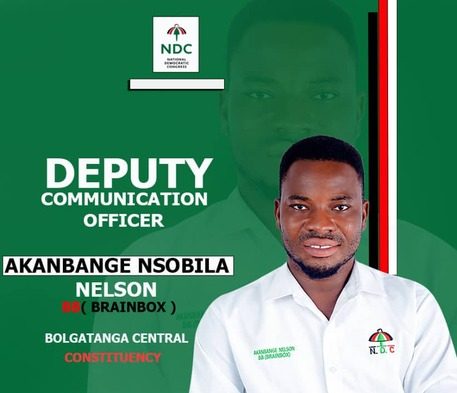
Akanbange Nsobila Nelson, popularly known as “Brainbox,” has officially declared his intention to contest for the position of Deputy Communication Officer of the National Democratic Congress (NDC) in the Bolgatanga Central Constituency. In his declaration, Mr. Nsobila appealed to Electoral Area Coordinators, Polling Station Executives, party elders, youth and women’s wings, communicators, constituency executives and the entire NDC rank and file for their support. According to him, his decision is driven by his commitment to the party and years of experience serving at various levels of the NDC. He highlighted his previous roles, including serving as TEIN Deputy Secretary at St. John Bosco’s College of Education, Navrongo, during the 2015/16 academic year, and as a two-term Branch Secretary since 2018. Mr. Nsobila also noted that he has been a member of the Constituency Communication Team since 2017, a member of the Regional Communication Team since 2019, and a member of the Regional Youth Working Committee since 2023. He further served as a party agent at Pobaga Tua No. 1 during the 2016, 2020 and 2024 general elections, experiences he says have given him a strong understanding of grassroots party organisation and communication. Explaining his motivation, Mr. Nsobila said he intends to bring experience, fresh ideas and modern communication skills to the constituency’s communication structures. He pledged to help strengthen the party’s communication systems, counter misinformation, engage effectively with the rank and file and contribute to the NDC’s efforts toward securing victory in the 2028 general elections. Mr. Nsobila concluded by humbly appealing to party members for their blessings, support and votes as he seeks to serve the party in the capacity of Deputy Communication Officer. Source: Apexnewsgh.com/Ngamegbulam Chidozie Stephen
Nabdam Health Summit Targets 2,000 Residents for Free Eye Screening, Surgeries
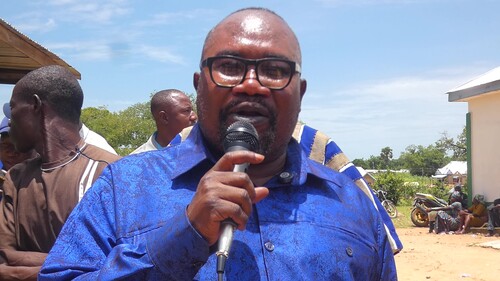
The Member of Parliament for Nabdam Constituency, Dr. Mark Kurt Nawaane, has spearheaded a major health outreach programme aimed at improving access to healthcare and eye treatment for residents of the Nabdam District. The initiative, dubbed “Health Summit 2026,” was organised in partnership with the Heaven of Love Children’s Foundation and seeks to provide free health screening and specialised eye care to thousands of people across communities in the district. Speaking at the opening of the summit, Dr. Nawaane said the initiative builds on previous interventions he had undertaken in the constituency to address common medical conditions. According to him, he had returned to Nabdam on about three or four occasions to perform surgeries for hernias, hydroceles and other minor ailments, resulting in approximately 900 operations over three visits. “Through these interventions, we have practically eliminated hernias and hydroceles in Nabdam. While isolated cases may still exist, reports of these conditions have dwindled to the point where no one comes forward to complain about them anymore,” he said. With significant progress made in addressing those conditions, Dr. Nawaane said the focus had now shifted to primary healthcare, eye diseases and other conditions that contribute to vision loss. He explained that participants would be screened for diabetes, hypertension and eye-related conditions, which are often interconnected and can contribute to serious vision problems. “Our goal now is to screen residents for diabetes, hypertension, and eye diseases, conditions that commonly cause vision problems in our part of the country,” Dr. Nawaane said. He added that the exercise would enable health professionals to identify people requiring specialised treatment and subsequently bring ophthalmologists and other specialists to provide the necessary care. Dr. Nawaane expressed the hope that by November, at least 300 residents of Nabdam would benefit from eye surgeries conducted by medical teams from Accra, Kumasi and the United States. He said the mass approach was adopted after years of encountering constituents seeking financial assistance to travel to health facilities for eye treatment. “Over the past decade as MP, I have often encountered people seeking help for eye problems, many requesting funds to visit clinics. This time, we decided to organise and appeal to NGOs and non-state actors to address the problem collectively, rather than helping individuals one at a time,” he explained. The MP thanked the Haven of Love Students Foundation, as well as the District and Regional Health Directorates, for supporting the initiative. The CEO and Founder of the Haven of Love Students Foundation, Samuel Nana Bekai Djirackor, said the foundation’s intervention was motivated by the healthcare challenges confronting rural communities in northern Ghana. He said the foundation deliberately focuses on rural communities because of limited access to specialised healthcare and the shortage of medical professionals in some parts of the country. “Our foundation is rural-centred because we understand the unique challenges of healthcare in the Upper East and the northern parts of Ghana,” Mr. Djirackor said. He noted that in some areas, the doctor-to-patient ratio could be as high as one doctor to 30,000 people, making access to quality healthcare particularly difficult. The foundation has therefore partnered with ophthalmic nurses, health professionals from district hospitals and specialists from major teaching hospitals, including Komfo Anokye Teaching Hospital and Korle Bu Teaching Hospital, to extend healthcare services to underserved communities. Mr. Djirackor said the partnership with Dr. Nawaane had allowed the foundation to expand the exercise from a single-community intervention to a wider six-community programme over six days. The exercise began at Sakoti and is expected to end at Pelingu, with the organisers targeting more than 2,000 people for screening. Beyond eye examinations, participants are also being screened for underlying conditions such as diabetes and hypertension, which can contribute to vision impairment. The organisers intend to compile a list of people requiring specialised eye treatment and subsequently organise free cataract and other eye surgeries later in the year. Mr. Djirackor said the Nabdam outreach was part of a broader commitment by the Haven of Love Students Foundation to improve healthcare delivery in rural Ghana. Since 2017, he said, the foundation had organised similar programmes across the Upper East Region, providing screening and treatment for conditions including eye diseases, hernias, post-polio paralysis, cancer and dental problems. He cited a recent intervention in the Bawku West District, where the foundation screened about 1,500 people, with 300 subsequently receiving cataract surgeries. According to Mr. Djirackor, the foundation’s volunteers and medical professionals offer their services without financial compensation, driven by patriotism and their desire to support vulnerable communities. “Our volunteers and doctors serve without pay, motivated by patriotism and the love of Christ. We want to be a blessing to these communities,” he said. The programme, he added, is not restricted to residents of Nabdam. Ghanaians from other parts of the country, as well as people from neighbouring Burkina Faso who can access the designated screening centres, are also welcome to participate. The initiative underscores the growing importance of collaboration between political leadership, health institutions, civil society organisations and medical professionals in tackling healthcare challenges in underserved communities. Through the Health Summit 2026, organisers hope to identify and treat residents suffering from preventable or treatable conditions while creating a pathway for sustained access to specialised healthcare in Nabdam and beyond. Source: Apexnewsgh.com