



Cape Coast South MP Ricketts-Hagan Urges Focus on Sustainable Jobs Under 24-Hour Economy Policy
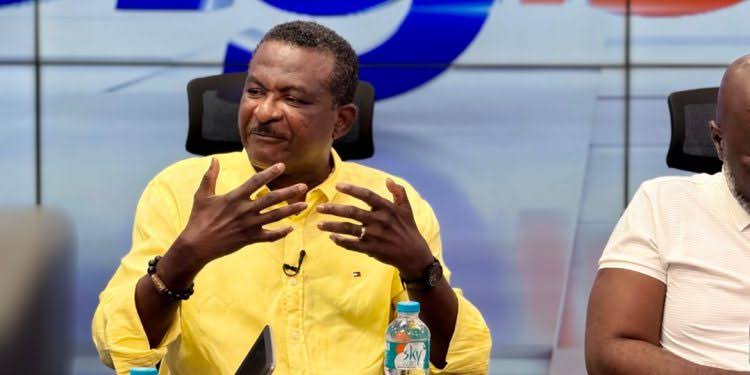
George Kweku Ricketts-Hagan, the Member of Parliament for Cape Coast South and a key member of Parliament’s Finance Committee, has called on the government to shift its focus to creating sustainable jobs as the next step in implementing the 24-hour economy policy. Speaking to the media on the sidelines of the recent IMF and World Bank Group annual meetings in Bangkok, Thailand, Ricketts-Hagan, who also serves as Board Chairman of the Ghana Revenue Authority and is a former Deputy Finance Minister, emphasised that economic stabilisation alone is not enough; it must be accompanied by robust job creation, especially for Ghana’s growing youth population. Launched in July 2025, the 24-hour economy policy aims to boost productivity, promote industrialisation, foster export-led growth, and create jobs by encouraging businesses to operate beyond traditional working hours. Ricketts-Hagan described the initiative as a long-term project requiring careful planning and noted that the newly established 24-hour Economy Secretariat has already put critical building blocks in place for its rollout. “We probably did not comprehend the enormity of the initiative, but it’s not something that’s supposed to be short-term. It’s long-term, so it has to be planned properly. What the 24-hour Economy Secretariat has done is that they’ve put the building blocks in,” he explained. His remarks come at a time when economic observers are raising questions about the proposed three-shift system—a core part of the policy, urging the government to take a phased approach and ensure annual budgetary support. Ricketts-Hagan agreed that the next phase must build on the current groundwork to achieve the policy’s goals of employment growth and economic expansion. He identified reliable electricity, incentives for businesses, and access to ready markets as essential factors for the initiative’s success. While tax reductions could encourage companies to extend their hours, he cautioned that such measures would be ineffective without a dependable energy supply to power round-the-clock operations. Ricketts-Hagan also pointed to broader strategies to combat youth unemployment, expressing optimism about the forthcoming $10 billion New Economy policy expected in 2027. He said the policy framework would leverage existing reforms and direct government investment into sectors with the greatest potential for targeted growth and job creation. “I do not want to pre-empt the Finance Minister, but the New Economy will build on existing reforms and focus on growing the economy in a manner that creates sustainable employment,” he concluded. Source: Apexnewsgh.com
GoldBod CEO Sammy Gyamfi Defends Call to Formalise Unlicensed Small-Scale Mining
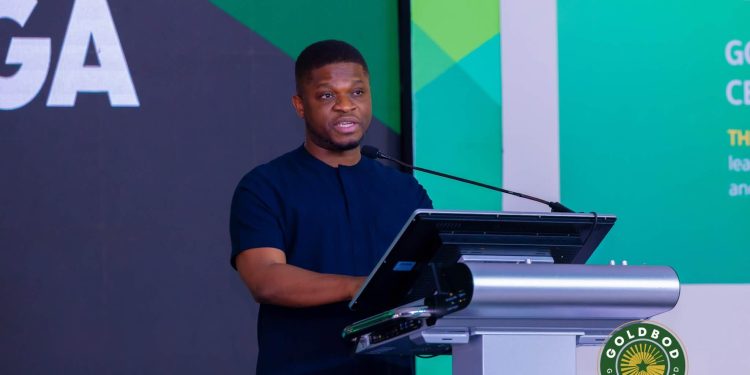
GoldBod Chief Executive Officer, Sammy Gyamfi, has stepped forward to clarify his stance on the formalisation of unlicensed small-scale mining, a topic that recently sparked widespread debate. Addressing critics who accused him of encouraging illegal mining, Gyamfi insisted that operators working outside protected zones such as forest reserves, water bodies, and other environmentally sensitive areas could be responsibly integrated into the formal mining sector. In a detailed response to the controversy, Gyamfi argued that supporting the formalisation of eligible miners was a more practical and effective solution than pursuing them with security forces. He stressed, however, that not all forms of unlicensed mining could be condoned. Operations that pollute water bodies, take place in forest reserves, or are conducted dangerously close to roadsides, school lands, or even within homes, he said, must remain prohibited. Gyamfi explained that artisanal and small-scale miners who work outside these restricted areas could qualify for formalisation under the government’s Responsible Cooperative Mining and Skills Development Programme (rCOMSDEP), provided their activities are environmentally sound. According to him, the programme aims to transform unlicensed operators into licensed, responsible miners by offering legal documentation, permits, certifications, and the necessary training to operate safely and sustainably. He also dismissed a video circulating online as a misleading, edited version of his earlier remarks, claiming it omitted key information about the government’s support for responsible mining. Gyamfi reiterated that formalisation, training, and financing are central to fostering environmentally responsible small-scale mining, strengthening traceability, and improving industry standards. Looking ahead, the GoldBod CEO announced plans to roll out an Artisanal and Small-scale Mining Formalisation and Financing Support Programme (FFSP) in 2027. The initiative, he said, would be implemented in collaboration with the Ministry of Lands and Natural Resources, the University of Mines and Technology, and Rand Refinery. Its goal: to increase gold production, boost mineral revenues, create jobs, and reduce both operational costs and environmental risks. With these measures, Gyamfi hopes to shift the narrative around small-scale mining in Ghana, promoting a future where responsible practices take center stage. Source: Apexnewsgh.com
Tamale High Court Convicts Top NDA Officials and Contractor for Corruption

Tamale High Court made headlines when it delivered a verdict that sent ripples through Ghana’s public sector. The courtroom was tense as four men stood before the judge: Sumaila Abdul-Rahman, former Chief Executive of the Northern Development Authority (NDA); Stephen Yir-Eru Engmen, former Deputy Chief Executive in charge of Operations; Patrick Seidu, former Deputy Chief Executive in charge of Finance and Administration; and Andrew Kuundaari, Chief Executive of A&QS Consortium Limited, a private contractor. The group faced eleven charges, all tied to corruption and procurement malpractices under the Infrastructure for Poverty Eradication Programme (IPEP), a flagship initiative of the Government of Ghana. After a thorough trial, the court found them guilty on seven counts, including conspiracy to directly or indirectly influence the procurement process, using their positions to gain unfair advantages in awarding contracts, and corruption by public officers. The scandal came to light after legal practitioner Martin Kpebu filed a formal complaint, prompting an investigation by the Office of the Special Prosecutor (OSP). The OSP’s swift intervention prevented any unlawful payments from being made under the contracts, ensuring that no financial loss was incurred by the state. During sentencing, the judge took into account the advanced ages of the convicts and the fact that the OSP’s actions had safeguarded public funds. Rather than imposing custodial sentences, the court ordered each convict to pay a fine of 1,000 penalty units for every count on which they were found guilty. The verdict stands as a warning to public officials and private contractors alike: accountability remains paramount in Ghana’s fight against corruption. Source: Apexnewsgh.com