


FDA Restrictions Cost Ghanaian Football Over $5 Million Guinness Sponsorship
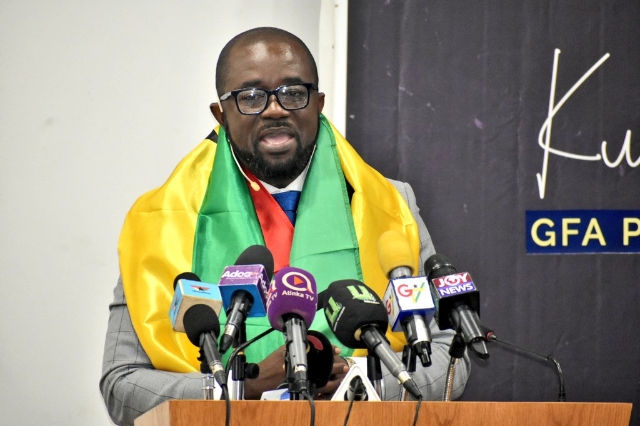
Ghanaian football has lost out on a lucrative sponsorship opportunity worth more than $5 million annually, all because of regulatory restrictions. This revelation came to light when Ghana Football Association (GFA) President Kurt Okraku appeared before Parliament’s Youth and Sports Committee to discuss the challenges facing the sport. Okraku told lawmakers that Guinness Ghana Limited had approached the GFA with ambitious plans to invest heavily in the Ghana Premier League. “We were approached by Guinness Ghana Limited wanting to invest heavily in the Ghana Premier League. We did whatever we had to do. We had series of meetings. At the end, FDA said no. The deal was, if I’m not mistaken, over $5 million a year,” he recounted. The proposal, however, failed to materialise after the Food and Drugs Authority (FDA) declined to approve the sponsorship arrangement, citing existing restrictions that prevent alcoholic beverage companies from sponsoring sporting activities in Ghana. Okraku appealed to the committee to champion efforts to remove these restrictions, arguing that Ghanaian football is being denied opportunities enjoyed by leagues in other countries that partner with major alcohol brands. “Mr Chairman, if there’s one thing that you can do to help sports and football, that will be for you to lead the charge to completely take out that provision,” he urged. Beyond the missed sponsorship, the GFA President pointed to other significant challenges: poor playing surfaces, inadequate stadium facilities, and limited investment in technical development. He emphasised that lasting success in Ghana’s football would require consistent investment in grassroots and youth football, coach education, international exposure for local coaches, effective scouting systems, and quality playing pitches. “If one has to be honest, Mr Chairman, there is a lot more that brings sustained success in football. This includes, but is not limited to, continuous investment in grassroots football, continuous investment in youth football, sustained and continuous investment in coach education, exposing your coaches to the international market,” Okraku said. He warned that without sustained commitment to these areas, Ghana would continue to struggle for consistent success on the continental and global stage. Source: Apexnewsgh.com
‘I want justice for my son’ – Mother of slain Ghanaian teenager Javits Frimpong

The mother of slain 15-year-old Ghanaian teenager Javits Badu Nkansah Frimpong has called for justice for her son following his fatal shooting in the Bronx, New York. “I want justice for my son, that’s all,” Doris Adu Gyamfi told the media at the Accra International Airport on Wednesday morning as she prepared to travel to New York to mourn him. Dressed in black and wearing dark glasses, she spoke as members of the Bronx community continue to pay tribute to the teenager. A vigil was held in his memory, bringing together Americans and members of the African diaspora. Some participants wore black shirts bearing the words “Stop the Bullying,” while mothers and clergymen offered prayers and called for justice. A memorial has also been set up near East 170th Street, close to Crotona Park, where Javits collapsed after being shot in the stomach. According to ABC7NY’s Eyewitness News people have been visiting the site to pay their respects. While some parents have brought their children to explain what happened, others have left written tributes on poster boards and candles. As the memorial grows, the New York Police Department (NYPD) has erected barricades around the site and blocked parts of the sidewalk. An eyewitness who tried to help Javits said he applied pressure to the teenager’s wound and shouted for assistance but was ignored by passersby. A grand memorial service is scheduled for Thursday, with the street expected to be closed for the event. Police are still searching for three teenage suspects in connection with the shooting. CCTV footage reportedly captured one of them fleeing the scene wearing what appeared to be a black hoodie, with a red scarf underneath and wrapped around the head. Javits’ mother had hoped her son would grow up to become a medical doctor. Source: Apexnewsgh.com
The International Monetary Fund’s Roadmap for Ghana: Eight Priorities for Economic Stability
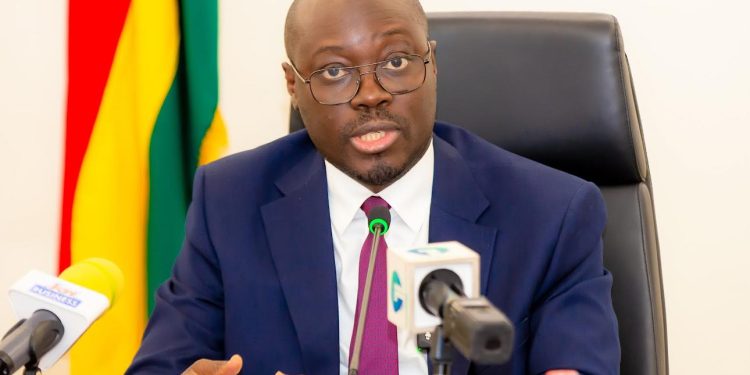
Ghana stands at a pivotal moment in its journey toward economic resilience. Following the first review of its 36-month Policy Coordination Instrument (PCI) programme, the International Monetary Fund (IMF) has delineated a clear path forward, outlining eight critical priorities for the nation to consolidate macroeconomic stability and strengthen public financial management. The story began when the IMF reached a staff-level agreement with Ghana, marking a significant milestone in the government’s ongoing efforts to secure lasting fiscal reforms and sustain economic stability. In its end-of-mission statement, the Fund praised Ghana’s progress but emphasized that the journey is far from over. The IMF’s eight priorities read like a roadmap for reform: Reform the Bank of Ghana’s liquidity management framework to ensure a more stable financial environment. Complete the rollout of the Integrated Tax Administration System, aiming to boost domestic revenue mobilisation and improve tax efficiency. Operationalise the Fiscal Council to enhance fiscal oversight and discipline. Prepare a comprehensive Fiscal Risk Statement to better manage and anticipate fiscal vulnerabilities. Publish the audit of ECG’s collection accounts as a step towards greater transparency in the energy sector. Adopt the Conduct of Public Officers Bill to strengthen ethical standards and public sector governance. Publish the second National Ethics and Anti-Corruption Action Plan, reinforcing the fight against corruption. Strengthen oversight and governance of state-owned enterprises, ensuring these key entities contribute positively to the economy. According to the IMF, timely completion of these reforms will be instrumental in boosting institutional accountability, enhancing fiscal transparency, and fostering a more attractive climate for private sector investment. Yet, the journey is not without its hurdles. The IMF cautioned that Ghana’s economic recovery remains vulnerable to both domestic and external risks. Globally, volatility in gold, cocoa, and oil prices, alongside geopolitical tensions and tightening financial conditions, could threaten the nation’s hard-won stability. Closer to home, Ghana faces substantial debt rollover requirements, fiscal pressures from the energy, cocoa, and gold sectors, and persistent weaknesses in the financial sector. To navigate these challenges, the IMF advises Ghana to maintain prudent monetary policies, allow greater exchange rate flexibility, bolster its international reserves, and build up a sinking fund to meet maturing debt obligations. As Ghana embarks on this next phase, the IMF’s eight-point plan offers a blueprint for reform, one that, if executed with determination and discipline, could pave the way for a more stable and prosperous future. Source: Apexnewsgh.com
Bawumia Criticises Bank of Ghana Over Gold Trading Losses, Urges Focus on Reserves
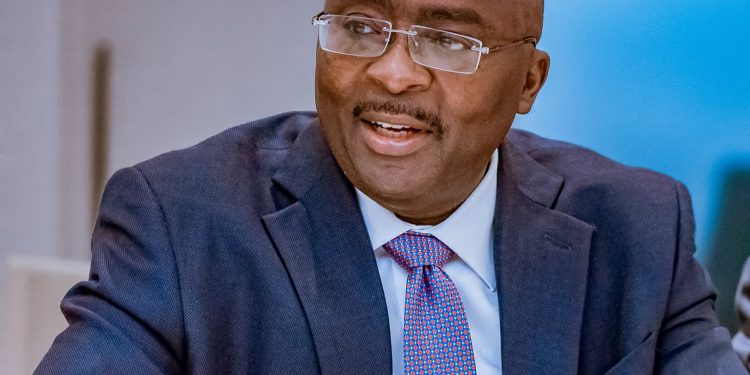
The New Patriotic Party (NPP) flagbearer, Dr Mahamudu Bawumia, has taken aim at the Bank of Ghana’s decision to trade part of the nation’s gold reserves, claiming the move led to losses of GH¢1.7 billion that could have been avoided. Speaking at a town hall meeting in Tokyo, Japan, Dr Bawumia argued that the Gold for Reserves programme should have prioritised the accumulation of gold rather than trading it on the market. “If they had followed the way that we had wanted to do the Gold for Reserves programme in terms of accumulating reserves, those losses would not have been made. But once you decide to start trading in gold, you will make those losses,” he said. Dr Bawumia urged the government to strengthen the Gold for Reserves programme by focusing on retaining gold as part of the country’s reserves, rather than engaging in risky trading activities. The NPP flagbearer also addressed criticisms that he avoided discussing economic issues during the run-up to the 2024 general elections. Dr Bawumia insisted that his emphasis on digitalisation was a strategic choice, reflecting the rising importance of technology in the global economy. “Many people don’t understand that the world economy is now digital… If you don’t go digital, you cannot prosper in this global economy. And if you don’t take your time and put your digital framework together, you’ll be left behind,” he stated. Dr Bawumia maintained that digital infrastructure is essential to economic development, and urged policymakers to embrace innovation to ensure Ghana remains competitive in an increasingly digital world. Source: Apexnewsgh.com
Upper East Region, South Korea Strengthen Partnership To Drive Agricultural Modernisation, Technology And Industrial Development
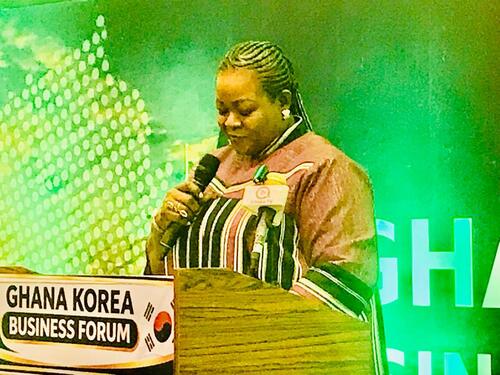
The Upper East Regional Coordinating Council has reaffirmed its commitment to strengthening economic and technological cooperation with South Korea, expressing readiness to welcome Korean investors and technology partners to support agricultural modernisation, skills development, water management and the revival of agro-industrial facilities in the region. The commitment was communicated by Ms Anatu Bogobiri, who represented the Upper East Regional Minister, Hon. Akamugri Donatus Atanga, at the Ghana–Korea Business Forum 2026 held at the La Palm Royal Beach Hotel in Accra on Thursday, November 5, 2026. Delivering the Regional Minister’s speech, Ms Bogobiri conveyed warm greetings from the people of the Upper East Region and explained that the Minister was unable to attend personally because of pressing official duties in the region. She expressed appreciation to Mr Cheol Soo Lee, Chief Executive Officer of A-Tech Group Korea, as well as the Daejeon Defense Industry Cooperative Association (DICA) and Digital Eye Africa Ltd for facilitating the visit of the Korean delegation to Ghana. She emphasised that the Upper East Region was not merely interested in establishing relations with South Korea but was prepared to translate the proposed partnership into practical development initiatives. “The Upper East Region is not only open to Korean partnership, it is ready for a Korean partnership,” she stated. According to her, discussions between the Upper East Regional Coordinating Council and A-Tech Group Korea over the past year have established a framework for cooperation covering drone and satellite technology, skills training, academic exchange and the revival of agro-industrial facilities. She disclosed that the discussions had been consolidated into a Memorandum of Understanding (MoU) between the Upper East Region and the Korean team, subject to approval by the relevant authorities. A key component of the proposed collaboration is a programme with Bolgatanga Technical University (BTU) to introduce drone and satellite remote-sensing capabilities in northern Ghana. The University of Technology and Applied Sciences (UTAS) in Navrongo has also been identified as a university partner. Ms Bogobiri noted that South Korea’s transformation from a war-torn, largely rural economy into a global leader in technology and manufacturing offered valuable lessons for the Upper East Region. She attributed Korea’s development experience to sustained investment in human capital, rural modernisation and long-term planning, adding that the Upper East Region had the land, human resources and development framework needed to accelerate its transformation. She explained that the region, which shares borders with Burkina Faso and serves as a gateway to the Sahel and Togo, has an estimated population of 1.3 million people spread across 15 districts and municipalities. A significant proportion of the population is young and depends largely on agriculture for their livelihoods. However, she acknowledged that the region continues to face development challenges, including a single rainy season, rising temperatures, pressure on land and water resources, and limited local processing of agricultural produce. To address these challenges, she highlighted the Upper East Region’s PEARL Framework 2026–2035, which stands for Prosperity through Enterprise, Agriculture and Regional Livelihoods. The ten-year development framework is estimated at GH¢8.6 billion and covers all 15 districts, eight sectors and 23 flagship projects. According to her, the framework was validated earlier this year through consultations involving traditional authorities, District Assemblies, farmers, women’s groups, traders and private-sector stakeholders. She identified several existing resources and infrastructure that could support the proposed Korean partnership. These include the Tono, Vea and Tamne irrigation schemes, which provide opportunities for dry-season agriculture, as well as agro-industrial facilities such as the Pwalugu Tomato Factory, Zuarungu Meat Factory, Pusu-Namongo cotton ginnery and Bolgatanga rice mills. Other opportunities include the region’s livestock and guinea fowl production potential, gold resources around Talensi and the strategic Paga border corridor, which provides access to markets across the Sahel. Ms Bogobiri outlined five major areas where Korean technology, expertise and investment could contribute to the region’s development. On precision agriculture and drone technology, she explained that farmers frequently suffer crop losses from drought, flooding and fall armyworm infestations, sometimes without early warning. She said the introduction of drones and satellite data could help farmers identify threats early, map agricultural fields, monitor crop conditions and improve the application of fertilisers and other agricultural inputs. She proposed that the initiative should initially target the Tono, Vea and Tamne irrigation schemes, where the benefits could be demonstrated more quickly. On geospatial mapping, she noted that District Assemblies require accurate information on land, settlements and properties to improve physical planning and strengthen revenue mobilisation. She added that the same technology could help identify water sources and monitor land restoration efforts in communities affected by mining activities. Water management was identified as another important area for cooperation. She said Korean expertise in water treatment, small-scale purification systems and efficient irrigation could help address drinking water challenges in communities while supporting agricultural production. On skills development, she stressed that technological investments would only be sustainable if local people acquired the knowledge to operate, maintain and repair the equipment. She therefore called on Korean partners to work with BTU, UTAS and technical institutions in the region to train young people in drone operation, equipment maintenance, geographical information systems (GIS), cybersecurity and coding. Industrial cooperation also featured prominently in the address. Ms Bogobiri invited Korean companies to explore investment opportunities in the region’s existing but underutilised agro-processing facilities, particularly in tomato, rice, meat and cotton processing. She explained that these facilities already had infrastructure, land and community support, providing a foundation for potential industrial partnerships. She further indicated that drone and geospatial technologies could support national security agencies in addressing security pressures in the region’s border communities, provided such applications operated within Ghana’s laws and in collaboration with the appropriate national authorities. Emphasising the importance of a mutually beneficial partnership, Ms Bogobiri said the Upper East Region was prepared to offer Korean investors four major assurances. First, she said the PEARL Framework provides a clear development roadmap, allowing potential investors to understand the region’s priorities and identify where their investments could contribute. Second, the Regional Coordinating Council would serve as a