
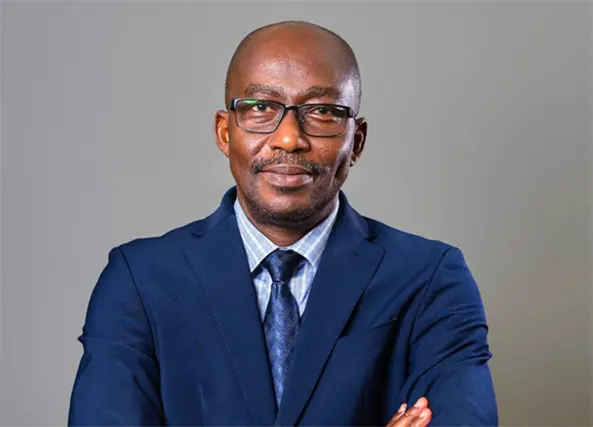
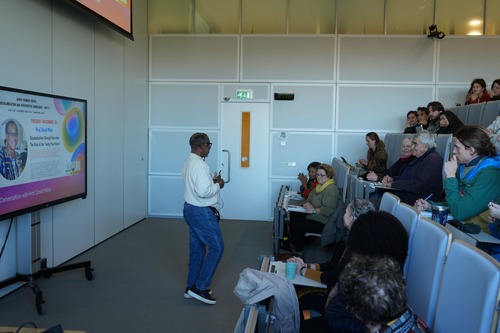
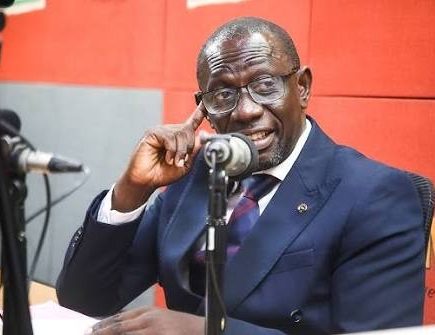
Professor David Millar did not come to the Netherlands to ask for pity, reparations, or sympathy for Africa. He came with a harder question: whose knowledge counts?
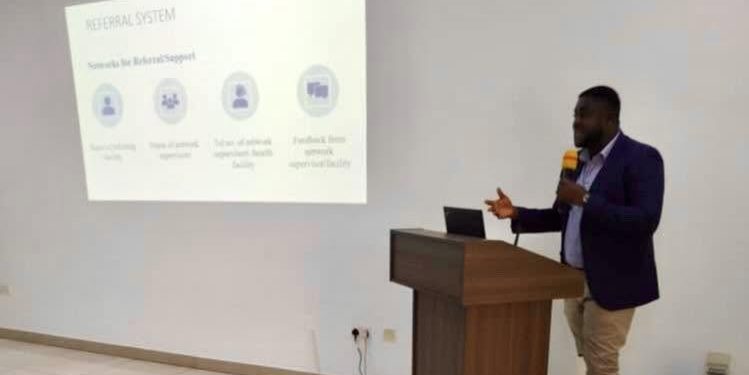
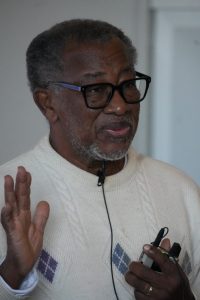
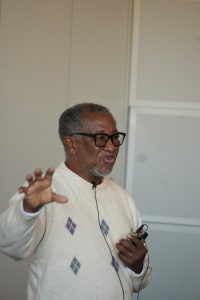
The founder and president of the Millar Institute for Transdisciplinary and Development Studies was in the Netherlands to teach in the Afrocentric programme he runs together with the Broos Institute for Afrocentric Studies and Research. During the visit, he also delivered a public guest lecture at Wageningen University & Research.
His message was clear. Decolonisation is about more than reparations. It is about knowledge.
Before colonialism, Millar reminded his audience, African education was education for life. It lived in storytelling, ceremonies, community work, farming, healing, and practical experience. It taught a child how to understand their environment, serve their community, and preserve their culture.
Britain, France, Portugal and Belgium did not build schools in Africa primarily to produce independent thinkers. They built them to produce clerks, interpreters, junior administrators and foremen, people who could follow instructions, not challenge authority.
The curriculum was imported from Europe. African children learned about European kings and queens, while the great civilisations of Mali, Songhai and Great Zimbabwe were pushed to the margins. Speaking an indigenous language could be punished. Memorisation was rewarded. Questioning was not.
The result, Millar argued, was a system that taught obedience rather than leadership, and planted a deep sense of cultural inferiority.
Independence did not fully break the pattern. Textbooks changed in places, but rote learning, examination-driven teaching, and the preference for foreign languages remained. Today, many African systems still prize certificates over practical skills, while graduates struggle to find work and many of the continent’s brightest minds leave in search of opportunity.
“The important question is: What next?” Millar asked. “If we recognise that education is one of the most colonised aspects of African society, then our next responsibility should be to liberate the educational system.”
He thanked three people who shaped his academic journey: his master’s supervisor, Professor Niels Rooney, who took on “a troublesome student from Ghana” and guided him to a distinction, cum laude, and later a PhD scholarship; Professor Norman Long, who supervised his PhD amid a fierce intellectual debate between the systems approach and the actor-oriented perspective; and Janice Jiggins, who offered quiet intellectual support behind the scenes since the 1990s.
He also thanked Beatrice Haberkamp, his fieldwork partner, with whom he disagreed, collected data, and learned to separate fieldwork from interpretation.
Those encounters, he said, gave him “confidence, vision and the courage to stand up for ideas.”
When Millar began working on indigenous knowledge, few called it decolonisation. He simply wanted indigenous knowledge to be taken seriously as another dimension of knowledge.
Instead, it was marginalised and ridiculed. And some of the strongest resistance, he said painfully, came from African scholars themselves.
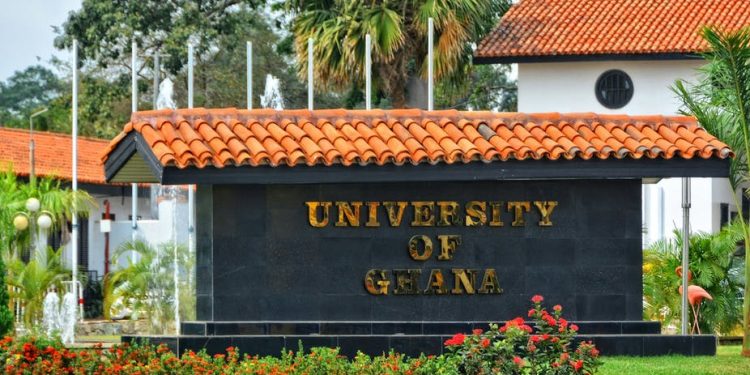
After the University of Ghana, he found little willingness to engage his thesis, which some dismissed as storytelling or imagination without scientific credibility. That pushback drove him to seek an academic environment at Wageningen University where the work could receive serious consideration.
Looking back, he now sees those experiences as manifestations of colonial influence still living inside African knowledge systems.
He first worked with an NGO linked to the Catholic Diocese of Cameroon, which supported his master’s education. After his master’s and PhD, he returned to serve the Diocese out of gratitude.
In 1996, he joined the newly established University for Development Studies (UDS) in northern Ghana. The invitation came in memorable fashion: Professor Dittor arrived in a Peugeot 504 station wagon whose doors would not open properly, forcing the occupants to climb out through the windows.
Millar joked that he was being asked to leave a comfortable NGO job, with vehicles whose doors opened normally, for a university where people jumped through windows. He accepted anyway.
He rose from assistant lecturer to full professor at UDS, and even aspired to become vice-chancellor. That ambition did not materialise. Some of his ideas, he believes, were not compatible with those who preferred the status quo.
After years of discussing agricultural extension, participatory development and community engagement, he grew frustrated. Too many processes, he observed, were still designed and directed from outside. Gender, for example, was sometimes reduced to simply adding women to a committee and calling the institution gender-sensitive.
About 14 years ago, he founded the Millar Institute, with cultural development at its centre. Its framework deliberately accommodates ethics and culture, gender and culture, feminism and culture, and other related disciplines.
Accreditation was a battle. The National Accreditation Board, now the Ghana Tertiary Education Commission, summoned him to defend the institution. During the hearing, Millar explained how numbers in some African contexts carry cultural and symbolic meaning, not only mathematical value, using examples around three and four and their associations with masculine and feminine groupings.
The chairman, a mathematician, became fascinated. The conversation shifted from bureaucracy to ideas. That intellectual connection helped the application gain acceptance.
Today, the institute focuses on African philosophies, philosophy of science, endogenous development, applied endogenous development, transdisciplinarity and applied transdisciplinarity.
Students first learn theory, then are challenged to apply it to real life. Millar calls that liberating.
Financed largely from his own resources, without major donors, churches or government dictating its direction, the institute has produced 60 PhD graduates.
About 98 per cent of the students are already employed when they enrol. They are not chasing certificates. They want knowledge that improves their work.
They come from accounting, social work, medicine and many other fields. One striking example was an American medical doctor, a consultant in non-communicable diseases, whose brother challenged him to look beyond Western definitions and explore indigenous interpretations. He spent four years on a PhD and developed an indigenous perspective on a health condition he described as DAGON.
That, Millar said, is the point: research that does not simply reproduce existing knowledge but expands it with local realities.
At the institute, every PhD student must dedicate a chapter to local knowledge systems. Where appropriate, that knowledge must be documented in the indigenous language in which it was expressed. If it lives in a traditional song, students must document the song, translate it, and explain its meaning.
Indigenous knowledge, he insisted, must be presented first at conferences, not as secondary information.
Millar warned that Africa faces two challenges, not one.
The first is external colonial influence, which still shapes knowledge production and institutions. The second is internal resistance — Africans themselves reproducing colonial ways of thinking. In some cases, he said, the internal forces have become even more powerful than the external ones.
Then came the question for the younger generation: what do we do with artificial intelligence?
AI is already here, Millar said. Africa cannot simply reject it. The question is how to adapt it so it serves African societies, recognises African knowledge, and does not reproduce old inequalities.
In his village, mobile phones are everywhere. People use them to check market prices, announce funerals, reach relatives and advertise their work. No one should tell those communities to abandon the phone because it did not originate from traditional knowledge.
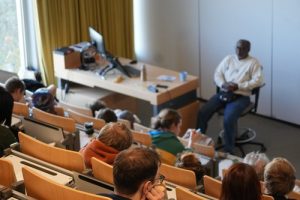
“The real question is how we can adapt such technologies to serve different purposes and cultural contexts,” he said. “We must find ways of decolonising these instruments so that they become useful to our communities.”
He did not claim to have all the answers. He left that task deliberately to the young scholars in the room.
For Millar, decolonising education is not about going backwards. It is about reclaiming education as an instrument of genuine liberation, empowerment and sustainable development, where African knowledge is not an appendix to Western knowledge, but a foundation on which Africa can build its future.
Source: Apexnewsgh.com