





The New Patriotic Party (NPP) stands at a critical historical junction. Navigating a highly competitive political landscape requires recognising that traditional partisan rhetoric and legacy campaigning are no longer sufficient to guarantee victory.
The contemporary Ghanaian electorate is younger, more discerning, digitally connected, and increasingly impatient with standard political promises.
For the NPP, “Electoral Reclamation” is not merely about winning the next election cycle; it is about reclaiming the party’s core identity as the pioneer of property-owning democracy, economic competence, and institutional development. To achieve this, the party must treat strategic leadership not as an abstract ideal, but as an immediate operational necessity.
To reclaim lost ground, the NPP must first objectively diagnose its recent electoral vulnerabilities. A clinical look at recent voting patterns reveals three distinct challenges:
- The Squeezed Centre and Floating Voters: The party has faced significant pushback from middle-class, urban, and independent voters who historically favoured the NPP’s technocratic appeal but have grown weary of macroeconomic pressures.
- The Youth Demography: Ghana’s demographic tilt means first-time and young voters hold the balance of power. This cohort is less moved by historical party loyalty and highly motivated by immediate economic survival, job creation, and digital governance.
- Grassroots Apathy: Internal friction, perceived elitism, and communication gaps between leadership and local party faithful have occasionally dampened the enthusiasm of the party’s most vital asset: its grassroots mobilisers.
Strategic leadership begins from within. If the NPP is to present itself as the fit instrument to lead Ghana forward, it must demonstrate peerless organisational discipline internally.
– Institutionalising Unity and Healing Factions: Political transition and internal primaries invariably leave bruises. Strategic leadership demands a deliberate, structured reconciliation mechanism that integrates aggrieved factions into the mainstream campaign machinery.
– Merit-Based Party Administration: Transitioning party operations from ad-hoc electioneering to a continuous, data-driven corporate structure. Constituency and regional executives must be equipped with modern management tools, KPIs, and resource flows that do not dry up between election cycles.
– Balancing the Technocrat and the Politician: The NPP’s greatest strength has often been its policy depth. However, policy must be translatable. Leadership must ensure that complex socio-economic interventions are coupled with empathetic, grassroots-friendly political marketing.
Reclamation requires a proactive strategy to dominate the national narrative and re-secure critical voting blocs.
– Message Discipline and Narrative Control: The party must move away from defensive politics. The narrative must aggressively focus on forward-looking solutions, contrasting the party’s structural development achievements with the alternatives. Every party communicator must speak from a unified, fact-checked script.
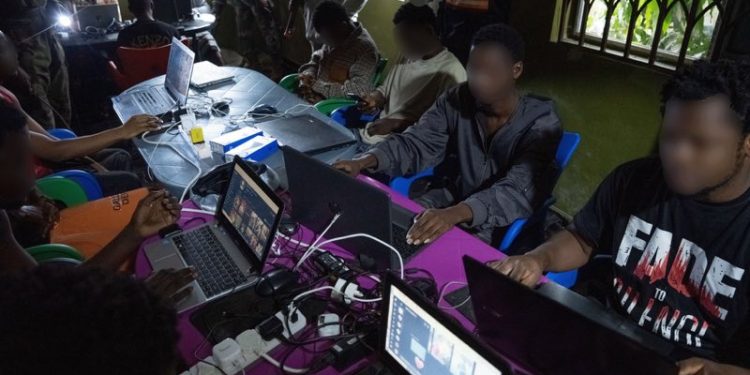
– Aggressive Digital and Youth Mobilisation: The battle for the minds of the youth is happening online. The party must deploy sophisticated, decentralised digital campaign structures-utilising micro-influencers, localised content, and interactive platforms- to meet young voters where they live.
– Grassroots Empowerment: Reclaiming lost constituencies requires decentralising resources directly to the polling station level. When local foot soldiers feel valued, adequately resourced, and respected, their capacity for door-to-door mobilisation remains unmatched.
The NPP has historically been the party that rises to meet national challenges with intellectual rigour and democratic resilience. The current political climate does not favour the complacent. By embracing a renewed framework of disciplined leadership, internal unity, and modernised voter engagement, the NPP can successfully answer this calling, not just to win an election, but to secure its legacy as the definitive architect of Ghana’s progress.
Hafiz Bin Salih (PhD)
Member, National Council (NPP)
Former Upper West/East Regional Minister
Source: Apexnewsgh.com