
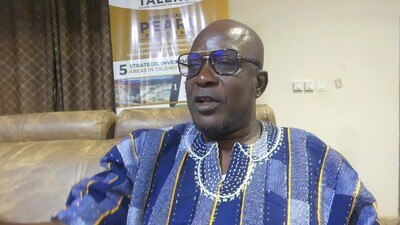
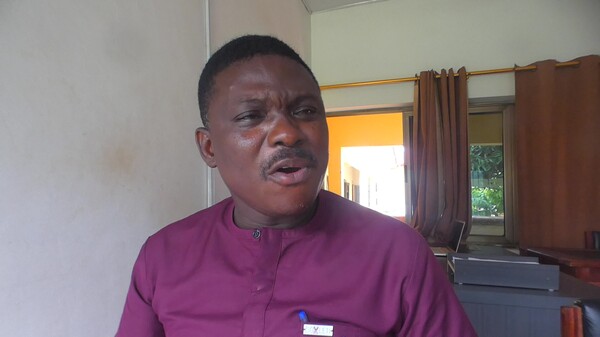







The Talensi District Chief Executive, Hon. John Millim, has assured residents that schools struggling with inadequate furniture will receive support, but stressed that the distribution will be based on verified data rather than political considerations.
Responding to concerns over schools such as the primary school at Sawalega, where a citizen reportedly highlighted a severe shortage of furniture, Hon. Millim said the Assembly was already taking steps to address the problem.
He disclosed that newly procured dual desks were being assembled and would soon be distributed to schools identified by the District Education Directorate as having the most critical shortages.
“We will not just get up, pick chairs and tables and go and distribute them to some community when we don’t have the data from the District Education Directorate.”
The DCE said development planning must be evidence-based, explaining that the Assembly relies on the Education Directorate’s data to determine where educational infrastructure and furniture are most urgently required.
“Development is a shared responsibility, and wherever we are building a school, we do not just decide to go and build a school for people because they are good to us. We do that in consultation with the Education Directorate.”
He further revealed that the Assembly had already procured dual desks, with some undergoing assembly, and promised that distribution would commence shortly.
“These dual desks that I have procured… in the next week, by God, we are going to distribute them.”
Beyond the immediate furniture challenge, Hon. Millim called for stronger community ownership of public facilities, arguing that providing infrastructure without protecting it undermines development.
“Whatever we get today, let’s try to protect it so we can ask for more new things.”
He therefore urged teachers, parents and community members to help maintain school facilities, warning that authorities would struggle to justify further investment when existing infrastructure and equipment were allowed to deteriorate.
“If we get something today and then we don’t take care of it, we cannot develop a community like that.”
The DCE also appealed to stakeholders to present development concerns through constructive engagement rather than partisan confrontation.
“Let’s share ideas. You can come to my office and say, ‘This is what I’ve observed at this corner.’ Development is not cut out that way.”
He maintained that government alone could not meet every development need and called for collective responsibility among public institutions and communities.
“Government cannot do everything. Communities must also play their part by protecting what they receive,” he said.
Source: Apexnewsgh.com