

NIA Rolls Out Strict New Data Protection Guidelines for Agencies Accessing National Identity Register
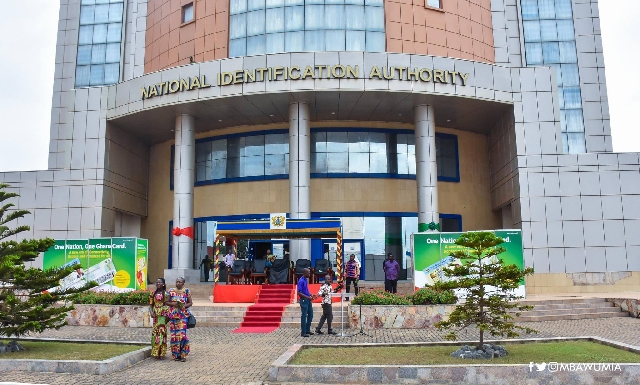
Ghana’s National Identification Authority (NIA) has taken a decisive step to tighten control over how personal data is handled across the country, rolling out new guidelines governing the security, storage, and retention of information drawn from the National Identity Register (NIR), effective March 19, 2026. The directive, which targets user agencies, institutions that access the national database in the course of their operations, marks a significant move by the Authority to close gaps in data protection and hold organisations to a higher standard of accountability when dealing with sensitive personal information. The NIA’s authority to issue such guidelines is firmly grounded in law. The new requirements are anchored in the National Identity Register Act, 2008 (Act 750) and its amendment, the National Identity Register (Amendment) Act, 2017 (Act 950), both of which vest the Authority with the mandate to regulate how personal data from the NIR is managed across institutions. At the core of the guidelines is a clear principle: personal data must be securely stored and retained only for as long as it is genuinely needed. Beyond that, the NIA is pushing for a culture shift, one that places responsible data management at the heart of how user agencies operate. The guidelines are also designed to significantly reduce the risk of unauthorised access, misuse, or loss of personal information, while bringing Ghana’s data handling practices in line with both domestic legislation and internationally recognised standards on information security. The timing of the directive reflects a broader strategic push by the NIA to shore up public trust in Ghana’s national identification system. In an era where data breaches and privacy concerns are increasingly in the spotlight globally, the Authority appears determined to ensure that the NIR, which holds some of the most sensitive personal information of Ghanaian citizens, is treated with the highest level of care. User agencies have been put on notice: compliance with the new requirements is not optional. The NIA has signalled that it will be intensifying its oversight of how personal information from the National Identity Register is handled, leaving little room for institutions to fall short of the standards now expected of them. Source: Apexnewsgh.com
MTN Ghana Launches Game Changing Sim Swap Self-Service – Customers Swap Anytime, Anywhere
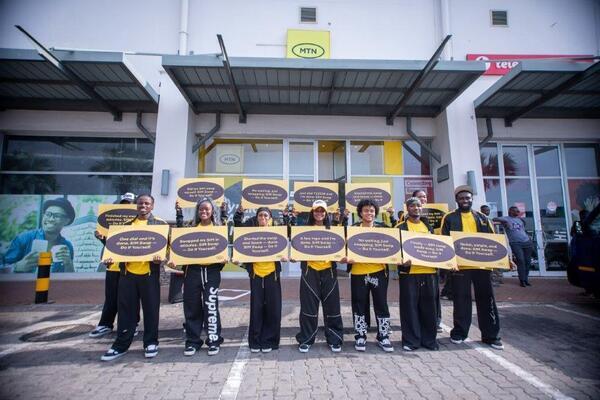
In its commitment to delivering convenient, secure and innovative digital solutions for customers, MTN Ghana has launched Sim Swap Self-Service. This innovative solution empowers customers to replace their SIM cards whenever and wherever they may be, eliminating the need to visit a physical service centre for assistance. The launch was held simultaneously across six locations, Accra, Kasoa, Koforidua, Kumasi, Ho and Tamale, demonstrating MTN’s commitment to digital transformation and enhancing customer experience. Speaking at the event, Jemima Kotei Walsh, the Chief Customer Experience Officer of MTN Ghana, shared the vision behind the new self-service SIM swap initiative. She underscored MTN’s dedication to harnessing technology for customer empowerment, describing the launch as a milestone that would reshape how customers interact with their mobile services. She explained that, for years, SIM swaps meant a trip to a service center or an online request that required assistance. Now, however, MTN Ghana is proud to enable customers to complete this vital service on their own, conveniently, securely and wherever they happen to be. “The need for SIM swaps has always been high, with MTN Ghana handling roughly 250,000 of such requests each month across its service centers. The self-service will ease these burdens by reducing lines, waiting times and giving customers more control and flexibility over their accounts. Before the full rollout, a pilot program had already demonstrated the value of the initiative with more than 18,000 customers successfully swapping their SIMs independently or with very little help at MTN branches. This success was more than just numbers, it was proof of digital empowerment and a shining example of customer-driven innovation in action,” she added. Beatrice Hemen, Director of Consumer Affairs at the National Communications Authority (NCA), praised the new solution, emphasizing that telecom users frequently report SIM swap concerns. “The Authority consistently receives a significant number of SIM swap-related complaints. Empowering customers to handle the process themselves marks a major step forward,” she commented. She added that the initiative will give customers greater choice and help shape Ghana’s telecommunications ecosystem. Commenting on the innovative Sim Swap Self-Service, the Chief Executive Officer of MTN Ghana, Mr. Stephen Blewett, stated that MTN continues to drive forward its vision for a dynamic digital future and remains dedicated to developing innovative solutions that consistently exceed customer expectations and enhance their daily experiences. The SIM Swap Service offers a range of advantages for customers. Users can conveniently swap their SIM cards at any time, saving valuable time and effort. Whether a device is lost, stolen, or damaged, the service allows for quick replacement, even for individuals located outside Ghana. It ensures rapid restoration of mobile services with little interruption, provides robust security through digital authentication and empowers customers to manage their accounts independently, eliminating reliance on service center staff. Security is a fundamental aspect of this innovation. The self-service SIM swap platform incorporates state-of-the-art biometric facial recognition, guaranteeing that only the legitimate owner can carry out the swap. This technology significantly reduces the risk of fraud and shields customers from threats posed by forged or compromised identification cards. Attendees witnessed a live walkthrough of the self-service SIM swap, demonstrating how users can complete the process seamlessly through MTN’s digital platforms, either via the myMTN App or by USSD dialling *1333#. This digital approach replaces traditional manual checks with a secure biometric facial-recognition scan that verifies the user against their registered SIM information, ensuring both ease and security. The event wrapped up with a lively, coordinated display featuring placards that illustrated each step of the SIM swap process, visually emphasizing how straightforward and effortless the new service is for customers. Source: Apexnewsgh.com
Ghana Gears Up for World Shea Expo with Strategic Meeting Between Presidency, ILO and Industry Players
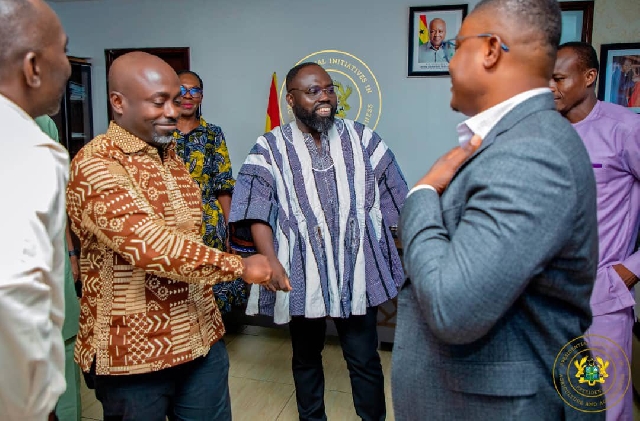
With the World Shea Expo on the horizon, Ghana is leaving nothing to chance. Peter Boamah Otokunor, Director of Agribusiness Development at the Office of the President, has convened a high-level strategic meeting with representatives from the International Labour Organisation (ILO) and Savanna Golden Tree Limited, signalling the government’s intent to make a strong impression on the global shea stage this year. The meeting served as both a planning session and a broader strategic conversation, bringing key stakeholders together to align on preparatory activities for the expo while mapping out Ghana’s wider ambitions for positioning its shea sector as a powerhouse in the international market. At the heart of the discussions was a shared recognition of the shea industry’s untapped economic potential. Participants examined how the sector could be harnessed more effectively to generate sustainable employment and contribute meaningfully to national development, goals that have taken on added urgency as Ghana looks to diversify its economic base and create opportunities in rural communities where shea production is most concentrated. Dr. Otokunor was emphatic on one point: Ghana cannot unlock the full value of its shea industry by working in isolation. He stressed the critical importance of deepening partnerships with international organisations and private sector actors, arguing that such collaborations are essential to expanding market access and driving greater value addition within the sector, moving beyond raw shea exports toward more processed, higher-value products that keep more wealth within the country. All eyes are now on the World Shea Expo, which is expected to be a defining moment for Ghana’s shea industry. The event will offer a prominent platform to showcase the country’s shea potential to a global audience, attract fresh investment, and open new trade doors for local producers who form the backbone of the sector. Source: Apexnewsgh.com
History Will Judge Nations That Oppose Ghana’s UN Slavery Resolution, PALU Warns
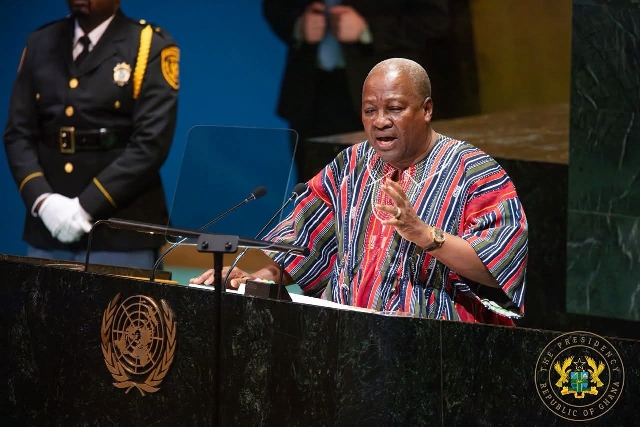
The Pan African Lawyers Union (PALU) has drawn a sharp line in the sand; nations that choose to abstain or vote against Ghana’s landmark UN resolution on the transatlantic trafficking and enslavement of Africans will be remembered poorly by history. The warning, delivered in a strongly worded statement dated March 18, 2026, signals growing continental resolve behind a resolution that has quickly become one of the most consequential diplomatic pushes of the year. The resolution, championed by President John Dramani Mahama, seeks to secure formal recognition at the United Nations of the transatlantic slave trade as the gravest crime against humanity ever committed, a designation its proponents say is long overdue. PALU’s statement made clear that this is not a debate about historical semantics. The organisation argued forcefully that the transatlantic slave trade was far more than a dark chapter in history, it was, in its words, a “foundational rupture” that permanently altered the course of human civilisation. The scale of the atrocity, its duration across centuries, and its deeply systemic nature set it apart, PALU contended, as an “absolute crime” whose consequences continue to reverberate across generations of African and diaspora communities to this day. Central to PALU’s argument is the economic legacy of enslavement. The organisation pointed to the enormous wealth generated through the forced labour of millions of Africans, wealth that, it argued, lay the very foundations of today’s global infrastructure and fundamentally transformed political, legal, and economic systems the world over. To ignore this, PALU suggested, is to wilfully misread history. Anticipating potential pushback at the UN, the organisation was careful to frame the resolution not as an attempt to rank or compare historical atrocities, but as an act of truth-telling, one that is indispensable to any genuine pursuit of justice, accountability, and reconciliation. For African nations and diaspora communities still navigating the socio-economic and cultural scars of enslavement, such recognition carries profound significance. PALU’s message to the international community was unambiguous: the adoption of this resolution is both a moral and historical imperative, and a rare opportunity to advance healing and forge authentic global solidarity. Those who stand in the way, the organisation cautioned, do so at the cost of their place on the right side of history. Source: Apexnewsgh.com
Minority Demands Immediate Scrapping of GHS1 Fuel Levy, Cites Worsening Cost of Living
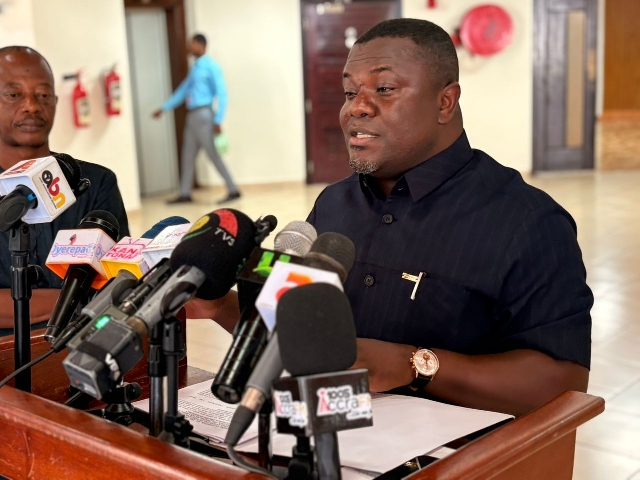
Pressure is mounting on the government to scrap the GHS1 fuel levy, as the Minority in Parliament calls for its immediate abolition, arguing that the charge is deepening the financial strain on Ghanaians already struggling under the weight of soaring living costs. The demand was made by Collins Adomako-Mensah, Deputy Ranking Member on Parliament’s Energy Committee, who voiced the Minority’s concerns to journalists on the sidelines of parliamentary proceedings. His remarks came at a particularly sensitive moment, fuel prices had just risen again, driven by escalating geopolitical tensions involving the United States, Israel, and Iran, compounded by disruptions stemming from the closure of the Strait of Hormuz. For many Ghanaians, the timing could not have been worse. Adomako-Mensah acknowledged that the levy was not introduced without purpose. Enshrined in the Energy Sector Levy Amendment Act 2025, it was designed to support fuel procurement and help the country chip away at longstanding debts in the energy sector. But he was unequivocal: the economic realities of today make its continued existence unjustifiable. Beyond the immediate call to scrap the levy, the Minority is setting its sights on a broader fight. Adomako-Mensah revealed plans to push for a sweeping review of all taxes embedded in petroleum pricing, a move aimed at identifying and eliminating charges that unnecessarily inflate costs at the pump for ordinary consumers. The Minority’s stance is poised to sharpen an already heated debate in Parliament over fuel taxation, as the government finds itself caught between the need to protect revenue streams and mounting public frustration over the relentless rise in the cost of living. Source: Apexnewsgh.com
Mahama Urges Tenants to Report Landlords Flouting Rent Advance Laws
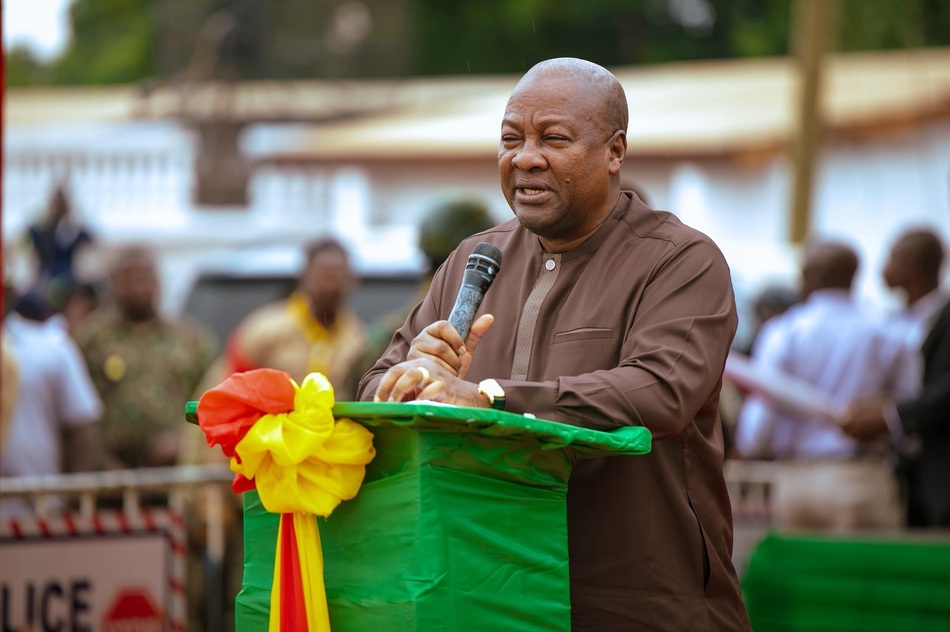
President John Dramani Mahama has urged tenants across Ghana to hold landlords accountable by reporting those who demand rent advances beyond the legally permitted limit, as the government intensifies efforts to protect renters from exploitation in the housing sector. The President made the call during a meeting with Organised Labour at the Presidency, where he underscored the urgent need to enforce existing housing regulations and shield tenants from unlawful financial demands. Mahama acknowledged the mounting pressure that housing costs are placing on Ghanaian households, warning that affordable accommodation is rapidly slipping out of reach for a growing number of citizens. He linked the surge in excessive rent demands to the country’s persistent housing deficit, arguing that the shortfall in available housing has emboldened some landlords to impose illegal charges on desperate renters. The President reminded the public that the law expressly bars rent advances of more than six months, yet enforcement of this provision remains largely ineffective, a situation he partly attributed to the reluctance of both tenants and landlords to pursue grievances through the rent courts. As a way forward, President Mahama proposed convening a national housing dialogue bringing together government, the private sector, and labour groups to craft a robust social housing policy. He stressed that only a well-coordinated, multi-stakeholder approach can meaningfully resolve the housing crisis and guarantee fair, accessible accommodation for every Ghanaian. Source: Apexnewsgh.com
Senegal Fumes Over CAF’s Decision to Crown Morocco 2025 AFCON Champions

Senegal’s football federation has fired back at the Confederation of African Football (CAF) after the continental body stripped the West African nation of its Africa Cup of Nations title and handed it to Morocco. In a dramatic turn of events that has sent shockwaves through African football, CAF’s Appeal Board on March 17, 2026, declared Morocco’s men’s national team the winners of the 2025 TotalEnergies CAF Africa Cup of Nations (AFCON), a title Senegal had claimed on the pitch after winning the tournament’s final match. The ruling stemmed from an appeal lodged by the Fédération Royale Marocaine de Football (FRMF), which challenged Senegal’s victory because the Senegalese players had walked off the pitch for several minutes during the final. The CAF Appeal Board sided with Morocco, recording the result of the match as a 3–0 defeat for Senegal and officially crowning the Atlas Lions as champions. Senegal, however, was having none of it. In a strongly worded statement sighted by ApexNewsGh on X on March 17, 2026, the Senegalese Football Federation blasted CAF’s decision as unfair, unprecedented, and deeply damaging to the image of African football. The federation did not mince words, describing the ruling as an “insult” to the continent’s game. “The Senegalese Football Federation denounces this unfair, unprecedented, and unacceptable decision, which discredits African football,” the statement read. But the federation made clear it would not stop there. Refusing to accept the outcome lying down, Senegal announced its intention to take the matter to the Court of Arbitration for Sport (CAS) in Lausanne, Switzerland, in a bid to reclaim what it believes is rightfully theirs. “To defend its rights and the interests of Senegalese football, the Federation will initiate an appeal as soon as possible before the Court of Arbitration for Sport (CAS) in Lausanne,” the statement added. The controversy has cast a long shadow over what should have been a celebratory moment for African football, with the legitimacy of the 2025 AFCON title now set to be decided not on the pitch, but in a courtroom. Source: Apexnewsgh.com
The Mockery, the Millions, and the Missing Answers

Stan Dogbe had plenty to say about the opposition. What he would not say was whether he had anything to do with a GH¢11.9 million government contract. The Deputy Chief of Staff at the Office of the President stepped into the public spotlight in March 2026, not to answer uncomfortable questions swirling around him, but to celebrate the ruling National Democratic Congress and taunt the New Patriotic Party over its crushing defeat in the December 2024 general election. It was a performance full of confidence. Yet beneath the bravado lay a silence that critics found far more telling than anything he actually said. The controversy had been building for weeks. At its centre was the Ghana Gold Board, known as GoldBod, a newly established institution that had, in the months following its creation in April 2025, embarked on a significant procurement exercise. Among its most consequential decisions was the award of a renovation contract worth GH¢11,901,736.13 to a firm called Correca Ghana Limited, for works on the old Bank of Ghana head office at No. 1 Thorpe Road, Accra, a building GoldBod had rented to house its expanding operations after outgrowing the dilapidated premises of its predecessor, the Precious Minerals Marketing Company. The contract required the works to be completed within six weeks of signing. On paper, it was one of three procurement deals with a combined value of nearly GH¢15 million. The other two, covering the supply of fifteen laptop computers and office furniture, went to Get4Less Ghana Limited and Grace-Filled Venture respectively, both awarded through a single-source procurement method that had received prior approval from the Public Procurement Authority. A PPA letter dated 7 November 2025 quoted the combined price of those two contracts at GH¢3,246,288.88. But it was the renovation contract that drew the sharpest scrutiny. Reports began circulating on social media alleging that Correca Ghana Limited shared not just an address and operational premises with Woezor TV, a television platform owned by Stan Dogbe — but also the same ownership structure and directorship. If true, the implications were serious: a senior presidential aide potentially benefiting from a multi-million-cedi public contract awarded by a state institution under the same government he served. GoldBod did not stay quiet. Through its Media Relations Officer, Prince Kwame Minka, the institution issued a detailed statement challenging what it described as deliberate falsehoods being spread across social media platforms. The board insisted the renovation contract had not been sole-sourced, as critics alleged. Three companies — Correca Ghana Limited, Project Direct Limited, and Building Construction Limited — had participated in a restricted tendering process formally approved by the PPA on 24 June 2025, following GoldBod’s request on 26 May 2025. Correca Ghana Limited had won the bid on merit, the statement said, and had completed the works in a timely and professional manner. On the laptops, GoldBod was equally firm. The fifteen Lenovo ThinkPad T14S units, each with Core i7 1355U processor, 16GB RAM, and 512GB SSD, were purchased at GH¢21,500 per unit, a price the institution said was consistent with the open market rate listed on the supplier’s own website. Get4Less Ghana Limited had been selected because it was the only supplier found capable of meeting the required quantity and delivery timelines at the time. The contracts, GoldBod added, had been published on its official website on 10 March 2026, in accordance with Section 42(1)© of the Ghana Gold Board Act, 2025 (Act 1140). The institution framed the disclosures as evidence of its commitment to transparency, and pointedly praised its CEO, Sammy Gyamfi, for championing that culture. The contracts were signed by GoldBod’s Deputy CEO, Richard Nunekpeku. When Stan Dogbe finally addressed the controversy publicly, he did so on Facebook — twice, on 14 March 2026, and with characteristic combativeness. He praised Sammy Gyamfi and the GoldBod team for their transparency, echoing the NDC’s longstanding rhetoric on accountability. He defended Woezor TV, celebrating its growth over the past four years and highlighting its role in broadcasting provisional election results that showed the NPP winning just over 38 per cent of the vote in 2024. He denied that the station operated from Dzorwulu, as some reports had claimed. What he did not do was answer the central question: did he have any ownership interest in Correca Ghana Limited? Did he play any role in the awarding of the renovation contract? Reports had also noted that some signatures on the procurement documents appeared to have been scanned — a detail that added another layer of concern to an already murky picture. Dogbe attributed the entire controversy to political reprisals from a wounded NPP, still smarting from its electoral humiliation. His message, in essence, was that the attacks were not about accountability — they were about revenge. Not everyone was satisfied with that framing. Hubert Tieku, who identifies himself on the social media platform X as Chief Executive and Managing Director of Agora Collective Co. Ltd, and also as a lawyer and researcher, alleged that Correca Ghana Limited had secured the renovation contract not through competitive merit, but through political connections and ties to senior government officials. It was an allegation that cut to the heart of the matter, and one that neither Dogbe nor GoldBod had directly refuted in terms of the company’s relationship to the Deputy Chief of Staff. The Ghana Gold Board maintained that it had followed due process at every step: seeking PPA approvals, publishing contracts, and selecting qualified firms. It called on the public to reject what it termed the work of “desperate purveyors of fake news.” Yet the questions persisted. Who, exactly, owns Correca Ghana Limited? What is its relationship, if any, to Stan Dogbe and Woezor TV? And why, with so much public attention focused on those questions, had the man at the centre of the storm chosen to mock his political opponents rather than simply answer them? The controversy surrounding GoldBod’s procurement contracts had become about more than renovation works and laptop computers. It had become
Mahama to Engage Civil Society Organisations After Labour Union Consultations — Kwakye Ofosu
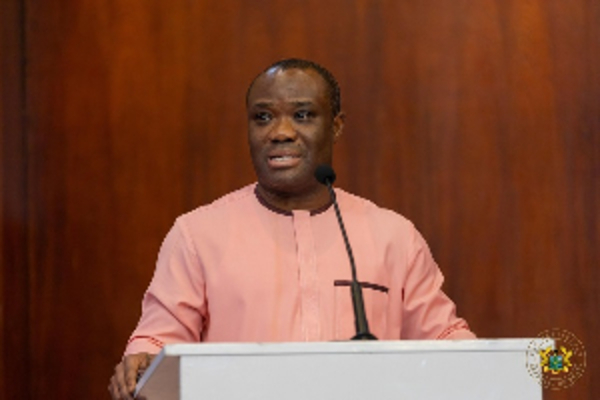
President John Dramani Mahama’s stakeholder consultation drive is set to widen its reach, with Civil Society Organisations (CSOs) next in line for engagement once talks with labour unions are concluded. This was disclosed by the Minister of State in charge of Government Communications, Felix Kwakye Ofosu, during an interview on Channel One TV’s Face to Face on Tuesday, March 17, 2026. According to the minister, the planned outreach to CSOs is a deliberate effort to ensure that a broad spectrum of voices informs government decision-making, moving beyond organised labour to tap into the perspectives of civil society. “Once he’s done with Organised Labour, he will turn his attention to CSOs. He will engage CSOs so that they will also bring their perspective to bear on governance, and through that we can get the best ideas for policy fine-tuning and better implementation,” Kwakye Ofosu said. The minister’s remarks signal a structured and inclusive approach to governance under President Mahama, with the consultations designed not merely as a formality, but as a genuine mechanism for gathering ideas that can sharpen policy formulation and strengthen implementation. By extending the conversation to CSOs, organisations that often serve as the voice of marginalised communities and watchdogs of public interest, the government appears intent on casting a wide net as it shapes its policy agenda. The outcome of these engagements, if effectively harnessed, could prove instrumental in bridging the gap between government policy and the realities on the ground. Source: Apexnewsgh.com
Adwoa Safo Urges Government to Resource Public Hospitals, Calls for Full Implementation of Mental Health Act

Former Minister of Gender, Children, and Social Protection, Sarah Adwoa Safo, has issued a passionate call to action, urging the government to make the basic needs of public hospitals a matter of urgency and to ensure these facilities are adequately resourced to function as they should. Her appeal came during a donation exercise by her philanthropic arm, the Adwoa Safo Foundation, at the Pantang Hospital, where she also turned her attention to a piece of legislation she helped champion over a decade ago. Adwoa Safo called on President John Dramani Mahama to fully implement the provisions of the Mental Health Act, 2012 (Act 846), a law passed by Parliament on March 2, 2012, with a clear and ambitious goal: to make mental healthcare free and accessible, particularly for Ghana’s most vulnerable citizens. As a former Dome-Kwabenya Member of Parliament who was part of the caucus that drove the legislation forward, she spoke with both personal conviction and institutional knowledge. Her tone, however, carried a note of deep frustration. Despite the promise the law once held, she lamented that it has “outlived its usefulness”, a consequence, she argued, of successive governments failing to adequately fund its implementation. For her, the cost of that failure is measured not in figures, but in the lives of Ghanaians who continue to go without the mental health support they deserve. “A country that is mentally healthy is also healthy in every aspect of national life,” she stressed, framing mental healthcare not as a peripheral concern, but as a cornerstone of national wellbeing. The visit to Pantang Hospital was more than a platform for advocacy; it was a demonstration of the Foundation’s long-standing commitment to walking its talk. Established in 2014, the Adwoa Safo Foundation has built a reputation for sustained support to vulnerable and disadvantaged groups across Ghana, and the day’s donation was a continuation of that legacy. The Foundation presented an array of essential items to the hospital, including eight bags of rice, 29 bags of sachet water, packs of plantain chips, two packs each of Milo and milk, 15 packs of toilet rolls, four packs of drinks, three bottles of Dettol, 10 bottles of cleaning detergent, 10 packs of mosquito nets, and a 43-inch television set. Going a step further, Adwoa Safo pledged to renovate one of the hospital’s dilapidated wards, a commitment that speaks directly to the kind of structural support the facility so desperately needs. The gesture was received with heartfelt gratitude by the Medical Director of Pantang Hospital, Dr Maalug Yennusum, who described the intervention as both timely and deeply appreciated. He took the opportunity to brief Adwoa Safo on ongoing development efforts at the facility, including farming projects designed to support patient feeding and generate income to cover administrative and operational costs. He also spoke of initiatives to beautify the hospital environment, with the aim of creating a more therapeutic and welcoming space for patients. Yet beneath the progress, the challenges remain stark. Dr Yennusum painted a candid picture of a hospital stretched thin, where many patients simply cannot afford the cost of their own care. “Most of our inmates do not even have money to pay for their treatment, so we rely heavily on support,” he said, a sobering reminder of why visits like Adwoa Safo’s matter far beyond the items donated. He appealed to other well-meaning individuals and organisations to follow her example, calling on Ghanaians of goodwill to step in where the system has fallen short. Source: Apexnewsgh.com