
ECOWAS Court Saves AG From Deadline Miss in Torkonoo Rights Battle
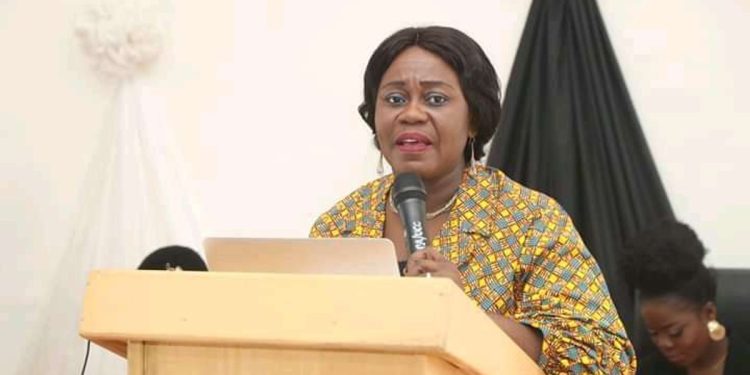
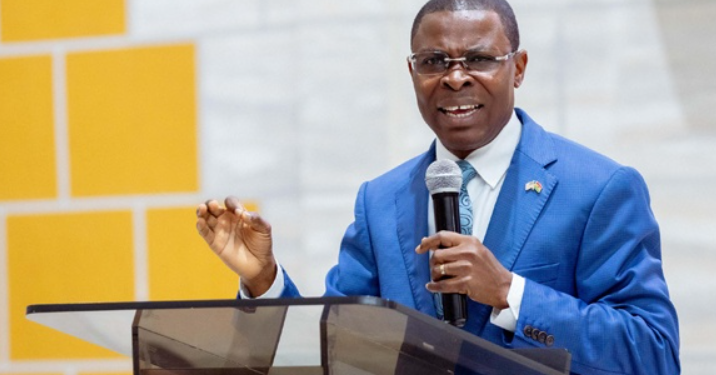
The ECOWAS Community Court of Justice has granted an application by Deputy Attorney-General Dr Justice Srem Sai to regularise a defence filed out of time in a human rights case brought by former Chief Justice Gertrude Torkonoo. When former Chief Justice Gertrude Torkonoo found herself removed from office under Article 146 proceedings of Ghana’s 1992 Constitution, she did not go quietly. Convinced that the process had trampled on her fundamental human rights, she took her fight to the Human Rights Court. But the battle did not end there. Following her subsequent dismissal, Justice Torkonoo carried her case further, this time to the ECOWAS Community Court of Justice, amending her application to challenge not just her suspension, but her outright removal from the bench. The ECOWAS court had earlier allowed that amendment, though not without resistance. The Attorney-General objected, but the court overruled those objections and directed the state to file its defence within 30 days. It was a clear instruction with a firm deadline, March 1, 2026. The Attorney-General’s office, represented by Deputy Attorney-General Dr Justice Srem Sai, missed it. When the defence was eventually filed, it arrived late, accompanied by a quiet appeal to the court’s discretion to admit it anyway. Justice Torkonoo’s counsel was having none of it. They argued that the filing was out of time, that no formal application for an extension had ever been made, and urged the court to strike out the defence entirely. Dr Srem Sai pushed back. His position was that the state had never been properly served with the court’s directive in the first place, that the Attorney-General’s office had been in the dark about the timeline until a hearing notice landed on their desk. Once aware, he told the court, the defence was filed without delay, even with a public holiday interrupting the process. He appealed to the court to act in the interest of justice. The court was not entirely persuaded by that reasoning. It pointed out that under common law practice, counsel who are present in court when an order is delivered are deemed to have notice of it, no separate service required. It also noted that the proper course of action would have been to file a formal application for an extension of time, not simply attach a request to the late defence. Counsel for Justice Torkonoo pressed the point further, reminding the court that the directive had been issued in the presence of the Attorney-General’s own representatives, making any claim of ignorance difficult to sustain. Yet, in a notable turn, Justice Torkonoo’s legal team stopped short of opposing the state’s oral request for an extension. They asked only that, should the court grant it, they be given the opportunity to file a response. In its ruling, the ECOWAS Community Court of Justice granted the extension of time, admitted the state’s amended defence, and gave Justice Torkonoo’s side seven days to file their reply. The procedural battle has been settled, for now. The deeper fight over the former Chief Justice’s removal from office continues. Source: Apexnewsgh.com
Roads Minister Reveals How Big Push Rescued 23 Abandoned Road Projects
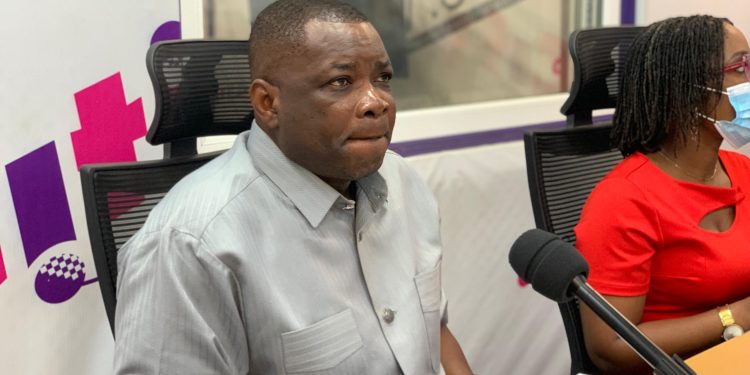
When the previous administration left office, it did not just leave behind a transition binder. It left behind 23 unfinished road projects, abandoned by contractors, starved of funding, and slowly fading into the landscape of Ghana’s infrastructure failures. On Tuesday, March 24, 2026, the man now responsible for fixing that mess stood before Parliament and told the country exactly what had been inherited, and what is being done about it. Minister for Roads and Highways, Governs Kwame Agbodza, used his address on the floor of Parliament to pull back the curtain on a significant but little-discussed dimension of the government’s flagship Big Push infrastructure programme: a large chunk of it is not new at all. “Mr. Speaker, additionally, 23 road projects valued at GHS 14.88 billion, which were awarded by the previous administration and abandoned by contractors due to lack of dedicated funding, were absorbed as part of Big Push,” he told the House. “These projects were novated with a new funding source.” In plain terms, what the minister was describing was a rescue operation. Projects that had stalled, not because they were bad ideas, but because no one had secured the money to see them through, were given a second life under the Big Push. Among the rescued projects are some of Ghana’s most critical road works: the Suame Interchange, the Takoradi–Agona road dualisation, the Kasoa–Winneba road expansion, and a range of upgrading projects spanning the Upper West, Oti, and Volta regions. These are not minor repairs. These are transformational pieces of infrastructure that communities have long been waiting for. The Big Push programme itself, the minister explained, is built around 12 major economic corridors stretching across the country, a framework he referred to as the “12 disciples.” To drive competition and speed up delivery, those corridors have been broken down into 54 lots, ensuring that no single contractor can bottle up progress across the board. But it was the minister’s remarks on procurement that are likely to generate the most discussion. Addressing concerns about sole sourcing, a method that has drawn criticism from some quarters, Agbodza defended its use in specific, legally recognised circumstances. “It is globally acceptable to use sole sourcing even in situations where there is the need to extend the implementation of works which were previously competitively procured to speed up completion,” he told Parliament. He went further, acknowledging that some of the inherited projects had not originally been awarded through competitive procurement processes in the first place, a candid admission that adds important context to the complexities the current administration faces in continuing and financing them. For the minister, the message was straightforward: the Big Push is not about politics or shortcuts. It is about finishing what was started, funding what was abandoned, and building what Ghana needs, regardless of who first broke the ground. Source: Apexnewsgh.com
No Laws Broken, No Shortcuts Taken — Roads Minister Fires Back at Big Push Critics
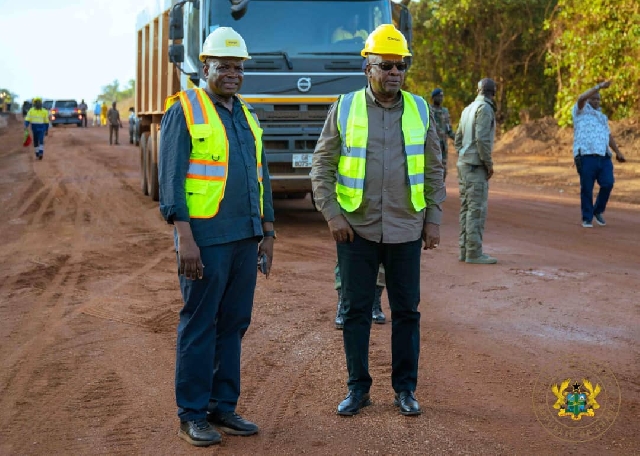
Ghana’s Minister for Roads and Highways, Kwame Governs Agbodza, came out swinging on Tuesday, delivering a pointed rebuttal to critics who have accused the government’s flagship Big Push infrastructure programme of leaning too heavily on sole sourcing. Standing before Parliament, the minister did not just defend the programme, he dismantled the allegations piece by piece, calling them misleading and flatly unsupported by the facts already placed before the House. “We have established a system where no contractor is paid without measurable progress,” he declared, setting the tone for an address that was as much about accountability as it was about infrastructure. At the heart of the controversy is the procurement method used to award contracts under the Big Push, a sweeping initiative currently overseeing the reconstruction and upgrading of more than 2,000 kilometres of roads across all 16 regions of Ghana. Critics have suggested that sole sourcing has become the default tool of choice, raising questions about transparency and value for money. The minister rejected that characterisation outright. According to him, only 44 percent of major contracts, including those under the Big Push, were awarded through sole sourcing, while more than 400 contracts have gone through open competitive tendering. Every contract, he stressed, has been awarded in strict compliance with the Public Procurement Act and its regulations, with full details publicly available on the Ministry’s website for anyone willing to look. But beyond the numbers, the minister offered context that he argued critics have been too quick to ignore. Ghana’s road network, he reminded Parliament, is in a state of serious deterioration. Given the scale and urgency of the challenge, he said, a rigid insistence on lengthy procurement processes alone would delay critical projects, inflate costs, and ultimately deepen the country’s economic difficulties. The law, he noted, allows for a balanced use of procurement methods, and that is precisely what the Ministry has done. One of the more striking revelations from the minister’s address was the fate of 23 major road projects inherited from the previous administration, projects valued at GHS 14.88 billion that had been left entirely without funding. Rather than abandon them, the current government integrated these stalled projects into the Big Push programme and secured new financing to get them moving. Among those rescued are the Suame Interchange, the Ofankor–Nsawam Road, and the Adenta–Dodowa Road — projects that, in the minister’s words, might have remained frozen indefinitely without the current approach. The programme itself has been structured with competition in mind. It targets 12 key economic corridors, broken into 54 lots, a deliberate design intended to attract more contractors, drive competition, and accelerate delivery on the ground. On the question of value for money, Minister Agbodza outlined a series of safeguards built into the programme: in-house survey, design, and costing by state agencies; independent value-for-money assessments of contractor proposals; and payments strictly tied to verified, measurable work completed. He also pointed to an ongoing collaboration with the Ghana Institution of Surveyors to further strengthen independent cost verification, a move he said underscores the government’s commitment to getting this right. He also took direct aim at critics who have drawn unfavourable comparisons based on cost-per-kilometre figures, arguing that such analyses are fundamentally flawed. They fail, he said, to account for differences in project scope, engineering complexity, and additional infrastructure components such as interchanges and bridges, factors that can dramatically affect cost without reflecting any wrongdoing. The minister did not shy away from contrasting the current administration’s record with that of its predecessor. He noted that many of the road projects inherited from the previous government lacked proper authorisation and had not gone through competitive procurement, a situation that contributed to road sector arrears exceeding GHS 40 billion. Since taking office, he said, the government has paid over GHS 11 billion toward clearing that inherited debt. With the programme operating under continuous parliamentary oversight, including regular ministerial questioning, committee reviews, and independent professional validation, Hon. Agbodza made clear that the Big Push is not operating in the shadows. Sole sourcing, he insisted, remains the exception, not the rule. And as he urged Parliament and the public to get behind what he described as a transformative effort to improve road infrastructure, reduce transport costs, create jobs, and stimulate economic growth, his message to critics was unambiguous: check the facts before you undermine the progress. Source: Apexnewsgh.com
Ghana TVET Workers Walk Off the Job in Indefinite Strike
The classrooms may still stand. The workshops may still be equipped. But as of March 24, 2026, the people who make them run have had enough. Members of the Ghana TVET Service (GTVETS), operating under the Public Services Workers’ Union (PSWU), have officially downed tools and withdrawn their services in an indefinite strike action — a move that signals a breaking point in what the union describes as a prolonged failure by management to listen, engage, and act. The decision did not come without warning. As far back as March 10, 2026, the union had written to management, raising concerns and calling for meaningful engagement. Three days later, on March 13, with no satisfactory response in sight, the union took the next step — issuing a formal strike notice addressed directly to the Director-General of the Ghana TVET Service. The message was clear: if management would not come to the table, workers would leave theirs. “The action has become necessary due to the lack of concrete and satisfactory steps taken by management to resolve the concerns,” the union stated, making no effort to soften the frustration that had clearly been building for some time. Yet even in the heat of the moment, the union left the door open for resolution. Despite declaring the strike, PSWU expressed its willingness to engage in dialogue, provided management treats the outstanding issues with the urgency and seriousness they deserve. It is a posture that speaks less to hostility and more to exhaustion: workers who are not looking for a fight, but who have simply run out of patience waiting for one to be avoided. Members have been directed to comply strictly with the strike directive and to stand united throughout the period of the action. They have also been encouraged to submit any additional grievances to union leadership for collective consideration, a sign that the concerns on the table may run deeper than what has so far been made public. In a message that reflects both resolve and restraint, the union urged its members to remain calm, disciplined, and law-abiding during the strike. It also issued a firm warning against any form of intimidation or victimization of striking workers, instructing members to report any such incidents to union leadership immediately. The notice was signed by Seth Botchway, Divisional IMC Secretary of the PSWU. As Ghana’s technical and vocational education sector feels the first tremors of this industrial action, all eyes now turn to management, and whether they will finally offer the meaningful engagement that could bring workers back before the disruption deepens.
Last-Minute Snub: How Lincoln University’s Shock Decision Left Ghana’s President in the Cold
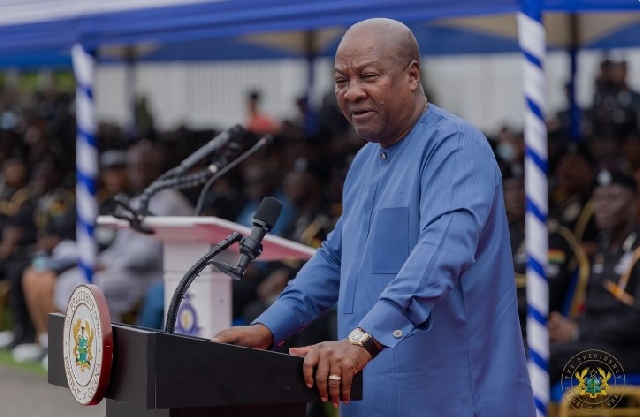
It was supposed to be a proud moment, a sitting African president welcomed with full honors by one of America’s most historically significant Black institutions. The venue had been inspected. The programme had been finalized. President John Dramani Mahama had already touched down on American soil in anticipation of the occasion. Then, just hours before the scheduled visit on Thursday, March 26, everything fell apart. Lincoln University delivered a stunning last-minute withdrawal of its decision to confer an honorary doctorate degree, honoris causa, on President Mahama. The reason? Concerns raised by a group within the University over President Mahama’s perceived stance on Ghana’s Human Sexual Rights and Family Values Bill, commonly referred to as the anti-gay Bill, which is currently before Ghana’s Parliament. For Ghana’s Embassy in the United States, the timing could not have been more jarring. “It is both surprising and regrettable that such concerns have surfaced at this late stage, particularly with the President already in the United States in anticipation of the visit,” the Embassy said in a formal statement. What made the situation even more difficult to accept, according to the Embassy, was the extensive groundwork that had already been laid. Officials from both sides had engaged in thorough due diligence and vetting processes prior to the visit. Just last week, representatives from both the University and the Ghanaian mission had conducted a full walkthrough of the venue and locked in all logistical and programme arrangements. At no point during those engagements were any such concerns raised. The invitation itself had been accepted in good faith, and not without reason. Lincoln University carries deep historical significance for Ghana. It was at Lincoln that Ghana’s founding father and first President, Kwame Nkrumah, was educated, making the institution not merely an American university but a place woven into the very fabric of Ghanaian national identity. It was this historic bond that made the invitation meaningful, and the withdrawal all the more painful. The Embassy was careful to acknowledge Lincoln University’s right to engage its internal stakeholders and stand by its institutional values. However, it pushed back firmly on the substance of the concerns raised, noting that the anti-gay Bill is an ongoing legislative matter subject to democratic debate within Ghana’s Parliament, and does not represent the unilateral position of any single individual, including the President. President Mahama, the Embassy noted, has built a career on democratic principles, respect for human rights, and inclusive dialogue on complex and often sensitive societal issues. As the dust settles on what has become a diplomatic embarrassment, Ghana’s Embassy expressed hope that the deep and historic relationship between Ghana and Lincoln University would serve as the foundation for a balanced and respectful resolution, one guided not by last-minute pressure but by the spirit of mutual understanding that has long defined ties between the two. For now, the honorary degree remains unawarded, the visit unfinished, and a moment meant to celebrate a legacy has instead sparked a conversation neither side anticipated. Source: Apexnewsgh.com
How Politicians Turned the Bolgatanga–Bawku–Pulmakom Road Into a 117-Year Election Stunt
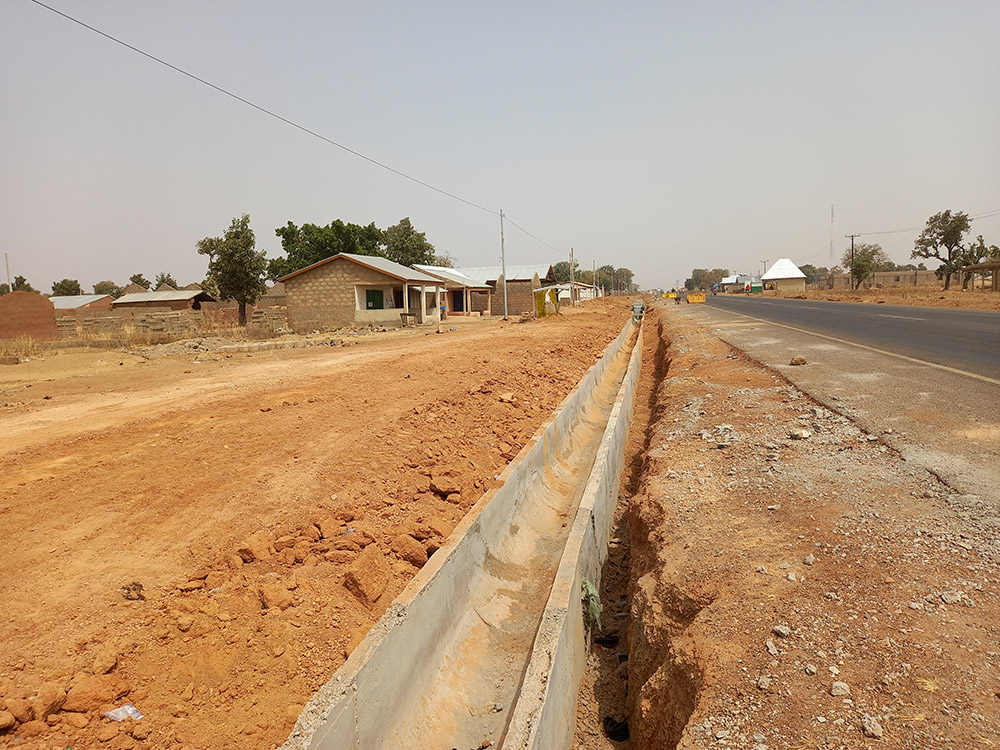
For over a century, the people of Ghana’s Upper East region have been waiting. Waiting for a road. Not just any road, but a road that was first laid out with human labor in 1909, during the era of British colonial rule. A road that, in 2026, remains unfinished. A road that has become the single greatest symbol of political betrayal in the Upper East region. According to historian Mr. Christopher Azaare, the Bolgatanga–Bawku–Pulmakom Road has its origins in 1909, when British colonial administrators mobilized local chiefs to rally communities for its construction. That means this road predates Ghana’s independence by nearly five decades. Yet here we are, 117 years later, and the road still has not seen the light of day. He made the revelation in an exclusive engagement with Ngamegbulam Chidozie Stephen of Apexnewsgh during a segment dubbed SpeakOut Upper East(SoUE) This is not simply a story about poor infrastructure. It is a story about a region that has been systematically failed by the very people entrusted to serve it. Since the return of democratic governance in 1992, the Bolgatanga–Bawku–Pulmakom Road has been recycled as a campaign promise by successive governments. Both the New Patriotic Party (NPP) and the National Democratic Congress (NDC) have made it a fixture in their manifestos, a crowd-pleasing pledge rolled out at every election cycle to win the hearts of Upper East voters. The pattern is painfully predictable. A party campaigns on completing the road. They win power. They do a little work on it. Then funding dries up, contractors abandon the site, and the road becomes “a story for another day.” The next government inherits the same road, the same promise, and the same cycle of disappointment begins again. In 2016, the NDC government commenced construction with funding from the Road Fund, but the project stalled before they left office. The NPP administration that followed continued the work, only for contractors to once again leave the site due to a lack of funding. As of 2026, construction remains stalled. What makes this situation particularly troubling is the attitude of some politicians toward those who dare to demand accountability. Journalists and citizens who raise the issue of the Bolgatanga–Bawku–Pulmakom Road are often branded as NPP or NDC sympathizers, a tactic that silences legitimate voices and shields politicians from scrutiny. This deliberate politicization of development is not just irresponsible. It is a betrayal of the people of the Upper East region. When those in positions of authority treat development as a political weapon rather than a civic duty, it is the ordinary people who suffer, navigating dangerous, deteriorating roads year after year while their leaders trade promises for votes. The Upper East region is not a battleground for political point-scoring. It is home to real people with real needs, people who deserve the same quality of infrastructure enjoyed by citizens in other parts of Ghana. President John Dramani Mahama and the current NDC government must act decisively. Contractors who have abandoned the Bolgatanga–Bawku–Pulmakom Road must be recalled to site. Funding must be secured and protected. And this project must be completed, not as a political gesture, but as a matter of justice owed to a people who have waited 117 years too long. A road that was started in 1909 should not still be making headlines in 2026 for all the wrong reasons. The people of the Upper East region deserve better. And it is long past time they got it. Source: Apexnewsgh.com/Ngamegbulam Chidozie Stephen
Beware the Scammers: Ministry of the Interior Sounds Alarm Over Fake Recruitment Payment Demands
A warning is ringing loud and clear from the Ministry of the Interior, and it is one that every recruitment applicant in Ghana must hear. As the ongoing screening process continues to attract thousands of hopeful candidates, the Ministry has stepped forward with an urgent caution: no applicant will ever be asked to send money directly to a mobile money number as part of the official process. Anyone demanding otherwise, the Ministry says firmly, is a fraudster. The warning, contained in a statement released on Monday, March 23, comes in response to a growing wave of fraudulent messages targeting applicants, messages falsely claiming that payment is required for medical screening. The Ministry was categorical: such demands have no place in the official recruitment process. “We have not yet sent out any SMS notifications regarding the medical screening phase,” the Ministry clarified, drawing a clear line between what is real and what is not. So when should applicants expect to hear from the Ministry? Official SMS notifications will only be dispatched between March 29 and March 31, 2026, ahead of a nationwide screening exercise scheduled to begin on Tuesday, April 7, 2026. Any message arriving before that window, or from an unverified source, should be treated with immediate suspicion. To help applicants separate the genuine from the fraudulent, the Ministry revealed a key detail: all legitimate SMS notifications will come exclusively from the authorised sender ID, CSERP. If a message does not bear that identity, applicants are advised not to act on it. There is also a reliable way to confirm one’s status through the official recruitment portal. Shortlisted candidates will notice their portal status shift from “Qualified” to “MEDICAL SCREENING” once official notifications have been sent. That change on the portal, and only that change, should prompt any further action, including payments, which must be made strictly through the secure web checkout system on the portal itself. The Ministry could not have been clearer in its closing message: no payment should ever be made outside the official platform. For those who encounter suspicious activity or believe they have been targeted by fraudsters, the Ministry has provided a dedicated email channel to report such incidents — recruitment@mint.gov.ghOpens a new window. In a time when scammers prey on the hopes of job seekers, the Ministry’s message is a timely reminder: stay alert, verify every message, and trust only the official process. Your future should not be stolen by a fraudulent text. Source: Apexnewsgh.com
Ghana’s Black Stars Fundraising Campaign Kicks Off With a Roaring $10 Million on Day One
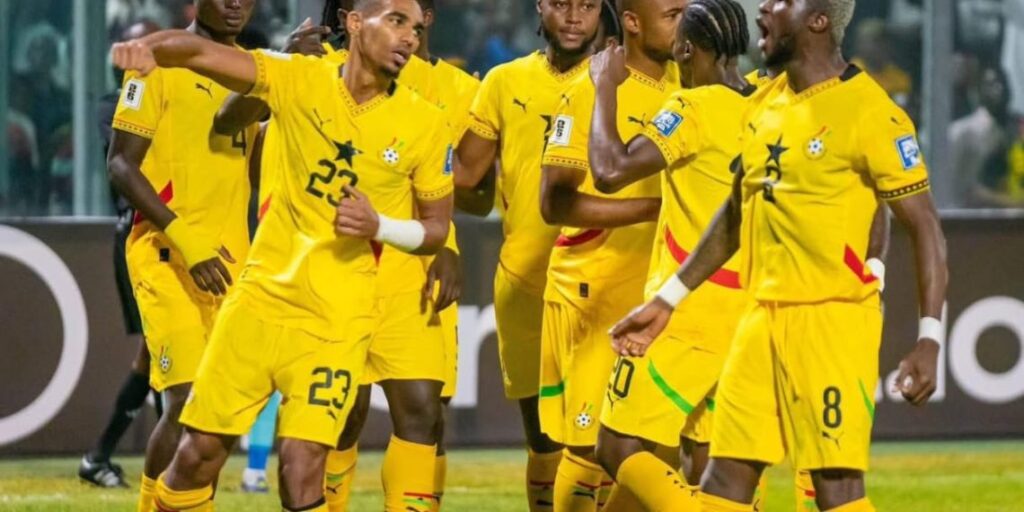
It was a night charged with national pride and purpose. Ghana’s Black Stars fundraising campaign made a thunderous entrance, pulling in approximately $10 million on the very first day of its launch, a figure that has set the tone for what organisers hope will be a historic drive toward a $30 million goal. The announcement came from Deputy Finance Minister and Chairman of the Fundraising Committee, Thomas Nyarko Ampem, who could barely conceal his excitement as he addressed the nation following the high-profile launch event. “The fundraising target is $30 million, and if you listen to the pledges and donations, on day one of the launch, we got about $10 million,” he said. “We are going to put together other events, and we believe that the contributions that are coming in from the short code as well.” The launch drew a constellation of Ghana’s most influential figures. President John Dramani Mahama graced the occasion alongside Sports Minister Kofi Adams and Ghana Football Association President Kurt Okraku, signalling the weight of government and football administration behind the initiative. The atmosphere buzzed with energy as the sports, entertainment, and business sectors rallied behind the cause. Legends of Ghanaian football were also in the room. Former Black Stars captain Stephen Appiah, ex-internationals Fatawu Dauda and Mohammed Polo stood shoulder to shoulder with music heavyweights Stonebwoy, Shatta Wale, and Nacee, a powerful reminder that supporting the Black Stars is not just a sporting affair, but a deeply cultural one. The funds raised will go toward preparing the national team for upcoming international competitions, including four international friendly matches ahead of major tournaments. But beyond the logistics of football, the campaign carries a deeply personal message for ordinary Ghanaians. Nyarko Ampem revealed that part of the initiative is designed to give everyday citizens a direct stake in the team’s journey. “We are using some of this also to randomly select some Ghanaians to go and support the players,” he explained. “Ghanaians who are interested, the code is *899#. With just two or three steps, you stand a chance of representing Ghana to support the Black Stars at the World Cup.” It is a gesture that speaks to the soul of Ghanaian culture, a people who have always worn their national identity with fierce pride, from the rhythms of highlife and afrobeats echoing across the country to the passionate roar of fans who live and breathe football. The Black Stars are not merely a team; they are a symbol of unity, resilience, and collective ambition. With $20 million still to go, organisers are confident. Additional fundraising events are set to be rolled out in the coming weeks, and the momentum from day one suggests that Ghana is more than ready to answer the call. The story of the Black Stars’ next chapter is being written, and every Ghanaian has been handed a pen. Source: Apexnewsgh.com
GUTA President Blasts Parliament Over Foreign Business Dominance, Warns Politicians Will Feel the Pinch After Office
The President of the Ghana Union of Traders Association (GUTA) has delivered a stinging rebuke to Ghana’s political class, holding both sides of Parliament responsible for what he describes as a systemic failure to protect local businesses from being crowded out by foreign enterprises. Clement Boateng made no effort to soften his message as he addressed members of the Minority Caucus, laying the blame squarely at the feet of successive political administrations across party lines. His central charge: that lawmakers, through inaction and weak oversight, have allowed foreign investors, particularly from China, to entrench themselves in sectors of the economy that were historically the preserve of Ghanaian entrepreneurs. The sectors Boateng identified paint a broad and troubling picture. Retail trade, construction, mining, finance, telecommunications, and small-scale commerce, areas once dominated by indigenous business owners, have, in his view, increasingly fallen under the influence of foreign players. The consequence, he argued, has been the gradual marginalisation of local entrepreneurs who find themselves unable to compete on an uneven playing field. Nowhere has this been more damaging, Boateng suggested, than in the mining sector, where the surge in foreign activity has not only displaced Ghanaians economically but has also wreaked havoc on the environment. He pointed specifically to the contamination of vital water bodies, a crisis that has drawn widespread public concern and underscored the real human cost of unchecked foreign involvement in the industry. The GUTA President also turned his attention to the regulatory frameworks that should, in theory, offer some protection. He singled out the Ghana Investment Promotion Centre Act, which contains provisions safeguarding local participation in certain sectors, but argued that the law exists largely on paper. Weak enforcement, he contended, has rendered these protections meaningless in practice, a failure he attributed to a lack of political will. Perhaps his sharpest warning, however, was directed personally at the lawmakers in the room. Boateng reminded them that many of them are active business people themselves, and cautioned that once they exit public office and return fully to private enterprise, they will be forced to confront the very same challenges they are currently doing so little to address. It was, in effect, a warning that the consequences of their inaction would one day come home to roost. Source: Apexnewsgh.com
Tema Microlight Crash: Lawmakers Demand Transparent Probe, Stronger Aviation Safety Standards
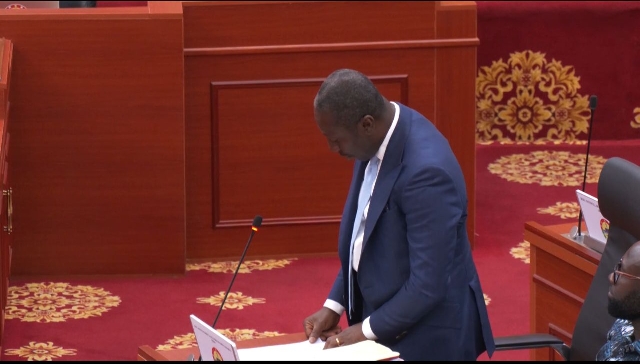
The fatal microlight aircraft crash in Tema that claimed the lives of two brothers has sparked urgent calls from both sides of Parliament, with lawmakers demanding accountability, transparency, and sweeping reforms to aviation safety standards. Leading the charge from the Minority side, Minority Leader Alexander Afenyo-Markin has called for a thorough, transparent, and time-bound investigation into the crash, and has made clear that the findings must not be buried in bureaucratic silence. The Effutu Member of Parliament is insisting that the results of the probe be made public, that aviation safety protocols be comprehensively reviewed and strengthened, and that the bereaved families receive adequate support as they come to terms with their devastating loss. Beyond the immediate tragedy, Afenyo-Markin raised a broader and troubling question: how was a private aircraft permitted to operate over a densely populated area in the first place? His concern points to what he sees as a worrying pattern, noting the recent uptick in aircraft-related incidents and questioning whether existing oversight mechanisms are fit for purpose. On the other side of the aisle, Majority Chief Whip Rockson-Nelson Dafeamekpor echoed the gravity of the moment as he presented a statement on the tragedy. While sharing in the grief over the loss of the two brothers, Dafeamekpor directed his message squarely at those responsible for operating microlight aircraft, urging them to strictly observe maintenance and safety standards to ensure that such a devastating incident is never repeated. Dafeamekpor also called on the Ghana Air Force to step up its engagement with private aircraft owners, stressing the need for a collaborative approach to safety that protects not only pilots but the communities over which these aircraft fly. Both lawmakers agreed on one thing: the incident has left a deep wound, on the bereaved family, and on all those touched by the tragedy. Whether their calls translate into meaningful reform now rests with the relevant authorities. Source: Apexnewsgh.com