

Ghana’s Inflation Tumbles to 3.2% in March 2026 — Lowest Since 2021 CPI Rebasing
Ghana’s inflation rate fell to 3.2% in March 2026, its lowest level since the rebasing of the Consumer Price Index in 2021, signaling a remarkable turnaround for an economy that was battling runaway prices just a year ago. The milestone arrives even as rising global fuel costs, fanned by the simmering geopolitical tensions in the Iran–U.S.–Israel conflict, threaten to reignite price pressures. The latest data released by the Ghana Statistical Service (GSS) paints a picture of steady disinflation, with the headline rate posting a sharp year-on-year decline from 22.4% recorded in March 2025, a drop of more than 19 percentage points in twelve months. On a month-on-month basis, however, overall prices nudged up only marginally, rising just 0.1% between February and March, suggesting that the broader downward trend remains intact. Breaking down the numbers, food inflation eased slightly to 2.3% from 2.4% the previous month, while non-food inflation moderated to 3.9%. A notable concern, however, emerged in the services sector, where inflation surged to 7.2%, a signal that cost pressures in transport, energy, and utilities have not yet fully dissipated. On the goods side, prices offered consumers some welcome relief, declining by 1.0%. Locally produced items saw inflation tick up modestly to 4.9%, while imported goods recorded a deflation of 0.6%, reflecting the relative stability of the Ghanaian cedi against major trading currencies. The regional picture told a more uneven story. The North East Region recorded the highest inflation in the country at 8.6%, while the Savannah Region stood at the opposite end of the spectrum, posting a deflationary rate of minus 4.6%, a stark reminder that the benefits of macroeconomic stabilization are not uniformly felt across Ghana’s diverse regions. In the financial sector, the sustained easing of inflation is beginning to filter through to lending conditions. Average lending rates from commercial banks eased to around 21.5% in March, down from 22.1% in February, reflecting the Bank of Ghana’s cautious but growing optimism about the inflation outlook. The sustained decline in inflation, even against the backdrop of global fuel-related shocks, points to strengthening macroeconomic fundamentals and is raising expectations of further interest rate cuts in the near term. Yet, the sharp rise in services inflation serves as a reminder that the battle against underlying cost pressures is far from over. For Ghanaian households and businesses alike, the direction of travel is encouraging, but the road to full price stability remains a work in progress. Source: Apexnewsgh.com
New APC Deputy Chairman Hits the Ground Running, Appoints Diaspora Medical Leader as Special Adviser

In a bold move signaling his commitment to inclusive leadership, the newly elected All Progressives Congress (APC) National Deputy Chairman for the South, Dr. Benjamin Nwoye, has announced his first major appointment—tapping a prominent Diaspora leader to bridge the gap between the party and Nigerians abroad. Dr. Nwoye has named Dr. Kingsman Obinna Chikelu, a medical doctor and Managing Director of Diaspora Hospital Abuja, as his Special Adviser on Diaspora and Medical Affairs. The appointment, made public on Monday, March 30, 2026, comes just days after Dr. Nwoye’s emergence at the party’s National Convention, where he took over from Chief Emma Eneukwu. Dr. Chikelu is no stranger to Diaspora leadership. A respected medical practitioner, he previously served as Chairman of the Nigerians in Diaspora Organisation (NIDO) Worldwide. His background spans Diaspora mobilization, international relations, and healthcare advocacy—qualities his new principal believes will be instrumental in advancing the party’s vision. According to sources close to the Deputy National Chairman’s office, the appointment is strategic. The goal, they explained, is to harness the skills, expertise, and vast networks of Nigerians living abroad to support the APC’s development agenda while also strengthening the party’s health and welfare initiatives. “This appointment reflects our commitment to inclusivity and tapping into the vast resources and expertise of our brothers and sisters in the Diaspora,” Dr. Nwoye said, expressing confidence in Dr. Chikelu’s ability to deliver. In his acceptance, Dr. Kingsman Obinna Chikelu pledged to work diligently to mobilize Diaspora support for the party and contribute meaningfully to its medical and welfare programmes. Party stakeholders have welcomed the move, describing it as a timely signal that Dr. Nwoye is ready to hit the ground running in his new leadership role. Source: Apexnewsgh.com
Burkina Faso Bans Tomato Imports to Boost Local Farming

Burkina Faso has officially kicked off a ban on the importation of tomatoes, marking a significant policy shift aimed at protecting local farmers and driving growth in the country’s domestic agricultural sector. The ban, which takes effect today, forms part of a broader push by the Burkinabè government to reduce the nation’s dependence on foreign produce and move toward greater self-sufficiency in food production. By limiting competition from imported tomatoes, particularly those flowing in from neighbouring countries, authorities hope to create a more favourable market environment for local growers who have long struggled to compete with cheaper foreign alternatives. Beyond shielding farmers from external competition, officials believe the policy will catalyze increased production, helping to stabilise prices at the farm gate and strengthen the country’s agribusiness value chain from field to market. The ripple effects of the decision, however, are expected to extend well beyond Burkina Faso’s borders. Countries that have relied on Burkinabè tomato imports may find themselves navigating supply disruptions, while traders on both sides of the divide adjust to the new restrictions. Closer to home, the reception has been mixed. Local tomato producers have largely welcomed the ban as a long-overdue step toward empowering domestic agriculture. However, some traders and consumers have sounded a note of caution, raising concerns about the prospect of supply shortages and rising prices in the short term as the market finds its footing under the new regime. Ultimately, the success of the policy will hinge on Burkina Faso’s capacity to ramp up local production and ensure efficient distribution systems are in place to meet domestic demand. Authorities are expected to keep a close eye on developments, with the aim of ensuring the ban delivers on its promise without placing undue strain on everyday consumers. Source: Apexnewsgh.com
Ghana Declares Good Friday and Easter Monday as Public Holidays

The Ministry of the Interior has officially declared Friday, April 3, and Monday, April 6, 2026, as statutory public holidays, giving Ghanaians across the country the opportunity to fully observe the Easter season. The announcement was contained in a press release issued on March 30, in which the Ministry confirmed that the two dates mark the observance of Good Friday and Easter Monday, respectively. The Ministry called on the general public to recognize both days as public holidays throughout Ghana, in accordance with the country’s official holiday calendar. The declaration was signed by the Minister for the Interior, Muntaka Mohammed-Mubarak, lending official weight to what is one of the most significant periods in the Christian calendar. Good Friday and Easter Monday hold deep religious meaning for Christians around the world. Good Friday commemorates the crucifixion of Jesus Christ, while Easter Monday celebrates his resurrection, together forming the cornerstone of the Christian faith. In Ghana, the holidays are widely marked with church services, religious processions, family gatherings, and vibrant community events that bring people together across the country. By making the declaration official, the Ministry ensures that citizens are not only free to rest from work, but are also able to fully participate in the spiritual and cultural observances that define the Easter period. With the holidays just days away, Ghanaians are being encouraged to make the most of the season. Source: Apexnewsgh.com
Ghana Sacks Otto Addo as Black Stars Head Coach After Run of Poor Results

The Ghana Football Association has parted ways with Otto Addo as head coach of the senior national team, the Black Stars, bringing an end to his tenure following a series of dismal performances in recent international friendlies. The axe fell after a run of results that left little room for patience. Ghana suffered a humiliating 5–1 thrashing at the hands of Austria before falling 2–1 to Germany, extending the team’s losing streak to four consecutive matches. The back-to-back defeats not only dented confidence but sparked widespread concern about the team’s direction and readiness for the challenges ahead. The timing of Addo’s dismissal could hardly be more significant. Ghana is gearing up for the 2026 FIFA World Cup, to be co-hosted by the United States, Canada, and Mexico, and the stakes could not be higher. The Black Stars have been drawn into a formidable group alongside Panama, England, and Croatia, making the need for an immediate turnaround in form all the more urgent. In a statement announcing the decision, the GFA acknowledged Addo’s service while making clear that the separation was effective immediately. “The Ghana Football Association (GFA) has parted ways with the Head Coach of the senior men’s national team (Black Stars), Otto Addo, effective immediately. The Association wishes to thank Otto Addo sincerely for his contribution to the team and wishes him the best of luck in his future endeavours,” the statement read. The Association gave no immediate indication of who would take the reins, but assured the public that a new technical direction for the Black Stars would be announced in due course, as preparations press ahead toward upcoming international competitions. With the World Cup on the horizon and a tough group awaiting, the clock is ticking for Ghana to find the right man for the job. Source: Apexnewsgh.com
Former Defence Procurement Chief Referred for Prosecution Over GH¢4.8M Vehicle Deal

The Public Accounts Committee has referred Frank Oliver Kpodo, former Director of Procurement at the Ministry of Defence, to the Attorney-General for prosecution in connection with the alleged purchase of six vehicles worth GH¢4.8 million. The matter came to a head following mounting pressure from Majority Chief Whip Rockson-Nelson Dafeamekpor, who called for Mr Kpodo’s immediate interdiction. At the heart of the controversy were allegations that falsified documents had been used in an attempt to procure the vehicles, intended for monitoring the 2024 general elections, raising serious red flags about the integrity of the transaction. The case had already attracted scrutiny from the Auditor-General, who disallowed store receipt vouchers valued at GH¢4.8 million during a special audit of government commitments and payables. The audit found that the vehicles in question were never supplied, casting doubt on the legitimacy of the procurement process. When Mr Kpodo, now serving as a procurement officer at the Ministry of Lands, appeared before the Committee on Tuesday, March 31, he offered an explanation that did little to ease tensions. He claimed the vehicles had initially been delivered but were subsequently removed amid concerns that payment might not be made. He added that he had later advised management to extend the contract agreement. His account, however, failed to satisfy Committee members. Mr Dafeamekpor was particularly scathing in his response, challenging Mr Kpodo on the whereabouts of the vehicles and the specifics of the deal. “You personalize the transactions, so they became your personal burden,” he said. “How many vehicles were involved? If you can’t tell us where the vehicles are, at least tell us how many there were. So for me, my demand is that the Ministry of Lands and Natural Resources should interdict this man. He should be interdicted.” With the Committee unconvinced by Mr Kpodo’s explanation, the Ranking Member, Samuel Atta-Mills, moved swiftly, referring Mr Kpodo to the Attorney-General for prosecution, bringing the matter one step closer to a formal legal reckoning. Source: Apexnewsgh.com
Best Year, Worst Year: The Story of How Ghana’s Anti-Corruption Office Fought to Stay Alive in 2025

The Office of the Special Prosecutor (OSP) delivered some of its strongest operational results in 2025. And in the very same year, it came closer than ever to being wiped off the map. Special Prosecutor Kissi Agyebeng laid this uncomfortable paradox bare at the National Dialogue on the Office of the Special Prosecutor on Tuesday, March 31, describing 2025 as a year the institution would not soon forget, for all the wrong reasons, and all the right ones. “2025 was our best year of performance; at the same time, it was our worst year of existential troubles,” he told the gathering. “Why should Kissi and a few officers of the Office of the Special Prosecutor always fight existential battles just to keep this office running?” It is a question that cuts to the heart of a deeper problem. An institution designed to pursue corruption at the highest levels of government found itself, in 2025, spending precious energy not on investigations, but on its own survival. The threat was real, and it came from within Parliament itself. In December 2025, Majority Leader Mahama Ayariga and Majority Chief Whip Rockson-Nelson Dafeamekpor drafted a Private Member’s Bill seeking the outright repeal of the Office of the Special Prosecutor Act, 2017 (Act 959). The bill’s memorandum argued that eight years of OSP operations had exposed deep structural and constitutional flaws, chief among them, a duplication of prosecutorial functions between the Special Prosecutor and the Attorney-General, which the drafters said had created institutional friction, overlapping mandates, and delays in criminal proceedings. In plain terms, some of Ghana’s most powerful lawmakers wanted the OSP gone. The bill did not advance. President John Dramani Mahama stepped in and requested that it be suspended, a move that, for now, kept the office breathing. But the episode left a mark. It demonstrated, with startling clarity, that the OSP’s existence is not guaranteed, and that its most persistent threats do not come from the corrupt, but from those with the power to change the law. Agyebeng, speaking from that experience, turned to civil society with both an appeal and a challenge. The OSP, he argued, cannot survive on the goodwill of presidents alone. It needs champions beyond the corridors of power, voices in communities, in boardrooms, and in the media, willing to defend it when politicians come calling with repeal bills and memorandums. “When I become the former Special Prosecutor, I want to look back and say: civil society forged this office and civil society preserved it,” he said. “It is your handiwork. Do not let it die.” The words carried the urgency of someone who has seen how quickly things can unravel. Ghana built the OSP to be a guardian of public accountability. In 2025, it needed to guard itself. The dialogue on Tuesday was, in many ways, a call to action, a reminder that anti-corruption institutions are only as strong as the public will that stands behind them. Whether that will prove strong enough remains, for now, an open question. Source: Apexnewsgh.com
Ghana’s Special Prosecutor Warns of Political Threats to His Office

He has spent years chasing corruption. Now, he says, the politicians are chasing him back. In a striking address that laid bare the fragile reality of Ghana’s anti-corruption architecture, Special Prosecutor Kissi Agyebeng stood before the National Dialogue on the Focus of the Special Prosecutor on Tuesday, March 31, and delivered a candid warning: the Office of the Special Prosecutor (OSP) is under siege, not from criminals, but from the political class it was created to hold accountable. Speaking with unusual candour, Mr. Agyebeng revealed that the OSP’s continued existence owes much to the goodwill of President John Dramani Mahama, at a time when a bill reportedly drafted by the Majority in Parliament seeks to scrap the institution entirely. Without that presidential support, he suggested, the office might already be gone. “Politicians consider the OSP as bad news for their interests,” he said plainly, framing the institution not as a bureaucratic body but as a threat, one that powerful people have consistently sought to neutralise. It is a sobering picture. An office established to pursue corruption, now spending its energy defending its own right to exist. But Agyebeng’s message was not one of defeat. It was a rallying cry. He called on civil society and the broader Ghanaian public to become active defenders of the OSP, arguing that an anti-corruption institution cannot survive on the goodwill of any single president. Today’s ally, he implied, could be tomorrow’s adversary. The office needs something stronger and more durable than political favour; it needs constitutional protection. The Special Prosecutor made clear that what is at stake is not just the fate of one institution, but the integrity of Ghana’s long-term fight against corruption. An OSP that must constantly battle for its survival cannot fully focus on its mandate. And a mandate left unfulfilled means impunity left unchecked. “We must build this office for the ages,” he said, “so that future Special Prosecutors do not spend most of their time fighting for survival instead of executing their mandate.” The words landed with the weight of lived experience, a prosecutor who knows, perhaps better than anyone, how easily the tools of accountability can be dismantled by those with the most to lose from them. Ghana built the OSP to go after corruption. The question Agyebeng posed on Tuesday is whether Ghana has the will to protect it long enough to let it do just that. Source: Apexnewsgh.com
Ghana Eyes GH₵15.23 Billion From Home: Government Lays Out Ambitious Domestic Borrowing Plan

The government is not looking abroad for this one. In a structured and deliberate push to fund its 2026 budget and keep its debt obligations in check, Ghana is turning to its own domestic market, and it is going in big. Between March and June 2026, the government plans to raise GH₵15.23 billion from the domestic market, according to an issuance calendar published by the Bank of Ghana. The plan is detailed, purposeful, and sends a clear message: the government intends to finance its ambitions from within, while simultaneously bringing order and predictability to a market that has weathered significant turbulence in recent years. The funds, once raised, will serve a dual purpose, refinancing existing debt that is coming due and providing the financial fuel needed to keep the 2026 budget running. The targets are anchored in the Net Domestic Financing framework outlined in the 2026 Budget Statement and Economic Policy, giving the exercise both structure and accountability. For everyday investors and market participants, the mechanics are familiar. The government will continue its weekly issuance of 91-day, 182-day, and 364-day treasury bills through the primary auction market, short-term instruments that have long been a staple of Ghana’s domestic borrowing toolkit. But this time, authorities are signalling a deliberate shift in strategy. Consistent with its broader debt management goals, the government is actively seeking to wean itself off short-term borrowing. In its place, medium- to long-term bonds will be scaled up, a move designed to reduce rollover risk, extend the maturity profile of Ghana’s debt, and build a more stable foundation for public finance. Bond issuances, however, will not begin immediately. The Bank of Ghana noted that it will commence only after restrictions tied to the Domestic Debt Exchange Programme (DDEP) expire, with settlement expected within two working days of each transaction. The DDEP, which reshaped Ghana’s domestic debt landscape, continues to cast a long shadow, but the government appears intent on moving forward carefully and within agreed boundaries. To further strengthen the market, the government also plans to reopen existing instruments. The strategy is aimed at boosting liquidity in the secondary market and helping to build out benchmark yield curves, technical tools that give investors a clearer picture of interest rate expectations across different time horizons. Taken together, the issuance calendar is more than a borrowing schedule. It is a statement of intent. The government has reaffirmed its commitment to transparency and predictability in the domestic debt market, signalling to investors that they can plan ahead with greater confidence. For a country that has spent recent years navigating one of the most difficult debt restructuring episodes in its history, the structured calendar represents a step toward stability, a sign that Ghana is not just borrowing, but borrowing with a plan. Source: Apexnewsgh.com
Finish What Was Started: Akufo-Addo Calls on Government to Complete Agenda 111 Hospitals
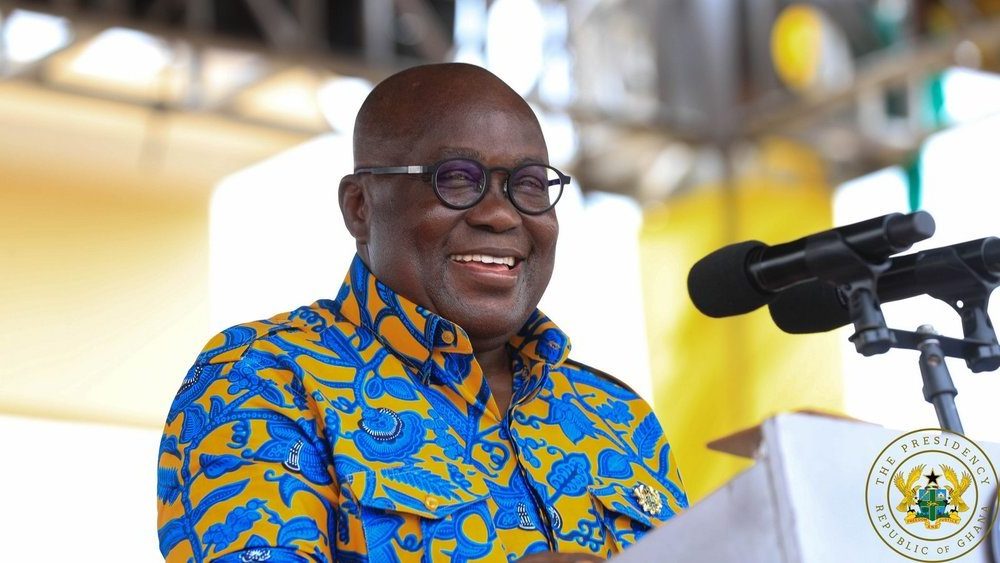
The launch of the Kyebi Government Hospital’s centenary celebrations over the weekend became more than a milestone event. It became a platform for an urgent national conversation about the state of Ghana’s healthcare infrastructure, and the fate of 111 hospitals that remain unfinished. Former President Nana Addo Dankwa Akufo-Addo, whose administration launched the ambitious Agenda 111 initiative to construct hospitals across all 111 districts in Ghana, used the occasion to make a direct appeal to the current government: complete the hospitals. Not for political credit, he urged, but for the people who need them. “We must also be honest, not every project was realised, not every project was completed,” the former president acknowledged, with a candour rarely heard in political circles. “At some facilities, we reached advanced stages that could not be finished before our term ended. Agenda 111 must be continued. Continuity, not disruption, is how health systems succeed.” It was a moment of rare self-reflection, paired with a clear call to action. Healthcare, Akufo-Addo stressed, must never become a casualty of political rivalry. But while the former president looked outward to the unfinished hospitals scattered across the country, the Overlord of Akyem Abuakwa State, Osagyefuo Amoatia Ofori Panin, turned attention to the very ground they stood, a hospital that has served the community for a hundred years, and yet still lacks the basic tools of modern medicine. “I am not the only one frustrated, but the nurses and doctors over there are equally frustrated,” the Overlord said, his voice carrying the weight of decades of unmet expectations. “100 years later, there is no scan machine in Kyebi Hospital, there is no quality laboratory in Kyebi Hospital.” His words painted a sobering picture: a facility old enough to have witnessed a century of Ghanaian history, still struggling to provide the standard of care its patients deserve. Osagyefuo Ofori Panin called on all stakeholders to rally around the hospital and invest in its transformation. Inside the wards, the situation is even more telling. The Medical Superintendent of the Kyebi Government Hospital, Dr. Isaac Adu-Opoku Antwi, revealed that children and pregnant women are currently sharing the same ward spaces, a reality that, he said, is directly undermining the quality of care being delivered. He made a pointed appeal to government for the construction of a dedicated maternity block, a children’s ward, a physiotherapy unit, and residential accommodation for health workers. Taken together, the voices that rang out at Kyebi over the weekend told a single, consistent story: Ghana’s healthcare system is crying out for investment, completion, and political will. The Kyebi Government Hospital turns 100 this year. The question now is what the next chapter will look like, and whether those in power will answer the call. Source: Apexnewsgh.com