


NAFCo Trial Adjourned to October 20 as Court Grants Time to Access Seized Devices

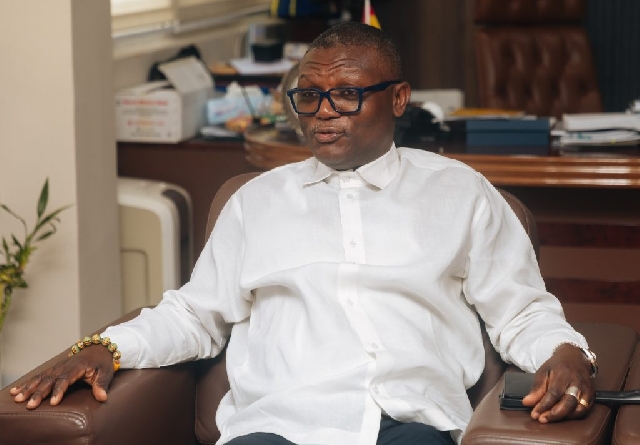
The trial of the former Chief Executive Officer of the National Food and Buffer Stock Company (NAFCo), Hanan Abdul-Wahab Aludiba, and his wife, Faiza Seidu Wuni, has been adjourned to October 20, 2026. The adjournment is to allow the accused persons time to access information contained on mobile phones and laptops that were recently released to them by the Economic and Organised Crime Office (EOCO). The case was expected to commence on Wednesday, October 7, 2026, before Justice Francis Achibonga. However, the trial judge adjourned proceedings after lawyers for the accused argued that they needed to retrieve vital information stored on the electronic devices to adequately prepare their defence. According to counsel, certain documents and data on the phones and laptops are crucial to responding to the charges levelled against their clients. Justice Achibonga subsequently granted the request and adjourned the case to October 20, 2026, for the trial to begin. Source: Apexnewsgh.com
Tragedy in Nigeria: 32 Killed as Military Plane Crashes into Swamp

32 people, including airmen, soldiers, crew members, and family members of military personnel, lost their lives yesterday when an ATR-42 plane crashed into a swamp opposite the Naval Base at Igbokoda, Ondo State. The ill-fated aircraft, which went down in the early hours of the morning, was carrying not just military personnel but also their relatives, among them children returning to school and loved ones who had visited their breadwinners serving in Edo and Delta states. According to sources, the turboprop aircraft was on a logistics mission to Lagos, part of Nigerian Air Force (NAF) operations, and had afforded families the opportunity to travel together. Authorities have delayed releasing the names of the victims, as some were civilian passengers, with efforts ongoing to notify their families first. President Bola Tinubu, mourning the loss, ordered an immediate investigation into the crash and declared a three-day national mourning period. Throughout the country, flags will fly at half-mast in tribute to the fallen officers and their families. Local officials confirmed the incident and cited bad weather as a likely cause. Ilaje Local Government Chairman, Maurice Oripelaye, reported that military gear was recovered from the site, stating, “Our findings showed that it was poor weather condition that affected the pilot. He was trying to maneuver, but the poor weather condition affected the pilot. It crashed into a swampy area very close to the water, at the back of Naval Base.” Police spokesperson DSP Jimoh Abayomi urged residents to remain calm and called on the public to avoid spreading unverified information, assuring that further details would be shared as investigations continue. Immediately following the accident, the Nigerian Air Force activated a search and rescue operation, with Air Commodore Ehimen Ejodame confirming that the aircraft was on a routine mission from Benin to Lagos when it crashed. Minister of Aviation and Aerospace Development, Festus Keyamo, confirmed on social media that air traffic control lost contact with the plane at about 9:13 a.m., and that all 25 passengers and seven crew members perished. Ondo State Governor, Lucky Aiyedatiwa, expressed heartfelt condolences to the Nigerian Air Force and the families of the victims, and mobilized state emergency agencies to assist in rescue and recovery efforts. The crash site has been cordoned off to allow unhindered operations, with local leaders urging the community to cooperate with authorities. Eyewitnesses in Igbokoda described hearing a loud sound and scenes of panic as the community rushed from the area. The Olu of Igbokoda, Oba Afolabi Odidiomo, said “a substantial part” of the aircraft was submerged in swamp water and, based on initial reports, feared there were no survivors. In a statement, President Tinubu praised the sacrifice of the Air Force personnel and assured that their service would never be forgotten. He commended first responders and pledged the continued support of his administration to the Nigerian Air Force and the families affected by the tragedy. Source: Apexnewsgh.com
Bank of Ghana Arrests Seven in Crackdown on Money Bouquets

In a coordinated operation with the Ghana Police Service, the Bank of Ghana (BoG) has arrested seven individuals in Accra for allegedly using cedi banknotes to create money bouquets and cakes for commercial sale. The suspects were apprehended at different locations across the capital as part of a targeted effort to curb the misuse of Ghana’s currency. Dianah Bondzi, Head of the Statistics Office at the Currency Management Department of the BoG, explained that the arrests form part of a broader enforcement campaign to protect the integrity of Ghana’s legal tender. “The Bank of Ghana wishes to issue a warning to the general public for using the banknotes and coins to create money bouquets, money cakes for weddings, for birthdays, for graduations, and other similar events, which constitutes the misuse and abuse of the currency, and it is illegal and unlawful,” Ms. Bondzi stated. She emphasized that the cedi must be treated with respect, and warned that anyone who engages in, aids, or promotes such activities risks arrest and prosecution. “From here, they will be prosecuted,” she confirmed, adding that sanctions under the Currency Act can include fines or imprisonment. The central bank’s action follows an earlier public notice issued on July 14, 2026, which cautioned against using currency notes and coins as decorations, including in money bouquets, jewellery, and other artistic creations. The notice also prohibits practices such as spraying money at events, scattering, stepping on, tearing, crumpling, or otherwise defacing banknotes and coins. According to Ms. Bondzi, the BoG, together with law enforcement agencies, has intensified enforcement to safeguard the quality and functionality of the cedi. She urged individuals, businesses, and institutions to handle the currency responsibly and to report any suspected violations to the authorities. “Today’s arrest should serve as a clear warning to the public. Let us all handle the Ghana cedi with dignity,” Ms. Bondzi concluded. Source: Apexnewsgh.com
Vice President Advocates Practical Support for Teachers at 2026 Ghana Teacher Prize
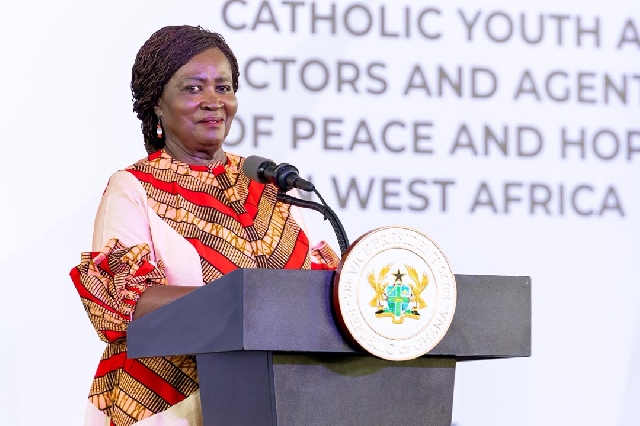
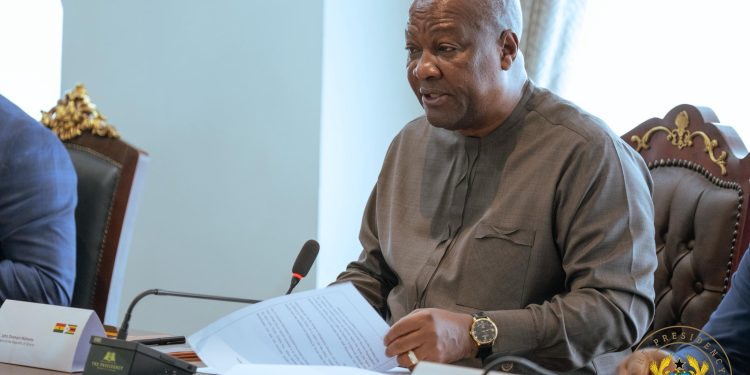
At the 2026 Ghana Teacher Prize ceremony held on Monday, October 5, Vice President Prof. Naana Jane Opoku-Agyemang delivered a heartfelt message on the enduring impact teachers have on their students’ lives. Addressing an audience gathered to honour exceptional educators, she emphasized that the profound responsibility entrusted to teachers must be matched by real, tangible support from the state. “A teacher’s influence on a child can last a lifetime. The responsibility we place on teachers must be matched by practical support,” Prof. Opoku-Agyemang stated, highlighting the crucial role teachers play in nurturing integrity, care, and professionalism in the next generation. She outlined the government’s ongoing investments in education, noting improvements in school infrastructure, the provision of educational resources, and initiatives aimed at enhancing teachers’ welfare. “The Teacher Dabrɛ Initiative seeks to improve accommodation, particularly for teachers serving in underserved communities. We are also working to ease the pressures of double-track schooling and resolve administrative challenges affecting teacher placement, promotions, and remuneration,” she revealed. Acknowledging the rapidly changing world facing today’s children, the Vice President called for classrooms to evolve accordingly. “Teachers must therefore have access to continuous professional development, appropriate technology and the tools required to prepare learners for the realities of the future,” she said. Prof. Opoku-Agyemang also addressed concerns raised by teacher unions, assuring the teaching community that the government is engaging stakeholders to work through their issues collaboratively. “Building the education system we want requires us all to continue working together in the interest of our children,” she said. To conclude the ceremony, the Vice President extended her warmest congratulations to all award recipients and expressed deep appreciation for teachers across Ghana who continue to serve with dedication, often in demanding circumstances. Source: Apexnewsgh.com
NDC Deputy General Secretary Admits Telling EOCO to Arrest Manhyia South MP

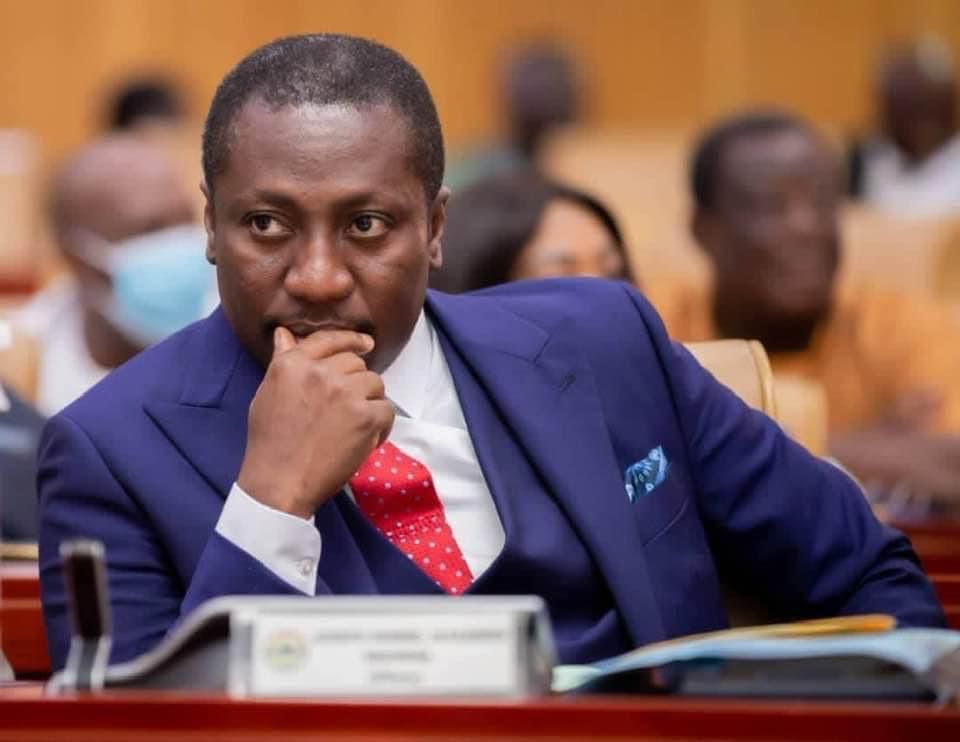
A major political stir has erupted after Mustapha Gbande, Deputy General Secretary of the National Democratic Congress (NDC), openly admitted instructing the Economic and Organised Crime Office (EOCO) to arrest Manhyia South Member of Parliament, Nana Agyei Baffour Awuah. Speaking on JoyNews, Mr. Gbande clarified that his call for arrest was not linked to the MP’s role as a lawyer for senior nursing officer Salomey Awiti-Baffoe, as some had speculated. Instead, he said his directive was prompted by concerns over the MP’s conduct and a firm belief that no one should ignore an invitation from law enforcement. “I told him to arrest him. I wouldn’t lie about it,” Mr. Gbande stated. “I met the EOCO boss; I told him to arrest the guy. Let the whole world come to an end. Arrest him.” Mr. Gbande argued that Baffour Awuah should have simply honoured EOCO’s invitation, made the necessary statement, and left, rather than hold a press conference over the issue. The controversy began on September 23, 2026, when EOCO officers attempted to arrest the MP at the Accra High Court. According to EOCO, the arrest was part of an ongoing investigation and followed two previous invitations sent to the MP in February 2026—both of which, the agency said, went unanswered. However, the operation was called off after officers assessed that proceeding could jeopardize public safety. MP Baffour Awuah, meanwhile, disputed parts of EOCO’s narrative. He claimed the officer who approached him at court failed to provide proper identification or an arrest warrant, and that he became suspicious when the officer insisted he travel in their vehicle instead of his own. The situation intensified on September 30, when the High Court granted EOCO authority to arrest Baffour Awuah and search for documents related to their investigation. The court directed that the warrant be executed through the Speaker of Parliament. EOCO’s probe focuses on alleged unauthorized financial transactions involving SIC Life Savings and Loans, including suspected financial loss, dissipation of public funds, and money laundering. Baffour Awuah, who explained that his former law firm represented SIC Life Savings and Loans in recovering funds from another institution, reported himself to EOCO on October 1, accompanied by his lawyers and other MPs. He was charged with three offences, pleaded not guilty, and was released on GH¢10 million bail with two sureties. The next hearing is set for October 26. Amid the ongoing case, Mr. Gbande dismissed suggestions that law enforcement agencies must announce intended arrests in advance. “There’s no law that says that when a law enforcement agency is doing its work, it should come to media houses and tell them that I’m going to arrest somebody,” he said. Mr. Gbande further insisted that no political office-holder should see themselves as above the law. “Never should I sit anywhere and say that because I am a deputy general secretary of a party, I am bigger than the laws of Ghana,” he emphasized. He concluded that if Baffour Awuah had committed an offence, it was right for law enforcement to take the necessary action. Source: Apexnewsgh.com
Ghana Catholic Bishops Sound Alarm Over Rampant Drug Abuse Among Youth
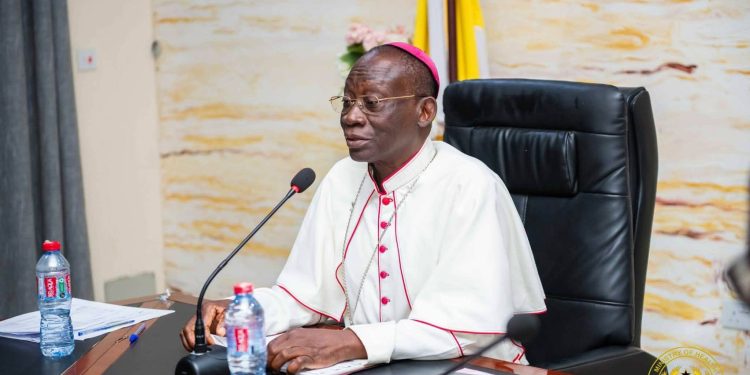
The Ghana Catholic Bishops’ Conference has sounded the alarm over the growing crisis of drug abuse sweeping across the country’s youth. At the heart of their concern is the widespread misuse of tramadol, marijuana, and other easily accessible drugs, which the Bishops warn are having a devastating impact on young people and communities nationwide. Speaking at a recent press briefing, the President of the Ghana Catholic Bishops’ Conference, Most Rev. Matthew Gyamfi, called for urgent and targeted action. He emphasized that while the fight against narcotics has largely focused on cocaine and other high-profile drugs, the real danger lies in substances that are readily available in Ghanaian villages and towns. “In our villages and towns, we know the young men and women have taken to drugs, tramadol, ‘Red’, marijuana, and this is destroying many, many young men and women,” Most Rev. Gyamfi stated, expressing deep concern over the toll these drugs are taking on the youth. He argued that the national response must recognize the scale and accessibility of these substances. “You should not concentrate only on drugs like cocaine, which is used, but not as massively as marijuana, tramadol, ‘Red’ and other similar drugs that are readily available on the shelves, and young people just go for it,” he noted. The Bishops’ Conference is calling for stronger laws and enhanced enforcement to restrict the importation and illegal sale of these drugs. “They should make laws to ban the importation of these drugs and ensure that they are cleared away from the shelves,” Most Rev. Gyamfi urged. Their plea forms part of a broader campaign to address the escalating drug menace and its consequences for Ghana’s future generations. The Bishops are urging authorities not only to intensify crackdowns on illegal drug supply, but also to expand efforts to prevent substance abuse among the nation’s youth, safeguarding their wellbeing and the health of communities across the country. Source: Apexnewsgh.com
Ghana’s Rape Laws Under Scrutiny: Calls for Reform to Protect Male Victims
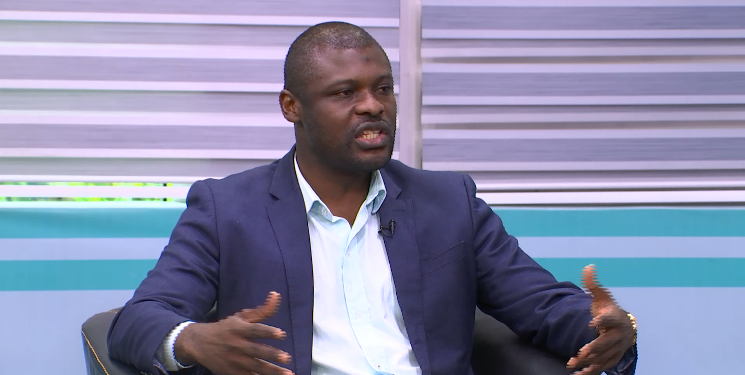
The President of the Young Lawyers Association, Noah Ephraem Tetteh Adamtey, recently brought national attention to a significant gap in Ghana’s rape laws. Speaking in the wake of a troubling incident involving a ride-hailing driver, Mr. Adamtey recounted the chilling ordeal: the driver alleged that three women, who had booked his vehicle, overpowered him during the trip and forced him to have sex against his will. Despite his resistance, the driver was ultimately subdued, left confused and hesitant to report the crime, uncertain if, as a man, he could even be considered a victim of rape under Ghanaian law. Mr. Adamtey explained that Section 98 of the Criminal Offences Act, 1960 (Act 29), which defines rape, does not recognize a man as a possible victim. As a result, men subjected to forced sexual acts by women cannot pursue rape charges. However, he clarified that the law is not entirely silent: such conduct could be prosecuted as indecent assault when there is forcible, non-consensual sexual contact. This allows the state to pursue criminal charges against perpetrators, even if the term “rape” does not apply. The Young Lawyers Association President further noted that if a victim is prevented from leaving a vehicle after being overpowered, the law could also support charges of assault, battery, and false imprisonment. Sections 84 and 85 of Act 29 offer grounds for prosecution in cases where someone is forcibly restrained or subjected to unwanted physical contact. Nonetheless, Mr. Adamtey observed a troubling disparity: the penalties for indecent assault and false imprisonment are generally less severe than those for rape, which is treated as a serious felony. This, he argued, leaves a gap in legal protection for men who experience sexually exploitative acts by women. While criminal charges may be possible, the resulting punishments may not match those imposed in conventional rape cases. “If the manner in which the woman had sexual contact with the man rises to the level of unnatural canal knowledge, then the punishment may be equivalent to that for rape,” Mr. Adamtey said. “In such a circumstance, the man could receive a remedy similar to what a woman would get if a rape charge was brought.” Describing the issue as one requiring thoughtful policy consideration, Mr. Adamtey stressed the importance of determining whether Ghana’s laws adequately protect male victims of non-consensual sexual violence. He emphasized that while the current definition of rape excludes male victims, there are still legal remedies available, albeit with potentially lighter penalties. Source: Apexnewsgh.com
Ngamegbulam Chidozie Stephen Honoured as Best Health Reporter at 5th Upper East Regional GJA Awards
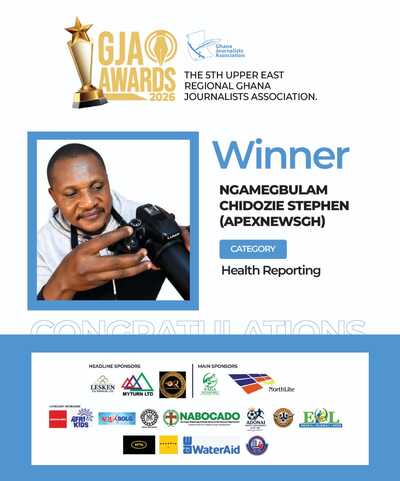
Ngamegbulam Chidozie Stephen, Editor-in-Chief of ApexnewsGh.com, has been honoured as the 2025 Best Health Reporter at the 5th Upper East Regional Ghana Journalists Association (GJA) Awards. Mr. Ngamegbulam, who had earlier been nominated for the prestigious regional awards, was recognised for his outstanding contribution to health journalism, particularly his commitment to telling stories that highlight the challenges confronting vulnerable and marginalised communities. His award-winning entry was a documentary titled “Pains of the Forgotten: Leprosy, Stigma, and Resilience in Ghana,” an investigative and human-interest documentary that exposed the struggles, stigma and challenges faced by persons living with leprosy in the Upper East Region. The documentary explored leprosy as one of humanity’s oldest known diseases, while drawing attention to its continuing impact on communities despite advances in medical science. According to the World Health Organization (WHO), 188 countries and territories reported a combined 172,717 new cases of leprosy in the year referenced by the documentary. However, the documentary highlighted that while leprosy remains a global health concern, its impact is particularly profound in vulnerable communities, including parts of Ghana’s Upper East Region. Communities in Bongo, Talensi, Nabdam and other districts continue to confront the disease and its associated social consequences. In Bongo District, where the population is slightly above 120,000, the documentary established that 57 cases were officially recorded between 2019 and September 2025. It also raised concerns that the actual number could be higher because of fear, stigma, misinformation and reluctance among some affected persons to seek medical attention. Beyond leprosy, the documentary placed the issue within the wider challenge of Neglected Tropical Diseases (NTDs) in Ghana. These diseases disproportionately affect vulnerable populations, often deepening poverty, social exclusion and inequality. The production, which received significant attention, was sponsored by the Development Research and Advocacy Centre (DRAC), a non-profit and non-state institution committed to research, training and advocacy towards sustainable development in Ghana, particularly within the savanna ecological zone. Speaking to journalists and bloggers after the awards ceremony, Mr. Ngamegbulam expressed satisfaction with the organisation of the event and commended the Upper East Regional GJA leadership, led by Regional Chairman Albert Sore, for what he described as a well-organised awards process. He also praised the Awards Vetting Committee for what he considered a thorough vetting exercise. Mr. Ngamegbulam said the recognition was particularly significant because it reflected years of consistency and dedication to journalism and public-interest reporting. Since the establishment of ApexnewsGh.com in 2020, he said, the platform has remained committed to producing stories that draw attention to issues affecting communities and contribute to public discourse on development in the Upper East Region. The recognition also adds to his record of awards and nominations in journalism since 2019, reflecting his involvement in different areas of media practice. Mr. Ngamegbulam also expressed special appreciation to the management of WORD FM, a community radio station in the region, for supporting the documentary and providing an opportunity for the production to be aired on its network. He noted that such partnerships between journalists and media organisations were important in ensuring that public-interest stories reached wider audiences. The awards ceremony brought together prominent personalities from the Upper East Region and beyond, including Dr. Braimah Baba Abubakari, Regional Director of Health Services; Bolgatanga Central Member of Parliament, Hon. Isaac Adongo; Deputy Minister of Education, Dr. Clement Apaak; Bongo Member of Parliament, Lawyer Charles Bawa Dua; the Baare Chief; and a representative of the Upper East Regional Minister, among other dignitaries. The event provided an opportunity to recognise journalists whose work has contributed to public awareness, accountability, development and social change across the region. Sponsors and Partners The 5th Upper East Regional GJA Awards received support from a number of organisations and institutions. Headline Sponsors: Lesken Enterprise Ltd MyTurn Limited KacStone Records Main Sponsors: PAGA Youth Movement NorthLite Solar Category Sponsors: ActionAid Ghana Afrikids Ghana NABOCADO Endswell Pharmacy MTN Partners: Alafia WaterAid Ghana Widows and Orphans Movement Ghana Tourism Authority Ghana Hotels Association – Upper East Region AquaBolg Natural Water The recognition of Ngamegbulam Chidozie Stephen as Best Health Reporter underscores the growing importance of health journalism that goes beyond reporting statistics to document the lived experiences of vulnerable people and bring overlooked public-health challenges into the national conversation. Source: Apexnewsgh.com
GJA Upper East Chairman Uses Humorous Personal Experience to Spotlight Importance of WASH at 5th Regional Awards Night
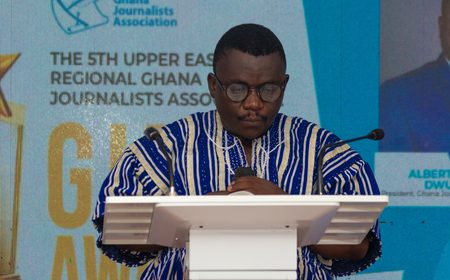
The 5th Upper East Regional GJA Awards in Bolgatanga was an evening of gratitude, laughter, and reflection, highlighted by an unforgettable address from GJA Regional Chairman, Albert Sore. Sore opened the ceremony on a warm note, drawing the audience in with a personal story from a July work trip. After a long journey and an unexpected detour, he and his companions found themselves at a modest hotel in Atebubu, where only shared bathrooms were available. In urgent need, Sore accepted the elderly hotel manager’s offer to use a private toilet. He was led through a maze of rooms, only to find himself in her bedroom, using the family facility. As he described the flurry of awkward thoughts that crossed his mind, the audience burst into laughter when he joked about setting a world record for the fastest toilet visit. But Sore’s humor set the stage for a sobering reflection. He called on the audience to imagine if the discomfort he felt was a daily reality for pregnant women and mothers in healthcare facilities, where privacy, clean water, and hygienic toilets are often lacking. For these women, Sore emphasized, there is no easy escape; their health and dignity depend on the conditions they find themselves in. This reality, Sore explained, is why this year’s theme, “Beyond the Headlines: The Media’s Role in Promoting WASH for Safe Motherhood and Quality Healthcare,” was chosen. He underscored that water, sanitation, and hygiene (WASH) are not luxuries but essentials for safe and dignified healthcare. Sore praised WaterAid Ghana for its ongoing commitment to advancing WASH in local communities. Calling on journalists to go beyond the surface in their reporting, Sore challenged the media to investigate whether healthcare facilities truly meet basic WASH needs, and to highlight not only the problems, but also the solutions, holding duty-bearers accountable along the way. As the awards recognized journalistic excellence in areas such as agriculture, education, health, gender, and more, Sore congratulated all honorees and reminded them that every accolade brings added responsibility. He encouraged all journalists to keep striving for impactful, ethical, and trustworthy storytelling. In closing, Sore reminded the gathering: “Beyond the headlines, there are lives to be touched, voices to be heard, and systems to be held accountable. Let us never lose sight of that responsibility.” Sponsors and Supporters: Headline sponsors: MyTurn Limited, Lesken Enterprise Limited Main sponsors: NorthLite Solar Limited, Kacstone Records, Paga Youth Movement Supporting organisations: WaterAid Ghana, ActionAid Ghana, AfriKids Ghana, Endswell Pharmacy, MTN Ghana, Alaffia, NABOCADO, Widows and Orphans Movement, Adonai Sport Management-UK, Ghana Tourism Authority, Lapam Zorkor Hotel, Ghana Hotels Association – Upper East Region, AquaBolg Natural Mineral Water Individual supporters: Hon. Dr. Mark Kurt Nawaane, Hon. Simon Aworigo, Lawyer Anthony Namoo, Dr. Dominic Anarigide, Hajia Charity Rahinatu Asoemah, Ambassadors for Julius Debrah – Upper East Region, Friends of Prosper Source: Apexnewsgh.com
Upper East Region Records 60 Maternal Deaths in 2025 Amid Water and Sanitation Challenges–UE-GHS Director Dr. Braimah Baba Abubakari
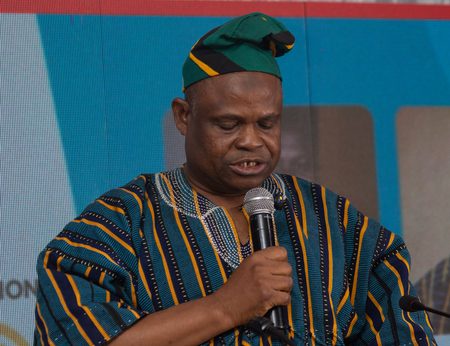
At the 5th Upper East Regional GJA Awards in Bolgatanga, a sobering statistic cast a shadow over the celebrations. Dr. Braimah Baba Abubakari, Upper East Regional Director of the Ghana Health Service (GHS), revealed that the region had recorded 60 maternal deaths in 2025, an alarming figure in a year when infections remained among the top causes of these tragedies. While the region achieved a skilled delivery rate of 75.86 percent, surpassing the national target of 65 percent, Dr. Abubakari cautioned that this progress should not overshadow persistent gaps in water, sanitation and hygiene (WASH) across health facilities and communities. He explained that the maternal mortality ratio had actually increased to 132.4 deaths per 100,000 live births in 2025, up from 97.1 per 100,000 the previous year. Sepsis, or infection, ranked as the fourth leading cause of maternal mortality in the region last year. Dr. Abubakari stressed that adequate WASH facilities are not a luxury but a necessity for safe motherhood and quality healthcare. “A health facility without water, sanitation and hygiene cannot deliver quality care, irrespective of how many doctors, how many pieces of equipment, how many midwives or how many drugs are stored in the facility,” he emphasized. Sharing the stage with journalists and health professionals, Dr. Abubakari called for stronger collaboration between the health sector and the media. “The health sector and the media need each other,” he said, highlighting how journalists can amplify hidden challenges and rally public support for critical health issues. He painted a vivid picture of the daily struggles faced by some health workers, who are forced to ration limited water supplies during shortages. Midwives, he explained, require clean water to wash their hands before and after deliveries, and to ensure that instruments and delivery rooms are properly sterilised. Without reliable access to water and good hygiene, the risk of infection, and maternal death, remains unacceptably high. As the Upper East Region looks ahead, Dr. Abubakari urged all stakeholders not to treat water and sanitation as peripheral concerns, but as the very foundation of quality healthcare. His message was clear: for every mother and child in the region, the simple act of turning on a tap could be a matter of life and death. Source: Apexnewsgh.com