









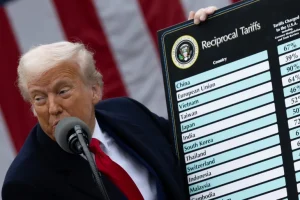
A coalition of 25 Democratic-led states has launched a legal challenge against the Trump administration’s latest round of tariffs, alleging that the former president exceeded his legal authority in imposing the new levies.
The lawsuit, filed on Monday, August 3, in the US Court of International Trade, targets double-digit tariffs placed on 60 trading partners last month. The administration justified the tariffs by accusing those countries of failing to curb the importation of goods produced with forced labour. The move came just as earlier temporary tariffs expired, after the Supreme Court struck down Trump’s signature “liberation day” levies in a February ruling.
“After losing at the Supreme Court, the administration is once again trying to illegally raise taxes on families and businesses with a new round of tariffs,” said New York Attorney General Letitia James. States participating in the lawsuit, including Oregon and New York, are all led by Democratic attorneys general or governors.
Responding to the lawsuit, White House spokesman Kush Desai defended the administration’s actions, stating, “A foreign country’s failure to impose and effectively enforce a prohibition on the importation of goods produced with forced labor is unreasonable and burdens US commerce, including American workers, and must be addressed.”
The legal battle comes as Trump continues to argue that high tariffs are necessary to revive US manufacturing. Last year, he broke with decades of US policy favoring low tariffs and open trade, citing the 1977 International Emergency Economic Powers Act (IEEPA) as justification for double-digit tariffs on imports from nearly every country. Trump claimed that the nation’s trade deficit constituted a national emergency. However, the Supreme Court ruled that IEEPA did not authorize such tariffs, forcing the administration to refund importers who had paid them.
To make up for lost revenue, the administration imposed temporary 10 percent tariffs, which expired on July 24. The newest tariffs, announced in July under Section 301 of the Trade Act of 1974, are aimed at countering unfair or discriminatory practices by other countries and now affect more than 99 percent of US imports.
The coalition of states, echoing arguments from previous lawsuits by small businesses, contends that the Trump administration is using concerns about forced labor as a pretext to reimpose tariffs already deemed illegal by the courts. They argue that sweeping import taxes will not effectively address the global issue of forced labor and instead harm American families and businesses.
Source: Apexnewsgh.com