


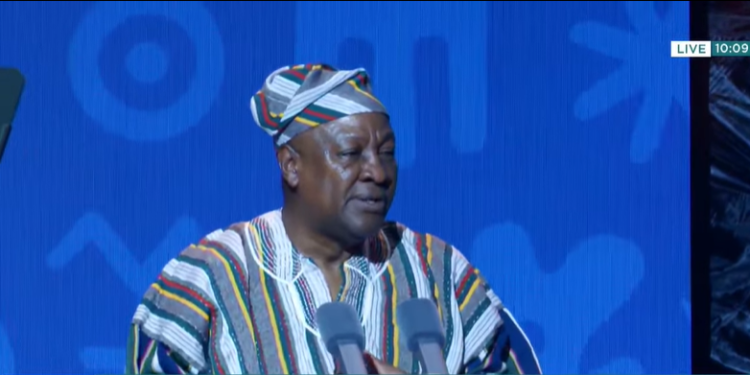
Deputy Education Minister Appeals to Striking Teachers to Return as Government Addresses Outstanding Issues
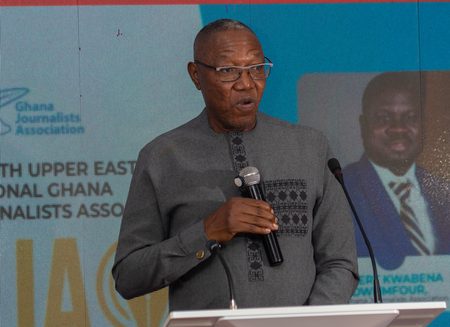
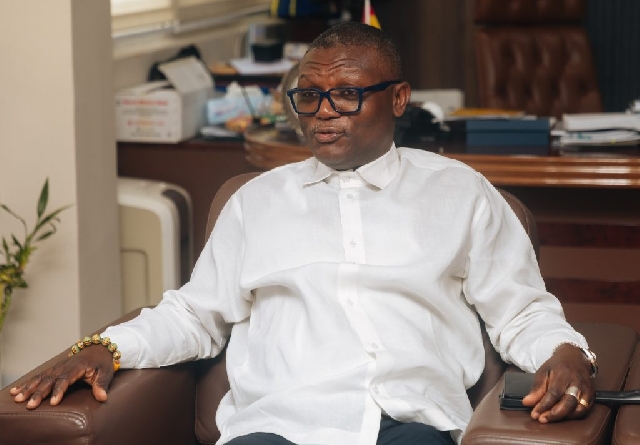
Just at the recent 5th Upper East Regional GJA Awards in Bolgatanga, Deputy Minister for Education, Dr. Clement Apaak, made a heartfelt appeal to pre-tertiary teachers across the country: return to the classroom as government works to resolve the longstanding issues surrounding their promotions, salaries, allowances, and conditions of service. Dr. Apaak acknowledged the legitimacy of the teachers’ concerns, assuring them that government was actively engaging with the teacher unions and relevant state institutions to find lasting solutions. He praised journalists for their vital role in ensuring public accountability and supporting the development of the education sector. Addressing the current impasse, Dr. Apaak explained that the challenges facing teachers—including delays in implementing promotions for those who had passed their exams—were genuine and had not been dismissed by government. He revealed that nearly 80,000 teachers were affected by a data-transmission problem between the Ghana Education Service (GES) and the Controller and Accountant-General’s Department, a glitch that had prevented the timely adjustment of salaries and allowances. Government, he said, had reached an understanding with teacher unions that promotions should be processed automatically, without teachers needing to resubmit documents. He assured teachers that there would be no financial disadvantage, with all payments to be backdated to January 2026. Dr. Apaak also addressed the government’s proposed 20 percent-plus salary incentive for teachers posted to rural and underserved communities—a policy aimed at attracting educators to areas in need. However, he noted that implementation had stalled due to difficulties in defining which communities qualified. To address this, a committee involving the Ministries of Education, Labour Relations and Employment, and the Ghana Statistical Service was being formed to provide the necessary data and criteria. The Deputy Minister further identified the expiration of the collective agreement between teachers and their employer as a source of tension. Negotiations for a new agreement had been delayed, but government had since tasked the Fair Wages and Salaries Commission to engage with teacher union leaders. A high-level meeting involving several ministries and union representatives had also been convened to continue dialogue and seek solutions. Throughout his speech, Dr. Apaak’s message was clear: government remained committed to honouring all legitimate entitlements owed to teachers. “We continue to appeal to the teachers to go back while we work out the modalities,” he said. “We can be assured that what is due them, no matter how long it takes, will become all their arrears.” As negotiations continue, teachers are being urged to return to their classrooms, with assurances that the issues at the heart of the strike are being addressed at the highest levels. Source: Apexnewsgh.com
Thousands of Police Deployed as NPP Prepares for National Delegates Conference in Kumasi
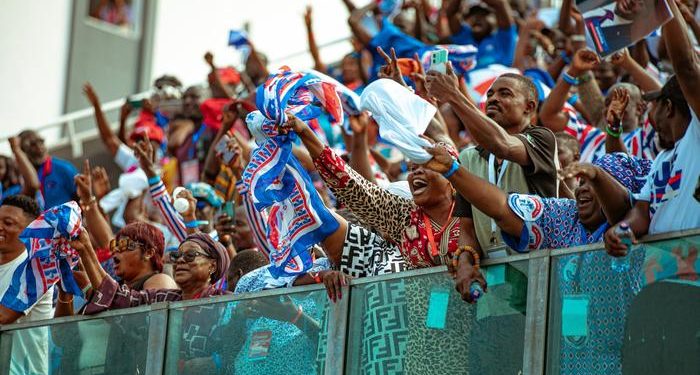
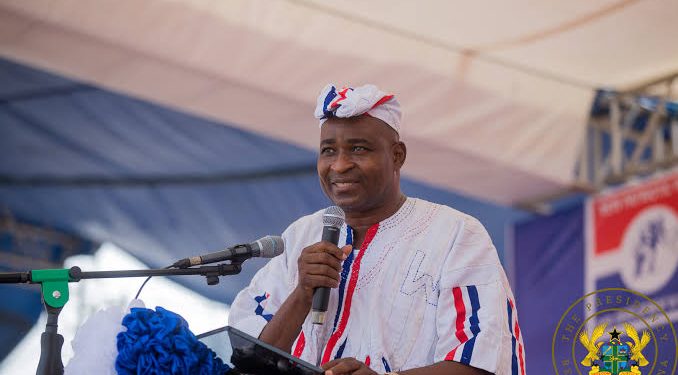
The Baba Yara Sports Stadium in Kumasi is abuzz with anticipation as the New Patriotic Party (NPP) gears up for its National Delegates Conference and elections. According to Anthony Abayifaa Karbo, the party’s Organisation Committee Chairperson, between 3,000 and 4,000 police officers have been deployed to provide security for the high-profile event. Karbo outlined that the security presence would cover not only the stadium itself, but also the hostels where delegates and guests are accommodated. Police officers are also tasked with managing traffic flow around the venue, ensuring a seamless experience for all attendees. Preparations for the conference, scheduled for Saturday, October 3, are in full swing. Delegates are arriving in Kumasi and settling into their designated hostels, while workers set up public address systems at the stadium. Security personnel have already taken up their posts in and around the venue, Karbo told Citi News. He took a moment to commend the Inspector General of Police and the Ashanti Regional Police Command for their strong cooperation and proactive efforts to ensure the safety and orderliness of the conference. Karbo expressed confidence in both the aspirants and the delegates, noting their responsible and cooperative conduct throughout the process. “We’re very much ready for tomorrow; you come around, you see the police and arrangements so far. I’m sure we’re ready; delegates are arriving at their hostels,” he said. The party, he emphasized, is committed to ensuring that the conference proceeds smoothly and successfully. Karbo called on all delegates to conduct themselves responsibly, underscoring the importance of a peaceful and well-organized event as the NPP gathers to shape its future. Source: Apexnewsgh.com
Stan Dogbe Clarifies La Beach Demolition Was Not Part of Flood Mitigation Plan
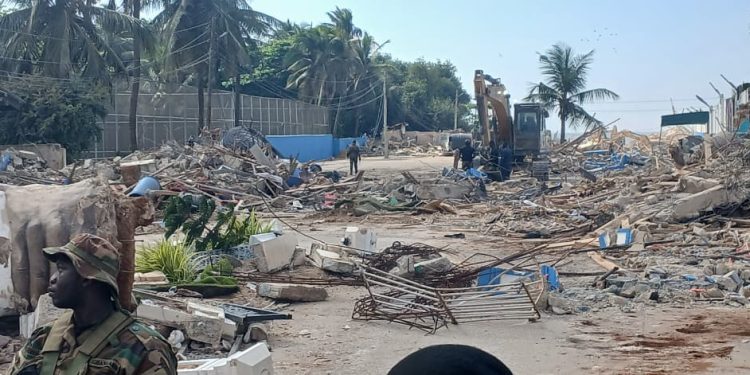
On a Friday morning along Accra’s iconic La Beach, the sound of demolition echoed across the coastline. Vendors and business owners watched as bulldozers, under the watchful eye of military personnel from the 48 Engineer Regiment and the Ghana Police Service, dismantled structures including the La Pleasure Beach and the Polo Beach Club, both nestled near the renowned Labadi Beach Hotel. News of the demolition quickly spread, with many assuming it was part of the government’s ongoing flood mitigation efforts. But Stan Dogbe, Deputy Chief of Staff in charge of Operations, stepped forward to set the record straight. In a Facebook post on Friday, October 2, Mr. Dogbe explained that the operation had no connection to the government’s flood mitigation task force. “Let’s not get it twisted,” he wrote. “Friday’s action along a section of the beachfront was not a Flood Mitigation Action by the government task force.” According to Mr. Dogbe, the government’s flood mitigation activities are currently focused elsewhere – at the Kpeshie Lagoon, East Legon Boundary Road, Oyarifa, and behind Mayfair Estates. The beachfront operation, he revealed, was instead done at the request of the Labadi Beach Hotel, with National Security overseeing the exercise. “These are structures, some permanently built, like the Polo Beach Club and others, on the beach in front of the hotel,” Mr. Dogbe clarified. “According to the business, these structures are adversely affecting the safety, tranquillity, and reputation of the hotel, diminishing the visitor experience and undermining the orderly management of one of Ghana’s most important tourism destinations.” While the hotel is expected to provide further details about its decision, Mr. Dogbe raised broader concerns about sanitation and security along the beach. He argued that unauthorised and unregulated commercial activities posed serious sanitation issues and security risks. Having reviewed drone footage and videos of the beachfront, Mr. Dogbe posed a question to the public: “Is the Labadi Beach Hotel not right in reclaiming its beachfront (I am not talking about the La Pleasure Beach, please)?” As the dust settled on the La Beach demolition, Stan Dogbe’s clarification sought to refocus the narrative, reminding the public that this was not about flood prevention, but rather, about restoring order and protecting one of Ghana’s cherished tourism destinations. Source: Apexnewsgh.com
Historic Gathering Awaits as 7,163 Delegates Prepare for NPP National Congress in Kumasi

On Saturday, October 3, 2026, the vibrant city of Kumasi will become the epicenter of Ghanaian politics as 7,163 delegates from every corner of the nation converge on the Baba Yara Sports Stadium. These delegates, representing the heart and soul of the New Patriotic Party (NPP), will participate in a much-anticipated National Delegates Congress and Officers’ elections, a gathering that promises to shape the party’s future. The congress, meticulously planned to unfold in two distinct parts, is not just about electing new national officers. Delegates will also turn their attention to a slate of proposed amendments to the party’s constitution. According to sources from Apexnewsgh, fewer than 20 amendments are expected to be considered. Some proposals are remnants from the last constitutional amendment session held in Accra in January 2026, while others are new, arising from ongoing reflections on the party’s direction. One of the most pivotal proposals centers on the role of the party’s leader. In January, the NPP introduced a clause making the National Chairman the party leader at all times. But after further debate, a new amendment is on the table: to designate the party’s flagbearer as the true leader. This shift reflects an evolving understanding of leadership within the party. Another significant amendment concerns how Vice Chairpersons are elected. Currently, all candidates vie for the National First Vice Chairman slot, with the top three finishers becoming the First, Second, and Third Vice Chairpersons in order of the votes they receive. The new proposal would see candidates apply for, and contest, specific Vice Chairperson positions, making the process more targeted. Additionally, three Vice Chairpersons would be appointed rather than elected, a move aimed at diversifying party leadership. Other notable amendments include proposals to formalize the appointment of Deputy Communications Officers and to elevate the IT Officer role to full executive status. Drawing on lessons from the Legon conference, the Chairperson of the Constitutional Amendment Committee is expected to present each motion, with delegates casting their votes by voice. But the heart of the congress will be the election of national executives. With 7,163 delegates casting their ballots, the stakes are high. The Ashanti Region will send the largest contingent, 1,122 delegates, followed by Greater Accra and Eastern with 773 and 732 delegates, respectively. At the other end of the spectrum, the Savannah Region will be represented by just 184 delegates, while Western North will have 223. Delegates will also choose key party organisers: 2,745 will vote in the Youth Organiser race, 1,275 in the Women’s Organiser race, and 858 in the NASARA Organiser race. Each vote, each amendment, and each decision will help chart the course for the NPP as it prepares for the challenges and opportunities ahead. Source: Apexnewsgh.com
Upper East Teacher Unions Vow to Sustain Strike Until Demands Are Met
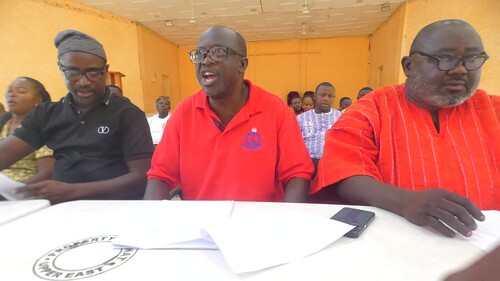
The Upper East Regional leadership of three teacher unions has reaffirmed its support for the ongoing nationwide strike, insisting that teachers will not return to the classroom until outstanding concerns affecting their welfare are addressed. The position was made known at a joint press conference in Bolgatanga addressed by the Upper East Regional Secretary of the Ghana National Association of Teachers (GNAT), Lare Kitonname; the Regional Chairman of the Pre-Tertiary Teachers Union of Ghana (PRETAG), Richard Sunday Yinbil; and the Regional Chairman of the National Association of Graduate Teachers (NAGRAT), John Akunzebe. The union leaders said the industrial action was triggered by several unresolved issues that have created frustration and growing anger among teachers across the country. According to the unions, one of the major concerns is the failure of the authorities to automatically place newly promoted teachers on their appropriate salary scales.They said an agreement reached between the Ministry of Education, the Ghana Education Service (GES), the Controller and Accountant-General’s Department, and the leadership of the teacher unions has not been fully implemented. The unions further complained about the failure to automatically place two cohorts of teachers who successfully passed the aptitude tests conducted in December 2025 and February 2026 on their respective salary scales, with Responsibility, Experience and Service (RES) effective from January 2026. They said the situation had heightened tension among their members. The teacher unions also raised concerns over the failure to implement the deprived area allowance for teachers working in underserved and hard-to-reach communities. They referenced Section 17.2 of the 2024 Collective Agreement, which provides for a review of the deprived area report by the Ministry of Education and the Ghana Education Service, followed by negotiations between the unions and the Fair Wages and Salaries Commission on the applicable allowance. The unions said the required process had not been completed. They described the situation as a disregard for a 2024 ruling by the National Labour Commission and said it also conflicted with a directive attributed to President John Dramani Mahama for teachers working in deprived and hard-to-reach communities to receive a 20 percent allowance on their basic salaries as an incentive to remain in such areas. Another major concern, the unions said, is the delay in negotiating a new collective agreement for teachers. They explained that the existing collective agreement has expired, while negotiations for a new agreement, which they expected to have been concluded by June 2026, remain outstanding. According to them, several engagements with the Fair Wages and Salaries Commission have failed to resolve the matter. The union leaders said the continued delay had become a major source of concern for teachers. The Upper East regional branches of GNAT, PRETAG and NAGRAT therefore declared their full support for the continuation of the industrial action. They maintained that teachers in the region would continue to stand with the national leadership of the unions until their concerns were addressed. The regional leadership stressed that the strike would only be called off when the outstanding demands of teachers were satisfactorily resolved, paving the way for members to return to the classroom. Source: Apexnewsgh.com
Ghana’s Bold Vision: Ablakwa Charts a New Path to Resource Sovereignty by 2030
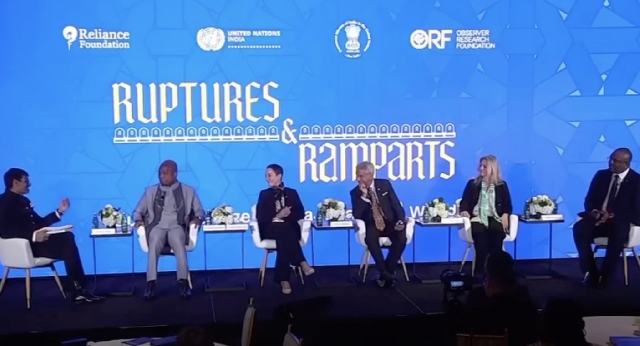
At a high-profile panel discussion at Ruptures and Ramparts, Foreign Affairs Minister Samuel Okudzeto Ablakwa painted a bold new vision for Ghana’s future. With passion and conviction, he declared that by 2030, Ghana would cease entirely the export of raw materials, a transformative step toward adding value to its rich natural resources and achieving true resource sovereignty. Mr. Ablakwa’s message was clear: it is time for Ghana, and indeed Africa, to look within. “With all your gold, your diamond, your bauxite, your cocoa. Waiting for what? Friends? What kind of friendship is that? Look within. Be resilient. Come up with homegrown solutions. Negotiate better, add value,” he urged. For decades, he lamented, Ghana’s wealth had been siphoned abroad through agreements that left the country with only a small share of the returns. In the gold sector, he noted, Ghana retains just 10% of the value, while the rest flows elsewhere. Oil and gas, discovered nearly two decades ago, brings only a modest 15% return. But change is on the horizon. The government, Ablakwa announced, is now renegotiating all upcoming leases under a new, tougher framework. “We have said that all leases coming up for renegotiation will not follow the same old template,” he emphasized, signaling a break from the past. Technology, too, plays a pivotal role in Ghana’s new approach. With advances like artificial intelligence and generative tools, he said, countries can now build their own internal capacity, ensuring that natural resources finally benefit the people. While acknowledging nostalgia for an older order of trust and international camaraderie, Ablakwa insisted that the new era offers Africans an unprecedented opportunity. “Smart leaders must take advantage and create new wealth for Africans. That’s how we see it.” With 2030 on the horizon, Ghana’s story is shifting, from exporter of raw materials to a nation determined to control its destiny and build prosperity from within. Source: Apexnewsgh.com
Minority in Parliament Demands Full Disclosure on Narcotics Seizures and Prosecutions After Major Cocaine Bust
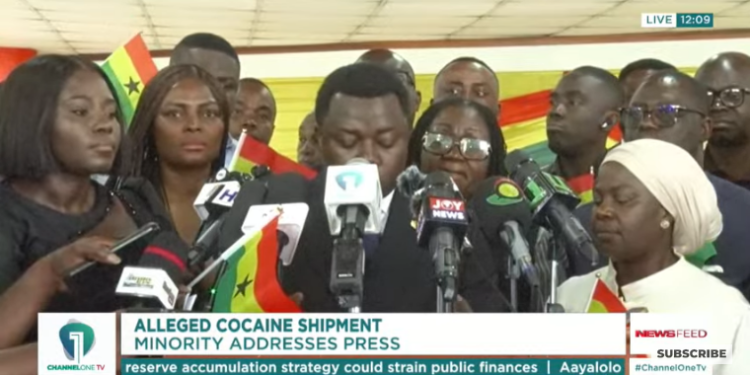
The Minority in Parliament has called for the immediate publication of comprehensive and verifiable data on narcotics seizures, arrests, and prosecutions in Ghana since January 2025. The demand comes on the heels of a major international incident: the seizure of nearly 3.9 tonnes of cocaine at France’s Port of Dunkirk from a container reportedly shipped from Ghana. Speaking ahead of Parliament’s emergency sitting on Tuesday, September 29, Rev. John Ntim Fordjour, representing the Minority, urged the executive branch to release real-time, primary-sourced information on all narcotics-related law enforcement activities. “We no longer want to learn about the state of our borders from foreign customs officers,” Rev. Fordjour stated. He emphasized that Parliament’s role must include scrutinizing institutional and systemic weaknesses, as well as investigating any possible complicity of state agencies. “Parliament is not a spectator in this matter,” he said. “The Constitution gives it the power to appoint committees, to summon and to demand answers.” Rev. Fordjour noted that any parliamentary committee formed would be empowered to compel witnesses, request documents, and conduct public proceedings unless national security dictated otherwise. The Minority stressed that the fight against narcotics should transcend party politics. “The trafficker does not check party cards. The young person destroyed by addiction does not ask which side of the House his member sits on,” Rev. Fordjour remarked, urging bipartisan cooperation. He called on the government to make all relevant data publicly accessible, arguing that transparency would provide Ghanaians with a clearer understanding of the country’s enforcement efforts and challenges surrounding narcotics control. Source: Apexnewsgh.com
GES Appeals to Striking Teachers to End Industrial Action and Safeguard Academic Stability
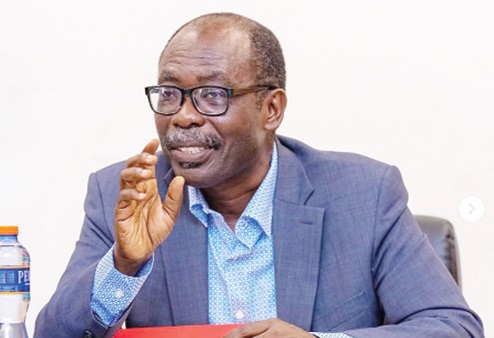
The Ghana Education Service (GES) has issued a heartfelt appeal to pre-tertiary teacher unions, urging them to call off their ongoing strike as government agencies work to resolve their concerns. Director-General Professor Ernest Kofi Davis, addressing the press on Tuesday, September 29, warned that the strike could jeopardize the hard-won stability of the academic calendar. He emphasized that, for the first time in six years, students at all levels had resumed classes within September, marking the return to a predictable and synchronized school year. “This did not happen by accident. It was achieved through hard work,” Professor Davis remarked, highlighting the progress made in restoring stability to Ghana’s education system after years of disruptions. The ongoing strike, declared by GNAT, NAGRAT, and PRETAG, centers on unresolved issues such as unpaid promotion arrears, delays in negotiating a new Collective Agreement, and the non-implementation of the Deprived Area Allowance. The unions launched the industrial action on September 25 after repeated appeals for their demands went unmet. Professor Davis assured teachers that the government, in collaboration with the Ministry of Education, Ministry of Labour, Controller and Accountant-General’s Department, and other stakeholders, is actively working to address their grievances. He cited recent efforts to mechanize teacher promotions as evidence of GES’s commitment to improving conditions for educators. Urging the unions to reconsider their stance, Professor Davis stressed the importance of protecting the academic calendar and called on all stakeholders to support efforts to keep the school year on track. “We wish to associate ourselves with the Ministry of Education’s appeal to teachers to rescind their decision as we work hard to address their issues,” he said. Source: Apexnewsgh.com
COPEC Warns of Steep Fuel Price Hikes, Urges Swift Action to Protect Consumers
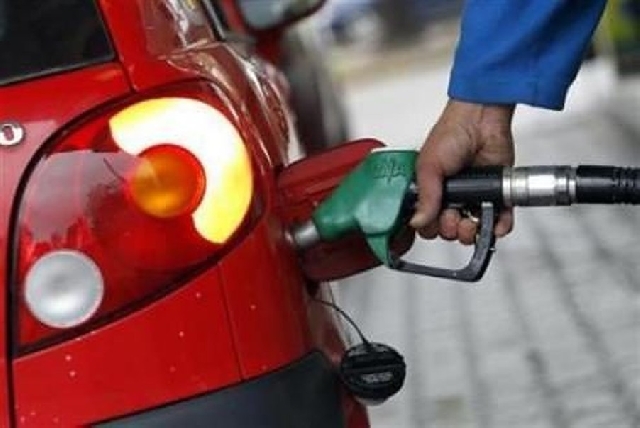
Ghanaian motorists should brace for a sharp rise in fuel prices, the Chamber of Petroleum Consumers (COPEC) has warned. In a statement released today, COPEC projected that petrol prices could climb from GH¢16.90 to GH¢17.78 per litre, while diesel may see an even steeper jump from GH¢18.24 to GH¢22.42 per litre in the next pricing window. COPEC attributed the expected increases to rising international Free-on-Board (FOB) prices and a recent 1.2% depreciation of the cedi. Petrol’s FOB price rose by 4.26%, and diesel’s by a significant 8.51%, pushing pump prices higher. According to COPEC, petrol is expected to retail between GH¢16.89 and GH¢18.67 per litre, while diesel could range from GH¢19.40 to GH¢21.44 per litre, within a ±5% margin of their projections. To help cushion consumers from the impact, COPEC called on the government to fast-track expansion works at the Tema Oil Refinery (TOR), aiming to boost refining capacity from 45,000 to 100,000 barrels per day. The chamber believes this move would reduce Ghana’s reliance on imported petroleum products and help stabilize prices in the long run. COPEC also appealed to Oil Marketing Companies (OMCs) to consider reducing their profit margins temporarily, so as not to overburden consumers amid the looming price hikes. Source: Apexnewsgh.com
Ghana Faces Uphill Battle to Control HIV Epidemic by 2030, Says Health Official
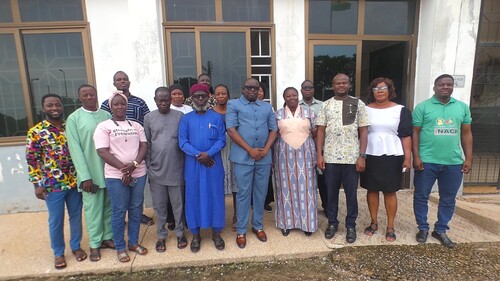
At the expanded Upper East Regional Committee of the Ghana AIDS Commission (ReCCOM) meeting held on September 29, 2026, Sulemana Majeed, Regional TB/HIV Coordinator for the Ghana Health Service/NACP, painted a sobering but hopeful picture of Ghana’s ongoing struggle with HIV. Majeed explained that since Ghana stopped conducting the HIV Prevalence Survey in 2014/2015 due to funding cuts, national HIV data has relied heavily on statistical modeling and estimates rather than direct surveys. Using the NAOMI model, the country now estimates that about 337,435 people are living with HIV, with 10% of infections among children. “Most of our HIV cases are in adults, but the risk of mother-to-child transmission remains a concern,” Majeed noted. He revealed a worrying trend: new infections are concentrated among people aged 20–44, Ghana’s most productive age group. In 2025 alone, the country recorded nearly 13,951 new HIV infections and 12,000 AIDS-related deaths. “New infections among young adults threaten our future workforce and demand urgent intervention,” he said. Majeed also highlighted gender disparities: while more women live with HIV, men are more likely to die from AIDS-related complications, often because they seek care late, when the disease is advanced. Ghana has not yet achieved the global 95-95-95 targets (95% of people living with HIV diagnosed, 95% of those on treatment, 95% virally suppressed) for epidemic control. As of 2025, only 70% knew their status, 81% were on treatment, and 92% of those on treatment had achieved viral suppression. Projections suggest that without significant improvements, Ghana will fall short of the 2030 goal to control the epidemic. By then, the country hopes to reduce new infections to around 6,500 annually and AIDS-related deaths to about 4,000–5,000. But to get there, ART (antiretroviral therapy) coverage must rise from the current 58% of adults to 95%. According to him, regionally, Upper East is among those with lower prevalence, but some districts have seen unexpected spikes in new cases, often linked to migratory labor patterns and mining activities. Majeed warned that 12 out of the region’s 15 districts need close monitoring. He also identified ongoing challenges with data quality, double reporting, and incomplete records, but reported ongoing efforts to improve data accuracy and support staff. However, he believe Ghana must ramp up efforts to find, treat, and retain people living with HIV, especially in the most affected age groups, to avert thousands of preventable deaths. “If we want to achieve epidemic control by 2030 and save lives, our response must be faster, stronger, and more focused than ever,” he concluded. Source: Apexnewsgh.com