



President Mahama Rejects US Health Compact, Citing Humiliating Terms
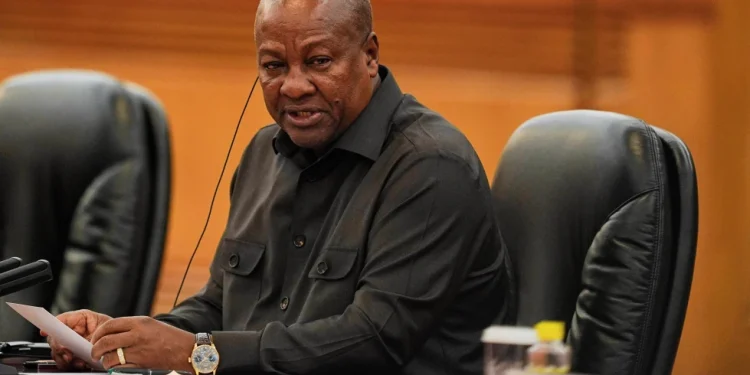
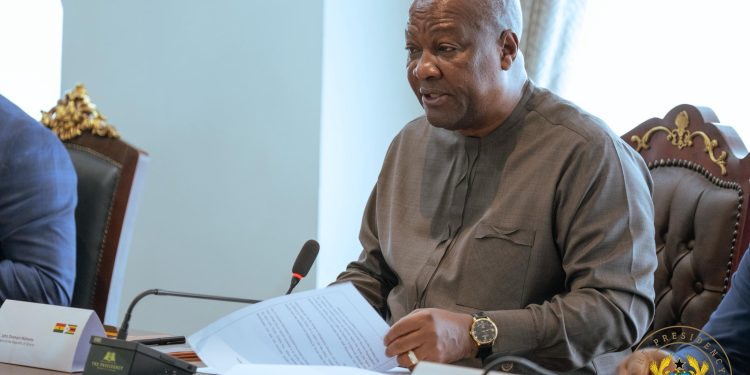
President John Dramani Mahama has stood by Ghana’s decision to turn down a proposed health compact from the United States, describing the conditions attached as demeaning and unacceptable. The compact, intended to replace funding previously provided through USAID, was put before Ghana’s Cabinet after a thorough review by the Ministry of Health. Addressing the Council on Foreign Relations in New York, President Mahama explained that the Ministry had flagged numerous problematic provisions in a Cabinet Information Paper. Chief among the concerns was a clause requiring Ghana to hand over its pathogen profile and national medical records to the United States. “It states that we shall give the United States our pathogen profile. It also says we should give our medical records. I mean, who takes another country’s medical records?” Mahama questioned, highlighting the sensitive nature of the request. In addition, the compact called for Ghana to provide counterpart funding and exempt imported medicines and medical products from inspection by the Food and Drugs Authority (FDA). These conditions, Mahama said, were not only impractical but also compromised Ghana’s sovereignty over its public health system. “It was humiliating. And so it was the compact that was thrown out in record time in our Cabinet. I’ve never seen anything thrown out as fast as that,” Mahama recalled. While the deal offered $100 million in funding to African countries hit by U.S. aid cuts, Ghana’s leadership felt the price was simply too high, a stand President Mahama says was necessary to protect the nation’s dignity and autonomy. Source: Apexnewsgh.com
BoG Governor Appoints Second Deputy to Represent Him on Ghana Gold Board

Dr. Johnson P. Asiama, Governor of the Bank of Ghana, has designated Second Deputy Governor Matilda Asante-Asiedu as his official representative on the Board of Directors of the Ghana Gold Board (GoldBod). The appointment was made official in a letter dated May 11, 2026, addressed to the Chairman of GoldBod’s Board of Directors. In the correspondence, Dr. Asiama announced that Mrs. Asante-Asiedu would attend and participate in all GoldBod Board meetings on his behalf, effective immediately. “Mrs. Matilda Asante-Asiedu, Second Deputy Governor of the Bank of Ghana, is my authorised representative to attend and fully participate in all GoldBod Board Meetings on my behalf,” Dr. Asiama wrote. He further emphasized that Mrs. Asante-Asiedu is empowered to represent his interests, contribute to board deliberations, and exercise all the rights and responsibilities that come with his seat on the Board. Dr. Asiama also called on the GoldBod Board to provide Mrs. Asante-Asiedu with the necessary support and courtesies to help her fulfil her new duties. He concluded the letter by expressing confidence in the Board’s cooperation as the new appointment takes effect. Source: Apexnewsgh.com
Striking Teachers Hold Firm After Talks with Education Minister, Demand Concrete Action
Teachers across Ghana have refused to end their nationwide strike following a meeting with Education Minister Haruna Iddrisu in Accra, insisting that verbal assurances are not enough to address their grievances. The striking teachers, represented by the National Association of Graduate Teachers (NAGRAT) and the Ghana National Association of Teachers (GNAT), have been demanding payment of promotion arrears and progress in stalled negotiations over their conditions of service. Despite the government’s call for patience, union leaders remain unconvinced. During the meeting, Minister Iddrisu and his deputy, Clement Apaak, assured the unions of President John Mahama’s commitment to improving teachers’ welfare. They announced that the Fair Wages and Salaries Commission would meet with the unions the following Tuesday to continue talks on their collective agreement and conditions of service. A validation committee, chaired by the Minister of Employment and Labour, has also been established to verify data on the promised 20 percent rural deprived allowance, scheduled for rollout in January 2027. “We have relayed to them to call off the strike while negotiations continue,” Minister Iddrisu said, emphasizing the government’s intent to implement the rural allowance pending validation and a clear roadmap. However, GNAT President Prosper Tachie, Esq. expressed skepticism after the talks. “What is on paper to show that they will start paying the deprived area allowance by 2027?” he questioned, highlighting the absence of documented commitments. He also lamented the lack of progress in negotiations, noting that expired collective agreements and unpaid allowances remained unresolved, with no clear timeline for settlement. Tachie stated that the unions would only consider ending the strike once a concrete, documented agreement is reached. “If we accept [the timeline], so be it… but it is not just by word of mouth. It is something that we have to see, something concrete.” As negotiations are set to continue next week, the teachers’ unions stand firm in their demand for tangible action before they return to the classroom. Source: Apexnewsgh.com
NPP Challenges Government’s Cocoa Price Decision, Cites Broken Promises to Farmers
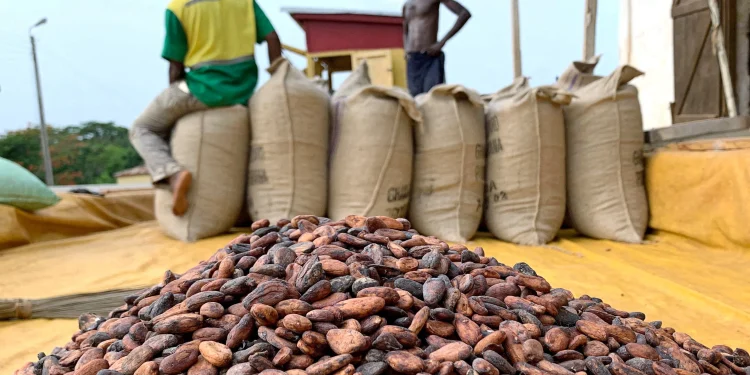
The New Patriotic Party (NPP) has taken aim at the government’s newly announced producer price for cocoa, claiming it falls short of both legal requirements and campaign promises made to Ghana’s farmers. In a press statement dated September 27, the NPP criticized the decision to set the price for the 2026/27 cocoa season at GH¢2,650 per 64-kilogramme bag. The party described the increase, just GH¢63, or 2.4 percent above last season’s price, as inadequate, and alleged that it does not meet the minimum set by law. Citing the Ghana Cocoa Board Act, 2026 (Act 1182), the NPP argued that the law requires the producer price to be at least 70 percent of the Gross Free-on-Board (FOB) price realized by COCOBOD. While the government claims the new price stands at 71.18 percent of this benchmark, the NPP disputes the calculation and called for greater transparency in how the figures were determined. The party’s criticism comes on the heels of the government’s announcement of the new price on September 25. The NPP also accused the administration of failing to live up to promises made on the campaign trail in 2024, when prominent National Democratic Congress (NDC) figures, including President John Dramani Mahama and several ministers, pledged a producer price of GH¢6,000 per bag to farmers. At the time, opposition leaders had labelled the then-current price of GH¢3,100 per bag as exploitative and asserted that farmers deserved at least 70 percent of the world market price. The NPP maintains that the government’s recent pricing decisions have fallen far short of these pledges, leaving many cocoa farmers disappointed and frustrated as the new season approaches. Source: Apexnewsgh.com
Finance Minister Unveils “New Economy” Vision to Spur Local Production and Jobs
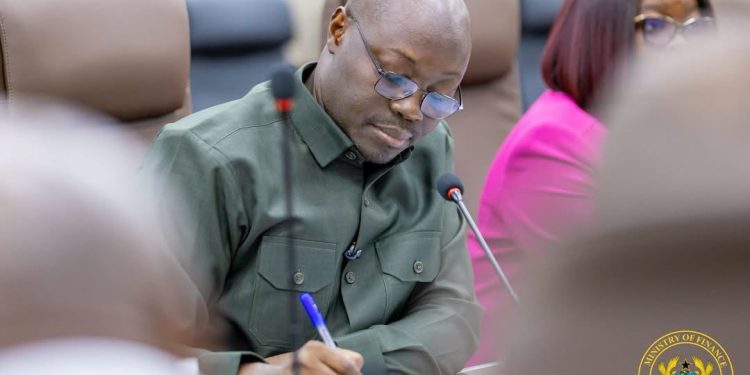
Ghana’s Finance Minister, Dr Cassiel Ato Forson, has outlined an ambitious vision to transform the nation’s economy by boosting local production, cutting back on imports, and generating jobs. Meeting with leaders from the Association of Ghana Industries and top business figures, Dr Forson declared, “Our mission is to produce more of what we consume and create more jobs here at home.” He challenged the country to see every imported product as a call to action: “Every import is an opportunity to ask: why can’t we make it in Ghana?” This shift in thinking is at the heart of the government’s New Economy programme, which aims to channel investment into productive sectors and build a more self-reliant, prosperous nation. “That is the promise of the New Economy: Ghana producing. Ghanaians working. Prosperity growing!” Dr Forson emphasized. The programme, set to launch with the 2027 Budget, will deploy around US$1.6 billion, about one percent of Ghana’s GDP, into key sectors. The focus will be on commercial agriculture, adding value to mining, and expanding energy and transport infrastructure. These areas are seen as engines for sustainable growth and job creation, with investments designed to strengthen the economy and generate returns for future development. In particular, Dr Forson highlighted plans for the energy sector, such as gas-to-power and gas-to-fertilizer projects, aimed at bolstering energy security and supporting industry. The transport sector is also in the spotlight, with the Western Railway Line and other strategic projects poised for potential support. While details are still being finalized, Dr Forson assured that the New Economy blueprint would be unveiled alongside the 2027 Budget, promising more opportunities for the private sector and a new era of growth for Ghana. Source: Apexnewsgh.com
Teachers’ Unions Poised for Crucial Talks with Government Amid Nationwide Strike
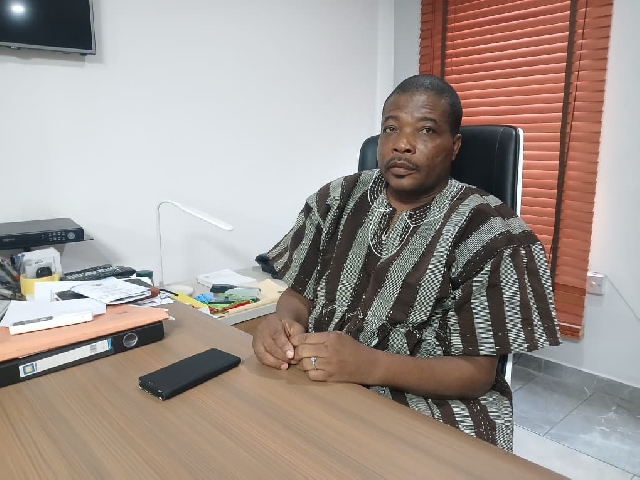
Leaders of Ghana’s pre-tertiary teacher unions are preparing for a pivotal meeting with government officials, hoping to resolve the issues that sparked their nationwide strike. Jacob Anaba, President of the National Association of Graduate Teachers (NAGRAT), assured that the unions are ready to engage in good faith. “Our reason for raising the issues is to resolve them, so if there is an avenue for us to resolve them, we will avail ourselves and make sure that we resolve the issues,” Anaba emphasized in an interview with Citi News. Anaba recounted receiving calls from both the Ministry of Education and the Ministry of Employment, Jobs and Labour Relations, inviting the unions to Monday’s meeting. “We will definitely be at the meeting to try and resolve our issues,” he stated, underscoring the unions’ commitment to dialogue. The talks come on the heels of a major strike declared by NAGRAT, the Ghana National Association of Teachers (GNAT), and the Pre-Tertiary Teachers Association of Ghana (PRETAG). The unions are pressing for payment of promotion arrears and a swift conclusion to protracted negotiations over their conditions of service. Monday’s meeting is expected to center on these core demands and explore possible solutions. The outcome could determine whether teachers continue their industrial action or consider suspending the strike should meaningful progress be achieved at the negotiation table. Source: Apexnewsgh.com
Mahama’s “Crocodile Skin”: How Insults Can’t Break a President
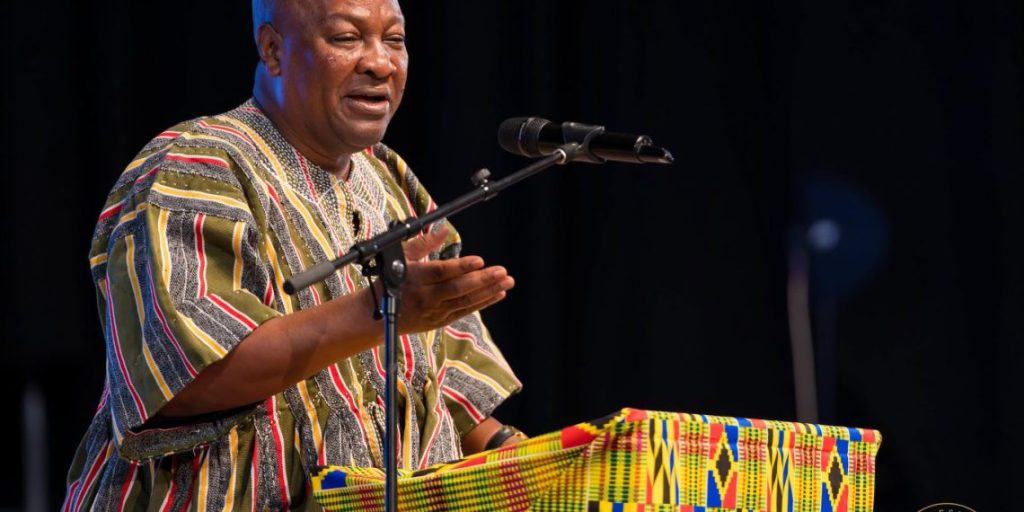
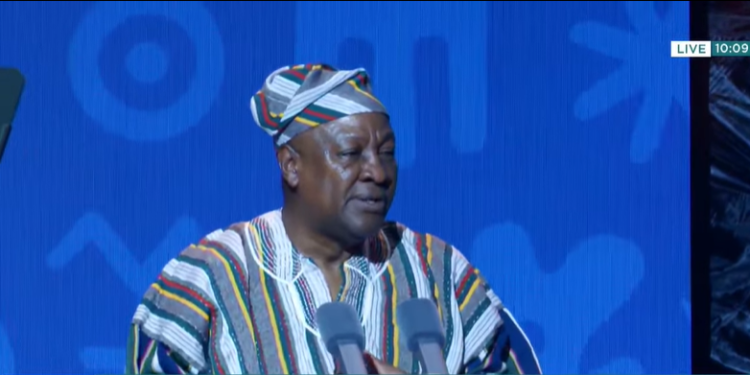
At a recent event, former President John Dramani Mahama stood before a crowd, unfazed by the harsh words often flung his way. With a smile, he described his resilience, joking, “This skin is crocodile skin.” The audience erupted in applause, clearly moved by his candor. Mahama, reflecting on his years in office and the scrutiny that came with it, said he had been insulted, vilified, and even voted out. Yet none of it, he insisted, could shake his commitment to his country: “I don’t mind the insults. I am focused on doing what is right for Ghana and Africa.” The conversation then turned to the world of TikTok and new media. Mahama acknowledged the power, and problems, of online speech. He had no issue with critics who showed their faces and owned their words, but he worried about those who hid behind anonymity to spread hate. He called on groups like the Ghana Journalists Association and the Media Foundation for West Africa to gather stakeholders and chart a way forward: “Let’s all collectively take a decision on what we want to do with the new media.” Mahama warned, however, that regulating online expression was a delicate matter. He urged caution, saying, “Sometimes the police can go to the extreme, and you never know where to stop once you start arresting.” It was time, he argued, for Ghana to decide: regulate online speech, or let the principle of free expression stand. His remarks echoed an earlier chapter in his political journey. In 2015, in the face of strikes and demonstrations, Mahama had famously declared he had developed “dead goat syndrome”, immune to threats and criticism. That phrase, born of frustration during mass labour unrest, became a symbol of his thick skin. Through it all, Mahama’s message remained clear: insults would not deter him. His focus, he said, would always be on serving Ghana and Africa, crocodile skin and all. Source: Apexnewsgh.com
Talensi DCE Assures Schools of Furniture Support, Says Distribution Will Be Driven by Need
The Talensi District Chief Executive, Hon. John Millim, has assured residents that schools struggling with inadequate furniture will receive support, but stressed that the distribution will be based on verified data rather than political considerations. Responding to concerns over schools such as the primary school at Sawalega, where a citizen reportedly highlighted a severe shortage of furniture, Hon. Millim said the Assembly was already taking steps to address the problem. He disclosed that newly procured dual desks were being assembled and would soon be distributed to schools identified by the District Education Directorate as having the most critical shortages. “We will not just get up, pick chairs and tables and go and distribute them to some community when we don’t have the data from the District Education Directorate.” The DCE said development planning must be evidence-based, explaining that the Assembly relies on the Education Directorate’s data to determine where educational infrastructure and furniture are most urgently required. “Development is a shared responsibility, and wherever we are building a school, we do not just decide to go and build a school for people because they are good to us. We do that in consultation with the Education Directorate.” He further revealed that the Assembly had already procured dual desks, with some undergoing assembly, and promised that distribution would commence shortly. “These dual desks that I have procured… in the next week, by God, we are going to distribute them.” Beyond the immediate furniture challenge, Hon. Millim called for stronger community ownership of public facilities, arguing that providing infrastructure without protecting it undermines development. “Whatever we get today, let’s try to protect it so we can ask for more new things.” He therefore urged teachers, parents and community members to help maintain school facilities, warning that authorities would struggle to justify further investment when existing infrastructure and equipment were allowed to deteriorate. “If we get something today and then we don’t take care of it, we cannot develop a community like that.” The DCE also appealed to stakeholders to present development concerns through constructive engagement rather than partisan confrontation. “Let’s share ideas. You can come to my office and say, ‘This is what I’ve observed at this corner.’ Development is not cut out that way.” He maintained that government alone could not meet every development need and called for collective responsibility among public institutions and communities. “Government cannot do everything. Communities must also play their part by protecting what they receive,” he said. Source: Apexnewsgh.com
Nabdam DCE Charts Bold Path to Transform Education Infrastructure
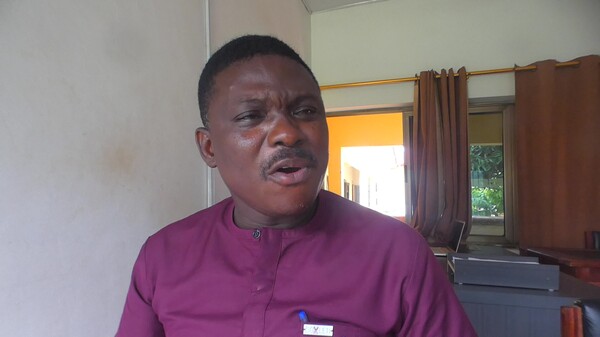
In Nabdam District, Hon. Francis Tobig, the District Chief Executive (DCE), is spearheading an ambitious campaign to transform the face of education. An educationist by profession, Hon. Tobig’s passion is personal, after more than 20 years teaching at Kongo Senior High School, he knows firsthand the struggles of overcrowded classrooms, broken furniture, and the daily challenges teachers and students face. During an exclusive interview on SPEAKOUT UPPER EAST with Apexnewsgh’s Ngamegbulam Chidozie Stephen, Hon. Tobig painted a vivid picture of both the hurdles and the hope now shaping education in Nabdam. A Teacher’s Vision “I have lived it,” Hon. Tobig shared, reflecting on his years in the classroom. “That’s why I am committed to making a real difference.” His background gives him a unique perspective on what schools truly need, not just buildings, but environments where learning can thrive. Building for the Future Under his leadership, the Assembly is rolling out a series of major infrastructure projects: A new three-unit classroom block, complete with a Head Teacher’s office, storeroom, ICT laboratory, library, staff room, and an eight-seater KVIP toilet facility. A fresh Junior High School at Damolgo, bringing education closer to more children. At Nkuziesie, a two-unit KG block with office, store, five-seater KVIP, and gender-friendly urinals, plus a protective fence and shed. Rehabilitation of classroom blocks at Nangodi Cluster of Schools and demolition of old KG blocks at Pelungu to improve safety and learning environments. Upgrades to the ICT lab at Kongo, including burglar-proofing and painting. Water for Learning Recognizing that good infrastructure means little without the basics, the Assembly is tackling water shortages. The Nabdam Education Directorate is being connected to a mechanized water system, and five new mechanized boreholes with overhead tanks are scheduled for institutions like Sakote Teachers’ Quarters and Kongo KG. More Schools, More Access Procurement is underway for further projects, such as a primary school at St. John’s School in Sakote and an educational facility at Potin. Though a new ultra-modern chief’s palace has been completed at Nkuziesie, Hon. Tobig made clear this was separate from the education push. Furniture: Filling the Gap, Fostering Care Furniture shortages have long plagued Nabdam’s schools. “It’s not just about providing desks,” the DCE emphasized, “but taking care of what we have.” This year, 1,000 pieces of furniture, 600 dual desks and 400 single desks, are being procured, with another 1,000 planned for 2026. But Hon. Tobig is equally focused on maintenance. After visiting a classroom full of broken furniture, he vowed to work with the Education Directorate to establish a robust maintenance system, so resources last longer and serve more students. Raising the Bar: Academic Performance Despite these improvements, academic performance remains a concern. Hon. Tobig expressed disappointment that only one student reached an aggregate of 20 in the 2025 BECE, far from his ambitious target. “We must do better,” he said. He pledged continued engagement with schools and parents, challenging them to raise their expectations and outcomes. A District on the Move Hon. Tobig’s leadership is turning vision into concrete action. From new classrooms and water systems to furniture and maintenance, Nabdam’s schools are changing for the better. As the DCE and his team press forward, the hope is clear: every child in Nabdam deserves a school that inspires learning, and a future filled with possibility Source: Apexnewsgh.com
Leading with Impact: Hon. Francis Tobig’s Trailblazing Initiatives in Nabdam Health Sector
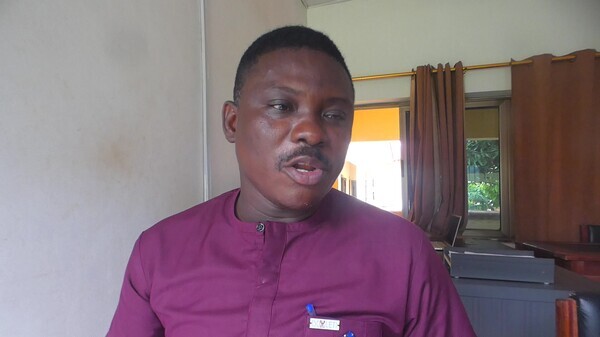
Since his appointment by President John Dramani Mahama, Hon. Francis Tobig, the District Chief Executive (DCE) of Nabdam, has been on a mission to transform the health sector in his district. In an exclusive interview on SPEAKOUT UPPER EAST with Apexnewsgh’s Ngamegbulam Chidozie Stephen, Hon. Tobig recounted a series of impactful interventions and ongoing projects, painting a vivid picture of progress and commitment. From the outset, Hon. Tobig made healthcare a top priority. Under his leadership, the Nabdam District Assembly channeled resources into improving both the infrastructure and accessibility of healthcare services. One of the first milestones was the expansion of the Nabdam District Health Directorate offices at Nangodi. The upgraded facility now boasts additional office spaces, providing health officials with a more comfortable environment, and a mini conference hall that enables the Health Directorate to organize meetings and programmes independently. To support daily operations, a mechanized borehole was also installed, ensuring a reliable water supply for staff and visitors alike. As Hon. Tobig walked through the district, he observed communities in need of essential healthcare services. At Soliga, a new Community-based Health Planning and Services (CHPS) compound began to take shape. Today, the project is nearing completion, with finishing touches underway before it is handed over for public use. The story of progress continued at the Gundug CHPS Compound, where a new maternity block was completed and handed over. Already in use, this facility has played a critical role in supporting safe deliveries and facilitating community health screenings in partnership with local stakeholders and the Member of Parliament. Recognizing the challenges posed by the lack of electricity, Hon. Tobig’s administration connected the Tindongo and Nyogbare CHPS compounds to the national grid. Where once health workers struggled to provide care after dark, these facilities can now remain operational throughout the night, greatly enhancing service delivery. Clean water, too, became a central concern. Mechanized water systems were rolled out for health facilities, including projects at the Zogabre and Pitanga CHPS compounds. The Assembly also planned five mechanized boreholes for critical offices and health posts, ensuring clean water reaches the NHIS Office, GES Office, GIPEC Office, Zogabre CHPS, and Pitanga CHPS. Sanitation improvements were not left behind. The Assembly set plans to construct two 4-seater water closet toilet facilities and two 2-unit urinals at the Health Insurance and CNC facilities in Kongo, aiming to raise the standard of hygiene and support public health. But Hon. Tobig’s vision extended beyond buildings and equipment. He forged partnerships to deliver health screenings to the people of Nabdam. Collaborating with CENSUDI, the Assembly facilitated breast cancer screenings, while joint efforts with the Happy Child organization brought additional screening and treatment services for various conditions. Each intervention, Hon. Tobig explained, forms part of a larger, ongoing commitment to improving healthcare and ensuring that every resident of Nabdam District has access to vital health services. He remains determined to build on these achievements, promising continued progress and new initiatives to address the district’s healthcare needs. Key Interventions Under DCE Tobig’s Tenure: Expansion of the District Health Directorate offices at Nangodi, with extra office space, a mini conference hall, and improved water supply. Construction of a CHPS Compound at Soliga (nearing completion). Completion and handover of a Maternity Block at Gundug CHPS Compound. Connection of Tindongo and Nyogbare CHPS compounds to the national electricity grid. Mechanized water systems for Zogabre and Pitanga CHPS, plus five planned boreholes for key health and administrative offices. New sanitation facilities at Kongo’s Health Insurance and CNC offices. Health screening partnerships with CENSUDI and Happy Child. Hon. Francis Tobig’s story is one of visible progress and unwavering commitment, a testament to the positive change that determined leadership can bring to the health sector in Nabdam District. Source: Apexnewsgh.com