

SCRAS Project Records 51.1% Adoption of Sustainable Farming Practices Among 7,200 Farmers – NABOCADO
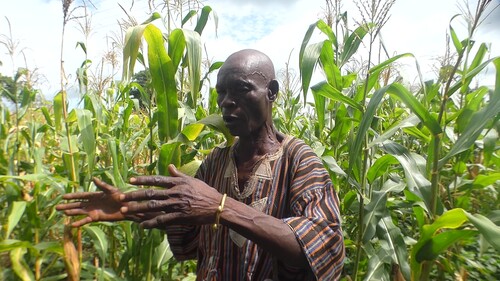
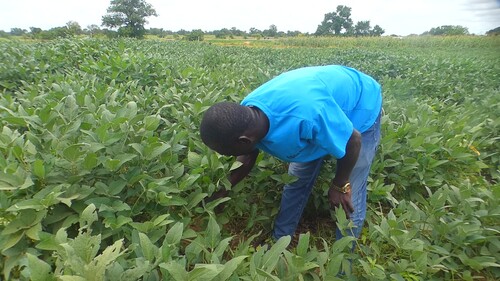
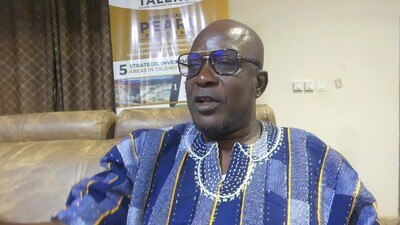
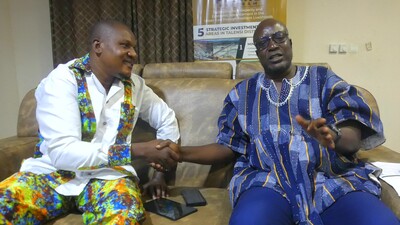
The Monitoring, Evaluation and Accountability Coordinator of NABOCADO, Dr. Michael Ayamga, has disclosed that 51.1 percent of the 7,200 farmers supported under the organisation’s SCRAS Project have comprehensively adopted sustainable agricultural practices. According to him, the farmers are spread across six districts and 16 rural communities where the project is being implemented. Dr. Ayamga made the disclosure during an exchange learning activity organised under the Strengthening of Smallholder Farmers’ Resilience towards a Changing Climate and Promotion of Environmentally Friendly Agriculture in the Diocese of Navrongo-Bolgatanga SCRAS Project. He explained that the project focuses on promoting sustainable agriculture, climate change adaptation and mitigation, as well as women’s enterprise development to help farming households diversify their sources of livelihood. Dr. Ayamga said 51.1 percent of the farmers have so far comprehensively adopted the sustainable agricultural practices being promoted by the project. He explained that “comprehensive adoption” refers to farmers who have consistently adopted compost application and at least two other sustainable farming practices on their fields over a number of years. He, however, noted that almost all the farmers supported by the project have adopted at least one or two of the sustainable practices. The target crops under the project include millet, sorghum, beans and groundnuts, with Dr. Ayamga indicating that assessments have recorded an average 13 percent increase in yields across the crops. He said although the project had set a target of a 15 percent increase, the results represented progressive improvement and farmers were being encouraged to continue adopting the practices to further improve or sustain their yields. According to him, the yields recorded by farmers using sustainable practices are not significantly different from those of farmers who rely heavily on external inputs such as synthetic fertilisers. Dr. Ayamga said the SCRAS Project also encourages farmers to develop and use local solutions to address challenges affecting agricultural production. He said the innovations cover areas including soil fertility, pest control and post-harvest storage. According to him, assessments conducted by the project indicate that the adoption of plant-based and other locally available solutions has contributed significantly to reducing post-harvest losses. He noted that food shortages are not caused only by low agricultural yields, but are also linked to poor storage practices, which can result in significant quantities of harvested produce being destroyed. He said the use of plant-based materials and shrubs to control pests in storage facilities has contributed to a 64 percent reduction in post-harvest losses among participating farmers. Dr. Ayamga further disclosed that local innovations promoted under the project have also contributed to reducing livestock losses, particularly among guinea fowl farmers. He explained that many smallholder farmers rear guinea fowls, chickens, goats and other livestock as an alternative source of income when they are unable to immediately sell their farm produce. However, guinea fowl mortality has been a major challenge. According to him, the adoption of locally developed interventions has resulted in a 44 percent reduction in guinea fowl mortality among participating farmers. He said farmers visited during the exchange learning activity had been able to raise guinea fowls beyond the stages where mortality is usually high. On climate change, Dr. Ayamga said the project works directly with communities to develop Community Climate Change Adaptation Action Plans. He explained that communities identify the climate-related hazards they face and, with support from the project, develop practical measures they can implement to reduce the impact of those hazards. He stressed that communities may not be able to prevent climate-related events from occurring, but they can strengthen their capacity to withstand their effects. According to him, 26 communities across the six districts have so far developed such climate change adaptation plans. He said the plans are guiding communities in implementing adaptation and mitigation activities. Tree planting and the integration of trees into farming systems, he added, are among the activities being implemented under the plans. Dr. Ayamga said the interventions are intended to strengthen the adaptive capacity of communities so that households can continue their livelihood activities and secure food even when climate-related hazards occur. The NABOCADO coordinator also highlighted the project’s focus on women’s economic empowerment. He further explained that the project recognises the vulnerability of women who depend heavily on agriculture for their livelihoods and therefore promotes alternative income-generating activities. According to him, women are supported with technical training, basic record-keeping and financial management skills to enable them to establish and manage sustainable businesses. He disclosed that approximately 2,580 women are currently engaged in various livelihood and income-generating activities across the project communities. He said the livelihood diversification programme is intended to reduce households’ overdependence on a single source of income, particularly agriculture, which can be severely affected by climate change. Dr. Ayamga emphasised that the SCRAS Project is not primarily an input-distribution programme but a knowledge-based intervention designed to encourage farmers and communities to adopt sustainable practices. He explained that the project engages communities over several years to allow farmers to understand, test and eventually adopt the practices. According to him, demonstration farms play an important role in the process, with early adopters serving as examples for other farmers. He said Bongo and Talensi have been part of the programme since 2011 and are expected to exit the project this year. Builsa South and West Mamprusi were subsequently brought into the programme in 2017 and are expected to exit next year. Dr. Ayamga said communities that have been engaged for several years are increasingly becoming learning centres for farmers from newer project areas because of their experience with sustainable agricultural practices. He explained that farmers from newer communities are taken to these established communities to observe and learn from farmers who have already adopted the practices and experienced their benefits over time. The Monitoring, Evaluation and Accountability Coordinator disclosed that the SCRAS Project is currently being implemented in Kassena-Nankana West, Builsa South, Bongo, West Mamprusi, Nabdam and Talensi. However, the farmers could barely contain their excitement as NABOCADO Team visited their various farms. Smiling and exchanging cheerful words, they
Climate Change Whiplash Threatens Water, Food Security Across Northern Ghana
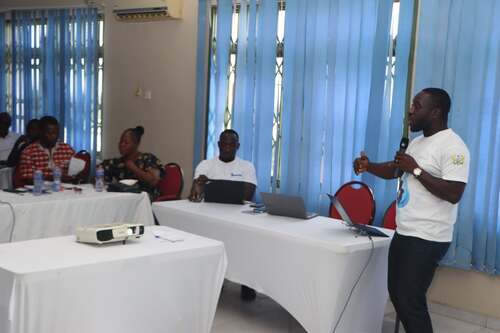
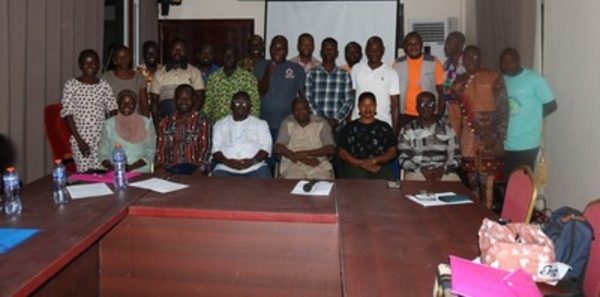
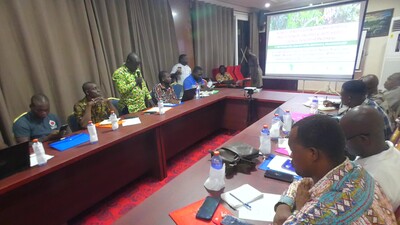
Northern Ghana is increasingly caught in a dangerous climate change cycle, prolonged droughts followed by devastating floods, putting the lives and livelihoods of at least 5.8 million people at risk across the five northern regions. The warning was sounded by Jesse Kazapoe, Head of the White Volta Basin Directorate of Ghana’s Water Resources Commission (WRC), during a three-day climate change advocacy training for 30 WASH (Water, Sanitation, and Hygiene) journalists on climate change reporting, a programme organized by BElim Wusa Development Agency (BEWDA) in partnership with WaterAid Ghana under the SIDA CLIMB Better WASH Partnership. According to Kazapoe, communities across northern Ghana are experiencing the harsh consequences of changing weather patterns, with drought and flooding emerging as two sides of the same climate crisis. For many farming communities, the dry season is no longer simply a predictable period of the year. Increasingly prolonged spells of drought are disrupting agricultural activities, reducing crop yields and threatening household food security. Kazapoe explained that the effects extend beyond agriculture, warning that prolonged droughts are also undermining water security. As surface water levels decline and groundwater recharge rates fall, both large and small-town water systems struggle to produce sufficient water to meet the needs of communities. This creates a difficult situation for households already dependent on increasingly unreliable water sources. Yet, when the rains finally arrive, the crisis often takes another devastating turn. Kazapoe noted that intense rainfall and flooding frequently cause widespread destruction across northern Ghana. The situation is sometimes worsened by the spillage of excess water from the Bagre Dam in Burkina Faso. The resulting floods destroy farms, water distribution infrastructure and small-town water systems, while also creating conditions conducive to the spread of water-borne diseases. Thus, communities that have spent months battling water scarcity can suddenly find themselves struggling with too much water, and the destruction that comes with it. Kazapoe pointed to several indicators of the changing climate, including the drying of the Volta Basin, shifting rainfall patterns and shorter but more intense wet seasons. He further noted that temperatures in northern Ghana are rising at a rate of about 0.6 degrees Celsius per decade, faster than the global average. According to him, the combination of rising temperatures, changing rainfall patterns and the increasing frequency of floods and droughts is having profound consequences for living conditions across the five northern regions. “For us at the WRC, climate change is ultimately about how the water cycle is changing and how society responds to those changes, because climate change is water change,” Kazapoe said. His observation highlights an increasingly important reality: the climate crisis is not only an environmental problem but also a water, food, health and development crisis. While climate change affects entire communities, Kazapoe stressed that its consequences are not evenly distributed. Vulnerable communities, women, children, persons with disabilities and displaced populations often bear the greatest burden when droughts and floods strike. For such groups, the loss of farmland, homes, water systems or livelihoods can have long-term consequences, further deepening poverty and inequality. With rainfall becoming increasingly unpredictable, Kazapoe said Ghana must rethink its dependence on rain-fed agriculture. He identified irrigation as an increasingly important intervention to protect food production as farmers face unreliable rainfall patterns. The challenge, however, goes beyond simply expanding irrigation. It requires a broader climate adaptation strategy that strengthens water infrastructure, protects vulnerable communities, improves flood preparedness and ensures that water resources are sustainably managed. The recurring pattern of drought followed by floods presents northern Ghana with a stark warning: climate change is already reshaping the region’s water cycle, agricultural systems and livelihoods. For the millions of people living across the five northern regions, responding effectively will require urgent investment, stronger climate adaptation measures and coordinated action to ensure that water remains a source of life rather than a driver of vulnerability. Source: Apexnewsgh.com/Ngamegbulam Chidozie Stephen
GWJN Urges Journalists to Prioritize Accuracy, Balance, and Community Voices
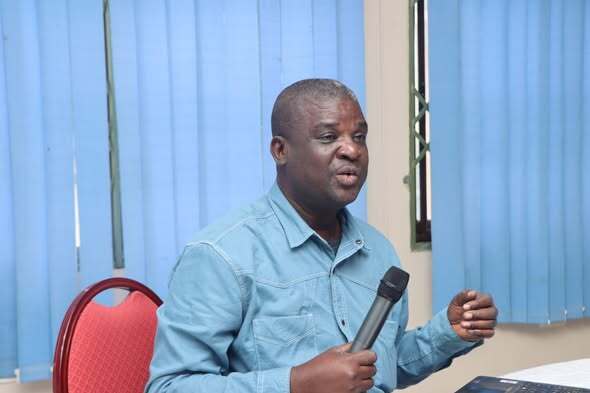
In an era of rapid environmental change, the field of climate and WASH (Water, Sanitation, and Hygiene) journalism faces new demands for accuracy, balance, and impact. This call to higher standards was delivered by Mr. Justice Lee Adoboe, National Coordinator for the WASH Journalist Network Ghana (GWJN), as he addressed thirty journalists from across northern Ghana during a three-day training organized by BEWDA in partnership with WaterAid Ghana under the SIDA CLIMB Better WASH project. Mr. Adoboe highlighted source mapping as an essential journalistic tool. By deliberately seeking out a variety of perspectives, he explained, journalists can avoid bias and produce stories that communities can trust. “Broadening your network of sources is key to delivering trustworthy journalism,” he said. Still, he was quick to remind participants that good sourcing is only the beginning. Upholding strict editorial standards and practicing diligent fact-checking are just as vital, ensuring every report is both accurate and meaningful before it is published. The training underscored the crucial role the media plays in raising awareness about how climate change is reshaping WASH services. With prolonged drought, erratic rainfall, and severe flooding threatening agriculture and livelihoods across northern Ghana, journalists were urged to lead the conversation. By informing the public, advocating for stronger policies, and engaging communities directly, the media can help build resilience and promote adaptation in response to the changing climate. Mr. Adoboe also cautioned journalists against common reporting pitfalls. He pointed out that focusing solely on water while neglecting sanitation and hygiene issues can give a distorted picture, especially when floods damage pit latrines and septic tanks. He also warned against labeling climate-driven disasters as routine natural events, and stressed the importance of highlighting the specific needs of marginalized groups, rather than masking them with broad national statistics. By raising their standards and widening their perspective, Mr. Adoboe believes journalists can tell stories that not only inform, but also inspire action and drive real change in their communities. Source: Apexnewsgh.com/Ngamegbulam Chidozie Stephen
BEWDA Launches Advocacy Project to Empower Journalists and Communities on Climate Justice
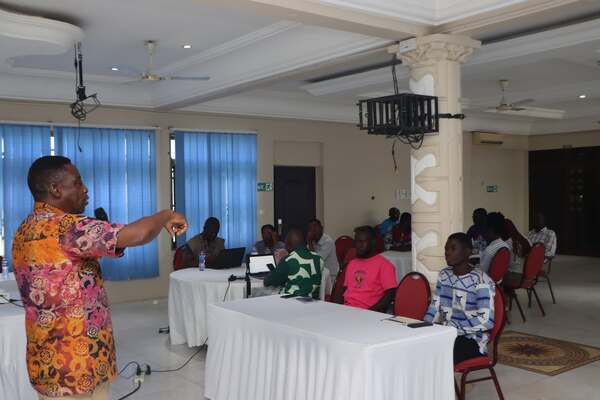
The Belim Wusa Development Agency (BEWDA) has set a new course for climate advocacy in Ghana’s Upper East Region, unveiling a pioneering project aimed at strengthening civil society and amplifying grassroots voices. At the heart of this initiative is the training of 30 WASH (Water, Sanitation, and Hygiene) journalists on climate change reporting, a programme developed in partnership with WaterAid Ghana under the SIDA CLIMB Better WASH Partnership. Speaking at the launch, BEWDA’s Executive Director, Peter Asaal, explained that the project. formally titled “Civil Society Leadership Mobilization for Better Wards”, is designed to support community mobilization and empower residents to address climate justice violations in their districts. “Our role is to see how we can mobilize communities and engage stakeholders and duty bearers in assemblies, making sure their voices are heard and their rights protected,” Asaal said. The project’s roots lie in extensive climate vulnerability assessments across Upper East, where BEWDA identified mounting challenges impacting local communities. The pilot phase in Boko West revealed the urgency for a broader response, prompting WaterAid to support an expansion to four more districts: Nabdam, Bongo, Kassena Nankana Municipal, and Kassena Nankana West, alongside Bawku West. Over three days, journalists have participated in intensive training, gaining deeper understanding of climate change impacts on water and sanitation infrastructure. The goal is to equip them to report accurately and compellingly on climate justice violations, ensuring that the lived experiences of affected communities are brought to light. “We want journalists to amplify the voices of those affected and hold duty bearers accountable,” Asaal emphasized. By empowering journalists with knowledge and storytelling skills, BEWDA aims to foster greater accountability from duty bearers to right holders, those whose lives are most affected by climate change. The project also seeks to influence policy at district, regional, and national levels, ensuring that grassroots realities shape decision-making and resource allocation. Running through March 2028, the project aspires to see a wave of impactful stories published, broadcast, and shared around the world. As these narratives reach wider audiences, BEWDA hopes to catalyze meaningful change, making climate justice a central part of policy and practice, not just in the Upper East, but across Ghana and beyond. Source: Apexnewsgh.com/Ngamegbulam Chidozie Stephen
Upper East Region Grapples with Layered Climate Threats as Journalists Spotlight WASH Crisis
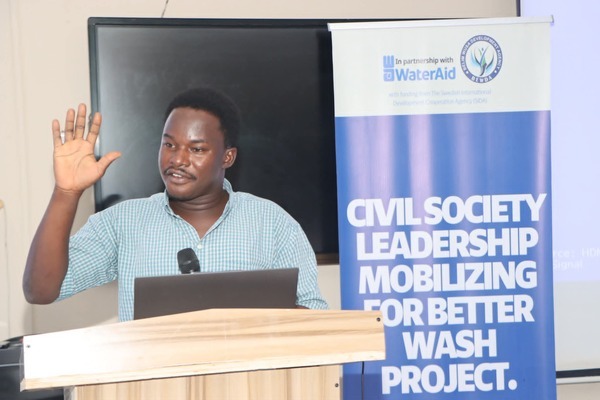
Once celebrated for its resilient communities, Ghana’s Upper East Region now stands as a stark example of climate change’s mounting toll. At the center of this unfolding story, thirty journalists recently convened in Bolgatanga for an intensive three-day training designed not only to strengthen climate change reporting, but also to shine a spotlight on the critical intersections of water, sanitation, and hygiene (WASH) justice. The training, spearheaded by the Belim Wusa Development Agency (BEWDA) in partnership with WaterAid Ghana and the SIDA CLIMB Better WASH Partnership, offered a sobering look at the obstacles facing the region. Project Lead Mr. Sebastian Mbabugri Agumah painted a detailed picture for the assembled journalists: over the past decade, the Upper East has suffered a 10 to 15 percent decline in rainfall. What was once a predictable five- to six-month wet season has shrunk to just three or four months in many areas, stretching the dry season to six months and leaving wells empty and fields barren. Yet drought is only part of the crisis. Rising temperatures have ushered in more frequent and intense heat waves, raising average temperatures by up to 1 degree Celsius, with the specter of a 2-degree increase by 2050 looming ever closer. These heat waves bring not only discomfort but also heightened health risks and disease, compounding the region’s daily hardships. Extreme weather is now an annual ordeal. The Bagre Dam’s controlled spillage and the recent overflow of the Tono Irrigation Dam have both caused devastating floods, sweeping away roads and farmland. In the district of Binduri, fierce windstorms have ripped roofs from homes and schools, including structures. Wildfires and violent rainstorms, too, have become regular threats, stoking fresh anxieties each season. Across the five hardest-hit districts, Bawku West, Nabdam, Bongo, Kassena Nankana West, and Kassena Nankana Municipal, communities face at least three of these climate hazards simultaneously. As drought, flood, heatwave, windstorm, and wildfire layer one upon the next, the result is a compounding crisis that imperils the region’s WASH infrastructure. Source: Apexnewsgh.com/Ngamegbulam Chidozie Stephen
Water Is Not a Donation: Advocates Call for Climate-Resilient WASH Services
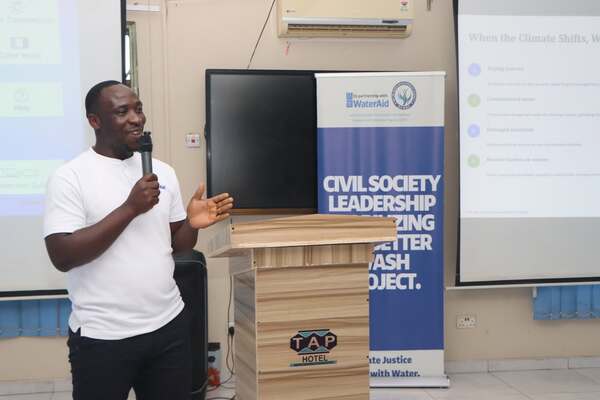
A group of thirty journalists have gathered for a transformative three-day training, focused not just on climate change reporting, but on the deeper issues of water, sanitation, and hygiene (WASH) justice. Spearheaded by the Belim Wusa Development Agency (BEWDA) in partnership with WaterAid Ghana and under the SIDA CLIMB Better WASH Partnership, the event became a platform for frank conversations about the responsibilities of duty-bearers and the rights of community members. Richard Ntibrey, Program Manager for WASH and Climate Change at WaterAid Ghana, did not mince words. “Water is not a donation. It is the duty of duty-bearers to provide it,” he declared, challenging the common misconception that access to clean water is something to be gifted rather than guaranteed. Ntibrey’s message struck a chord among the journalists: “Most times, community members are not aware that it is the duty of the duty-bearers to provide good sources of water in our various communities. We don’t want to see duty-bearers providing water as a donation. It is the duty of the duty-bearers to provide water.” The training, held in Bolgatanga, was more than a lecture, it was a call to action. Ntibrey emphasized the power of advocacy, urging journalists to tell the stories of both duty-bearers and right-holders. “Advocacy and influencing will allow you to reach more people, to target those responsible for providing water, sanitation, and hygiene, and to ensure systemic change. The focus here is on climate justice.” The project, currently running in five climate-vulnerable districts, Bawku West, Nabdam, Bongo, Kassena Nankana West, and Kassena Nankana Municipal, was born out of a climate vulnerability and risk assessment. Data revealed declining rainfall by as much as 15%, decreased borehole yields, and excessive heat, particularly in Nabdam. These findings, coupled with high poverty rates, made the districts a priority for climate-resilient WASH interventions. Ntibrey explained the role of NGOs like WaterAid Ghana: “Our work is to support government in delivering its mandates. But ultimately, it is the government’s responsibility to ensure that communities have sustainable access to water, sanitation, and hygiene services, especially in the face of climate change.” He called for leadership and collaboration from local and national governments, journalists, development organizations, and the communities themselves. “Most importantly, we want governments to invest more in sustainable WASH services that consider the impact of climate change. Beyond climate events, these systems must endure.” The stories journalists uncover, about water scarcity, declining sanitation, and the daily struggles of communities, are key to understanding the true impact of climate change. “Change starts with water,” Ntibrey affirmed. “If you enter a community and see them struggling for water, you know that agriculture, household nutrition, and sanitation are all affected.” The advocacy, he concluded, is about more than infrastructure. It’s about justice. “Wherever you are, you are either a duty-bearer or a right-holder. Duty-bearers must provide; right-holders must demand. Even in the face of climate change, access to water, sanitation, and hygiene is a right, not a privilege.” He stressed Source: Apexnewsgh.com/Ngamegbulam Chidozie Stephen
Spillage of Bagré Dam Postponed: WRC Issues Fresh Update
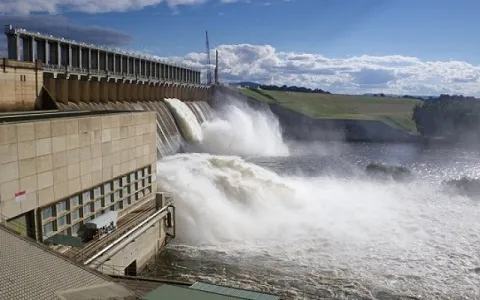
Communities living downstream of Burkina Faso’s Bagré Dam have received a temporary reprieve as the Water Resources Commission (WRC) announced the postponement of a planned controlled spillage. The decision, shared in a press release on Tuesday, August 11, 2026, follows new data from SONABEL, the dam’s operator, showing that the reservoir level remains below the critical threshold for water release. According to the WRC, the Bagré Dam’s reservoir currently stands at 233.08 metres, accounting for 75.40 percent of its capacity. This measurement leaves the water level 1.92 metres shy of the dam’s normal level of 235.00 metres, and still 1.42 metres below the 234.50-metre mark required to trigger the controlled spillage. The news comes after the WRC’s earlier warning on August 4, which cautioned farmers and residents along vulnerable waterways, especially those near the Kubore River in northern Ghana, to prepare for possible flooding. With the latest update, those communities have gained extra time to brace for any eventuality, though the risk remains should water levels rise further due to rainfall or increased inflows. SONABEL, tasked with managing the dam, has opted to continue monitoring the situation, delaying the commencement of spillage until the required reservoir level is reached. The WRC has assured the public that it will relay any significant developments, including the exact date and time of water release, as soon as SONABEL confirms the need for action. The Commission emphasized the importance of continued vigilance among stakeholders and residents in potentially affected areas. While the postponement offers some relief, the WRC reiterated that the situation could change rapidly, urging everyone to stay alert for further updates and official advisories. For now, the threat of immediate flooding from the Bagré Dam has been postponed, but the WRC continues its close watch over the reservoir, promising timely communication should conditions warrant a controlled spillage. Source: Apexnewsgh.com/Ngamegbulam Chidozie Stephen
Ministry of the Interior Issues Weather Alert for Greater Accra Region
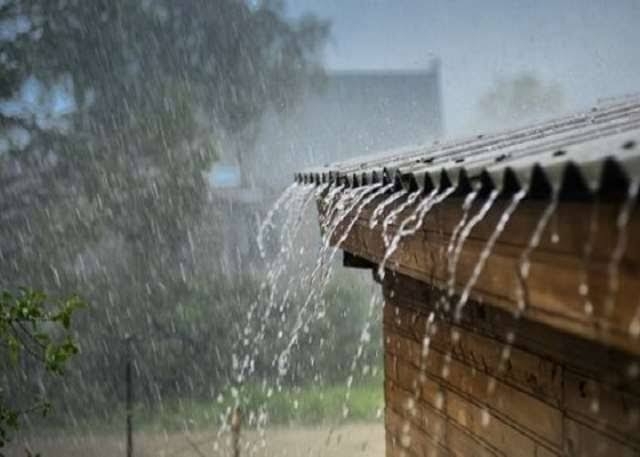
The Ministry of the Interior has issued a public weather alert, warning residents of the Greater Accra Region about the likelihood of moderate rainfall in the early hours of Monday, July 6. According to a text message sent out to citizens, the forecast predicts moderate rain between 4 AM and 7 AM, with a 40 percent chance of occurrence. The ministry cautioned that low-lying areas are at risk of flooding and strongly advised residents to avoid driving or walking through flooded roads during this period. In addition, the public is urged to stay alert and closely monitor changing weather conditions to ensure their safety. This warning comes as the region continues to grapple with the aftermath of recent flooding incidents. Authorities are reminding the public to prioritize safety as weather patterns remain unpredictable. Flood death toll rises to 34 as nearly 90,000 displaced, NADMO says. Source: Apexnewsgh.com
GWJN Calls for Bold Action as Floods Ravage Accra Again
Once more, devastating floods have swept through Accra and its surrounding communities, leaving a trail of loss, destruction, and anguish. The Ghana WASH Journalists Network (GWJN) has voiced its profound sadness over the tragedy, as lives have been lost, homes and businesses destroyed, and thousands of residents traumatized by yet another round of flooding. In a statement, GWJN extended heartfelt condolences to grieving families and expressed solidarity with all whose livelihoods have been upended. “Every life lost to flooding in Ghana is one too many,” the network lamented, adding that the recurrence of such tragedies is now unacceptable and demands urgent, lasting solutions. Year after year, governments make promises, form committees, and launch emergency interventions, yet the same communities flood whenever the rains come. GWJN insists that Ghana deserves better and that the national flood management strategy requires a complete overhaul. The network identified the well-known causes of Accra’s flooding: illegal developments on wetlands and waterways, poor land-use planning and enforcement, choked drains from indiscriminate dumping, rapid urbanization without matching drainage infrastructure, and weak institutional coordination, among others. “Floods are natural, but disasters come from human failure,” GWJN stressed. GWJN argued that flood prevention must become a permanent national development priority, not just a seasonal emergency. The network called on the Ghana Hydrological Authority (HYDRO), Metropolitan, Municipal and District Assemblies (MMDAs), Land Use and Spatial Planning Authority (LUSPA), Environmental Protection Authority (EPA), and the Ministry of Works and Housing to move decisively to protect all remaining wetlands and drainage corridors from encroachment. “No road project should proceed without comprehensive drainage engineering, and the destruction of wetlands for housing and infrastructure must end immediately.” Recalling the formation of the Anti-Flood Taskforce in March 2025 by President John Dramani Mahama, GWJN questioned what had become of its findings and recommendations. The network demanded transparency and accountability, pressing for measurable progress in preventing a repeat of these tragic scenes. GWJN called on the government to demonstrate bold political leadership, enforcing planning laws, reclaiming wetlands, strengthening engineering standards, and holding public officials accountable for negligence. “This is not the time for temporary solutions or annual emergency responses. Permanent engineering solutions and strong political will are needed.” Citizens, too, have a role to play. The network urged Ghanaians to end indiscriminate dumping and illegal building on waterways, warning that these actions worsen the crisis. GWJN pledged to intensify media advocacy on environmental sanitation, drainage protection, and flood prevention, and to expose those who undermine the nation’s safety. Flooding, GWJN insisted, should not define Ghana’s rainy seasons. The expertise and institutions exist, what remains is coordinated action, enforcement, and sustained political commitment. The network also called for immediate protection of safe water sources, proper testing and treatment of submerged pipes and boreholes, and, if possible, the provision of emergency safe water supplies to affected communities. “The time to act decisively is now,” GWJN concluded, urging all stakeholders to rise to the occasion and end the cycle of flooding once and for all. Source: Apexnewsgh.com
Hajia Charity Challenges Dr. Bawumia: Demand Accountability from Cecilia Dapaah Over World Bank Funds
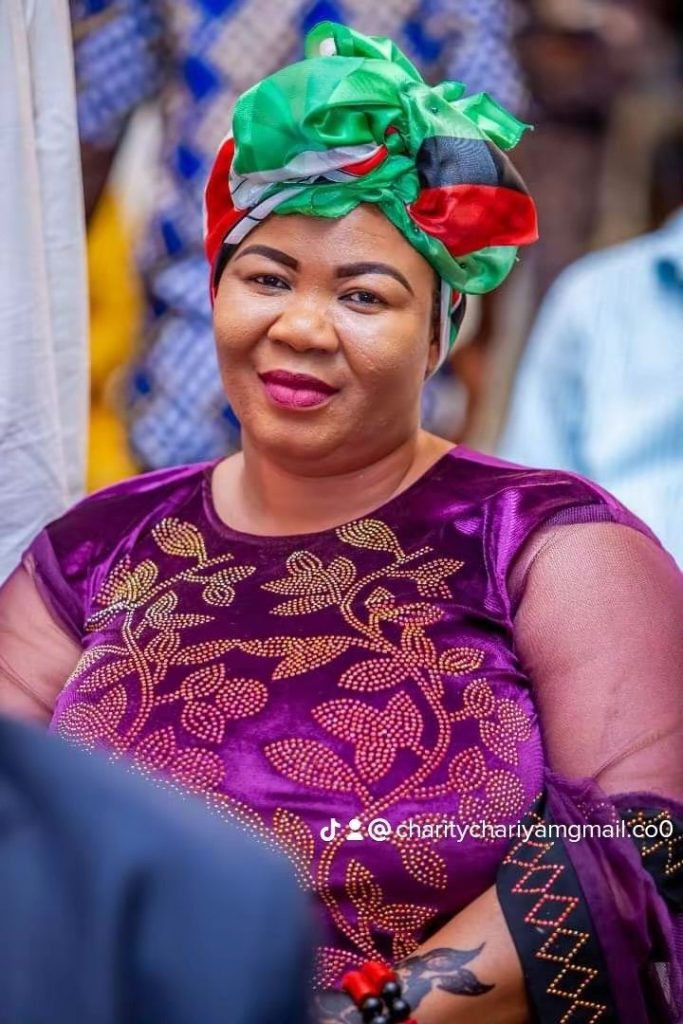
As torrential rains battered Accra, leaving over a dozen dead and tens of thousands of families displaced, the city’s heartbreak quickly turned into a political battleground. Among the most outspoken voices was Hajia Charity Rahinatu Asoemah, Deputy Director General in charge of Stores at NADMO, who condemned what she called a legacy of neglect and corruption that led to the catastrophe. Standing amid devastated communities and overwhelmed rescue workers, Hajia Charity did not mince words. “This flooding is not just a natural disaster; it’s the direct result of failed leadership and abandoned promises,” she declared to gathered to Apexnewsgh. According to her, the previous administration received substantial World Bank funding specifically earmarked for desilting and constructing drainage along the Odur River—a project that could have averted the disaster. “Ask Cecilia Dapaah what she did with the World Bank money,” Hajia Charity challenged, referring to the former Minister for Sanitation. “If those funds had been used as intended, we wouldn’t be facing such destruction and loss today.” Her frustration extended to Dr. Mahamudu Bawumia, the former Vice President and now presidential candidate for the New Patriotic Party. As Dr. Bawumia arrived to console victims, Hajia Charity called him out for not using his office to demand accountability when the funds were disbursed. “Instead of crying foul now, Dr. Bawumia should have tackled corruption when he had the chance,” she admonished. “The innocent people of Accra are suffering because leaders failed to act.” The streets, now rivers of mud and debris, became the stage for a fierce debate over responsibility. Critics argued that the NPP government’s failure to act on the Odur River project was not a mere oversight but a deliberate betrayal. “They had a singular responsibility to protect our city, and they chose to do nothing,” Hajia Charity insisted, gesturing toward the overflowing waterway. Public anger swelled as residents and journalists pressed for answers about the World Bank funds. The absence of visible progress along the Odur River fueled suspicions of mismanagement or misappropriation of donor resources. The question echoed from one flooded neighborhood to the next: if the money was released and agreements signed, where did it all go? Amid the storm of accusations, Dr. Bawumia opted for a conciliatory tone. He urged Ghanaians to unite beyond political lines, calling for President John Dramani Mahama to assemble a multi-partisan panel of experts to craft a lasting solution to the capital’s flooding woes. “Floods do not care about party colors—they devastate all Ghanaians alike,” Dr. Bawumia said, sidestepping direct engagement with the allegations. But for Hajia Charity and many ordinary citizens, technical solutions must go hand in hand with accountability. “We cannot build a safer future on a foundation of distrust,” she warned. As families sought refuge in schools and churches, the city’s wounds remained raw, and the most pressing question lingered in every conversation: with all the funds and promises, why does Accra still drown in preventable disaster? Source: Apexnewsgh.com