








Governor of Bank of Ghana Reassures Investors: Ghana Open for Business Again
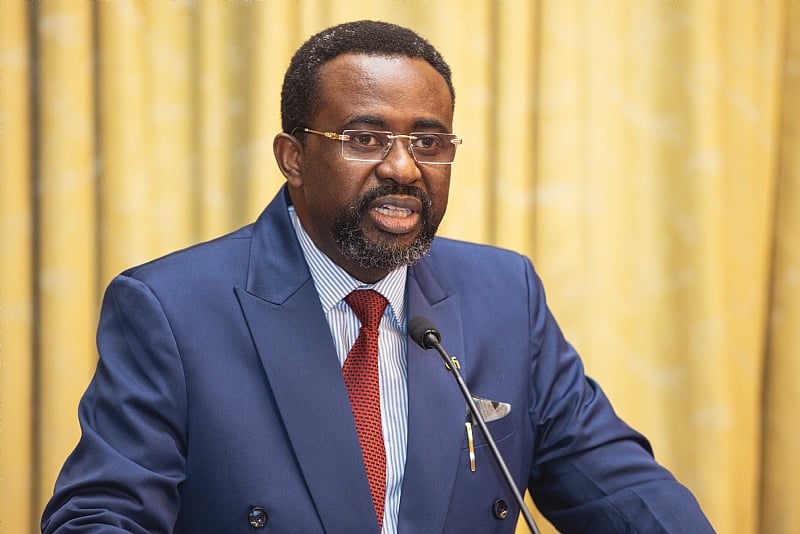
Ghana is once more ready to welcome investors, according to Dr. Johnson Pandit Asiama, Governor of the Bank of Ghana (BoG). Addressing an audience at the Ghana-UK Investment Summit in London, Dr. Asiama affirmed that recent economic reforms have restored stability and renewed confidence in Ghana’s long-term growth prospects. Reflecting on the challenges of Ghana’s 2022 economic crisis and the subsequent Domestic Debt Exchange Programme, Dr. Asiama acknowledged the caution that some investors have felt in recent years. However, he stressed that decisive policy and institutional reforms have since been implemented to ensure such difficulties are not repeated. Among these reforms, Dr. Asiama highlighted amendments to the Bank of Ghana Act, which now provide stronger safeguards against excessive central bank financing of government spending. New fiscal rules have also been introduced to reinforce discipline in economic management. “We are building back better. What happened in the past belongs to the past,” Dr. Asiama told investors, pointing to improving macroeconomic indicators as proof that Ghana’s economic recovery is underway. He noted, however, that global geopolitical tensions and the ongoing conflict in the Middle East remain significant factors in preventing a more rapid decline in interest rates. Dr. Asiama suggested that, were it not for these global uncertainties, interest rates in Ghana could already have fallen below 10%. He expressed confidence that as international conditions normalize, Ghana will continue on its path toward lower interest rates and stronger economic growth. Looking to the future, the Governor drew inspiration from financial centers in the Middle East and Asia, suggesting that Ghana could become the “Singapore of Africa” with the right investments. He outlined an ambitious vision to transform Accra into a leading international financial services hub within the next few years. Dr. Asiama concluded by urging the Ghanaian diaspora and international investors to seize the opportunities emerging from Ghana’s improving economic environment. He emphasized that the time is ripe for investment across multiple sectors, as the country enters a new phase of growth and development. Source: Apexnewsgh.com
Bank of Ghana Refutes Claims of Headquarters Sale

On June 2nd, the Bank of Ghana found itself at the center of swirling rumors. Reports were making the rounds, claiming that the central bank was considering selling its newly constructed $260 million headquarters. The story, first published by MyJoyOnline, sent ripples across the financial sector and raised many eyebrows. But the Bank of Ghana was quick to set the record straight. In an official press release, the central bank categorically dismissed the rumors as both false and misleading. The statement, clear and direct, left no room for doubt: “The Bank of Ghana categorically states that this report is false and misleading. The Bank is not considering, discussing, or planning the sale of its new headquarters.” The Bank went on to explain the significance of its new facility. Designed to enhance efficiency and support its operations, the building is described as a critical institutional asset, an investment in the future of Ghana’s financial system. Far from being up for sale, the headquarters stands as a testament to the Bank’s commitment to its statutory mandate. Concerned about the impact of such unfounded stories, the Bank also issued a word of caution. It warned that the spread of unverified reports could erode public confidence and inject unnecessary uncertainty into Ghana’s financial market. “Unverified reports of this nature have the potential to undermine public confidence in Ghana’s financial system and create unnecessary market uncertainty,” the statement stressed. To further reassure the public, the Bank reaffirmed its dedication to transparency. All official announcements, it emphasized, are made only through its established channels, its website, verified social media accounts, press statements from its Communications Department, or signed statements from the Secretary of the Bank. In the end, the Bank of Ghana’s clear response put the rumors to rest, reminding everyone of the importance of fact-checking and the value of credible information in safeguarding the nation’s financial stability. Source: Apexnewsgh.com
Bank of Ghana Halts New 0.75% Wallet-to-Bank Transfer Fee Pending Review

The Bank of Ghana has stepped in to halt the planned introduction of a 0.75 per cent charge on direct wallet-to-bank transfers by Mobile Money Fintech Limited (MMFL), following a wave of public concern and debate. MMFL had announced that the new fee would be implemented starting June 1, 2026, sending ripples across the digital payments landscape. Many Ghanaians voiced worries about how the extra charge could discourage mobile money transactions, undermine financial inclusion, and increase the cost of accessing digital financial services. Responding to the mounting concerns, the central bank issued a statement on Tuesday, May 26, 2026, directing MMFL to put the proposal on hold. The Bank of Ghana emphasized the need for broader stakeholder engagement and a thorough review of the planned fee. According to the central bank, any changes to charges within the mobile money ecosystem must be approached with caution to safeguard consumers’ interests and ensure the continued growth and fairness of the mobile financial services sector. The Bank of Ghana reiterated its commitment to protecting users and supporting their financial well-being. While the central bank’s intervention has temporarily paused the fee, it remains unclear when the consultation process will be completed or whether the proposed charge will be revised, approved, or scrapped altogether. For now, customers and industry stakeholders await the outcome of further discussions and the future direction of mobile money fees in Ghana.
A Vision for Africa: Dr Asiama’s Journey Toward Financial Integration
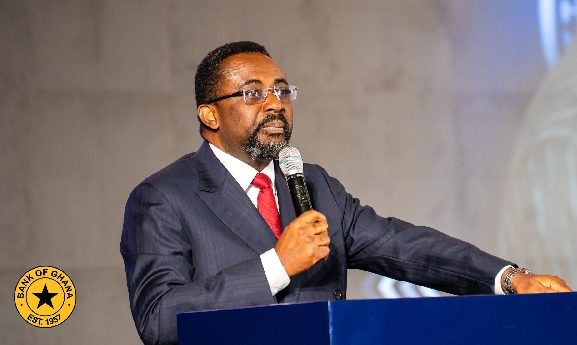
At the ACI Financial Markets World Congress, Dr Johnson Pandit Asiama, Governor of the Bank of Ghana, took the stage, his eyes set on a horizon of possibility for Africa’s economic future. With leaders, innovators, and investors gathered around, he painted a vivid picture of a continent on the cusp of transformation while also outlining the hurdles that still stood in the way. Dr Asiama began by recounting the strides Africa has made in regional trade. Yet, he lamented, the systems that move money across borders remain fragmented and inefficient. “It is cheaper,” he remarked with a touch of irony, “to send money across oceans than to send it to a neighbouring African country.” The cost and complexity of cross-border payments, he argued, threaten to stifle trade and limit opportunities for millions. The Governor’s vision was clear: Africa needed an integrated payment and settlement system—a digital backbone that would connect the continent, support trade, deepen financial inclusion, and fuel economic growth. Achieving this, he stressed, was essential to realizing the promise of the African Continental Free Trade Area (AfCFTA). Dr Asiama shared how the Bank of Ghana, in partnership with AfCFTA and other stakeholders, is exploring digital innovations such as stablecoins to tackle cross-border payment challenges. These efforts, he explained, are being nurtured in regulatory sandboxes, safe spaces where new technologies can be tested and refined before being scaled up. But the journey was not Ghana’s alone. Across the continent, central banks are joining forces to harmonise regulations, enhance payment systems, and share knowledge on emerging technologies. Dr Asiama highlighted the 3i Africa Summit, a collaborative platform bringing together central bank governors, innovators, and investors to drive financial sector development. Still, the Governor cautioned, innovation must be carefully balanced with financial stability and consumer protection. “Do not regulate the technology, but regulate the risk,” he advised, urging regulators to work alongside innovators rather than standing in their way. As the fireside chat drew to a close, Dr Asiama’s optimism was infectious. With greater collaboration among regulators, innovators, and investors, he believed Africa could build a resilient and inclusive financial system, one capable of supporting sustainable growth and prosperity for all. Source: Apexnewsgh.com
Governor Warns: Converging Risks Threaten Ghana’s Economic Gains

It was a pivotal moment in Accra as Dr. Johnson Asiama, Governor of the Bank of Ghana, addressed the opening of the 130th Monetary Policy Committee (MPC) meeting. With the city bustling outside, the Governor’s message inside was one of both caution and urgency: Ghana’s economy faces a confluence of external and domestic threats that could undermine the hard-won macroeconomic stability achieved in recent years. Dr. Asiama placed global energy developments and domestic pressures at the forefront of his address. He highlighted the prolonged Middle East conflict, which continues to inflate global energy prices and ripple through Ghana’s economy. “The protracted Middle East conflict and sustained energy price elevation are all risks which, if not addressed, could dislodge inflation expectations before they are firmly anchored,” he warned. For an energy-importing country like Ghana, every uptick in crude prices translates to higher fuel and transport costs, with cascading effects on consumer prices and inflation. The Governor described how these external shocks intersect with local vulnerabilities, especially disruptions in domestic energy supply, to create a “dual-channel inflation expectations problem.” Policymakers, Dr. Asiama said, are increasingly concerned that these risks could undo recent progress in stabilizing inflation. “Without timely policy responses, the current trajectory could reverse recent disinflation gains, complicating monetary policy decisions in the near term,” he cautioned. Beyond inflation, the Governor drew attention to Ghana’s external balances. Improvements in the current account, he noted, could be short-lived if global headwinds weaken export earnings and limit foreign exchange inflows. “The second risk is the current account and reserve vulnerability issues, fiscal risks from external revenue compression, and the domestic power crisis,” he explained. Fiscal risks are also heightened by possible revenue shortfalls linked to global economic slowdowns and volatile commodity prices. Dr. Asiama did not downplay the impact of domestic structural problems, particularly in the energy sector. While the power situation is “showing signs of abatement,” it still weighs heavily on the economy. Persistent power supply disruptions have driven up business costs and inflation expectations, raising the stakes for both producers and consumers. Against this backdrop, the Governor urged his colleagues on the MPC to scrutinize how well monetary policy is working in the current climate. “The current monetary policy transmission is still of concern,” he admitted, questioning whether policy signals are effectively influencing lending and credit growth. The answer, he stressed, would be critical for sustaining broader economic activity as conditions tighten. As the MPC’s deliberations got underway, it was clear that the stakes had rarely been higher. With risks ranging from global geopolitical tensions to domestic energy and fiscal challenges, the path forward would require a careful balancing act. “These risks will be central to the discussions this week,” Dr. Asiama concluded, underlining the importance of decisive and timely action. His final message was unmistakable: Ghana’s economic resilience will depend not just on the foundation of past reforms, but on the country’s ability to respond swiftly and effectively to a rapidly changing risk environment. Source: Apexnewsgh.com
Bank of Ghana Unveils 2025 Financial Stability Review, Emphasizes Vigilance Amid Emerging Risks

The Bank of Ghana ushered in a new chapter of transparency and oversight with the official launch of the 2025 Financial Stability Review, the flagship publication of the Financial Stability Advisory Council. The ceremony, held on Friday, May 15, 2026, brought together key stakeholders to assess the current health and resilience of Ghana’s financial sector under the theme: “From Stress to Stability: Staying on Course.” In her address on behalf of the Governor, Second Deputy Governor Matilda Asante-Asiedu praised the continued resilience of Ghana’s financial system. She reaffirmed the central bank’s unwavering commitment to maintaining stability, reinforcing public confidence, and safeguarding the integrity of the sector. However, Asante-Asiedu cautioned that new risks are beginning to emerge, subtly shaping the outlook for the financial sector. “Some risks are emerging in the outlook. Financial institutions are reassessing their business models to adapt to evolving conditions and avoid disruptions to the stable trajectory we have enjoyed,” echoed Governor Johnson Pandit Asiama in remarks included in the report. The 2025 Financial Stability Review highlights how regulators are proactively working with financial institutions to ensure they adjust their strategies in response to changing economic conditions. The report underscores ongoing efforts to preserve stability across the banking and financial services sector, even as the landscape continues to evolve. With this new publication, the Bank of Ghana signals its continued vigilance and readiness to respond to challenges, ensuring that Ghana’s financial sector remains robust and trusted in the face of uncertainty. Source: Apexnewsgh.com
Ghana’s Financial Revolution: Making Women’s Ventures ‘Investment-Ready’ for the World

In the bustling markets and roadside stalls across Ghana, millions of women work tirelessly, yet most remain invisible to the formal banking system. But a shift is coming. “Our goal is to ensure these ventures are ‘investment-ready’ for the global stage,” a spokesperson for Chartered recently declared, capturing a growing consensus among financial leaders. Still, the reality of the “unbanked” female entrepreneur is stark. Despite national economic gains, countless women in the informal sector find themselves locked out of traditional loans. Experts argue that until Ghana dismantles its deeply rooted “collateral culture”, which demands physical assets most women don’t possess, many will remain trapped, relying on high-interest informal lenders who circle like vultures. Enter Dr. Elizabeth Zormelo, a fierce advocate for female financial literacy. She doesn’t mince words. “Credit is the fuel, but financial literacy and market access are the engine,” Dr. Zormelo explains, her voice carrying the urgency of someone who has watched too many small businesses flicker and die. “The Women’s Development Bank must be paired with aggressive training to ensure these businesses don’t just survive, but dominate.” Her message arrives at a pivotal moment. The Bank of Ghana is preparing to release new guidelines on gender-disaggregated data reporting,a tool that will finally reveal, in stark numbers, who gets loans and who doesn’t. The message to the financial sector is unmistakable: the future of Ghana’s economic growth is female, and the cost of exclusion is a price this nation can no longer afford to pay. Source: Apexnewsgh.com
BoG Unveils Six Pillars of Digital Defence
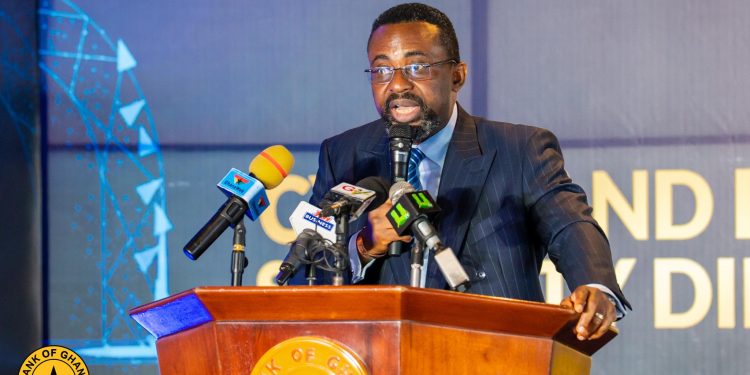
The Bank of Ghana (BoG) has drawn a bold line in the sand against the rising tide of cyber threats, introducing six strategic pillars that form the backbone of its revised Cyber and Information Security Directive (CISD 2026), a sweeping framework designed to forge a safer and more resilient digital financial sector. At the official launch of the directive, Governor Dr. Johnson Asiama made clear that the stakes go far beyond regulation. “A Safer and More Resilient Digital Financial Industry,” he declared, “is the central pillar of our regulatory philosophy.” For him, the CISD 2026 is more than a policy document; it is a solemn commitment to every individual and business that entrusts their financial data to Ghana’s financial ecosystem. The Governor did not mince words about the dangers lurking in the shadows of the digital economy. He warned that the very progress driving Ghana’s financial sector forward has also opened the door to increasingly sophisticated and persistent threats. “From ransomware attacks that can paralyse a bank for days, to systemic data breaches that can shatter public trust in an instant,” Dr. Asiama cautioned, “the threats we face are no longer just isolated IT incidents; they are national security concerns.” Acknowledging that the Bank of Ghana saw this shift coming, he pointed to the first Directive issued in 2018 as a necessary but now insufficient foundation. “We must be honest,” he said candidly, “a framework designed for the challenges of 2018 cannot adequately solve the problems of 2026.” The time had come, he stressed, to move beyond simple compliance and embrace a posture of active and collective cyber resilience. Six Pillars, One Vision To meet this moment, the CISD 2026 is built around six transformative pillars, each targeting a critical dimension of cybersecurity in the financial sector: AI and Machine Learning Governance As financial institutions lean more heavily on artificial intelligence for fraud detection, credit scoring, and customer service, the directive steps in to ensure these tools operate with transparency, fairness, and security, guarding against the risks that come with algorithmic decision-making. Cloud Computing Security Recognising the rapid shift toward cloud technologies, the directive promotes responsible, risk-based cloud adoption while firmly protecting data sovereignty over sensitive financial information. Proportionality Framework Not every institution faces the same risks or commands the same resources. This pillar tailors cybersecurity requirements to the size and risk profile of each institution, ensuring that smaller banks and fintechs are not crushed under the weight of disproportionate compliance demands. Board-Level Accountability Cybersecurity is no longer just an IT department conversation. The directive mandates that at least one board member possess verified cyber risk expertise, embedding security thinking at the very top of institutional leadership. Inclusive Oversight Ghana’s cyber defences are only as strong as their weakest link. By expanding the directive’s coverage beyond universal banks to include micro-finance institutions, savings and loans companies, fintechs, and partner regulators, the CISD 2026 creates a unified, sector-wide shield against cyber threats. Proactive Defence and Preparedness Rather than waiting for attacks to happen, this pillar pushes institutions to anticipate, prevent, and respond swiftly to evolving threats — shifting the culture from reactive damage control to proactive resilience. Building and sustaining this level of cyber defence does not come cheap. Governor Asiama acknowledged the significant investment required in infrastructure, advanced technology, and most critically, highly skilled personnel. As the Sectoral CERT, the Bank of Ghana has shouldered the initial cost of establishing the Financial Industry Cyber Security Operations Centre (FICSOC), a critical piece of national infrastructure that underpins the entire framework. With the CISD 2026 now in motion, Ghana’s financial sector stands at the threshold of a new era, one defined not by fear of cyber threats but by the confidence and capability to face them head-on. Source: Apexnewsgh.com
GEXIM@10: Ghana Braced for Oil and Gold Price Swings, BoG Governor Assures
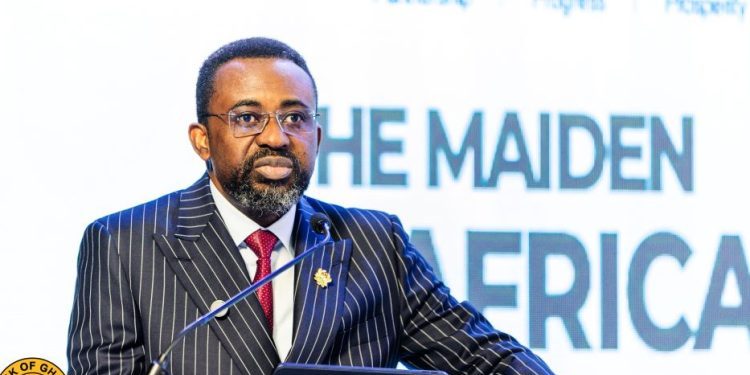
Dr. Johnson Asiama has highlighted Ghana’s preparedness to withstand global commodity shocks, emphasizing the critical role of reserves in safeguarding economic stability. Addressing delegates at the 10th Anniversary International Conference of the Ghana Export-Import Bank in Accra on Wednesday, March 25, Bank of Ghana Governor Dr. Johnson Asiama delivered a measured but candid assessment of the country’s economic vulnerabilities and the defences being built against them. At the heart of his remarks was a familiar challenge: Ghana’s fortunes remain deeply tied to the unpredictable rhythms of global commodity markets. Oil and gold, the twin pillars of the country’s export earnings, are subject to forces largely beyond its control, and Dr. Asiama made no attempt to downplay that reality. “Ghana is exposed to fluctuations in global commodity prices, particularly oil and gold, which make up a significant portion of our export earnings,” he acknowledged. But the Governor was equally clear that exposure does not mean vulnerability. The strategy, he explained, has been deliberate and forward-looking, centred on building reserves robust enough to absorb external shocks and keep the economy on an even keel when global markets turn hostile. “Our strategy is to ensure that we are prepared, building reserves that can absorb shocks and sustain the economy through uncertain times,” he said. “This level of reserves gives us some distance to navigate potential crises, but we must remain vigilant.” That note of vigilance was not incidental. Dr. Asiama went on to flag a scenario that keeps policymakers up at night — the prospect of simultaneous shocks hitting multiple commodity sectors at once. Ghana’s buffer strategy partly relies on one sector compensating for weakness in another, but that calculation has its limits. “We are hopeful that one sector, like gold, may offset the impact from another, such as oil. However, prolonged volatility could challenge our ability to maintain economic gains,” he cautioned. It was a frank admission that even a well-prepared economy has a ceiling on how much pressure it can absorb, and a reminder that the work of building resilience is never truly finished. The Governor’s address came at a symbolically fitting moment. The Ghana Export-Import Bank’s decade-long journey has unfolded against a backdrop of global economic uncertainty, and Dr. Asiama’s remarks reinforced a broader message: that prudent fiscal and monetary planning is not merely good practice, it is Ghana’s first and most important line of defence in a world where commodity shocks can arrive without warning and linger without mercy. Source: Apexnewsgh.com
Ghana Unveils Framework for Ethical Banking
The landscape of Ghana’s financial sector is on the cusp of a transformative shift. In a landmark move, the Bank of Ghana (BoG) has officially unveiled the operational guidelines for Non-Interest Banking (NIB), opening the door to a new era of ethical finance and deeper financial inclusion. This culmination of years of strategic planning is widely credited to the steadfast efforts of BoG Governor, Dr. Johnson Asiama, and the Advisor on Non-Interest Banking and Finance, Professor John Gatsi. The finalized guidelines provide a clear and robust regulatory roadmap, building upon an earlier exposure draft to ensure operators function within strict prudential standards. The excitement within financial circles is palpable. Rumors are swirling of at least five existing conventional banks preparing to apply for dedicated NIB “windows” by the end of January, while several large new investors are lining up to establish full-fledged non-interest banks. This dual-application system is a core feature of the framework, designed to encourage both innovation and stability. The comprehensive guidelines establish a solid foundation for this new banking model: Governance & Expertise: Licensed NIB Institutions (NIBIs) must form a Non-Interest Banking Advisory Committee (NIBAC) of experts in banking, law, and NIB principles to ensure all products are ethically sound and risks are managed. Integrity of Operations: For conventional banks offering NIB through a “window,” a strict separation is mandated. They must operate a separate Non-Interest Finance Fund (NIFF), ensuring these ethical funds are never mixed with conventional banking funds. Inclusive & Voluntary: The BoG emphasizes that NIB is open to all Ghanaians, irrespective of religious belief, and participation is entirely voluntary. Capital & Compliance: Capital requirements align with existing standards, while NIBIs must maintain liquidity through Shari’ah-compliant instruments, steering clear of interest-bearing securities. Tax Clarity Pending: The guidelines acknowledge the crucial issue of tax neutrality, with a resolution expected from a joint team coordinated by the Ghana Revenue Authority (GRA). The implications stretch far beyond bank branches. The BoG is collaborating with the Securities and Exchange Commission (SEC) to develop a harmonized framework for non-interest capital market instruments. This paves the way for the future introduction of Sukuk (ethical investment certificates), which promise to unlock new, shari’ah-compliant capital for Ghana’s critical infrastructure projects. By integrating Ghana with the global non-interest finance industry, this initiative promises to diversify the financial sector, promote resilience, and revolutionize how finance serves the real economy. Welcome to the new, inclusive chapter of banking in Ghana. Source: Apexnewsgh.com